Matox News

Truth Over Trends, always!

Air Canada halts select flights to New York, signaling possible travel hurdles for Canadians

In a clear reflection of the geopolitical volatility engulfing the Middle East and its ripple effects worldwide, airlines across the globe are facing unprecedented challenges. Air Canada recently announced a temporary suspension of flights from Toronto and Montreal to New York’s JFK airport, citing the spiraling costs of aviation fuel. This move, while seemingly operational, signals a deeper crisis directly tied to the ongoing conflicts involving the US, Israel, and Iran. The escalation of hostilities since February, particularly the latest military confrontations, has driven oil prices skyward, disrupting established supply chains and forcing airlines to reassess their routes and profitability.

Experts and international organizations warn that the impact extends beyond mere airline scheduling. The International Energy Agency (IEA) recently issued a stark warning that Europe’s jet fuel reserves could last only six weeks unless regional stability improves. Fatih Birol, the IEA’s executive director, emphasized that ongoing Middle East unrest has created a reservoir of uncertainty, threatening to spark widespread flight cancellations should oil supplies remain disrupted. This scenario not only jeopardizes international travel but also portends a broader economic ripple across sectors reliant on global logistics and mobility. The escalating crisis is striking at the very heart of international commerce, with governments and markets on high alert for further escalation.

Meanwhile, American carriers like Spirit Airlines are seeking emergency financial aid to cope with surging fuel costs, reflecting the severity of the crisis within the aviation industry. Industry analysts point out that the doubling of jet fuel prices, since the flare-up of hostilities, has rendered many routes unprofitable, prompting service reductions and route suspensions. Air Canada’s schedule adjustments are just the tip of the iceberg—other carriers such as Qantas and Virgin Australia are also raising ticket prices while curtailing flight frequencies, reflecting a global flight industry in crisis mode. These decisions are not made lightly; they are emblematic of a broader economic reality where energy prices directly influence societal mobility and national economic stability. Economists and geopolitical analysts warn that prolonged instability in the Middle East could escalate these issues, dragging the global economy into a period of unprecedented turmoil as the very air travel network, a pillar of globalization, convulses under pressure.

As the world watches this unfolding crisis, the question remains: how long will nations linger on the brink of economic chaos before an international response is galvanized? The decisions made in the coming weeks will either stabilize or deepen an already fractured global order. History may well record this moment as a turning point—where geopolitical conflicts ignited a domino effect threatening the core of international commerce, testing the resilience of societies and economies worldwide. The future of international travel, energy security, and geopolitical stability hangs precariously in the balance, leaving humankind at the mercy of the shifting tides of power and conflict—an enduring reminder that in today’s interconnected world, the stakes could not be higher.

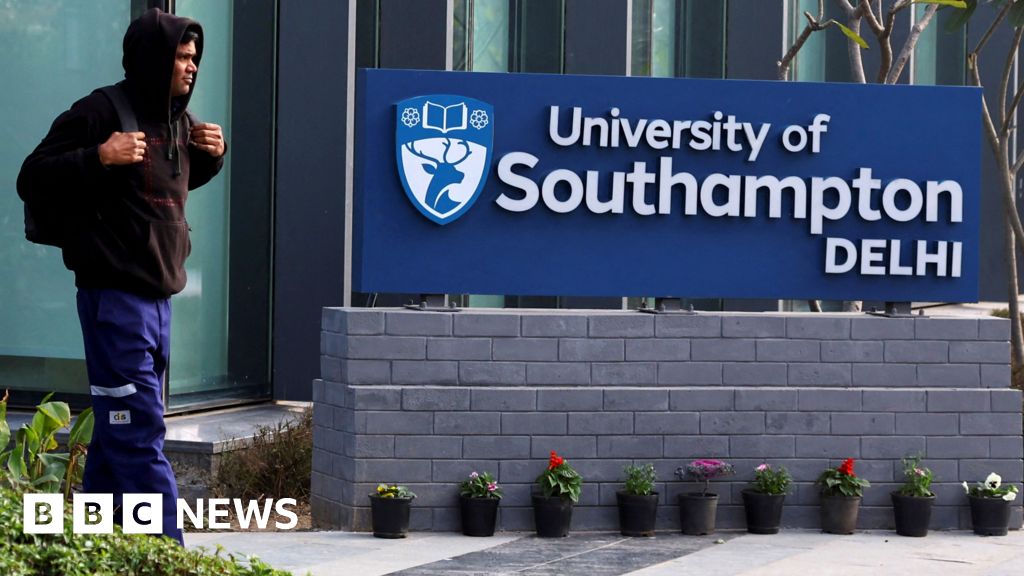
UK Universities Shift Focus to India: York and Southampton Lead the Way

Bridging the Gap: The Socioeconomic Divide in India’s Education System

The staggering figures emerging from India’s educational landscape reveal both a nation of promising potential and a deepening social divide. Annually, approximately eleven million students complete their Grade 12, marking the national threshold of secondary education. Yet, within this vast pool, only about 1.5-1.7 million students secure a place in the country’s top academic institutions. This stark disparity underscores a persistent inequality of opportunity, with a select few ascending to what many see as the gateways to socio-economic mobility, while the majority remain outside the privileged orbit of elite education.

The reality is that educational access often mirrors societal hierarchies rooted in economic status, regional disparities, and social caste. India’s most prestigious universities admit only about 200,000 students annually from this vast talent pool, leaving millions of talented youths excluded from the pathways that lead to leadership and innovation. Sociologists like André Béteille have long argued that these disparities not only limit individual potential but also entrench **social stratification**, where privilege is perpetuated through generations. In this context, education becomes less of a universal right and more of a symbol of societal division.

The ramifications for families and communities are profound. Many families from lower socioeconomic strata invest heavily in private coaching, often at great financial sacrifice, hoping to secure a foothold into India’s competitive academic world. Yet, the lack of equal opportunity creates an unfair playing field, amplifying social tensions. For educators and policymakers, this stark reality calls for urgent reforms—ranging from improving access to quality primary and secondary education in rural areas to dismantling systemic barriers that favor urban, affluent communities. These issues touch upon not only individual futures but also the moral fabric of society, calling into question whether the ideals of fairness and meritocracy remain meaningful in such an ecosystem.

Looking forward, there is hope that societal reflection and strategic policy may pave the way for a more inclusive future. Institutions and civic leaders must embrace the challenge of equality, fostering environments where talent does not go unrealized due to societal bias. By addressing root causes of disparity, from inadequate infrastructure in marginalized areas to the prevalent social stigmas, communities can nurture a generation capable of lifting itself beyond inherited divides. As sociologist Arjun Appadurai emphasizes, fostering *cultural resilience* and *social cohesion* are essential in transforming the promise of education into tangible social progress. Society stands at a crossroads where the resilience of families, the dedication of educators, and the resolve of policymakers may either reinforce the barriers of today or dismantle them in pursuit of a more *equitable* tomorrow. Only then can India truly aspire to be a land where opportunity is not dictated by circumstances of birth but fueled by the collective hope of its youth.

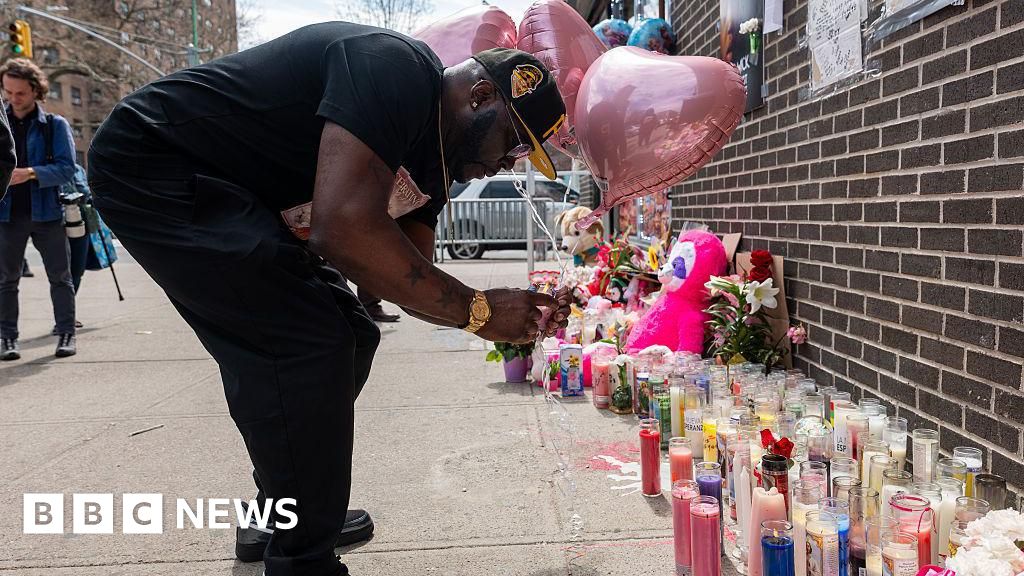
Man arrested in New York after deadly shooting of baby in stroller

In a recent and disturbing development, law enforcement officials have arrested two men in connection with the shooting of a seven-month-old baby in Williamsburg, stirring widespread concern across local communities and raising questions about increasing violence and instability. While on the surface this case pertains to a tragic crime in a specific American neighborhood, the implications extend far beyond borderlines, underscoring ongoing societal struggles that intersect with international issues of security, governance, and social cohesion.

The incident, which shocked residents and enraged advocates for safety, parallels broader themes of rising urban violence plaguing major cities worldwide. Analysts from organizations like the Global Security Initiative emphasize that such acts of violence serve as microcosms of larger, systemic challenges faced by nations attempting to maintain order amidst economic disparities, political unrest, and social fragmentation. The arrest signifies a crucial step in upholding justice, yet also highlights the pervasive nature of instability that global institutions warn could escalate if left unaddressed. Defense alliances and local governments alike are watching with concern, recognizing that localized violence can sometimes serve as a proxy for larger geopolitical tensions.

Experts on international security note that how nations respond to internal crises influences their global standing and stability. The United States, amidst its own domestic upheavals, finds itself under scrutiny for managing violence and social divisions. The Biden administration’s efforts to curb urban violence are often criticized for policy inconsistencies, a fact not lost on international observers who view internal stability as a precursor to effective diplomacy and global influence.
Furthermore, the recent arrests in Williamsburg could be seen as a microcosm of the climate of unrest that many governments are struggling to contain. Underlying these incidents are complex issues like economic inequality, racial tension, and institutional failures — all of which resonate with global narratives where internal societal battles often influence foreign policy decisions and international relations.

The arrest in Williamsburg underscores the fragile nature of social order and the critical importance of law enforcement in maintaining public trust. However, as historians and security analysts warn, these moments of crisis are often turning points — opportunities to chart new courses or deepen divisions. Institutions such as the United Nations have long advocated for integrated approaches to stability that blend security, social development, and economic resilience. Yet, the story in Williamsburg reminds us that borders are porous and conflicts transcend geography. The repercussions of such localized violence ripple outward, affecting national pride, international relations, and the very fabric of societies worldwide.

As the justice system moves forward with the case, the weight of history and the uncertainty of the future hang heavily in the air. The unfolding response to this tragedy may yet serve as a catalyst for change — or as a stark reminder of the ongoing struggles that define our era. In a world teetering on the brink of transformation, each event, no matter how small, becomes part of the larger narrative of history — a story still being written, with stakes higher than ever before.

Ralph Lauren, the U.S. style icon and poet of fashion, kicks off New York Fashion Week with signature swagger

Once heralded as the poet laureate of American style, Ralph Lauren has long held an iconic place in the pantheon of fashion legends. His brand emerged during the gilded era of the 1980s and 1990s, embodying an America of sportsmanship, vigor, and prosperity—think polished golf courses, classic baseball caps, and the timeless charm of a well-pressed shirt. Now, at the age of 86, Lauren is experiencing a remarkable renaissance, thanks largely to a societal shift that has seen the younger generation crave authenticity, tradition, and a sense of reassurance amid the chaos of today’s cultural landscape.

This resurgence isn’t just about nostalgia; it signifies a broader societal re-evaluation of societal values. Generation Z—those who grew up amid social upheaval, climate anxieties, and a new digital landscape—are turning away from the ultra-casual, street-styled wardrobe that once dominated youth culture. Instead, they are rediscovering the refined, preppy codes that Lauren made mainstream, such as knits, collared rugby shirts, and loafers. This shift reflects a craving for stability and *timeless elegance*—a visual reassurance that tradition and manners still matter. Fashion sociologists note that this return to classic American aesthetics is also an act of cultural reappropriation, reclaiming a sense of opportunity, optimism, and civility in an era often characterized by division.

Under the guidance of CEO Patrice Louvet, Ralph Lauren has harnessed this mood, translating it into a compelling social media-driven marketing strategy. The brand’s digital presence has helped it reconnect with a younger audience, many of whom prefer scrolling through TikTok or Instagram to traditional malls. The result? A consistent aesthetic that maintains familiarity—roughly 70% of products remain similar year after year—yet feels fresh and relevant. From the iconic quarter-zip sweater to the re-embraced loafers, Ralph Lauren’s products embody a tailored sense of American pride. High-profile endorsements from Taylor Swift and Olympic athletes, along with viral campaigns like “Ralph Lauren Christmas,” amplify this aesthetic, turning it into a cultural movement that resonates far beyond the fashion industry.

At the recent New York Fashion Week, Ralph Lauren showcased this aesthetic with grandeur, transforming a historic marble palace into a cozy, estate-inspired runway. Models strutted in velvet gowns, tailored evening suits, and layered casual-chic pieces, all designed to evoke the comforting yet aspirational lifestyle that connects the brand’s historical legacy with contemporary sensibilities. This was no ordinary show; it was a statement of how fashion can serve as a cultural anchor—offering beauty and stability in turbulent times. Meanwhile, the brand’s flagship store on Bond Street remains a hub for young consumers, where leather jackets might cost thousands, yet a coffee in the in-house café is just five pounds. Here, the synergy of luxury and everyday comfort becomes a social signature—affirming that high-end fashion isn’t just for the elite but can inspire a shared cultural identity.

Given this compelling cultural shift, the question now becomes: Is this revival of preppy Americana merely a fleeting trend or a fundamental redefinition of youth culture? As designers, sociologists, and marketers watch closely, a true revolution seems to be brewing—one built on nostalgia but rooted in a craving for authenticity, civility, and American optimism. In a world increasingly divided, fashion might just be the next frontier where youth find common ground——a mirror reflecting both the enduring American dream and the hopeful future that lay ahead. The next big question is whether this renewed appreciation for tradition will sustain itself or fade into mere trend hysteria. If history is any guide, it will be fascinating to see whether Ralph Lauren’s timeless signature continues to shape the cultural landscape, or if a new wave will rise, challenging the old guard in unexpected ways.

Hidden Underground Railroad Passage Discovered in New York Museum

The Merchant’s House Museum in New York City has long been celebrated as an architectural and cultural landmark, preserving 19th-century life in Manhattan. However, recent archaeological discoveries have unveiled a profound layer of historical significance, shedding light on its secret role as a refuge for escaped slaves during a tumultuous period in American history. Hidden beneath the floorboards of a nondescript hallway, investigators found a clandestine space—a small, enclosed cellar with a ladder leading to the street—used as an escape route for those fleeing bondage before and during the civil war. This remarkable find underscores the fact that America’s fight against slavery was not only fought in legislative halls but also in clandestine networks woven into the fabric of towns and cities like Manhattan.

This discovery offers critical insight into the operational depths of the Underground Railroad, a clandestine network of abolitionists who risked everything to ensure the safety of runaway slaves seeking freedom. The house’s hidden compartment, likely installed by Joseph Brewster, the original builder, suggests active involvement by abolitionist-minded residents—an extraordinary assertion in a city where white abolitionism was, historically, a minority view. Experts like Michael Hiller, a preservation attorney and professor, have described this find as “a generational breakthrough,” emphasizing its importance for understanding the underground resistance movement. The space, roughly two feet by two feet with an emergency escape ladder, indicates a well-constructed hideout designed to shield and expedite escape for enslaved individuals during a period when the Fugitive Slave Act of 1850 empowered bounty hunters and law enforcement to capture those fleeing slavery, often with local complicity.

More than just an archaeological curiosity, this discovery redefines the geopolitical impact of Northern cities like New York. Historically, the city’s elite and law enforcement apparatus often wavered in their stance on abolitionism, exemplifying the deep societal divide of the era. The role of abolitionists and free black communities in the city becomes more tangible through such findings, highlighting how local actions contributed to the broader abolitionist movement that ultimately reshaped the international order. In a recent statement, Christopher Marte, a New York councilman, emphasized the significance of the house as “a crucial part of the city’s history,” reminding us that the fight against slavery was fought on the streets as much as in parliamentary halls. This narrative resonates today amid ongoing geopolitical shifts, as nations grapple with their own histories of oppression and resistance, asserting that the struggle for freedom is universal and ongoing.

As the future of the Merchant’s House faces threats from urban development—most notably, plans for an adjacent eight-storey building—advocates warn that losing this emblem risks erasing the physical trace of a critical chapter in American history. Historians underscore the importance of preserving such sites, deeming them essential to understanding not only the past, but the ideological battles shaping the present. In an age where geopolitical tensions often ignite around questions of sovereignty, civil rights, and historical memory, this discovery leaves us with a stark reminder: the currents of history continue to flow beneath our cities, their weight felt most when least expected. As the shadows of the past collide with the ambitions of the future, the question remains—all of us are part of this unfolding story—will we listen to the silent echoes within this historic house and stand vigilant against the forces seeking to erase it?

Thanksgiving 2025: The Bold Takes Shaping Our Holiday Scene — The New York Times

In an era where personal well-being becomes increasingly intertwined with everyday life, a _shift_ in how we approach our leisure and wellness routines is unfolding—one that champions the importance of rebalancing between productivity and genuine self-care. This new mindset invites us to reconsider the traditional schedules and expectations, emphasizing that _living intentionally_ can transform the way we experience daily routines. As wellness experts like Dr. Deepak Chopra have pointed out, _the journey toward self-awareness_ begins with simple, deliberate choices—starting with how we structure our days and the foods we consume.

One of the most significant lifestyle changes gaining momentum is the push toward eat-at-normal dinner hours. Simply put, aligning meal times with _natural circadian rhythms_ not only enhances your metabolism but also frees hours otherwise lost in hasty dining. Reports from leading food journalists like Priya Krishna highlight the benefits of eating at 7:30 PM, which paradoxically grants you extra hours to _unwind_, _prep_, and even _enjoy_ a relaxed happy hour featuring dishes like _bhel puri_. This approach encourages a _more mindful appreciation_ of food, turning meal times into daily rituals rather than rushed episodes. The core message: when we manage our schedule proactively, we create space for _meaningful leisure_, which is essential for developing resilience and _personal wellness_.

In parallel, contemporary culture is venerating the concept of _authentic connection_—whether through setting the right playlist for dinner parties or engaging in games that cultivate _shared joy_. Chef Natasha Pickowicz advocates for something as simple as saying, _“This should be the least formal scenario you can imagine,”_ urging us to dismantle the overcomplicated social scripts. Her advice emphasizes that in embracing _casual, honest interactions_, we foster communities rooted in _authenticity_. Foods and entertainment are no longer mere indulgences but tools for creating _memories_ and _meaning_, connecting us to our roots and each other on a deeper level.

  • Adopt a regular meal schedule to align with your body’s natural rhythms.
  • Prioritize _intentional_ leisure activities—like game nights or soulful playlists—over superficial social rituals.
  • Embrace _authentic connections_, whether through meaningful conversations or shared experiences that foster _resilience_.

Ultimately, this lifestyle shift is about _embracing your true self_—your instincts, your passions, your health. Figures like Andy Baraghani remind us that _the playlist_ is as vital as the food served; it sets the tone and creates an environment of _genuine enjoyment_. As Eddie Huang eloquently states, _“Thanksgiving is different when your team’s playing,”_ urging us to infuse tradition with personal passion, turning routine holidays into _celebrations of self_ and _community_. When we choose the paths aligned with _our authentic desires_, we pave the way for a life that feels less like obligation and more like _a journey we’re proud to walk_. With each deliberate choice, we write our stories—filled with health, joy, and resilience—culminating in a lifestyle that celebrates the _fullness of being_.”

Qantas Unveils Game-Changing Ultra-Long-Range Airbus for Non-Stop Sydney to London & New York Flights

The global landscape of aviation and international connectivity is on the brink of a transformative shift, driven by the ambitious plans of Qantas and the ongoing evolution of aerospace technology. The Australian airline recently unveiled the first images of its next-generation aircraft, an Airbus A350-1000ULR, which is set to revolutionize long-haul travel by enabling non-stop flights from Sydney to London and New York starting in 2027. This development signifies more than just a new type of aircraft; it symbolizes a strategic move by Qantas to establish dominant global routes, reduce travel times, and secure competitive advantages in the fierce international aviation market. Such advancements, while promising for travelers, have wide-ranging implications for geopolitics, economic influence, and societal change.

In crafting this ultra-long-haul flight network, Qantas is positioning itself to challenge existing transcontinental aviation standards, with the aircraft scheduled for test flights in 2026 at Airbus’s Toulouse assembly line. The airline has ordered a dozen of these aircraft as part of its Project Sunrise, a strategic initiative aimed at connecting Australia directly to global hubs, bypassing traditional stopover points.

  • These non-stop flights will cut travel times up to four hours, significantly altering international mobility and opening new avenues for global commerce, tourism, and cultural exchange.

While some analysts, such as those at the International Air Transport Association, highlight the benefits of reduced travel time, critics warn that this acceleration of global connectivity could deepen geopolitical tensions and economic disparities. The dominance of Australia in long-haul aviation might diminish reliance on transcontinental hubs in Asia or the Middle East, impacting regional influence and shifting international power balances.

Beyond the technological and economic implications, these developments further underscore how decisions made by multinational corporations like Qantas impact societies worldwide. The push for faster, more direct routes exemplifies a growing trend towards minimizing geographical barriers, which, according to historians specializing in globalization, could lead to a new era of interconnectedness—yet also exacerbate existing inequalities. The emphasis on efficient global travel aligns with broader geopolitical strategies that favor the free flow of capital and people, often at the expense of local industries and national sovereignty. International organizations such as the World Trade Organization have noted that such advancements may foster economic growth but also pose challenges for labor markets, especially in regions less equipped to adapt to rapid technological shifts.

As the world hurtles toward an era where the boundaries of distance are continually compressed, the weight of history presses ever more heavily. The unfolding story of Qantas’s bold leap into ultra-long-haul aviation is not just about advancements in flight; it is a reflection of an era where technological progress and geopolitical ambitions intertwine, shaping the future of global society. Whether these developments herald a new age of prosperity or deepen divisions remains to be seen. What is certain, however, is that the decisions now being made will echo through history, for better or worse, as the world watches with bated breath—an unfolding saga where every mile traveled is a step further into a future yet unknown.

Ugandan Roots Shine as New York Mayor Earns Youths’ Respect

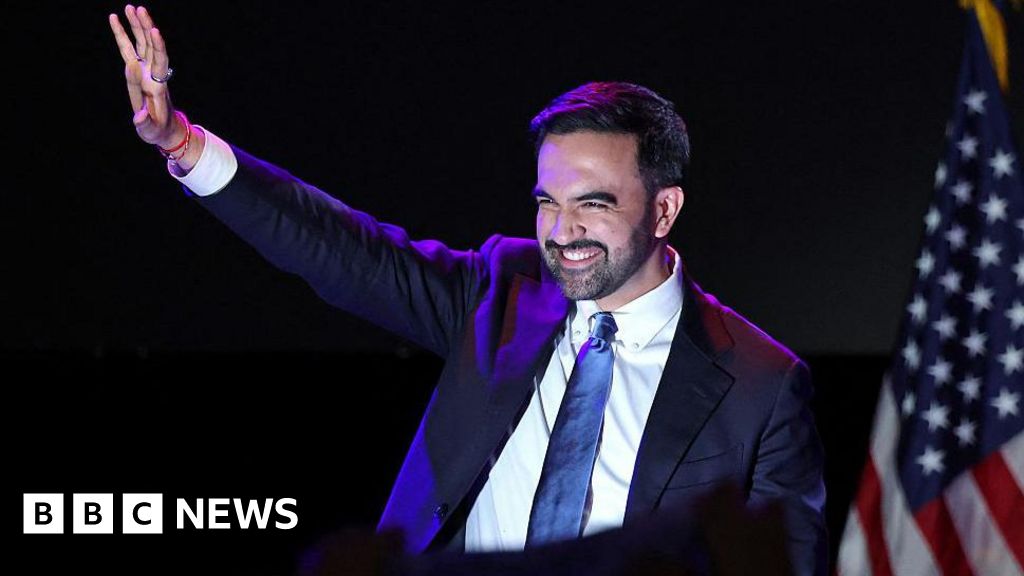
In an era marked by turbulent geopolitical shifts, the victory of Zohran Mamdani as the mayor of New York City has resonated far beyond the city limits, capturing the imagination of societies across continents. This young leader, born in Uganda and bearing dual nationality, exemplifies a new wave of global youth asserting influence in the heart of the world’s superpowers. His rise symbolizes more than local political achievement; it heralds a cultural and ideological shift that transcends boundaries, inspiring millions of young Africans and diaspora communities to view leadership as a matter of possibility and resilience.

According to international analysts, Zohran’s background embodies a narrative underpinned by the legacy of post-colonial Africa and the global reach of ideas rooted in freedom and justice. His father, Prof Mahmood Mamdani, a distinguished academic renowned for his anti-colonialist scholarship, deeply influences his worldview. Historians like Nzongola Nganza emphasize how such figures symbolize the awakening of a continent that has long struggled against the lingering effects of colonialism, yet now finds hope in its youth. Decision-makers in Africa observe that Zohran’s rise could energize local youth movements and challenge entrenched political dynasties, especially in nations like Uganda, where President Yoweri Museveni seeks yet another term amid a nation with one of the world’s youngest populations—median age just 16.2, according to the CIA World Factbook. The youthful demographic, combined with symbols like Zohran, has the potent potential to reshape regional politics and international perceptions of African capacity for self-determined leadership.

Meanwhile, South Africa also celebrates the achievement of a young leader whose formative years were shaped in its society. The imam of Cape Town’s Claremont Road Mosque, Rashied Omar, lauded Zohran’s early exposure to social justice activism rooted in South Africa’s own struggle against apartheid. This cross-continental narrative highlights how localized social movements are increasingly interconnected with global agendas, reinforcing a picture in which youthful leadership across Africa and its diaspora become a central force within global affairs. Such narratives are increasingly seen as a challenge to the old geopolitical order rooted in military might and economic dominance.

Across the Atlantic, international organizations and political analysts note that Zohran’s success heralds an ideological shift within the framework of global capitalism and multilateral diplomacy. For instance, the Economic Freedom Fighters (EFF) in South Africa hailed his election as a sign that “progressive, justice-driven leadership is rising even in the heart of the global capitalist order.” This sentiment underscores a burgeoning global movement skeptical of traditional power structures, seeking instead a leadership rooted in equity and multicultural diversity. Conversely, in Nigeria, a supporter of President Bola Tinubu and critics of former US President Donald Trump’s threats against Nigeria, Zohran’s name has become a symbol of resilience. His victory is framed as a counterpoint to external intimidation, illustrating how the younger generation perceives their capacity to withstand external pressures and internal injustices simultaneously.

Ultimately, the story of Zohran Mamdani embodies a critical moment in world history — a point where leadership, identity, and sovereignty intertwine in unprecedented ways. As nations like Uganda, South Africa, and beyond watch closely, the question remains: will this beacon of youthful promise catalyze a new era of multi-ethnic, multi-religious, and justice-oriented leadership? The answer, still bearing the weight of history, is yet unknown. What is certain, however, is that this moment signals the ongoing clash of old and new, a palpable tension in the ever-evolving narrative of our shared future, where the aspirations of the young now challenge the shadows cast by centuries of empire and despair. As the world turns, those who hold power must face the profound truth — the future belongs to those who dare to dream differently, for history’s next chapter is being written now, in the footsteps of figures like Zohran Mamdani.

Trump warns: Funding New York City could be tough if Mamdani wins mayor’s race

In the midst of political upheaval and shifting attitudes toward governance, New York City stands at a crossroads that exemplifies the broader ideological debates facing many urban centers in America today. With the upcoming mayoral race featuring innovative young candidates like Mamdani, the city is witnessing a vibrant movement that challenges traditional political paradigms. Mamdani, a 34-year-old state assemblyman, captured the imagination of many New Yorkers by positioning himself as a fresh voice committed to _restoring dignity_ and _empowering communities_. His victory in the Democratic primary signals a potential _cultural shift_—a move away from the old guard of political complacency to a more _youth-driven_ and _values-centered_ leadership.

The frontrunners’ contrasting visions underscore a broader theme: the importance of personal impact—not just on policy, but on the _lifestyle_ and _well-being_ of residents. While political discourse often fixates on budgets and legislation, the deeper ripple effect can be seen in how a city’s leadership influences everything from _public safety_ to _urban renewal_. Mamdani’s approach emphasizes _community dignity_, aiming to create an urban environment where everyone feels _valued_ and _safe_. This resonates with many young Americans who seek _authenticity_ and _accountability_ from their leaders, inspired by thought leaders like Jordan Peterson and organizations such as the Claremont Institute, which advocate _values-driven_ governance and _cultural renewal_.

On the other hand, the political landscape is tinged with echoes of the past, with figures like Andrew Cuomo remaining in the mix, positioning himself as a seasoned advocate during his tenure as governor. Yet, the contrast between the two candidates highlights a significant _lifestyle change_—a departure from _elite decision-making_ toward _grassroots engagement_. As debates unfold about federal funding and policies, the underlying question is: how will leadership influence not just the city’s finances, but its _cultural fabric_? The city’s $7.4 billion in federal funding exemplifies the sizable stakes involved, but more crucial is whom the city chooses to serve as its _moral compass_ and _visionary guide_. This dynamic underscores the vital role of _personal impact_: whether city officials foster _inclusivity_ and _liberty_ or succumb to _bureaucratic stagnation_.

  • Embrace the _power of community_—engage locally to understand your city’s unique _identity_.
  • Stay informed about _political shifts_ that influence your _quality of life_ and _personal wellbeing_.
  • Support leaders who prioritize _authenticity_, _dignity_, and _accountability_ in governance.

As the city’s narrative continues to unfold, it challenges each individual to reflect on what _leadership_ truly means in _everyday life_. The choices made today—be it at the ballot box or in everyday community engagement—shape a _culture of resilience_ and _hope_. For young Americans embracing the _lifestyle_ of self-empowerment and _public responsibility_, the future of New York is more than just a political story—it’s a collective _journey_ toward _renewed purpose_ and _lifestyle evolution_. In this ongoing _narrative of transformation_, the lessons are clear: _leadership rooted in integrity, connectedness, and vision_ can spark a _lifestyle revolution_, inspiring generations to believe in _the power of community_ and _their own capacity to effect change_.

Google’s New York Offices Hit with Bed Bug Outbreak — What’s Going on Behind the Screens?

Google’s New York City Campus Encounters Bed Bug Outbreak, Highlighting Industry Challenges

In a striking reminder that even the most innovative technological giants are not immune to operational disruptions, Google recently issued a notice to employees at its Chelsea campus in New York City regarding a potential bed bug outbreak. The incident underscores ongoing challenges in maintaining clean and healthy environments within the rapidly evolving landscape of tech hubs, despite the company’s status as an industry leader in innovation. Exterminators, equipped with advanced sniffing dogs, confirmed credible evidence of pests, prompting the immediate suspension of office activities until remediation efforts were completed.

Implications for Business Operations and Industry Standards

This recurring annual issue reveals a broader truth about high-density tech campuses—sustainable innovation demands resilient infrastructure and robust operational protocols. Google’s proactive approach, including additional inspections across its New York campuses, exemplifies industry best practices. The incident not only disrupts workflow but also raises questions about workplace hygiene standards in these high-profile centers of innovation. Such occurrences serve as a reminder to industry leaders and firms across sectors about the lurking vulnerabilities of large-scale physical environments, even amidst the digital revolution.

Broader Industry Trends and Disruptive Challenges

The recurrence of pest issues at Google’s offices is emblematic of urban tech hub insecurities faced by Silicon Valley giants and startups alike. Past incidents, such as the 2010 outbreak at Google’s Ninth Avenue offices, highlight a persistent challenge in managing the intersection of urban living conditions and cutting-edge workplaces. As industry analysts like Gartner emphasize, disruption isn’t limited to products or markets—it extends to operational resilience and health standards.

Future Outlook: Innovation Meets Continued Disruption

While these setbacks might seem minor against the epoch-defining scope of technological progress, they serve as crucial lessons for future innovation strategies. Technological disruption is often accompanied by unforeseen operational vulnerabilities, underscoring the need for integrating advanced pest management and environmental controls into corporate infrastructure. Experts like Elon Musk and Peter Thiel have long warned that disruption also requires resilience and agility—traits that will define market leaders in the coming decade. Going forward, the emphasis on health-driven innovation and sustainable workplace environments will be essential to sustain growth amid mounting external challenges. The lesson remains clear: as the artificial and digital realms accelerate, so must the robustness of their physical counterparts.

Social Media Auto Publish Powered By : XYZScripts.com