Matox News

Truth Over Trends, always!

What are NEETs, and why are they a rising concern among Britain's youth?
What are NEETs, and why are they a rising concern among Britain’s youth?

Societal Challenges: The Rising Tide of Neets and Society’s Response

In recent months, the British social landscape has been confronting a distressing reality: a growing number of young people are classified as Neet, a term that denotes those not in education, employment, or training. The latest figures from the Office for National Statistics (ONS) reveal that nearly 947,000 individuals aged 16 to 24 fall into this category, accounting for approximately 12.7% of the demographic. Most of these Neets are classified as economically inactive, which signifies a troubling disengagement from the workforce and educational opportunities that are vital for individual growth and societal stability. Sociologist Peter Saunders warns that this persistent trend threatens to foster a generation with diminished prospects, potentially burdening communities with long-term socio-economic difficulties.

The causes behind this surge are multifaceted but deeply intertwined with economic shifts, health issues, and social inequality. The Youth Futures Foundation emphasizes that a significant driver is the rise of **long-term sickness among youth**, notably mental health conditions. Approximately 18% of Neets confront mental health challenges that hinder their ability to access opportunities. Additionally, those with learning difficulties are disproportionately represented within this group. The challenging job market, particularly in sectors like hospitality that traditionally employ a high volume of young people, has grown more hostile. The falling number of vacancies and the increased reliance on low-paying, unstable jobs exacerbate this issue, leaving many youth stranded on the sidelines, unable to contribute meaningfully to their communities.

Society’s Response: Government Initiatives and Community Strategies

Recognizing the urgency, the government has announced measures aimed at reinserting these young individuals into the fabric of society. In her November Budget, Chancellor Rachel Reeves committed £820 million over three years to fund the “youth guarantee”, targeting 18 to 21-year-olds who have been inactive for over 18 months. This scheme promises to provide access to apprenticeships, training, and dedicated work placements—crucial stepping stones toward sustainable employment. Reeves articulates a moral imperative—*”to give young people the support and opportunities they deserve,”*—yet experts like David Hughes from the Association of Colleges argue that the funding remains insufficient to address the scale of the problem.

Precise actions include offering six-month paid work placements for those persistently inactive, with an emphasis on incentivizing participation through potential benefit sanctions for refusal. Additionally, schemes to make internships and apprenticeships in small and medium businesses entirely free aim to create accessible pathways into the workforce. An independent investigation led by former Health Secretary Alan Milburn will further probe the underlying social and health issues, particularly focusing on mental health and disability’s role in youth inactivity. It’s a comprehensive response that reflects an understanding of how social issues ripple through families, disrupt community cohesion, and challenge schools and local institutions.

The Broader Spectrum of Community and Regional Efforts

Beyond Westminster, regional initiatives bolster national efforts, illustrating a shared understanding that systemic change requires localized action. In Wales, the Young Person’s Guarantee offers young adults tailored support for apprenticeships, employment, or entrepreneurship. Similarly, Scotland‘s Developing the Young Workforce (DYW) scheme emphasizes early intervention and formal mentorship, acknowledging that transforming the future of youth necessitates community-driven resilience and tailored solutions. These initiatives caringly recognize that social cohesion hinges on offering every young person the opportunity to find their footing amidst turbulence. While funding and programs provide essential scaffolding, social commentators stress that true empowerment stems from addressing gaps in mental health support, combating entrenched inequality, and fostering environments where aspiration is nurtured, not suppressed.

As society stands at this crossroads, the challenge lies not only in immediate intervention but in cultivating a culture that values the vibrant potential of its youth. The story of those labeled as Neets is, in essence, a mirror reflecting our collective priorities—whether we choose to invest in hope and resilience or accept a future shadowed by disenfranchisement and stagnation. In this societal journey, there remains a quiet, persistent hope that through committed community efforts and moral resolve, society can weave a new narrative—one where every young person can rise, contribute, and renew the social fabric for generations to come. Their future, like society itself, depends on whether we dare to prioritize hope over apathy, action over silence, and unity over division.

Rising Stars Shine in Thrilling Weekend of Youth Sports Competition

The Dynamic Landscape of USMNT’s World Cup Roster

As the U.S. Men’s National Team (USMNT) gear up for another thrilling World Cup campaign, attention quickly turns to the roster selection process. Typically, there are familiar faces that fans can expect to see on the pitch, yet there are also those surprising inclusions that can shift the dynamics of the team. The question remains: who will emerge as the game’s unsung heroes?

Historically, the USMNT has featured a mix of established stars and rising talents. Coach Gregg Berhalter faces the intriguing challenge of balancing experience with youthful exuberance. As highlighted by commentator Bobby Warshaw, the uniqueness of this competition often leads to the emergence of “wildcards,” players who perform exceptionally well when the pressure is on. This year, expect competition amongst potential starters to be fiercer than ever.

Game-Changing Moments to Watch

  • Last-minute goals that can turn the tide of matches.
  • Players like Christian Pulisic and Weston McKennie showcasing their influence on the field.
  • Potential breakout performances from younger players looking to make their mark.

The importance of these game-changing moments cannot be overstated. As each player steps onto the field, the weight of expectation builds, reaching beyond personal ambitions. Berhalter’s strategic acumen, combined with the grit of his players, has the potential to shape a memorable World Cup journey. Individual performance will undoubtedly matter, but how the team collaborates as a unit will be crucial in achieving success.

As the countdown to kickoff draws near, fans are reminded that the essence of sports transcends mere victories and defeats. The camaraderie and spirit of competition unite a nation, fostering a deep sense of pride and connection. Regardless of the outcome on the scoreboard, the true beauty of sports lies in the stories that unfold, the bonds forged, and the rivalries that enrich the fabric of our culture. As the USMNT takes the field, they carry with them not just their aspirations, but also the hopes of fans rooting for them from every corner of the nation.

Source link

Rising Stars Shine as Youth League Championship Kicks Off with Thrilling Matches

Winter Signings Spark Excitement in the Sports World

As the winter sports season heats up, the recent trades and player signings have garnered significant attention from fans and analysts alike. Coaches, athletes, and commentators are weighing in on the implications of these transactions, each bringing their own unique perspectives to the conversation. This year’s winter signings set the stage for what promises to be a thrilling backdrop to the latter part of the season.

With numerous teams making bold moves, the offseason has not fallen short of drama. The Chicago Bulls made headlines by acquiring center Nikola Vucevic, hoping to bolster their frontcourt presence. In a recent interview, head coach Billy Donovan emphasized the importance of this signing, stating, “We are looking to elevate our game and strengthen our chances at a playoff run.” Key trades like this one can often define a team’s trajectory and their playoff aspirations.

In addition, analysts are thrilled about the Los Angeles Lakers landing sharpshooter Buddy Hield in a controversial trade that challenged conventional wisdom. Sports commentator Stephen A. Smith remarked, “This move rekindles the Lakers’ shooting prowess, crucial for their championship ambitions.” The deal underscores how pivotal such signings can be for teams striving for success. The ripple effects of these trades are felt throughout the league, as teams realign their strategies in tandem with new personnel.

  • Nikola Vucevic joins the Chicago Bulls and brings an all-star caliber presence.
  • Buddy Hield strengthens the Los Angeles Lakers as a critical shooter.
  • Coaches are adjusting game plans in light of new acquisitions.

In conclusion, as we dive deeper into this thrilling season, the unifying force of sports continues to shine through the highs and lows of each game. These trades represent more than mere statistics; they are the lifeblood of team transformations. Every signing has the potential to rewrite narratives, cultivate rivalry, and bring communities together. As fans rally behind their teams, the shared journey through victory and defeat strengthens the bonds that sport so splendidly fosters. In the end, it is not just the scoreboard; it is the heart and soul that echo through every arena.

Source link

Hong Kong Tower Fire Claims 128 Lives, Youth Voice Demands Action

The recent fire outbreak at Wang Fuk Court in Hong Kong marks one of the most devastating tragedies in the territory’s modern history, with **128 lives lost** and dozens still missing. This catastrophe underscores profound failures in building safety standards and , igniting questions about how local governance and international investors manage safety protocols amidst ongoing urban renovations. As rescue operations conclude and emergency agencies tally the damage, the impact on Hong Kong’s societal fabric and global image becomes unmistakably clear, reflecting broader issues of urban neglect and corruption entrenched in the city’s development.*

This disaster, which saw flames rip through seven of the eight apartment blocks, speaks to systemic vulnerabilities. Firefighters worked tirelessly, with over 2,300 personnel involved in containment efforts, but the rapid spread was exacerbated by combustible exterior materials such as Styrofoam, which officials now link to the uncontrolled blaze. Experts from the International Fire Safety Organization warn that such negligence is indicative of a larger pattern—where cost-cutting and lax regulation compromise safety, especially in densely populated zones with aging infrastructure. Moreover, testimonies of missing safety alarms and allegations of turned-off fire systems by construction workers reveal a disturbing neglect that goes beyond mere oversight, pointing to potential criminal negligence***. These revelations resonate internationally as a warning of what unchecked corruption and profit-driven development can lead to, endangering vulnerable populations.

International analysts and historians have already contextualized this tragedy within Hong Kong’s longstanding struggle with urban density and governance. The 1948 fire that claimed 176 lives remains a dark chapter, and the current incident has reignited debates about urban planning failures—especially amidst recent protests over housing affordability and public safety. The fact that nearly 40% of residents are seniors who have lived in Wang Fuk Court since its 1983 construction emphasizes rising concerns that neglect of the elderly and marginalized communities is a symptom of broader societal disparities—disparities widened by the interplay of local government policies and international economic pressures. Such failures have drawn sharp criticism from international watchdogs and local civil society groups, who argue that the tragic loss could have been prevented had safety oversight been prioritized over profit gains.

The geopolitical repercussions extend beyond Hong Kong’s borders. As a major global financial hub, the city’s stability is vital to international investors and regional powers, notably China, whose leadership faces increasing scrutiny over transparency and governance. The incident fuels broader worries about urban resilience in the face of rapid development and challenges international perceptions of Hong Kong’s autonomy and rule of law. Some experts suggest that this crisis could catalyze reforms, but others caution it might deepen authoritarian tendencies, where accountability remains elusive. The story of Wang Fuk Court is thus not merely a local tragedy, but a symbol of the struggle between neglect and resilience, a chapter still being written in a consequential saga that shapes the very future of Hong Kong and, by extension, China’s global image.

As smoke clears and the city grapples with the enormity of the loss, history urges caution. Every life lost etches a scar into Hong Kong’s collective memory—an indelible reminder that the spirit of a society is measured by how it confronts its darkest hours. Yet, as with all moments of profound crisis, the question remains: will this catastrophe serve as a catalyst for meaningful reform, or will it fade into the backdrop of ongoing urban struggles? The weight of this tragic chapter lingers, leaving the world with a haunting realization—that sometimes, the flames of destruction threaten to consume not just buildings, but the very foundation of societal trust and safety, until a return to vigilance becomes the only path forward.

Starmer under fire from Labour youth over U-turn on workers' rights bill
Starmer under fire from Labour youth over U-turn on workers’ rights bill

Global Implications of the Labour Rights U-turn Amid Political Turmoil

In a remarkable turn of events that has sent shockwaves across the international political landscape, Britain’s Labour Party appears to be embroiled in a seismic policy shift that risks fundamental upheaval within its own ranks. Campaign promises made openly in the party’s manifesto, such as introducing ‘day one’ protections from unfair dismissal, have been swiftly abandoned in the face of mounting political and economic pressure. This retreat, characterized by a notable U-turn on employment legislation, has rekindled deep divisions within Labour, with its former allies and critics questioning the party’s commitment to its core principles.

Historian and political analyst Dr. Michael Armstrong notes that such policy reversals by major parties are not uncommon in parliamentary democracies, but the scale and public manifestation of Labour’s pivot mark a distinctive moment of crisis. Official statements from figures like Angela Rayner, once a prominent advocate for workers’ rights, highlight the internal tensions; her strong opposition to the *climbdown* underscores the broader implications for Labour’s social base and its relationship with labor unions. Union leader Sharon Graham has openly condemned what she describes as a “shell of its former self” legislation, warning that the Bill’s dilution—particularly the exclusion of reforms like fire and rehire bans and zero-hours contract restrictions—severely undermines trust in Labour’s promises.

The geopolitical impact of Britain’s internal discord reaches beyond its borders, serving as a cautionary tale to global democracies grappling with electoral mandates and governing realities. International organizations and foreign diplomats observe with concern the apparent unraveling of Labour’s electoral commitments, pondering whether this signals a broader trend of political expediency overriding genuine reform. Some analysts suggest that this collapse of ideological clarity could embolden populist and nationalist forces elsewhere, capitalizing on perceived governmental unreliability. As geopolitical strategists warn of a potential decline in political stability within the UK, European allies and transatlantic partners scrutinize the developments for signals of increased volatility, which could influence investment climates, alliance strategies, and the future of the UK’s role on the world stage.

In the hallowed halls of Westminster and the dusty corridors of history, this moment will be remembered as a symbol of the complex dance between policy promises and political pragmatism. As the battle lines within Britain are redrawn—highlighted by colorful debates over leadership ambitions, party loyalty, and the very fabric of democratic representation—the weight of the decision lingers. With Britain teetering on the cusp of a pivotal crossroads, the choices made today threaten to echo through generations, leaving an indelible mark on the annals of modern democracy. The unfolding saga of Labour’s legislative retreat serves as a stark reminder that, in politics, the line between ideals and reality is often blurred—a domain where the fate of nations and societies is ultimately forged amidst chaos and compromise, in the shadow of history still waiting to be written.

Up-and-Coming Stars Shine in Thrilling Youth Sports Championships

Real Madrid Eyes Haaland: A Shift in European Football?

In a move that could shake the foundations of European football, Real Madrid is reportedly considering a transfer for Manchester City‘s sensational striker Erling Haaland. Known for his extraordinary scoring prowess, Haaland’s potential move has stirred the imagination of fans and analysts alike. As reported in recent Transfer Talk, the transfer window could see major upheaval, and few moves would be as impactful as this one.

Consistently lighting up the pitch with his remarkable ability, Haaland has made a name for himself as one of the most dynamic players in the game today. Under the guidance of Manchester City coach Pep Guardiola, Haaland has amassed an impressive tally of goals, solidifying his reputation as a game-changer. Commentator Gary Neville remarked, “Haaland is a once-in-a-generation talent. If he makes this leap to Real Madrid, it will redefine the landscape of European football.”

Match Highlights and Takeaways

  • Haaland’s tally of goals this season: 25 in 29 matches.
  • Real Madrid boasts an illustrious history, winning the UEFA Champions League a record 14 times.
  • The possibility of reshaping team dynamics, potentially bringing an unprecedented level of synergy with players like Vinícius Júnior.

Such a high-profile transfer would not only elevate Real Madrid but also intensify the rivalry in La Liga. The impact on both clubs, fanbases, and the league’s competitiveness could be monumental. Real Madrid’s reputation as a global powerhouse may be further solidified with Haaland leading the attack, which could also influence future transfer negotiations across Europe.

In the world of sports, moves like this transcend mere statistics and more resemble the stirring narratives of epic tales. Seasoned fans and newcomers alike rally behind their clubs, finding common ground in shared passions and the unifying magic of competitive spirit. As Real Madrid considers this strategic acquisition, the beautiful game reminds us that, amid rivalries and victories, it is the tenacity and heart of the players that truly binds fans together.

Source link

Rising Stars Shine: Youth Athletes Dazzle at National Championships

Warriors’ Stephen Curry Faces Injury Setback Against Rockets

The Golden State Warriors suffered a significant blow during their recent clash against the Houston Rockets, as star guard Stephen Curry exited the game with a right quad contusion. The injury occurred during a tense fourth quarter filled with critical plays that could have shifted the momentum of the game. As Curry limped off the court, Warriors fans held their breath, realizing that the cornerstone of their offense may now be facing an uncertain future.

During the contest, Curry demonstrated why he is considered one of the league’s most elite players. However, collision after collision marked a physically demanding final period. Missing Curry would not only impact the Warriors’ immediate game plan but could also shake their aspirations for a deep playoff run. Coach Steve Kerr acknowledged the gravity of the situation, stating, “We are hopeful, but we need to wait for more info after the MRI.” The coaching staff’s experience will now be measured by how they adapt in the absence of their franchise player.

In the aftermath of the game, commentator Mark Jackson highlighted how crucial Curry’s contribution is to the team, noting, “He is the engine that drives this squad. Without him, we are in a battle.” The Warriors must rally around their injured leader and find a way to grind out wins. Players like Draymond Green and Klay Thompson will need to step up in Curry’s absence, showing resilience and delivering strong performances to keep the Warriors competitive.

  • Curry’s scoring average of 29.5 points per game is among the highest in the league.
  • Previous injuries have seen the Warriors struggle, emphasizing the need for depth in their roster.
  • The MRI results will be crucial in determining the length of his recovery.

This moment reminds us that sports transcend beyond mere victories and losses. In times of hardship, teams often discover new camaraderie and determination, rallying their fanbase in support of their cause. As the Warriors forge their path forward, they can take solace in knowing that their journey is fueled not just by scores, but by the collective spirit of their community. Through trails and tribulations, the game binds fans and players alike, shaping stories that will last far beyond any season.

Source link

NHS doctor suspended for alleged antisemitic social media posts—Concern rises among youth over hate speech

The recent suspension of Dr. Rahmeh Aladwan, a trainee in trauma and orthopaedics at the NHS, highlights a disturbing intersection of social media misconduct and the broader geopolitical tensions surrounding antisemitism in the digital age. The Medical Practitioners Tribunal Service (MPTS) in the United Kingdom placed her on a 15-month interim suspension amidst allegations that her online posts contained content supporting terrorist organizations such as Hamas, propagated antisemitic conspiracy theories, and even used Nazi imagery. These acts are not isolated incidents but are symptomatic of rising global concerns over hate speech and the erosion of social cohesion, especially within highly sensitive societal institutions like healthcare and law enforcement.

International observers and analysts are now wary of how such incidents ripple beyond the confines of national borders, affecting the public’s trust in institutions and the fabric of multicultural societies. According to prominent international organizations and senior historians, the proliferation of extremist rhetoric online, particularly when backed by figures within societal institutions, poses a serious threat to what national security experts term cultural stability. The case raises a pressing question: How should nations balance the right to free expression with the need to protect communities from hate and extremism? The GMC and MPTS have justified their cautious approach, emphasizing that Dr. Aladwan’s conduct could harm public confidence in the healthcare system and fuel social divisions—an outcome that transcends the UK and impacts the global image of medical professionalism amid geopolitical unrest.

This incident comes at a time when Western nations are grappling with their own internal divides, often exploited by those seeking to manipulate societal fears for political ends. As nations seek to clamp down on hate speech, the broader geopolitical impact becomes evident: policies regarding internationally proscribed organizations such as Hamas have become a flashpoint, affecting diplomatic ties and the fight against extremism. Many analysts warn that permitting unchecked hate speech under the guise of political debate; risks emboldening terrorist sympathizers and radicalizing segments of society, thereby undermining national security. Understanding these dynamics is crucial, particularly as civil rights advocates call for greater oversight, yet critics argue that overreach could threaten free speech and political dissent. The UK’s response, including the ongoing review of Dr. Aladwan’s case, underscores the delicate balancing act between safeguarding societal cohesion and respecting individual freedoms—an issue faced universally, from Europe to the Middle East.

Historically, societal shifts driven by extremism have often left a lasting scar on nations’ collective memories. As historians and international security analysts observe, the current wave of online radicalization mirrors past periods of societal upheaval, often leading to conflict, division, and loss of life. The unfolding case of Dr. Aladwan is, therefore, more than an isolated disciplinary action; it is a stark reminder that history is watching us, and the decisions made today could shape the geopolitical landscape for generations. The fight against hate and extremism is not merely a national concern but a chapter in the ongoing battle for global stability. As institutions examine their roles and responsibilities, the weight of history presses on regulators to carefully weigh free expression against the imperative to defend vulnerable communities. The world remains on a knife’s edge, with the echoes of past conflicts whispering that, in times of rising division, the choices of today may determine whether future generations will remember peace or be haunted by the shadows of extremism.

Georgia's Pro-EU Youth Push Back a Year After Halted Accession
Georgia’s Pro-EU Youth Push Back a Year After Halted Accession

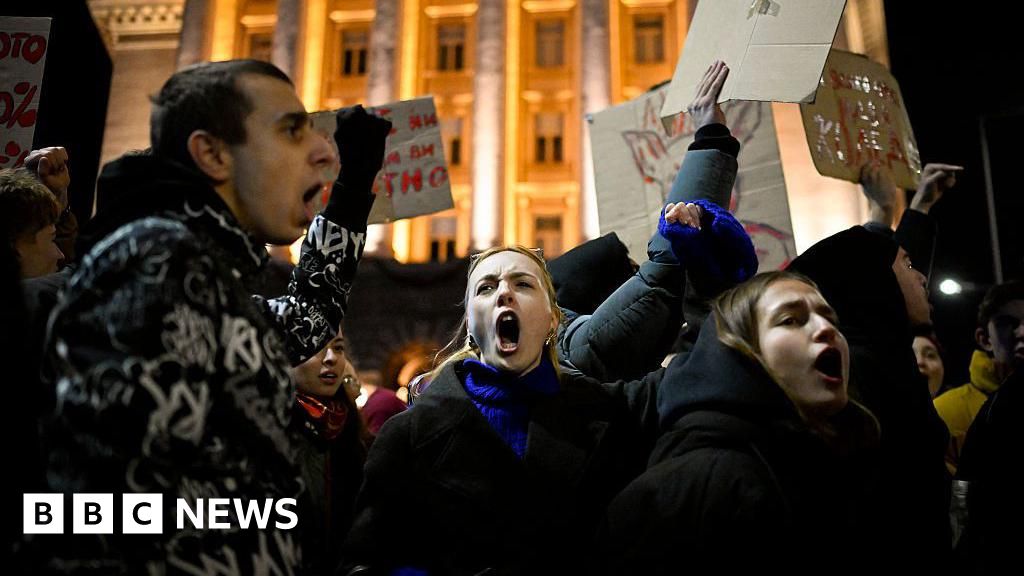
In the heart of the Caucasus, Georgia finds itself embroiled in a profound crisis that threatens its very future as a democratic nation. The recent protests in Tbilisi, which have persisted for over a year, signal the resilience of the Georgian people fighting against what they perceive as authoritarian overreach by their government. Fueled by reforms that threaten civil liberties and hinder Georgia’s European aspirations, these demonstrations reflect a broader diplomatic struggle over the direction of Georgian society. Analysts warn of a shift towards authoritarianism reminiscent of post-Soviet Russia, with significant geopolitical repercussions for Western interests in the region.

  • The Georgian government, led by Prime Minister Irakli Kobakhidze and the ruling Georgian Dream, has enacted sweeping legislation targeting protest activity, civil society, and media independence, drawing criticism from European institutions and democracy advocates worldwide.
  • Opposition figures, including respected journalist Mzia Amaglobeli, have faced arrest, imprisonment, and intimidation, sparking international concern about the erosion of civil liberties.
  • Despite these hardships, hundreds of Georgians remain committed to their demonstrations, inspired by the memory of the Rose Revolution, and driven by fears that their country is drifting into Russian-style autocracy.

Observers contend that the Georgian government’s policies are not merely domestic measures but are deeply entwined with Russia’s strategic interests. The influential billionaire Bidzina Ivanishvili, a key figure behind the scenes, has longstanding ties to Russia, fueling suspicions that Georgia’s leadership is acting in the Kremlin’s favor. As European Union officials recently delivered a “devastating” report, asserting that Georgia is now considered an EU candidate “in name only”, the nation’s fragile path toward integration remains more distant than ever. The crackdown on opposition—including the imprisonment of opposition leader Zura Japaridze—underscores the growing authoritarian trend, with critics warning that Georgia risks losing the democratic principles it fought so hard to secure.

The geopolitical impact of this crisis stretches beyond Georgia’s borders. Western nations are increasingly alarmed as democratic backsliding in Georgia threatens to destabilize the region, divide pro-European factions, and embolden Russia’s ambitions. Historians and policy analysts assert that the current crackdown echoes the post-Soviet pattern: a combination of authoritarian repression, suppressing free speech, and undermining electoral legitimacy, all under the guise of maintaining stability. The European Parliament’s recognition of Georgia’s faltering democratic trajectory marks a stark warning: unless there is international intervention, Georgia could become a new front in the contest between Western liberal values and Russian autocratic authoritarianism.

As Georgia’s protests continue amidst a climate of repression, the nation’s future remains a poignant symbol of a broader struggle for sovereignty and democratic integrity. The streets still echo with chants of freedom—a movement that, despite the government’s harsh tactics and the shadows of Russia’s influence, refuses to be silenced. The story of Georgia’s fight is now etched into the grand narrative of history—a chapter that will determine whether it can reclaim its European destiny or be swallowed by a new era of autocratic darkness. The weight of these moments rests heavily on the shoulders of the international community, as they watch a proud nation teeter on the brink—an unresolved story, yet unwritten, that will echo through generations to come.

Zambia's 'Fix-It' President Confronts Youth Rage and Stone-Throwing
Zambia’s ‘Fix-It’ President Confronts Youth Rage and Stone-Throwing

Unfolding Crisis in Zambia: Leadership in the Crosshairs

In a nation teetering on the edge of political tumult, Zambia‘s President Hakainde Hichilema is confronting burgeoning internal unrest and a fraught diplomatic landscape. Since his victory in the 2021 elections, Hichilema has sought to steer his country toward economic stabilization, capitalizing on reforms to renegotiate debt and attract international investment. Yet, the persistent struggles of power shortages, inflation, and widespread dissatisfaction reveal that his efforts have yet to fully resonate with the average Zambian, especially as the August 2026 elections draw near. Notably, a recent incident where Hichilema was violently attacked during a rally underscored the fragility of his presidency and the deep-rooted discontent simmering within the nation.

The internal unrest has provoked concerns beyond its borders, with regional analysts warning that Zambia’s instability could ignite a broader uprising of societal discontent that spills across neighboring nations. The president’s speech defense, where he emphasized ongoing national achievements, contrasts sharply with the hardships faced by ordinary citizens, many of whom are suffering under the weight of power outages and high living costs. The power crisis deepened recently when droughts decimated hydroelectric capacity, exposing Zambia’s vulnerability to climate variability and underscoring its reliance on unstable energy sources. Experts warn that this energy crisis could hamper the country’s economic recovery, further disgruntling voters and fueling opposition sentiments.

International Reactions and the Geopolitical Ramifications

Global institutions and international analysts have started to voice concern that Zambia might devolve into political chaos if unrest escalates, potentially destabilizing the southern African region. The African Union, along with the World Bank and other diplomatic bodies, emphasize the importance of safeguarding democracy and stability in Zambia. Yet, critics argue that Hichilema’s government is increasingly becoming encumbered by accusations of using oppressive laws against opposition figures, a trend that analysts say echoes authoritarian tendencies. Historically, Zambia has been viewed as a beacon of peaceful transition in a volatile continent; however, recent violence and suppression efforts threaten that reputation, raising alarms among international watchdogs.

Meanwhile, Hichilema maintains that his government upholds the rule of law and that measures taken against critics are necessary to renew order and promote reform. His stance aligns with his broader strategy of balancing reform and control amidst mounting pressure from both political opponents and civil society. This delicate dance has drawn sharp criticism from academia and local opposition, questioning whether the regime’s focus remains solely on consolidating power rather than fostering genuine societal growth. If Zambia continues down this path, many fear the nation’s hard-won democracy could be compromised, potentially setting a dangerous precedent for the region’s future.

Legacy in the Making: The Future of Zambia’s Political Journey

As Hichilema pushes forward with controversial constitutional reforms, including plans to expand parliamentary representation, opposition voices claim he is betraying the democratic ideals he once championed. The tipping point may come when economic hardships and political repression collide, forcing citizens to choose between stability and upheaval. Zambia’s saga is emblematic of the broader struggles faced by aspiring developing nations caught in the storm of internal reform and external pressure. Will the nation’s resilience withstand the rising tide of discontent, or will its people’s aspirations be drowned in the sound of stones thrown in anger?

History continues to write itself in Zambia’s streets and council chambers, a reminder that one nation’s internal conflicts can quickly reverberate across borders and redefine regional geopolitics. The weight of this unfolding chapter remains uncertain, yet it is clear: Zambia stands at a critical crossroads — with leaders and citizens alike holding the pen that will inscribe its future into the annals of history.

Social Media Auto Publish Powered By : XYZScripts.com