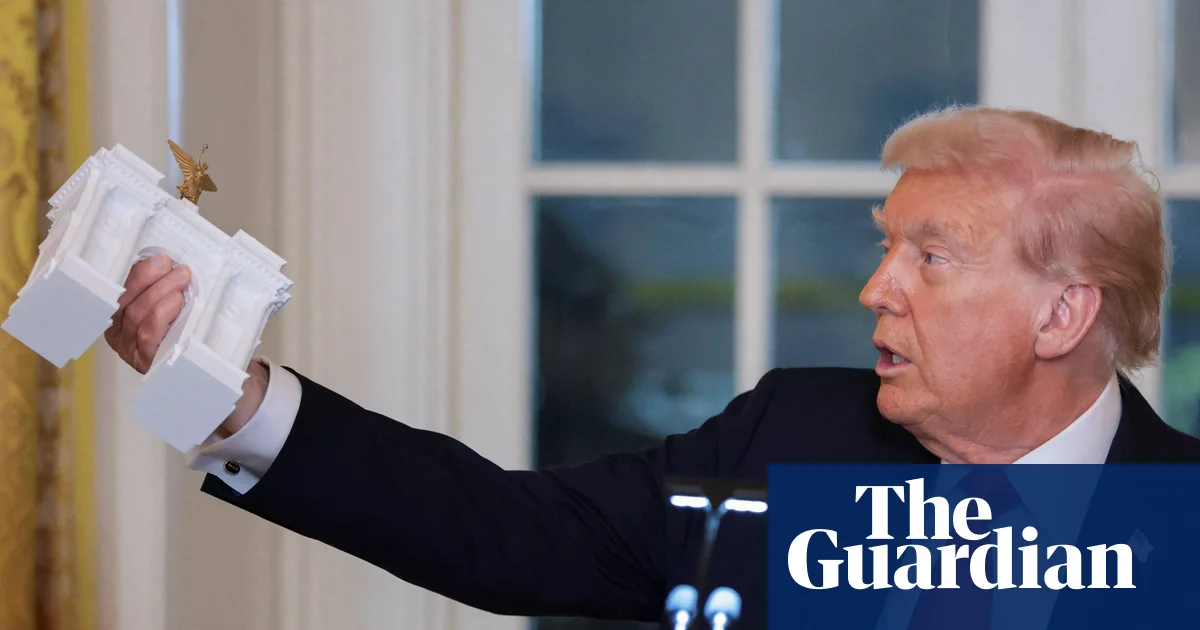
United States Domestic Politics: A New Symbol of Priorities Amid Growing Struggles
The recent revelations from President Donald Trump regarding the construction of a triumphal arch in Washington, D.C., mark a significant shift in the narrative of American governance. Trump’s praise for his domestic policy chief, Vince Haley, and the unveiling of a project reminiscent of historic monuments have sparked widespread controversy. While the nation faces an alarming affordability crisis—with health insurance premiums expected to surge for over 20 million Americans—and rising tariffs that inflate everyday costs, the administration exhibits a focus on symbolism over substantive policy solutions.
Analysts and international observers have voiced concern about the geopolitical implications of such misplaced priorities. The decision to channel federal funds into a decorative monument, rather than address deeply rooted economic hardships, underscores a disconnect between political spectacle and urgent societal needs. According to historians specializing in American greatness and public policy, this emphasis on monument-building amid hardship echoes a recurring pattern in history where national leaders prioritize legacy projects over sustainable economic reform.
Symbolism Versus Substance: The American Dilemma
During a White House holiday event, Trump bandied about grandiose visions of a triumphal arch, situated near the Lincoln Memorial and Arlington Cemetery—sites of profound national significance. He boasted that the project would eclipse Napoleon’s famous arch, representing a bold, even patriotic, statement—yet critics argue that this lends itself more to ego than effective governance. The project’s costs and its symbolic resonance are raising alarms among policymakers and social critics, who see it as emblematic of a decadent distraction from economic realities faced by millions.
International organizations such as the United Nations and think tanks like the Cato Institute have warned that such public displays at a time of economic turmoil may further erode confidence in leadership. Economists warn that with insurance premiums set to double or even triple, and tariffs contributing to inflation, the American public’s trust in government’s ability to solve real problems could further decline. As the United States grapples with these domestic issues, the federal government’s focus on monuments risks redefining its priorities in a manner reminiscent of late-stage empires of history—more obsessed with legacy than legacy of prosperity.
The Impact on Society and Global Power
Global perceptions are also shifting. China and Russia continue to watch closely, aware that internal distractions and apparent neglect of domestic welfare could weaken America’s standing on the world stage. Analysts warn that such internal divisions and the perception of elected leaders engaging in emblematic excess could embolden adversaries and weaken alliances. Moreover, the country’s youth, increasingly burdened by economic hardship, are beginning to question the legitimacy of a political elite more invested in spectacle than substance.
For many, the decision to build an imposing arch rather than tackle tangible economic issues signals a dangerous slide into prioritizing superficial symbols over sustainable policy reforms. As history’s course continues to unfold, the coming months pose a critical crossroads—whether the nation can rally around meaningful change or succumb to the divisions created by misplaced priorities and hollow promises. The weight of history presses down, reminding us that the true monument of a nation’s greatness lies not in its monuments, but in the resilience and grit of its people amid the stormy times ahead.