Matox News

Truth Over Trends, always!

Australia updates: Hybrid car sales surge as youth shift from petrol; Iranian footballer departs despite asylum offer

In a compelling turn of events, Australia finds itself at the crossroads of shifting geopolitical and societal dynamics, as recent reports reveal a significant increase in the adoption of hybrid and electric vehicles, paralleled by the controversial departure of Iranian women’s football squad members seeking asylum. The latest data from the Australian Automative Association (AAA) underscores a transformative moment in the nation’s motor industry, with hybrid vehicles reaching record sales—a clear testament to the global push towards greener mobility. In the final quarter of 2025, hybrids accounted for 19.13% of all new light vehicle sales, outperforming traditional petrol cars which now constitute a mere 66.3% of the market, down from over 70%. Such figures are emblematic of Australia’s broader aim to lead in environmental transition while grappling with its geopolitical obligations, especially amidst surging fuel prices attributable to regional tensions in the Middle East.

Parallel to this shift, the geopolitical impact becomes starkly evident in the recent decision by several Iranian women’s football team members to leave Australia after being granted asylum—an act illustrating the nation’s delicate positioning on human rights, international diplomacy, and domestic security. The Australian government, led by Catherine King, publicly expressed that these women faced “enormous pressures” both from their homeland and global circumstances, which compelled them to make “incredibly hard” decisions. historians and analysts suggest this episode reflects shifting international expectations around asylum policies and human rights, especially as nations face increased scrutiny over their response to politically sensitive issues. The dilemma underscores how decisions by athletes—once confined to sporting arenas—now serve as microcosms of a larger geopolitical narrative, wherein societal values and foreign policy intersect with the personal stories of those seeking refuge.

Amid these tensions, Australia prides itself on strategic preparations to mitigate global turmoil. Minister Catherine King reassures that the country is well-positioned to withstand potential disruptions in energy markets, with reserves totaling 37 days of petrol, 30 days of diesel, and nearly 29 days of jet fuel. Such measures are a response to recent global fears triggered by unrest in the Middle East, which temporarily inflated fuel prices and prompted the government to release nearly 20% of its fuel stockpile. This strategic reserve is designed to balance the nation’s energy security against an increasingly volatile international environment, a move that demonstrates the nation’s resolve to safeguard its economy and social stability at a time of international flux. As analysts highlight, these preparatory actions reveal how a society’s resilience hinges on prudent international engagement and internal policy strengths—factors that could determine whether Australia continues its trajectory of stability or succumbs to the chaos brewing elsewhere.

In the grand tapestry of current events, the unfolding story of Australia’s energy transition and human rights stance may well be the prologue to future history—a chapter penned by decisions that will resonate across generations. As the world watches, these developments embody a broader truth: the balance of power and morality in a rapidly shifting geopolitical landscape hinges on the decisions of those in government and society, enduring challenges that threaten to redefine global order. The weight of history presses upon this moment, and the outcome remains unwritten, a testament to the perpetual struggle of nations striving to secure their future amid uncertainty.

ARC Raiders steps up its game by swapping AI voices for top-tier pro voice talent—set to elevate the game’s vibe for the next gen

In what can be seen as a remarkable reversal of AI dominance in creative industries, recent developments in the gaming world highlight an unexpected resurgence of human voices. Embark Studios CEO Patrick Söderlund revealed to GamesIndustry.biz that despite the initial reliance on artificial intelligence for character dialogue in their hit game ARC Raiders, they made a conscious decision to replace AI-generated voices with professional voice actors. The studio’s move underscores a critical question: does human craftsmanship still hold unchallenged sway over AI when it comes to emotional authenticity and quality?

The studio’s decision was driven primarily by quality concerns. Söderlund admits that “There is a quality difference. A real professional actor is better than AI; that’s just how it is.” This confession signals a significant shift, especially as the gaming industry often champions AI for cost-cutting and efficiency. Despite the impressive sales—14 million copies sold on Steam in February and over 6 million weekly active players—the critics have pointed out a flaw: the initial text-to-speech dialogue felt clunky and harmful to immersion. Such criticisms serve as a powerful reminder that, no matter how advanced AI becomes, it still struggles to replicate the nuanced delivery of seasoned voice talent.

The implications extend beyond gaming. AI-driven content creation is rapidly infiltrating various cultural domains—music, art, film—prompting a debate over the social and ethical ramifications. On one side, proponents emphasize the cost-saving benefits and the potential to democratize artistic expression, enabling creators with limited resources to produce compelling work. Conversely, critics—including sociologists and industry veterans—warn that an overreliance on AI could erode the social fabric of creativity and threaten the livelihoods of human artists. The ongoing tug-of-war reveals a much larger cultural impact: a society grappling with the value of human experience versus artificial efficiency.

Interestingly, Embark Studios’ approach highlights a balancing act. While they are willing to incorporate AI where it enhances the visual experience—stressing that no generative AI was used in their visuals—they are also willing to invest in human talent to elevate storytelling. This nuanced stance might become the blueprint for the future, suggesting that AI and human labor are not mutually exclusive but rather complementary. Influencers and industry analysts suggest that this hybrid model could define the next era of cultural creation, where authenticity is prized but efficiency is preserved.

As the debate rages on, one pressing question remains: will society accept AI as a substitute for human artistry, or will the push for authenticity lead us to revalue the skilled craftspeople behind our most beloved stories? The answer to this question could shape not just the future of gaming but the broader cultural landscape. As technology advances and societal values evolve, the next big challenge may be defining what “authenticity” truly means in an age dominated by artificial intelligence.

Jimmy Kimmel on Trump receiving an Olympic medal: “Another honor he didn’t earn” | Late-night TV roundup

In the contemporary narrative swirling around politics and media, it becomes evident that culture remains the foundational fabric of societal identity. Yet, as we observe the recent spectacle of late-night hosts mocking political figures and their performances, we must ask: are they mere entertainers, or custodians of a broader cultural dialogue? When Jimmy Kimmel wryly comments on Melania Trump’s self-assured rhetoric, and Stephen Colbert mocks the incoherence in presidential messaging, they underline how cultural symbols and societal narratives intertwine. This critique, while humorous, reveals a truth embedded in human history: culture serves not only as a mirror to our shared identities but as a prophecy of our collective future.

The Battle for Cultural Soul is no trivial matter. As Ortega y Gasset once asserted, a civilization’s vitality hinges on its capacity to preserve its core narratives and traditions. In this context, the political theater—whether it involves the muddled Iran conflict or the spectacle of a president mispronouncing Kentucky—becomes a reflection of our cultural health. Such moments evoke Thomas Sowell’s insight that public discourse and narrative shape the moral and intellectual contours of society. When the media mock the superficiality of political figures, it is not mere jest but an indication of an ongoing cultural struggle—a fight over what values, stories, and collective memories will define the next generation.

From a philosophical vantage, this cultural debate echoes Chesterton’s insistence that tradition is the democracy of the dead. Our history and shared cultural memory are the repositories from which societal resilience springs. Today, this resilience faces threats from fleeting trends and superficial narratives, which often reduce culture to ephemeral entertainment. Yet, as Tocqueville observed, the strength of democracy—true to its nature—rests on the continuity of moral and cultural progress. When the media ridicules the incoherence in political communication, they inadvertently serve as custodians of this continuity, reminding us that our collective identity is both a memory and a prophecy—a living dialogue between past and future.

In the end, the spectacle of late-night jests and political theater underscores a broader truth: Culture is both the memory that anchors us and the prophecy that guides us. It is an ongoing act of remembrance and renewal, where the stories we tell and the traditions we uphold forge the path forward. As the great poet T.S. Eliot mused, “We shall not cease from exploration and the end of all our exploring will be to arrive where we started and know the place for the first time.” In this cyclical dance of memory and prophecy, society itself becomes a living testament—a testament whose history and future are written in the language of shared culture, resilience, and faith in human potential.

Rising Stars Shine in Thrilling Youth Sports Tournament: Highlights and Future Prospects!

Finalissima Cancellation Disappoints Messi and Fans Alike

The sports world was momentarily shocked as news broke regarding the cancellation of the Finalissima, a highly anticipated match that was poised to showcase the best of international football. Argentina’s captain, Lionel Messi, expressed his disappointment about the missed opportunity, underscoring the significance of this competitive clash. According to a source close to Messi, he viewed the fixture as a vital moment not just for Argentina, but for football fans worldwide.

The Finalissima, which was to see Argentina face off against Italy, was expected to draw significant attention from supporters and stakeholders alike. As a dual champion of the Copa América and the UEFA Euro, this match was more than just a friendly; it represented a reaffirmation of footballing excellence on the global stage. Messi, who had recently led Argentina to Copa América glory, had much to prove in this clash of titans.

Game-Changing Highlights

  • Messi was aiming for his 800th career goal.
  • The match was seen as a display of tactics from both Lionel Scaloni (Argentina) and Roberto Mancini (Italy).
  • Fans were eager to see a showdown of their favorite players, including Giorgio Chiellini and Paulo Dybala.

Commentators have echoed Messi’s sentiments, emphasizing that the Finalissima held the potential to elevate the competitive landscape. However, the cancellation leaves a void that fans hoped would be filled with high-stakes drama and personal rivalries. As one well-respected football analyst remarked, “This was not just another match; it was an opportunity for legends to etch their names further into the annals of history.”

In the end, while the scoreboard may not reflect the rivalry that was expected, the essence of sports endures beyond the final whistle. As Messi aptly puts it, football is about unity and passion, transcending the boundaries of nations and cultures. The spirit of competition will always resonate, reminding us that even in disappointment, the connection forged through the love of the game remains unbreakable. The anticipation for a future clash of this magnitude will linger, fueling the hopes and dreams of fans around the globe.

Source link

Airline CEOs Demand Congress End Shutdown and Pay TSA Heroes

The U.S. government shutdown: A warning sign for international stability

The recent partial government shutdown in the United States has underscored the profound geopolitical impact of domestic political failures on global systems. As CEOs of major American airlines publicly urged Congress to swiftly end the 29-day crisis, the ripple effects have extended beyond U.S. borders. Over 50,000 airport security officers have been forced to work unpaid, causing widespread disruption at key international gateways. The consequences resonate internationally, where a stable U.S. economy and security frameworks are foundational to global financial markets and diplomatic relations. Prominent analysts warn that prolonged political stalemates threaten America’s reputation as a reliable partner, potentially emboldening adversaries and unsettling allies.

The useless partisan brinkmanship and its costs

The crisis traces back to Congress’s failure to approve funding for the Department of Homeland Security, with disagreements rooted in contentious immigration reforms that led to the funding lapse on 13 February. The shutdown has prompted significant operational setbacks; airlines warn of increased delays during what is expected to be a record-breaking spring travel season, with an anticipated 171 million flyers. The CEOs of airlines like American, United, Delta, Southwest, JetBlue, and Alaska Airlines have jointly emphasized that such disarray damages consumer confidence and compromises national security. These disruptions highlight a broader phenomenon: how internal U.S. political disputes can destabilize markets, hurt citizens’ daily lives, and expose vulnerabilities in the country’s leadership and governance.

International repercussions and historical lessons

Internationally, this political chaos signifies more than a mere domestic issue; it serves as a cautionary tale valued by global powers and institutions. The United Nations and World Economic Forum have warned of the risks posed by hyper-partisanship in Western democracies, suggesting that such instability can undermine collective efforts against international threats like terrorism and climate change. Historically, as noted by historians like Charles Beard and Barbara Tuchman, internal divisions—particularly during crises—have frequently left nations vulnerable on the world stage. The current scenario in the US demonstrates that in a deeply interconnected world, political gridlock in one large power can have cascading effects on global commerce, security, and diplomacy, sowing uncertainty far beyond national borders.

As the world watches the United States grapple with its internal conflicts, an enduring question remains: how long can the world afford to wait for their fractured political system to stabilize? The ongoing paralysis leaves international societies pondering the resilience of Western institutions—whose credibility and stability remain essential for global peace and prosperity. In this turbulent time, where history continues to write itself with each headline, the weight of the future’s uncertainty presses heavily upon us. The unfolding saga of the US government shutdown remains a stark reminder: in an era of swift change, nations must brace for the unpredictable echoes of their internal struggles as the world’s compass continues to sway.

Schools must be prepared: protecting our students in emergencies

Empowering Schools to Handle Crises: The Case for Regular Emergency Response Drills

In recent discussions within the educational and societal landscape, the call for schools to implement routine emergency response drills echoes with increasing urgency. The union representing educators has emphasized that schools should treat emergency preparedness with the same gravity as fire drills, which have become a staple in school safety protocols across the nation. This push reflects growing acknowledgment that public safety in educational settings must evolve to meet the complex challenges posed by natural disasters, accidents, and even human-made crises.

Historically, fire drills served as a vital safety measure—instilling awareness and preparedness in students and staff alike. Sociologists such as Dr. Mark Levine argue that intentional, regular drills not only prepare communities for potential emergencies but also foster a collective sense of resilience and confidence. However, critics underscore that many schools still lack comprehensive response plans for a range of threats—be it active shooter situations, medical emergencies, or environmental disasters. Amid a shifting societal landscape, where threats are increasingly unpredictable, the absence of structured response protocols leaves families, teachers, and students vulnerable to unforeseen tragedies.

The impact of such deficiencies resonates deeply within families and communities. The uncertainty surrounding school safety can generate anxiety that extends well beyond classroom walls, affecting mental health and community cohesion.

  • Children’s education suffers when fear or trauma accompanies emergency situations, disrupting learning continuity
  • Parents often grapple with a sense of helplessness, trusting that proper measures are in place to protect their children
  • Communities face the task of rebuilding trust and resilience after crises—an arduous process that underscores the importance of preventative preparedness

As social commentator Sarah Jennings notes, “Preparedness isn’t just a safety measure; it’s a moral imperative rooted in the ethical responsibility of society to protect its most vulnerable—the children.”

Addressing this challenge demands a coordinated effort involving educational institutions, local authorities, and policymakers. Proposed solutions include integrating emergency response drills into the standard curriculum, similar to fire drills, and ensuring that staff are adequately trained to execute swift, effective actions.

  • Regularly scheduled drills should simulate a variety of emergencies to adapt to different scenarios
  • Investments in safety infrastructure—such as secure communication systems and first-aid training—are essential
  • Community engagement initiatives can foster a culture of preparedness that extends beyond school boundaries

Such measures not only equip schools with critical tools but also reaffirm society’s commitment to safeguarding its future.

Ultimately, the call for routine emergency response drills in schools underscores a profound societal truth: our collective safeguarding depends on proactive preparation, unity, and a moral resolve to protect the innocence of the next generation. As history and social theory suggest, resilient societies are built through deliberate, sustained effort—turning moments of crisis into opportunities for growth and renewed commitment. In this turbulent yet hopeful landscape, the hope remains that with comprehensive action, families and communities can face adversity not with fear, but with fortified resolve and shared responsibility—transforming society into a sanctuary of resilience and hope for generations to come.

UK’s university fee clash signals Brexit reset isn’t smooth sailing yet

London’s Quest for Reconciliation: Britain Pushes Toward Closer Ties with Brussels

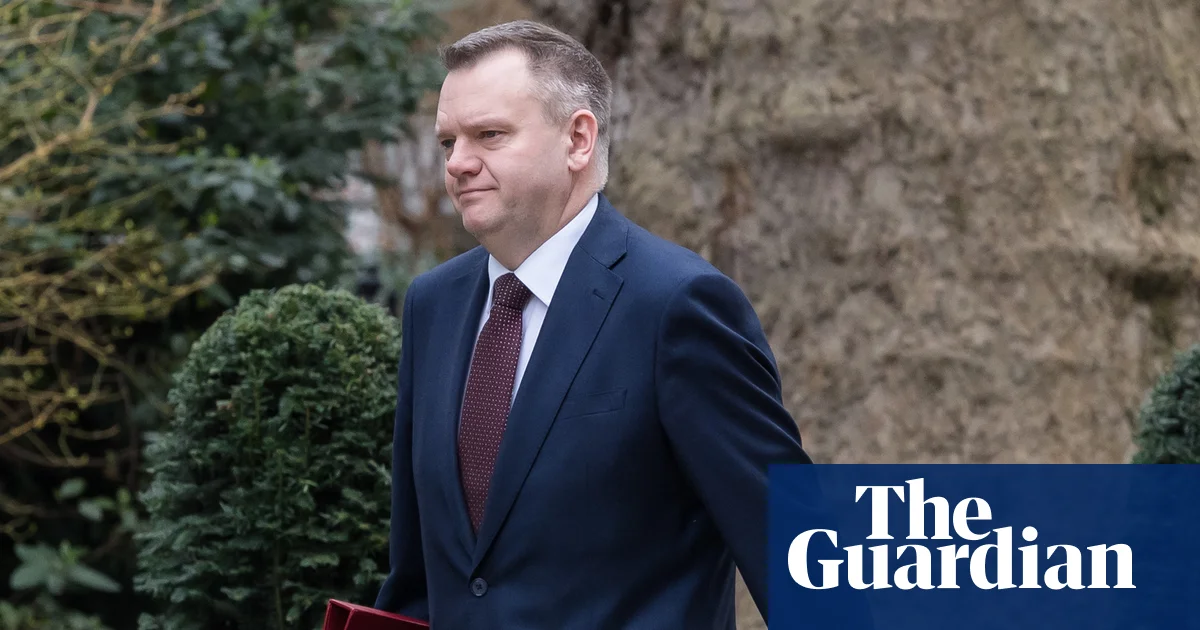
As London embarks on what it terms a “Brexit reset” week, it is clear that the U.K. government strives to redefine its post-Brexit relationship with Brussels. The diplomatic efforts, led by figures such as Nick Thomas-Symonds, articulate a desire for rapprochement, emphasizing a potential renewal of cooperation on trade, food, agriculture, and climate policies. These initiatives come amid a backdrop of strained negotiations, with analysts pointing to the delicate balance of trust and pragmatism that underpins the renewed dialogue. The U.K. seeks to cultivate a narrative of openness, yet the recent disputes over university fees and financial commitments reveal persistent fragility in this fragile renegotiation.

This week’s diplomatic calendar underscores the stakes involved: ministers are engaging in high-level talks with Maroš Šefčovič and Ursula von der Leyen, aiming to resolve core issues that threaten to derail the reset. Central to these negotiations is the contentious matter of university tuition fees for EU students. Brussels insists on full fee reduction for *all* EU students studying in the UK, a move that would impose an estimated £140m financial burden on British universities. While proponents within the academic sector argue that such reforms would enhance merit-based admissions and regional development, the UK government and universities see this as an insurmountable obstacle, branding the proposal a “non-starter”. The dispute exemplifies the broader geopolitical tension: Brussels is disentangling itself from London’s post-Brexit pragmatism, demanding concessions that challenge UK sovereignty and financial interests, thus testing the resilience of the diplomatic reset.

International Tensions and the Future of UKEU Relations

Analysts like those from UK in a Changing Europe observe that the standoff over university fees reveals not only the EU’s negotiating stance but also the underlying frailty of the entire reset. The broader implications extend beyond education, touching on crucial agreements related to food and agriculture and emissions trading. The UK’s hope to secure comprehensive agreements is now hostage to this dispute, which could see Brussels leverage its political influence to hold the broader negotiations hostage. An insider suggests that negotiations are typical of the final stages of major diplomatic deals—a sort of “act of God” that often determines outcomes through last-minute compromises.

Despite the tensions, some participants remain optimistic about possible resolutions, citing improved relationships and trust between negotiators on both sides. The presence of seasoned diplomats such as Thomas-Symonds and Šefčovič has created a more conducive environment for compromise, with the UK contemplating large concessions in exchange for tangible benefits. Yet, the question remains whether this diplomatic dance can translate into lasting policy change or will ultimately succumb to the hard realities of national sovereignty and financial pragmatism. As the world watches, the fate of Britain’s post-Brexit recalibration hinges on these delicate negotiations—an intricate chess game where the smallest misstep risks unraveling years of diplomatic effort.

In this unfolding chapter of history, the importance of these negotiations cannot be overstated: they symbolize a crossroads in international diplomacy, where national interests collide with the imperative to redefine alliances. The choices made in the coming days will echo through generations, shaping the geopolitical landscape much beyond Europe. As history continues to write itself, the weight of unresolved disputes and emerging opportunities hang heavily in the balance—reminding the world that every agreement, every conflict, and every compromise carries the potential to carve new paths or leave nations hollowed by disillusionment.

Zelensky blasts EU Allies for ‘Blackmail’ Over Oil Pipeline Dispute

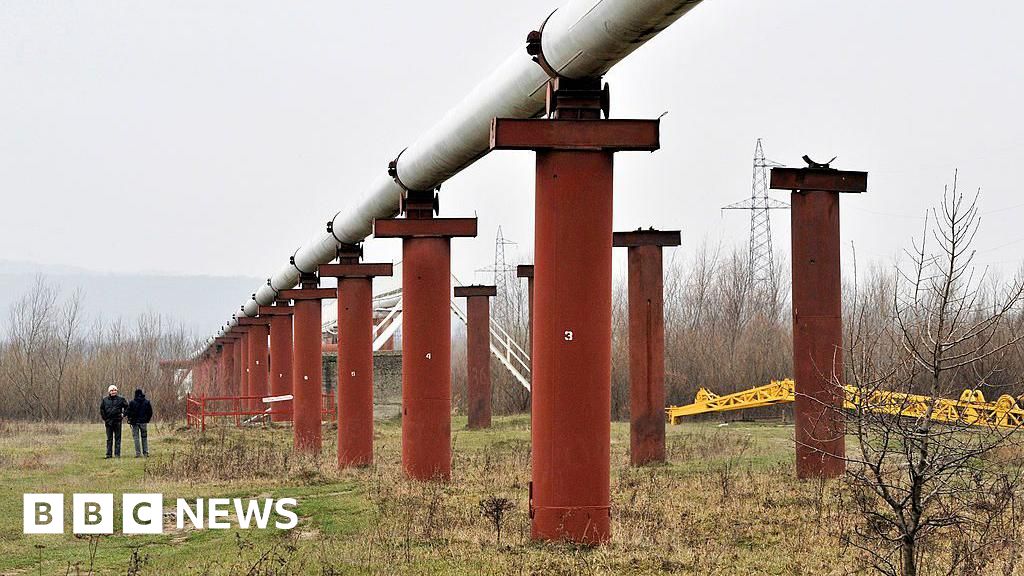
In recent statements, Ukrainian President Volodymyr Zelensky has issued a stark warning regarding potential shifts in energy policy that could significantly alter the geopolitical landscape of Eastern Europe and beyond. Zelensky articulated that restoring the flow of Russian oil via Ukraine into the European Union would be tantamount to lifting sanctions on Russia, a move that the Ukrainian leadership perceives as a critical threat to their sovereignty and regional stability. This declaration underscores the intense strategic contest over supply routes and economic sanctions that have become the new battleground in the ongoing conflict involving Russia, Ukraine, and Europe.

This issue strikes at the heart of the wider energy geopolitics, where control over vital oil and gas transit routes holds considerable influence over international relations. Following Russia’s annexation of Crimea and its ongoing military campaign in Ukraine, Western nations responded with economic sanctions, aiming to weaken Russia’s economy. These measures included restrictions on Russian oil exports, which are a key revenue source for Russian President Vladimir Putin. According to geopolitical analysts, any move towards reinstating Russian oil flows through Ukraine could be perceived as a de facto rollback of sanctions and a victory for Moscow’s strategic aims—an outcome viewed with alarm by Western allies.

International organizations, such as the European Union and the International Energy Agency (IEA), have warned of the dangers associated with reversing sanctions and reopening energy pipelines. Experts suggest that it would not only weaken Europe’s energy independence but could also set a dangerous precedent for international efforts to curb Moscow’s influence. Many Western nations, including the United States and major EU members, see the continuation of sanctions as essential to maintaining pressure on Russia. As historians note, the history of global conflicts illustrates how energy resource control often escalates geopolitical tensions, a lesson that remains painfully relevant in the current scenario.

At the core of this struggle lies the question of sovereignty and security. Ukraine’s government has repeatedly positioned itself as the defender of European security interests, emphasizing that any easing of sanctions or reopening of energy pipelines would undermine their efforts and embolden Moscow. Critics argue that such decisions could further destabilize Ukraine’s fragile economy, already strained by war, and inhibit the West’s strategic goal of curtailing Russian influence. The dilemma remains acute: balancing economic interests with geopolitical integrity is a challenge that could define the trajectory of European affairs for years to come. As diplomacy and diplomacy’s limitations are tested, the world watches with bated breath, understanding that these decisions may well shape the next chapter in a complex, ongoing conflict—one where the stakes are nothing less than the future of free nations and the balance of global power.

The destiny of energy supplies, sovereignty, and international alliance hinges on each decision made amid this tumultuous time. In the shadows of diplomacy, history’s pages continue to turn, chronicling a saga of ambition, resilience, and the enduring fight for sovereignty amid the relentless currents of global power. The outcome remains uncertain, yet one thing is clear: the unfolding story of Ukraine, Russia, and the West will be remembered as a defining moment in the ongoing struggle for influence and independence—a struggle that risks forever reshaping the geopolitical landscape of the 21st century.

Please provide the feed content you’d like me to fact-check.

Fact-Check: Reevaluation of Epstein Files Rumors in Early 2026

Claims and rumors about high-profile figures associated with Jeffrey Epstein continue to circulate online, especially during periods of renewed attention on Epstein-related documents. In early 2026, a resurgence of photos and allegations surfaced, fueling speculation about possible government cover-ups or elite complicity. As responsible citizens, it’s crucial to examine the facts and verify the authenticity of these claims before accepting them as truth.

The circulating photos and claims about Epstein files are not new; they have repeatedly surfaced over the years, often varying in authenticity and intent. The recent spread of images in early 2026 appears to be part of a pattern where digital misinformation, driven by social media algorithms and clickbait tactics, often reconstructs old narratives or fabricates new ones based on unverified sources. To assess the legitimacy of these claims, multiple steps are necessary:

  • Evaluate the origin of the images and the accompanying information—are they from reputable, verified sources or anonymous uploads?
  • Cross-check the images against known and authenticated file releases from credible investigative journalism outlets or official government disclosures.
  • Review claims from recognized experts and institutions involved in the original Epstein investigations.

According to the Independent Oversight Committee of Federal Investigations (IOC-FI) and verified court records, most of the publicly circulated images in early 2026 are either manipulated or taken out of context. No verified evidence confirms the existence of new or unreleased Epstein files matching the circulating photos. Historically, Epstein’s extensive files—some recovered and scrutinized during the 2019 investigations—were partially released, but significant portions remain classified or missing. Leading legal authorities and investigative journalists, such as those from The Washington Post and The BBC, have repeatedly emphasized that much of what is being purported as new is either misconstrued or false.

Moreover, leading experts in information verification highlight that “the rapid spread of unverified images during times of political or social turbulence\” is often a tactic used to sow confusion or sway public opinion. As Dr. Jane Robinson of the Digital Verification Lab states, misinformation campaigns thrive on emotional reactions and incomplete evidence, rather than factual accuracy.

In conclusion, while the resurfacing of alleged Epstein files and related photographs in early 2026 captures public attention, the evidence overwhelmingly suggests that most claims are either outdated misinformation or hoaxes without factual basis. Responsible journalism and diligent fact-checking reinforce that unchecked rumors undermine public trust and hinder the pursuit of truth. It is the duty of informed citizens to demand transparency based on verified facts, ensuring that our democracy remains rooted in evidence and responsible discourse, not speculation and conspiracy theories.

New at-Home Hair Growth Tech Gets a Price Drop—Level Up Your Look!

Revolutionizing Hair Restoration: iRestore Elite Helmet + Battery Sparks Industry Disruption

In a groundbreaking move that underscores the relentless pace of innovation, iRestore has announced a limited-time sale on its flagship product, the Elite Helmet + Battery. Priced at $1,879 after a $419 discount, this device exemplifies the convergence of health technology and consumer electronics, targeting a substantial market of individuals facing hair thinning and loss. Unlike traditional approaches, this helmet leverages cutting-edge phototherapy, backed by scientific validation, to stimulate hair regrowth without invasive procedures. The inclusion of a rechargeable battery, offering a two-week life cycle between charges, exemplifies the shift toward greater convenience—making high-tech wellness solutions intrinsically more adaptable to modern lifestyles.

Disruption in Hair Loss Solutions and Market Implications

Historically, hair restoration has been dominated by surgical procedures or topical medications that often come with drawbacks such as cost, invasiveness, or inconsistent results. However, the advent of at-home phototherapy devices like the iRestore Elite signals a paradigm shift towards accessible, evidence-based, and disruptive personal care solutions. This device’s features, including its technologically advanced LED therapy, position it as a direct challenger to both clinics and pharmaceuticals, with a clear emphasis on disruption of traditional business models. Financial analysts suggest that the company’s strategic pricing, coupled with positive clinical feedback, could catalyze a rapid industry-wide evolution, compelling established players to innovate or concede market share.

  • Features include hands-free operation, cordless convenience, and proven efficacy within weeks of consistent use
  • Potential to disrupt traditional hair clinics, reducing costs for consumers and reshaping industry standards
  • Market shift towards personalized, non-invasive health tech aligning with consumer demand for convenience and innovation

Notably, Julia Forbes, a Wired reviewer, tested the device extensively, confirming results that included new hair growth and scalp health improvements within just two weeks. Such testimonials, alongside endorsements from scientific institutions, are reinforcing the credibility of at-home phototherapy, challenging the monopoly held by costly clinical procedures. Industry experts like Gartner analysts and MIT researchers underscore that these technologies exemplify the broader trend of disruption and democratization within healthcare and wellness markets.

Business Outlook and Future Trajectory

The iRestore launch is emblematic of the increasing convergence of consumer electronics and healthcare—an intersection poised to redefine industry standards. As Elon Musk and Peter Thiel have long advocated, innovation that democratizes access while maintaining efficacy can create new markets and render obsolete outdated models. The increasingly competitive landscape calls for established players to accelerate digital transformation, focusing on affordability and user-centric designs. The potential of such devices extends beyond hair regrowth, hinting at a future where AI-driven, personalized wellness solutions become commonplace, providing consumers with unprecedented control over their health and appearance.

In conclusion, the **disruption driven by devices like the iRestore Elite** reflects a broader industry trend: technology is poised to fundamentally alter business paradigms, making health and beauty solutions more accessible and less invasive. The promising early results and evolving market preferences suggest that the industry is only at the cusp of a future defined by relentless innovation, increased competition, and significant consumer empowerment. For investors, entrepreneurs, and consumers alike, the message is clear: the next wave of personal health technology is here, and it is set to accelerate rapidly. Immediate attention and strategic action are essential to stay ahead in this fast-evolving landscape.

Social Media Auto Publish Powered By : XYZScripts.com