Global Political Power Plays Unveiled: The Hidden Hands Behind Elections and Their Geopolitical Impact
In recent developments that underscore the complex web of international influence, controversial revelations have emerged concerning the 2019 Australian federal election. While official narratives often emphasize local democratic processes, evidence suggests that covert foreign interventions and international strategists may have played a significant role in shaping the outcome. An investigation into documents released by the US Department of Justice has shed light on communications allegedly involving Steve Bannon, a notorious figure in American right-wing politics, and the enigmatic figure linked to Jeffrey Epstein. These messages seem to imply that strategic foreign-backed advertising campaigns targeted Australian voters, aiming to polarize politics and influence policy directions.
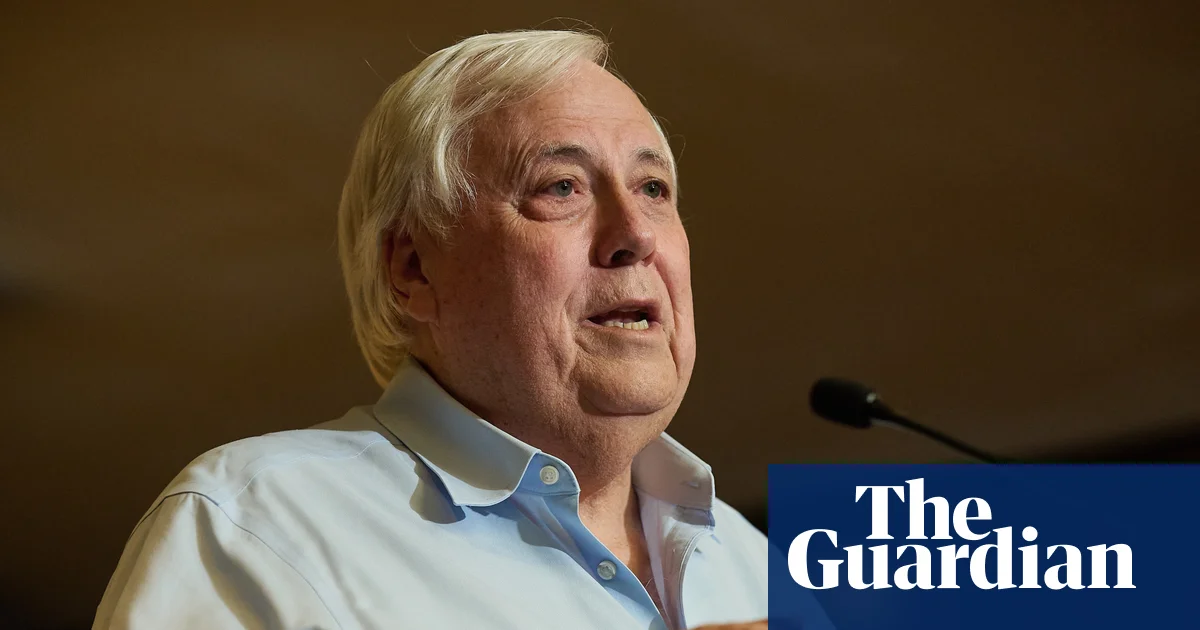
Specifically, the messages purport that Bannon claimed to have orchestrated a \u201c$60 million anti-China and climate change\u201d advertising blitz for billionaire Clive Palmer. Such assertions are currently under skepticism, with Palmer’s spokesperson dismissing them as mere “bullshit.” Nonetheless, the implications of these claims point to a broader pattern: the use of shadowy political meddling as a tool to sway elections on a national level, with far-reaching geopolitical consequences. As analysts observe, these tactics not only distort democratic processes but also weaponize misinformation to bolster strategic allies and weaken adversaries in Asia-Pacific—a region of escalating importance in global geopolitics.
How Decisions to Influence Elections Reshape Society and Global Power Dynamics
Historically, commentators and analysts such as Professor Anne-Marie Slaughter have warned that the lines between domestic politics and international influence are blurring dangerously. The recent Australian case exemplifies this, with local elections being affected by foreign-funded campaigns that amplify fear and suspicion—particularly regarding China, a rising superpower. The 2019 election’s aggressive advertising campaigns, which included claims of a \u201cclanestine\u201d Chinese takeover, exemplify how powerful narratives can be used to mobilize voters, often based on outright misinformation or fearmongering. This phenomenon exemplifies a new battleground for global influence, where national sovereignty and societal trust are increasingly vulnerable to covert foreign manipulations.
Moreover, influential international organizations such as the United Nations have expressed concerns over these trends, warning that such covert interventions threaten the very foundation of democracy. At the same time, Western governments face a critical challenge: how to combat misinformation without infringing on sovereignty or free speech. The case of Clive Palmer’s campaign also highlights how preferential deals and monetary influence can significantly shift voter behavior, often negatively affecting political stability and public trust. As Western democracies confront these clandestine tactics, the mounting question remains: how much longer can nations remain resilient against a new era of invisible warfare that seeks to manipulate societies from behind the curtain?
The Rising Tide of Influence and the Weight of History
The current controversy encapsulates a crucial turning point in the international arena—where power is no longer confined to traditional military and economic dominance but expands into the digital and informational realms. Historians warn that these covert strategies, if unchecked, risk unleashing a novel form of global instability. As nations like Australia become battlegrounds for influence, their societies are drawn into the larger contest between Western liberal democracies and authoritarian regimes seeking to reshape global governance.
The unfolding story does not merely involve distant political actors wielding influence in foreign elections; it echoes a broader narrative of how decisions made behind closed doors impact countless lives across continents. As state-sponsored misinformation campaigns grow more sophisticated, the boundary between truth and manipulation becomes perilously thin. History whispers warnings—that the struggle for sovereignty and societal integrity hinges on vigilance and resistance to unseen forces. The next chapter in this unfolding drama remains unwritten, but the weight of history presses heavily on the present, urging nations and societies to confront their vulnerabilities before they are forever altered by shadows in the halls of power.