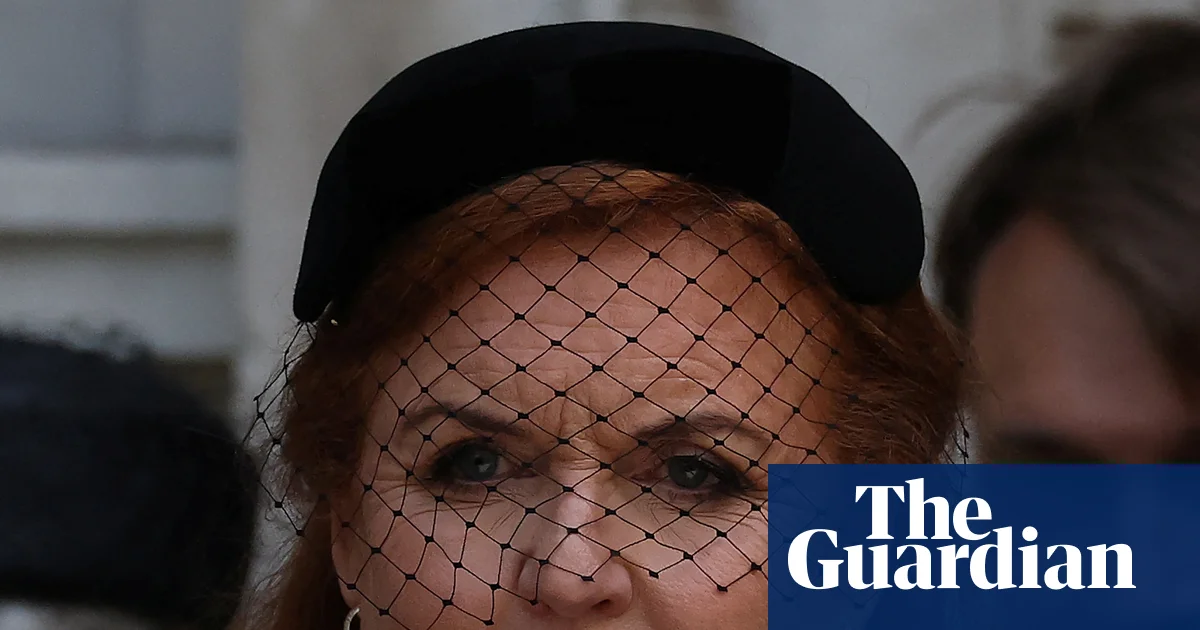
In recent days, the closing of Sarah Ferguson’s charity has sent ripples through society’s fabric, illuminating deep-seated issues about moral accountability, social trust, and the influence of power dynamics in modern communities. The charity, once celebrated for its humanitarian efforts across multiple nations—delivering aid, healthcare, and educational projects—decided to shut its doors amid revelations that have cast a long, troubling shadow over its founder’s associations. This event underscores a broader societal challenge: how social scandals involving prominent figures can erode community trust and threaten the moral foundation of charitable institutions.
These revelations come amidst the unprecedented release of millions of files related to Jeffrey Epstein, exposing a disturbing network of connections between the disgraced financier and the wealthy elite. Among the disturbing insights, evidence emerged about Epstein’s interactions with individuals like Prince Andrew and Sarah Ferguson, illustrating how social networks often blur lines between influence and misconduct. Notably, Ferguson’s public declarations of Epstein as her “brother” and her the *deep personal bonds* she maintained with him reveal a troubling pattern where social status and personal ties overshadow moral judgment. These relationships, now laid bare, threaten to undermine the credibility of philanthropic efforts, raising fears about how families and communities can protect themselves from social and moral corruption.
- Many sociologists argue that public scandals involving figures of influence have a lasting impact on societal trust, especially within families and local communities.
- Historically, trust is fundamental for the effective functioning of charitable institutions and community-led initiatives, and its erosion can lead to apathy, disengagement, or worse, cynicism.
- Addressing such issues involves robust accountability measures and fostering a culture where moral integrity takes precedence over social climbing or personal gain.
The repercussions extend beyond individual failings—they threaten the **moral fabric** that upholds societal cohesion. Within families, the erosion of trust in social institutions can lead to disillusionment among young people, who see their moral values compromised by the glaring hypocrisy of their superiors. In education, this manifests as a crisis of moral authority, where schools are left to grapple with the challenge of instilling virtues of integrity when society’s icons are revealed to be morally compromised. Communities, the fundamental building blocks of society, must then decide whether to retreat into cynicism or to seek renewal through transparency and reform. Social commentators often emphasize that the true test of a society’s resilience lies in its ability to confront uncomfortable truths and emerge stronger.
Reflecting on the societal fallout from these revelations leaves us with a profound question: how can society rebuild trust and ensure that families and communities are protected from the corrosive effects of moral and social failures? Social change begins with moral courage and the acknowledgment that ethics must be non-negotiable. Historically, phases of societal renewal have been driven by voices willing to confront power with honesty and humility—a tradition that must be rekindled in today’s fractured landscape. Only then can society envision a future where *families are nurtured in integrity, communities are resilient in truth, and social institutions stand firm on foundations of moral accountability*. Society’s greatest challenge is not merely unearthing scandal but transforming tragedy into a catalyst for genuine moral revival—an enduring hope that society’s collective soul can be mended, one honest step at a time.