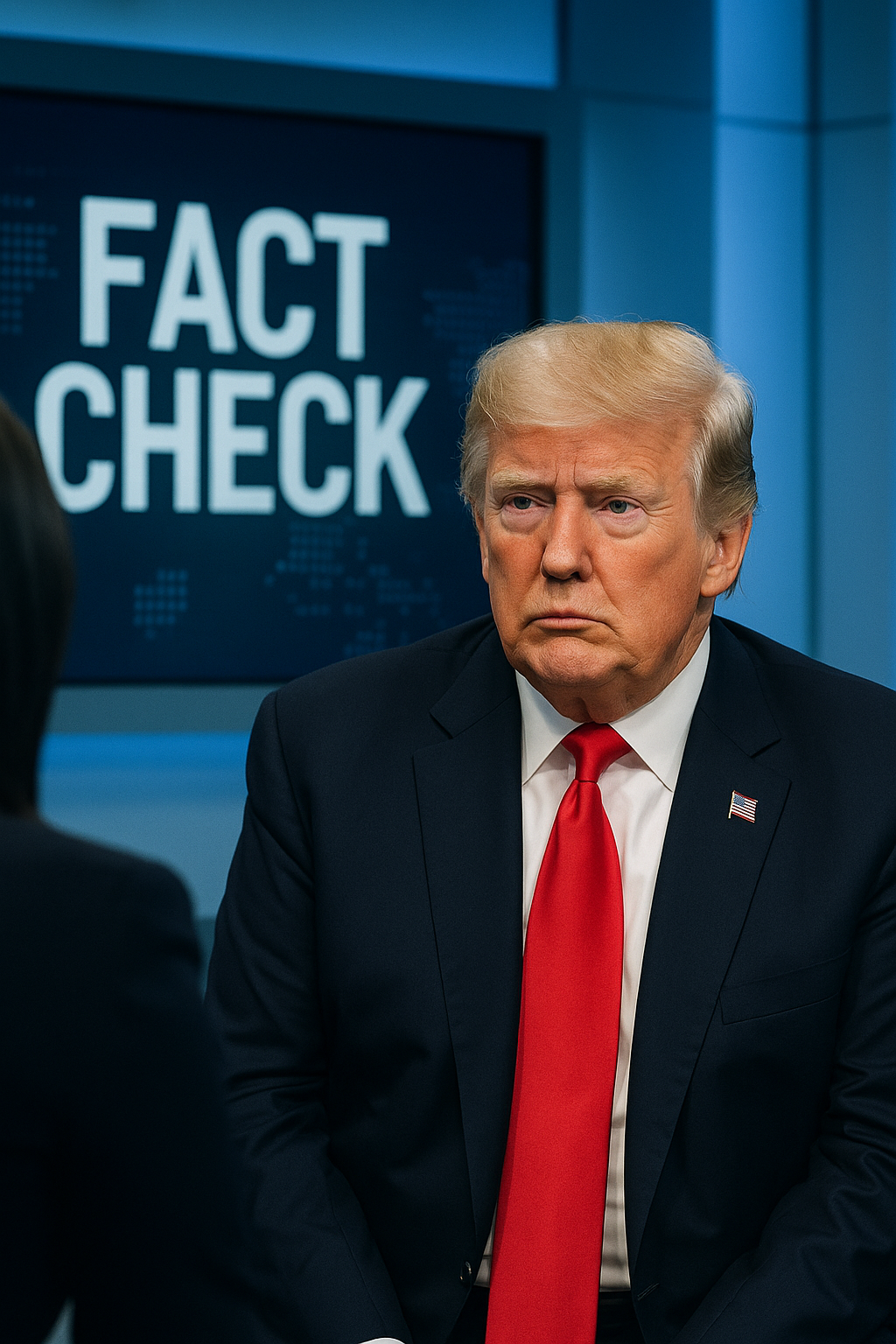
Fact-Checking President Trump’s Second Term Economic and Social Claims
In analyzing the latest data on President Donald Trump’s second term, it is essential to scrutinize the numerous claims about the state of the U.S. economy and social indicators. As with any administration, the narrative often varies depending on perspective and sources. FactCheck.org’s recent update provides a comprehensive and source-supported overview, allowing us to evaluate these claims objectively.
Jobs, Unemployment, and Economic Growth: The Complex Reality
Claimed: Job growth has slowed, with only 369,000 jobs created between January 2025 and March 2026, and unemployment has increased to 4.3%.
Verdict: True. The U.S. Bureau of Labor Statistics shows a **slower pace of job growth** compared to Biden’s last months in office, which saw over 1.5 million jobs added during the same period. The unemployment rate did indeed inch up to 4.3%, but remains below the historical average of 5.5% since 1948, indicating a still relatively healthy labor market. The decline in new jobs and the rate increase are factors that merit attention but should be viewed within the broader context of an evolving economy.
Claimed: The economy grew only 2.1% in 2025, with fluctuations in quarterly growth rates.
Verdict: True. The Bureau of Economic Analysis confirms a 2.1% full-year growth rate, which, while modest, aligns with a slowdown from the strong 3.8% and 4.4% quarters earlier in the year. Experts like Gregory Daco of Oxford Economics point to global supply shocks, tariffs, and geopolitical uncertainty as contributing factors to this modest growth. Therefore, the data support the claim that economic growth has been tepid relative to previous years, yet still positive.
Inflation, Wages, and Market Dynamics
Claimed: Inflation has worsened slightly under Trump, with CPI rising to 3.3%, and gasoline prices increasing by nearly 30% since inauguration.
Verdict: Mostly accurate. The Consumer Price Index (CPI) increased from a 3.0% rise pre-inauguration to 3.3%, but inflation remains high relative to the Fed’s target of 2%. Gasoline prices, which hovered around $2.78 per gallon at the start of the second term, have risen to approximately $4.04, a significant increase driven partly by geopolitical tensions, including U.S.-Israeli strikes on Iran. Fuel prices are volatile, and recent spikes reflect international instability rather than domestic policy alone.
Claimed: Wages have accelerated under Trump, with inflation-adjusted weekly earnings rising 1% for private-sector workers.
Verdict: True. Data from the Bureau of Labor Statistics substantiates this, showing a 1.0% increase in inflation-adjusted wages. Notably, earnings among production and nonsupervisory employees also increased by 1.2%, indicating benefits across various worker categories. This suggests some progress in real wage growth amidst inflation concerns.
Border Security, Immigration, and Social Trends
Claimed: Illegal border crossings have decreased by 92%, with apprehensions dropping significantly, and refugee admissions sharply down.
Verdict: Mostly accurate. The Migration Policy Institute reports a 92% reduction in apprehensions, largely attributed to policies that limited asylum applications and expedited removals enacted by Trump. The decrease in refugee admissions—down over 90% since Biden’s administration—reflects similar policy shifts and a focus on interior enforcement. However, experts caution that these figures are influenced by policy and administrative practices, and true illegal crossing numbers are inherently difficult to fully quantify.
Social Indicators, Crime, and Environmental Impact
Claimed: Violent crime has declined, with homicides dropping significantly in 2025, reaching historic lows.
Verdict: True. Independent analyses, including AH Datalytics, confirm an approximately 11% decline in violent crimes from 2024 to 2025, with homicides decreasing by nearly 18%. Several law enforcement organizations affirm this trend, suggesting that overall crime rates—after spiking during the pandemic—are receding.
Claimed: Carbon emissions have increased slightly but are projected to decline in 2026, with oil production setting records.
Verdict: Mostly supported by data. The EIA reports a slight 2% increase in energy-related carbon emissions in 2025, partly due to fossil fuel consumption, but projections anticipate a 2.4% decline in 2026. U.S. oil production hit a record average of 13.6 million barrels per day in 2025, driven by efficiency improvements and new technology, supporting energy independence and economic stability.
Concluding Remarks: The Role of the Truth in Democracy
In sum, the latest data paints a nuanced picture of President Trump’s second term. While some indicators—such as job growth and consumer confidence—reflect challenges, others like crime reduction and energy production showcase progress. Critical to democratic deliberation is reliance on transparent, credible facts. As voters and citizens, understanding these realities fosters responsible engagement and preserves the integrity of our electoral and political systems. The truth remains the cornerstone of accountability, ensuring that debate remains rooted in facts rather than misleading narratives.