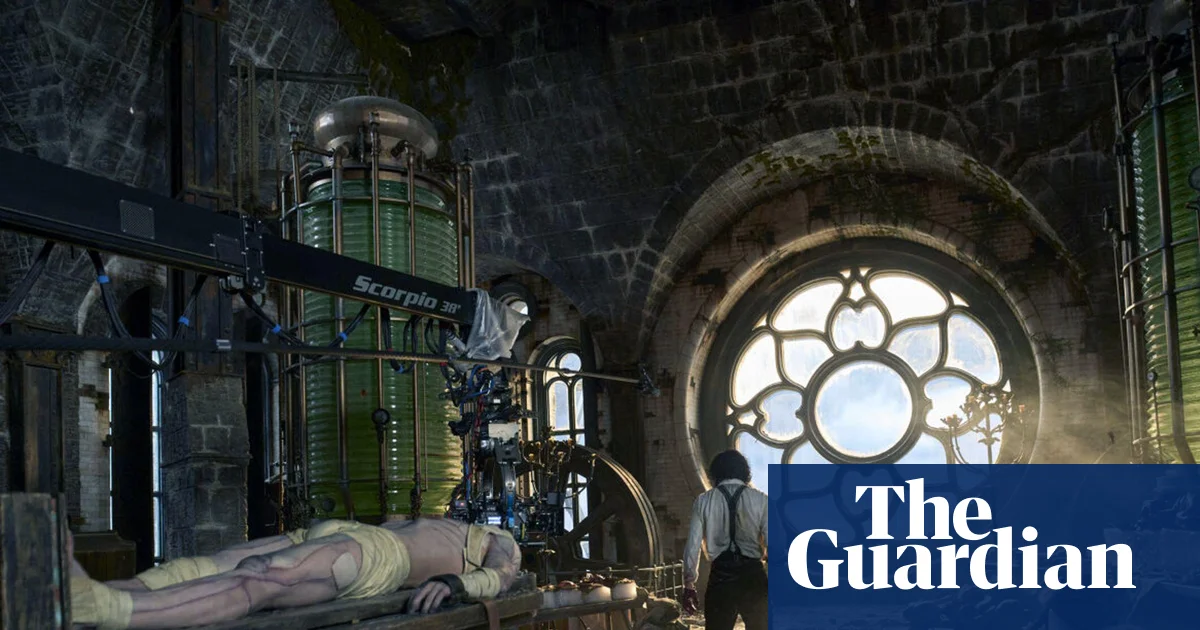
In an era where cinematic storytelling often leans toward spectacle and superficiality, Guillermo del Toro emerges as a rare craftsman, weaving profound human truths into his fantastical tapestries. His latest adaptation of Frankenstein reflects his lifelong devotion to humanising monsters—an act that transcends mere horror to explore the core of human nature. Del Toro’s approach is rooted in a belief, echoed by thinkers like G.K. Chesterton, that monsters serve as mirror images of the fractured human soul, reminding us that our true monsters are often born from within, shaped by generational trauma and societal neglect. His reinterpretation transforms Shelley’s creation from a grotesque figure of fear into a poignantly sympathetic being, a symbol of the neglected and misunderstood, underscoring how culture and narrative shape our collective identity.
Furthermore, this film underscores the enduring importance of culture as memory and prophecy. Through its visual grandeur and nuanced performances, it reminds us that stories—be they mythic or modern—serve as vessels for tradition, morals, and values. Del Toro’s meticulous craftsmanship echoes the philosophical insight of Ortega y Gasset, who emphasized that culture is an ongoing act of interpretation and re-creation. As we grapple with the chaos of contemporary life, the revival of classical themes—such as the peril of hubris and the necessity of compassion—becomes a vital act of cultural preservation. In this light, the monster’s story is not merely a horror tale but a reflection of societal breakdown, urging us to reconnect with our roots, our familial bonds, and the moral fabric that holds us together.
- Visual storytelling: Sumptuous imagery filled with symbolic lighting—candlelit shadows and sunset hues—embody the duality of enlightenment and darkness.
- Performance mastery: Jacob Elordi’s Creature, more tender soul than grotesque ogre, illustrates the power of empathetic acting to challenge preconceived notions of evil.
- Themes of toxicity: The film shines a light on toxic masculinity, drawing a parallel to the Enlightenment’s warnings about playing God and the hubris that corrupts.
Yet, in the political realm of awards and recognition, Del Toro’s film faces the harsh reality of Hollywood’s selective biases against genre cinema—an echo of the broader cultural tendency to marginalize the mythic and symbolic as mere entertainment. Despite his proven track record—awards for The Shape of Water and Pinocchio—the absence of a Best Director nod hints at the lingering snobbery that still perceives fantasy and horror as inferior. Nonetheless, as T.S. Eliot once wrote of poetry that “the tradition is a public thing,” so too does culture demand that we see these stories as vital articulations of our shared human adventure. History has shown us that true cultural revolution often begins from the margins, in the stories overlooked by the mainstream.
As we look towards the future of both cinema and society, the enduring lesson remains: culture is an act of remembrance and foresight, a gift from those who came before us and a prophecy of what we yet may become. Like the timeless figures of myth and legend, our stories—whether of monsters or saints—are threads in the fabric of human consciousness, whispering in shadows and shining in the golden sunset of our collective memory. In this grand dialogue of humanity, the greatest stories are the ones that remind us of who we are—and who we might yet become—a perpetual evolution of the human spirit, forever yearning, forever becoming.