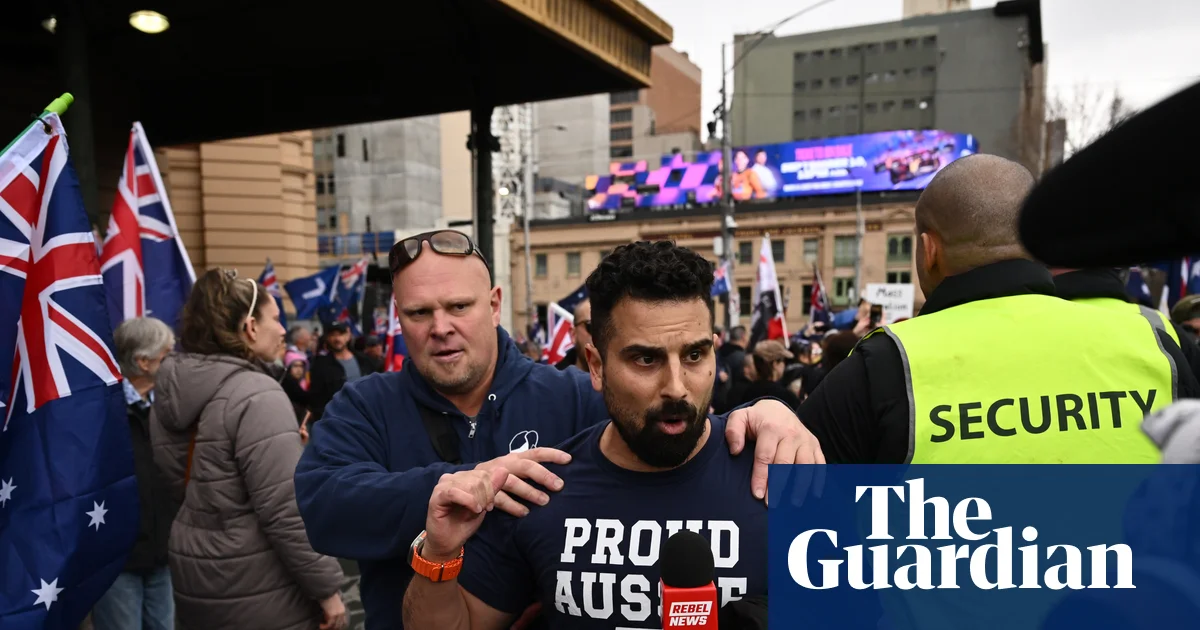
In a development that underscores how internal political processes can influence geopolitical stability, Victoria’s electoral landscape is facing renewed scrutiny. A controversial scheme led by Avi Yemini, a fervent right-wing provocateur and former Israeli soldier, aims to register a “Free Palestine party” in order to manipulate preferences within the state’s voting system. While ostensibly focused on local politics, this maneuver hints at larger issues of electoral integrity and the geopolitical ramifications of ingrained societal divisions. The plan exemplifies how vote-routing tactics can weaken democratic accountability and embolden fringe factions—potentially shifting power balances in ways that ripple beyond Australia’s borders.
The core of Yemini’s strategy relies on Victoria’s continued use of group voting tickets (GVTs), a system now targeted by critics for allowing backroom deals and artificial inflation of minor parties’ representation. Influential figures such as the preference whisperer Glenn Druery have long exploited GVTs to funnel votes toward controversial candidates with limited genuine support. Many political analysts, including members of the Labor party, warn that such mechanisms distort democratic processes, enabling parties with minimal primary votes to attain significant legislative power—often without voters fully understanding the preferences they are endorsing. The threat is not confined to Australia; it reflects a broader global concern over how electoral systems can be manipulated to favor radical agendas, destabilizing societies and encouraging geopolitical instability.
International organizations and historians have sounded the alarm on how electoral manipulation, even when domestically focused, can serve as a catalyst for wider geopolitical tensions. “The integrity of electoral systems is paramount,” cautions Dr. Samuel Hughes, a political historian at Oxford, who highlights that “distorting votes through preference deals fosters political extremism, which can spill over into regional conflicts or international crises.” The ongoing debate in Victoria reflects a critical juncture: whether electoral reforms are implemented swiftly or exploited by vested interests may determine the stability of Australia’s democratic institutions and its relations with much larger powers, such as China and the United States. These external actors closely observe how internal political maneuvering influences commitment to democratic principles—an indicator of a nation’s capacity to contribute to or undermine regional security frameworks.
Nevertheless, the fallout extends into societal divisions; the manipulation of preferences fosters an environment where identity politics and extremist narratives flourish, prompting concern among international observers and security analysts alike. The United Nations and regional security councils urge transparency and electoral integrity as prerequisites for peace and stability among democracies. As the Victoria controversy deepens, the decision to either reform or preserve GVTs could serve as a critical case study in how internal electoral policies affect international stability. History shows that unchecked manipulation of voting systems often sows the seeds of future conflicts or authoritarian resilience, and the world watches with bated breath.
As voters prepare to cast their ballots in the upcoming election, the unfolding saga in Victoria embodies a larger narrative: the relentless tug-of-war between democratic safeguards and the forces seeking to undermine them. The weight of history looms large, reminding all that political choices today often cast shadows over the future of global stability. Will the principles of transparency and integrity prevail, or will the shadows of electoral deception stretch further, until the fabric of democracy itself is irreparably torn? Only time will reveal where the currents of this unfolding story will ultimately lead.