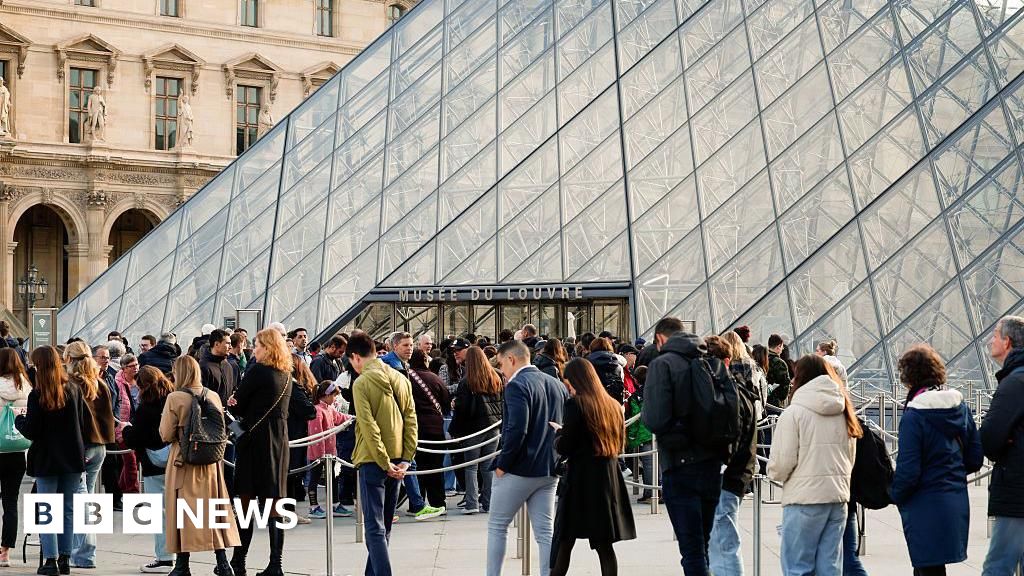
The Louvre Museum in Paris has reopened its doors only three days after a brazen daylight robbery that took away priceless artifacts valued at over 88 million euros. The audacity and precision of the crime, executed by a group of masked thieves wielding power tools, underscore a troubling wave of security vulnerabilities facing some of the world’s most treasured cultural institutions. The attack, which unfolded with shocking speed and sophistication, threatens not only the integrity of this iconic museum but also raises wider questions about international security protocols guarding humanity’s shared heritage. While visitors now flock back to the Louvre, the apparent negligence in surveillance, evidenced by a report that a third of the museum’s rooms lacked CCTV, paints a stark picture of the challenges facing cultural custodians worldwide.
The heist involved a small team of four accomplices who used a truck fitted with mechanical ladders to access the gallery near the River Seine early Sunday morning. Two of the thieves then cut through a glass window using battery-powered disc cutters—a tactic reminiscent of organized crime syndicates operating across borders. They threatened guards, who evacuated the building, and swiftly made off with a treasure trove including a diamond and emerald necklace once gifted by Emperor Napoleon to his wife, along with a tiara worn by Empress Eugenie, and jewelry previously owned by Queen Marie-Amelie. As security experts scramble to piece together the details, investigators have uncovered a damaged crown belonging to Empress Eugenie along the thieves’ escape route, fueling speculation about organized criminal involvement. French authorities, led by Interior Minister Laurent Nunez, express confidence in apprehending the culprits, but the broader issue remains: how well are nations prepared to defend cultural heritage in an era of rising organized crime and geopolitical uncertainty?
The incident has sparked intense debate among international analysts, with many warning that cultural institutions in Europe and around the world are increasingly targeted by criminal syndicates seeking lucrative art and jewelry. The attack on the Louvre’s security infrastructure—notably, the fact that alarm systems failed to trigger and CCTV coverage was incomplete—highlight glaring gaps in protecting vital national treasures. Some experts argue that the incident might be a wake-up call, urging governments and global institutions to adopt more advanced, integrated security measures against this new wave of threats. The potential for art and jewelry smuggling, driven by criminal organizations with international reach, presents a challenge not just for France but for the entire Enlightenment legacy that many nations aim to preserve. The European Union and Interpol are likely to increase collaboration, but critics contend that local authorities must prioritize infrastructure upgrades and intelligence sharing.
The fallout from this event extends beyond the immediate theft; it symbolizes a broader crisis of cultural sovereignty and national identity threatened by organized crime, geopolitical shifts, and lax security policies. Historians and analysts warn that if such breaches are not swiftly addressed, our global heritage risks becoming vulnerable to exploitation and loss. The Louvre’s roving security failures could set an alarming precedent, emboldening those with no regard for history’s sanctity. With every piece stolen, a fragment of cultural memory is lost—an irreversible dent in our shared history. As investigators pursue the thieves through a maze of criminal networks, the world watches with bated breath, acutely aware that this event might mark a turning point—either a catalyst for reform or a grim reminder of the increasing peril facing humanity’s culture. In this unfolding narrative of loss and resilience, one truth remains evident: history’s pages are still turning, and the stakes have never been higher.