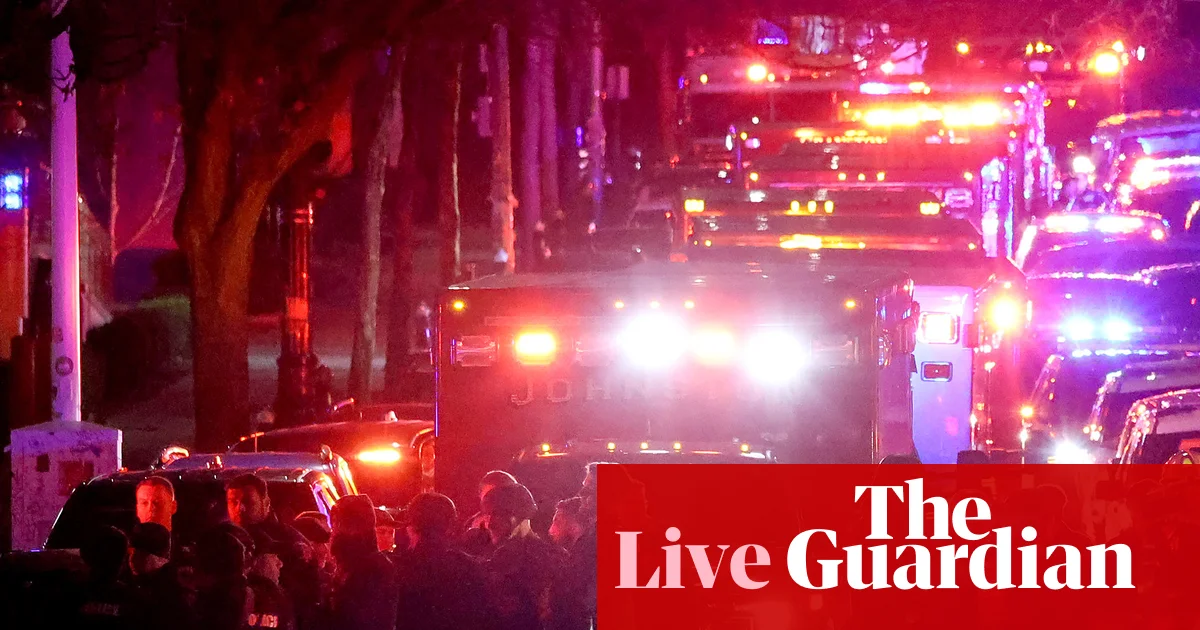
In a stark reminder of America’s ongoing gun violence epidemic, the recent mass shooting at Brown University in Providence, Rhode Island, has ignited international debate about the nation’s handling of firearm regulations and societal safety. While the tragedy unfolded during final exams—an event that should epitomize the pursuit of knowledge and peaceful progress—the harrowing reality highlights a deeper crisis that transcends individual incidents.
The attacker, described by authorities as a male dressed in black who remains at large amidst a city swarmed with holiday shoppers and busy streets, has left a nation mourning yet again. Officials from law enforcement, including Mayor Brett Smiley, have provided limited details, confirming only that two individuals are dead and at least eight are in critical condition. The incident occurred within a university housing over 100 laboratories and numerous classrooms, where students like biochemistry senior Alex Bruce and engineering student Emma Ferraro experienced firsthand the chaos and fear of gunfire in what was supposed to be a safe academic environment. The international community observes these scenes with a mixture of concern and frustration, questioning whether America’s unique relationship with guns can ever be reconciled with fundamental rights and public safety.
Global organizations and analysts have long critiqued the United States’ approach to gun control, often describing it as a failure in policy and societal management. The Everytown for Gun Safety organization labels itself as the leading gun violence prevention group and insists that “we either take action or bury more of our kids.” International voices, from academics to political leaders, emphasize that the US is increasingly isolated in its refusal to enact effective legislation. Historical perspectives, including those of renowned historians, suggest that cycles of violence in America are not only a product of targeted policy failures but also reflect cultural and political divisions. The impact extends beyond fatalities, permeating social fabric, education, and the perception of safety among youth.
As the nation grapples with this latest tragedy, every international observer recognizes that decisions made today—be it on stricter gun laws, mental health support, or national security—will shape the societal landscape for decades. Leaders like President Donald Trump, having initially claimed a suspect was in custody before clarifying otherwise, highlight the often chaotic and politicized response to such incidents, complicating international perceptions of American governance. Meanwhile, voices from across the political spectrum, including New York’s incoming Mayor Zohran Mamdani, have pointed to the tragedy as a symptom of a broader crisis that demands urgent and decisive action.
The story is still being written, and history waits with bated breath on what course the United States will chart in the aftermath of these recurring tragedies. The weight of future generations and the conscience of a nation hang in the balance, as the world watches and waits for a turning point—an opportunity for meaningful change or a continued descent into violence that defies comprehensible explanation. The pages of history are turning, and the next chapter remains unwritten, leaving us to ponder: how many more lives must be lost before America’s crisis finds its resolution?