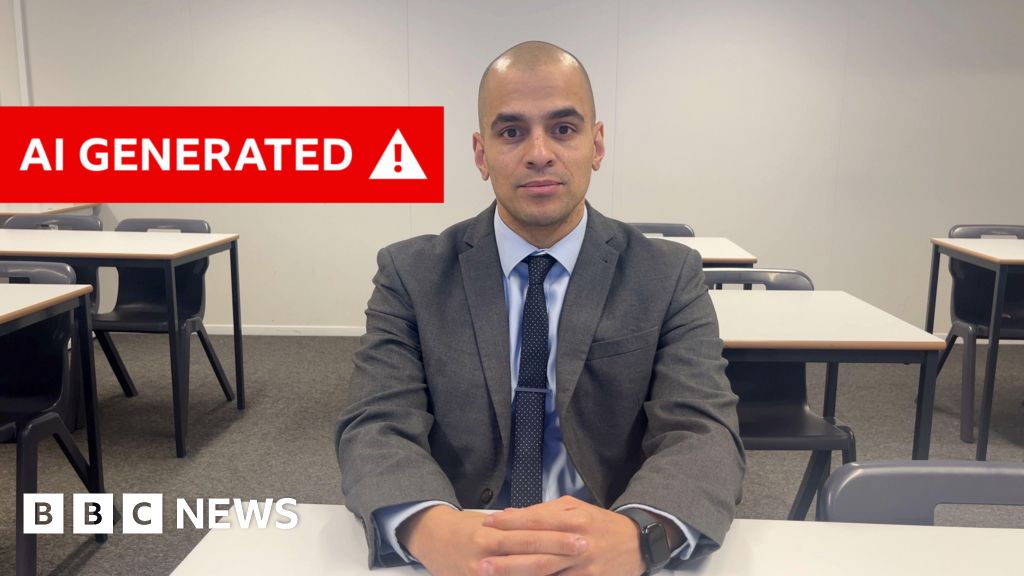
In today’s evolving educational landscape, the integration of artificial intelligence (AI) and deepfake technology into classrooms has sparked both hope and controversy. Schools across the UK are experimenting with innovative methods such as deepfake teachers and remote educators, aiming to address longstanding challenges like teacher shortages and the need for personalized learning. The government’s narrative emphasizes that AI holds the **power to transform education**, promising to lighten teachers’ administrative burdens and tailor instruction to individual student needs. However, beneath this veneer of progress lies a tapestry of social tensions, especially for families and communities who are grappling with the moral and ethical implications of machines replacing human connections in education.
At the heart of the debate are questions about societal values and the human element of learning. Critics, like mathematics teacher Emily Cooke, argue that teaching is more than delivering knowledge; it’s about fostering meaningful relationships, trust, and emotional support. She voices concern over initiatives such as a virtual maths teacher based 300 miles away, emphasizing that *the essence of mentorship and human interaction* cannot simply be replicated through screens or AI avatars. This contention touches on broader social issues, where the erosion of community and personal bonds in educational settings threatens the social fabric that sustains families and local neighborhoods. Historians have long observed that education is as much about social cohesion as it is about knowledge transfer, and the perceived depersonalization of learning raises fears of societal fragmentation.
Meanwhile, agencies like Great Schools Trust are pushing AI experiments further, aiming to make virtual assessments, feedback, and translations more accessible, especially for multilingual communities. Shane Ierston, the CEO, touts AI as a potential “leveller” that offers “personalized tuition” for every child. Yet, as Nicola Burrows—a parent and former educator—acknowledges, *bringing parents into the conversation and ensuring safety* is crucial. Parental skepticism remains high, with only a small fraction of the public willing to endorse widespread AI use in classrooms, reflecting deep-seated fears about privacy, safety, and the commodification of childhood. Sociologists highlight that adopting such technologies often exacerbates existing social divides, where technology becomes a tool for the privileged, leaving behind those in marginalized communities.
Furthermore, the move towards remote and AI-centered education fuels protests among educators and unions. Teachers at The Valley Leadership Academy have gone on strike over the deployment of a remote teacher, citing concerns about the loss of personal connection and the decline in educational quality. Mrs Cooke criticizes the approach as a misguided attempt to address staffing shortages, warning that “if we do not challenge this trend, it will spread and erode the profession’s core values.” The National Education Union (NEU) and other bodies advocate for safeguarding the human elements of teaching, emphasizing that education is fundamentally a moral act, rooted in empathy, mentorship, and community engagement. As society navigates these technological upheavals, the question remains: can society preserve the human spirit while embracing innovation? Or are we on the verge of a future where our children are educated by digital doubles, disconnected from the human roots that form the backbone of tradition and social stability?