Matox News

Truth Over Trends, always!

Honoring the Legend: Reverence Grows for Iconic Indian Singer Asha Bhosle Among the Youth

In an era often characterized by rapid technological shifts and transient trends, the enduring significance of culture remains a vital cornerstone of societal identity. The recent passing of a venerable singer at the age of 92, whose life’s work spanned nearly a century, underscores this truth. Her forthcoming cremation with full state honours symbolizes a collective acknowledgment that true cultural icons transcend personal achievement to become harbingers of tradition and moral compass for generations. As the nation prepares to honour her memory, we are reminded that artificial innovation can never replace the profound power of artistic
moral resonance rooted in shared history and cultural continuity.

The role of the artist extends well beyond individual expression; they serve as custodians of a civilization’s mythos. Philosophers like Ortega y Gasset have emphasized that culture embodies the vital spirit of a nation, shaping not only public sentiment but anchoring the identity of its people. The singer’s oeuvre, a testament to the virtues, struggles, and aspirations of her era, becomes part of a collective cultural memory. Her death, mark­ing the end of an era, also illuminates the pathways through which cultural heritage continues to function as a moral compass—guiding societal values and inspiring future generations to forge their own legacies with similar gravitas.

History offers us ample parallelsthe cultural shifts from the Renaissance to the Enlightenment, or the tumult of the 20th century. Folk traditions, classical artistry, and revolutionary movements all bear witness to the enduring importance of maintaining the carrying capacity of cultural memory. Tocqueville’s observations on American democracy highlight this phenomenon: a society’s strength lies in its shared cultural reservoirs, which nurture patriotism and social cohesion. The image of a revered artist, received with state honours, embodies this legacy—an affirmation that culture is both a reflection of who we are and a prophecy of who we may become.

Drawing upon revered voices like Chesterton, who posited that “tradition means giving a vote to the most obscure of all classes, our ancestors,” reminds us that the preservation of cultural memory is an act of reverence. It is through this reverence that societies preserve their roots and resist the erosive forces of triviality and forgetfulness. As critics and historians remind us, the true purpose of culture is not merely entertainment but the cultivation of a moral landscape that sustains the individual and collective soul. The quiet dignity of the singer’s passing—her body honored by state ceremony—serves as a poignant symbol: a reminder that the enduring language of art continues to speak across ages, invoking a sense of unity that ties the present to an ongoing spiritual tradition.

In the silent spaces between memory and prophecy, culture stands as both witness and visionary, whispering of human potential and the divine in everyday life. As T.S. Eliot contemplated, the task of the poet—much like the artist—is to chart a “dislocation” and a “restoration”, to grapple with the fragmented world and reveal a glimpse of wholeness. The legacy of such cultural icons tells us that—despite the transient nature of individual lives—art remains eternal, a safeguard of truth and beauty. The artist’s departure urges us to treasure this communion, knowing that culture is not merely memory but also the prophetic voice beckoning us toward a future yet unwritten, where humanity’s highest virtues are forever inscribed into the communal spirit—an enduring ordination of the soul.

Eamonn Holmes Undergoes Hospital Recovery Following Stroke, Regaining Strength and Spirit

In a time when the rapid flux of technology and global interconnectedness threaten to drown the unique voices that define our cultural heritage, it is vital to recognize the enduring significance of tradition, identity, and the arts as pillars of societal coherence. As the recent news of a venerable broadcaster, aged 66, “responding well to treatment,” reminds us, life itself remains a testament to resilience and continuity. Behind the updates of health and recovery lies a larger narrative—one that echoes the timeless importance of individual contribution and the collective memory that shapes our civilization.

Throughout history, figures of media and culture have served as custodians of societal values, transmitting the stories that forge communal bonds. Broadcasters like this veteran journalist embody the voice of tradition in a sea of perpetual change, reminding us that the preservation of our cultural roots is crucial for maintaining a coherent sense of self in a transient world. As Ortega y Gasset famously observed, society is an ongoing project rooted in the “drive of life” that must be guided by the continuity of shared narratives. The health and vitality of such figures symbolize the resilience of these narratives, and their capacity to adapt and thrive despite contemporary challenges.

This is especially important within a broader context that echoes what Tocqueville warned about—the fragility of free societies in the face of cultural erosion. The media’s role, far from being just entertainment or news, becomes a space where the moral and spiritual fabric of society is woven and tested. History’s lessons remind us that when the custodians of our cultural legacy falter, society risks losing its compass. Culture, in its deepest sense, is more than mere tradition; it is the living memory that informs our identity and fuels our aspirations. When these voices are cared for, nourished, and resilient, they forge the foundation from which future generations can draw strength and wisdom.

Reflecting on the ongoing narrative of restoration and renewal, we are reminded that culture is both a diary of human achievement and a prophecy of human potential. It elevates us from the superficial brinkmanship of modernity toward a profound understanding of who we are and what we might become. As Chesterton championed, it is through the appreciation of our common roots and enduring stories that we find the clarity to face the uncertain horizons ahead. The health and well-being of individuals like this seasoned broadcaster serve as symbols of the resilient spirit that sustains society’s moral backbone, urging us to honor the past while shaping the future.

In the quiet unfolding of recovery, there is a lyrical reminder that our cultural memory is not merely an inventory of bygone days but an active inheritance—a living, breathing dialogue with the ancestors and an anticipation of the generations yet to come. As the twilight of the old world converges with the dawn of the new, let us remember that culture is neither static nor purely nostalgic; it is a vital force that molds the human soul, guiding us through shadows and into enlightenment. For in the language of art, history, and shared stories lies the perpetual prophecy: that humanity, in seeking its roots, also reaches toward its destiny, weaving the present into the everlasting fabric of time.

Kimmel Calls Out Trump’s Reckless Rhetoric: “Talking War Like It’s a Badge of Honor,” Late-Night TV Highlights

In an era marked by shifting allegiances and unpredictable leadership, the culture of continuity remains a cornerstone of societal identity. Recent comments from Jimmy Kimmel highlight the existential dissonance in contemporary political discourse, where spectacle often obscures deeper realities. The spectacle, whether on late-night television or in national diplomacy, reflects a broader cultural struggle—namely, the tension between tradition and novelty, between the inherited values and the transient whims of leadership. As Ortega y Gasset suggested, the crisis of our age stems from the erosion of the spiritual and cultural backbone that sustains a civilization, leaving chaos as the default mode of operation.

Current events, such as the vacillating stance of President Trump on Iran, serve as vivid examples of how symbolic politics can distort the collective consciousness. The apparent chaos—misstatements on international matters, pop-psychological jabs on social media, and impulsive declarations—betrays a deeper cultural malady: the weakening of a shared narrative grounded in tradition, sovereignty, and a cohesive identity. The philosopher T.S. Eliot remarked that “the past is never dead; it’s not even past.” In this vein, the spectacle of political blunders and media banter underscores a society detached from its foundational stories, risking becoming mere spectators in its own history.

Yet, amidst the chaos, there are voices—be they critics or advocates—that remind us of the importance of cultural memory as a form of resistance and renewal. Chesterton observed that “tradition means giving votes to the most obscure of all classes, our ancestors.” Today, as the cultural currents threaten to be swept away by the relentless tides of superficiality, it is vital for the youth to harness the enduring truths embedded in our heritage. The Great Books and philosophical traditions anchor us; they offer a compass amid the tumult, reminding us that culture is both the memory and prophecy of humanity.

In our pursuit of identity, it becomes clear that culture is a living, breathing testament to what we have inherited and what we choose to pass forward. As G.K. Chesterton proclaimed, “A dead thing can go with the stream, but only a living thing can go against it.” In this timeless battle, the true artist and thinker serve as the keepers of a luminous legacy—one that defines us not just by what we are, but by what we aspire to become. The future is less a blank page than a reflection of the noble past; it is the prophecy written in the indelible ink of tradition, waiting to be reimagined by those committed to the enduring power of culture—an echo of eternity, a hymn of continuity in the symphony of human existence.

How the Cast of ‘Euphoria’ Is Redefining the Next Generation of A-List Talent

When “Euphoria” arrived in 2019, it did more than shatter the conventional high school narrative—it illuminated the restless pulse of a generation grappling with fractured identities and the chaos of modern life. Under the raw gaze of artistic creators like Sam Levinson, the series embodied a culture in flux, echoing the sky’s restless evolution and reflecting a society torn between its cherished traditions and the relentless march of innovation. From Zendaya’s transformation from teen icon to a symbolic voice of cultural authority to the emergence of a new breed of stars who leverage their fame into entrepreneurial and artistic ventures, this era underscores the indelible role of culture: a battleground where identity, society, and tradition intersect and evolve.

The trajectories of figures like Zendaya, Sydney Sweeney, and Jacob Elordi serve as a mirror—mirroring perhaps the transitional parables of Western civilization itself. Zendaya’s ascent from Disney’s small screens to the grand stage of the cultural elite, collecting awards and honors including two Emmy wins—a historic milestone as the first Black actress to do so for lead drama—reminds us of Ortega y Gasset’s insight that “The only thing that has been able to save us from the chaos of tradition is art, which creates a new order out of the chaos.” Her ability to navigate a landscape of social justice, Hollywood prestige, and entrepreneurial ambition exemplifies how modern cultural icons are becoming both artists and architects of societal myth. Meanwhile, Sydney Sweeney’s move from minor TV roles to producing her own projects echoes the historical parallels of cultural renewal through self-made craftsmanship—a reminder that modern media, like Western art in its golden ages, is a terrain where the new rebuilds on the ruins of the old.

In the grand tapestry of cultural evolution, actors such as Elordi demonstrate that the path to legitimacy in Hollywood now demands both a command of the craft and a keen awareness of societal currents. His efforts to shift away from the superficial boy-next-door archetype to a more profound, introspective presence resonate with Tocqueville’s notion that “America is a land of heterogeneous origins, yet it forges a shared identity through its culture.” Elordi’s experiments with taste, his literary pursuits, and his deliberate career choices embody a conscious effort to forge an identity rooted in cultural depth—a necessary rebellion against the trivialization of celebrity and the spectacle-driven nature of modern fame.

As we observe these starlets and icons, it becomes evident that our culture offers a dual function: it preserves the memory of societal virtues and prophecies the future’s potential. History and myth intertwine in the works and lives of today’s cultural figures, just as Chesterton warned that the modern mind risks losing sight of tradition’s importance, mistaking novelty for progress. Our shared stories, whether told through the brushstrokes of film or the lyrics of song, are what Anchor our society—a living archive of human hope and resilience. From the fiery crucible of youthful rebellion to the serene dawn of mature achievement, culture remains the silent witness and the prophetic voice of humanity, reminding us that in every story told, lies the echo of our collective soul.

Culture is both memory and prophecy; a testament to who we are and a beacon of who we might become. As a tapestry woven from the threads of human endeavor, it is in our stories and our symbols that the future quietly whispers, casting shadows and light across the ages.

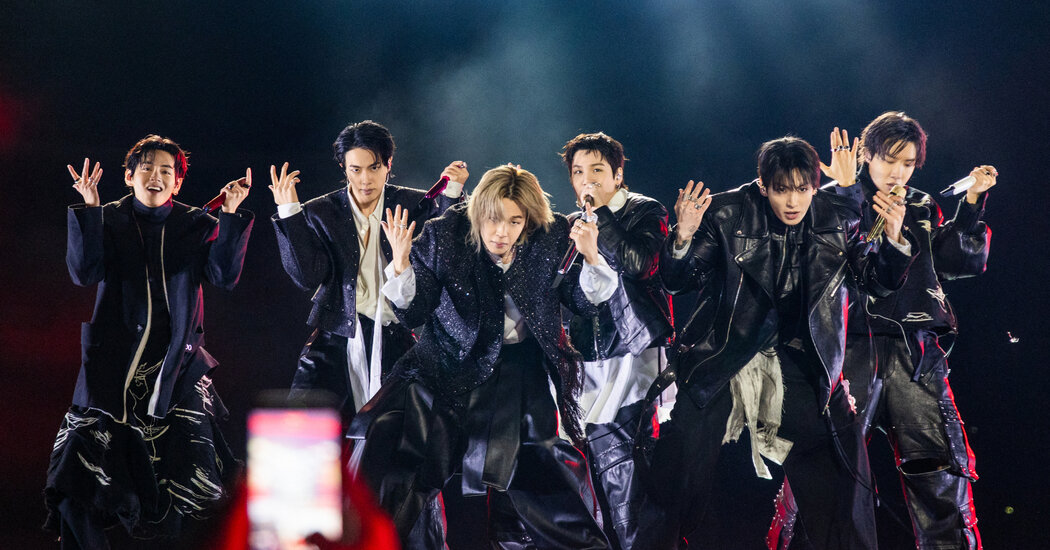
Is BTS sacrificing its K-pop roots in pursuit of global supremacy?

Few phenomena exemplify the profound power of popular culture to shape national identity and global perceptions quite like the rise of BTS. This South Korean boy band transcended mere entertainment to become a cultural force, opening the world’s eyes to K-pop and, more broadly, to the dynamism of Korean culture. In doing so, BTS not only immersed millions in infectious melodies and compelling visuals but also catalyzed a deeper appreciation — a shared understanding — of tradition, innovation, and the enduring importance of identity.

Yet, as BTS’s influence extends beyond the boundaries of entertainment, it now embodies a complex cultural crossroads. On the one hand, it symbolizes the triumph of a modern, technological society—shaped by digital connectivity—that can elevate local forms of artistry to worldwide prominence. On the other, it highlights the tension faced by many nations in protecting and preserving their cultural sovereignty. Like the aristocratic reflexions of Ortega y Gasset or the democratic caution of Tocqueville, South Korea finds itself negotiating a delicate balance between embracing international appeal and safeguarding the traditions that form its core.

Historically, cultural movements such as the Harlem Renaissance or the Italian Renaissance demonstrated that when a society recognizes and invests in its artistic roots, it ignites a renaissance not only of art but of national character. Today, in the burgeoning sphere of digital culture, the challenge has become ensuring that such movements do not become mere commodities but remain repositories of authentic tradition—a vital wellspring of societal cohesion. Critics like G.K. Chesterton reverberate through this discourse, warning that true culture anchors society beyond fleeting trends, fostering a communal memory that guides future generations.

In this turmoil of flux and tradition, BTS’s story reveals a fundamental truth: culture is both memory and prophecy, a bridge linking the stories of ancestors to the visions of descendants. While the global stage has elevated South Korea’s cultural expression, it also poses the question of whether these new icons can serve as custodians of a holistic cultural identity—one that honors the past as much as it inspires the future. As T.S. Eliot observed, “The past should be altered by the present as much as the present is directed by the past,” suggesting that true cultural evolution demands both preservation and reinvention. BTS, in their rise and current challenge, embody this dynamic process—an artistically charged dialogue between history and prophecy, tradition and innovation.

Ultimately, the story of BTS and the Korean Wave is a testament to the enduring significance of culture as both collective memory and creative foresight. It reminds us that in a world saturated with transient images and commodified identities, the true strength of a society lies in its capacity to remember—recapturing the voices of its ancestors—while daring to imagine the future. Like a poetic refrain echoing through the corridors of history, culture remains an ongoing hymn, a timeless prophecy whispering that humanity’s greatest legacy is not merely in what it creates, but in what it preserves, transmits, and redefines.

Breaking Barriers: How Blind and Visually Impaired Adventurers Conquer the World

In the dawn of history, culture has been the vessel through which societies preserve their identity, remnants of tradition, and visions for the future. The contemplative journey of experiencing unfamiliar places—whether through sight or other senses—reminds us that culture is not merely a collection of artifacts or landscapes, but a living, breathing narration of human life across generations. Consider the story from the Taj Mahal’s grounds, where even the silence, the scent of perfumed air, or the echo of recited prayers, becomes a part of this grand narrative—an inner dialogue with eternity that transcends visual spectacle alone.

An Immersive Reflection on Perception and Humanity

The extraordinary narrative of a journey with Traveleyes reveals that perception is the bridge that connects the senses to our understanding of society. The founder Amar Latif, a British entrepreneur who lost most of his sight due to hereditary retinal disease, exemplifies how culture’s core lies in multisensory engagement. His company’s ingenious model—pairing blind and sighted travelers as equals—embodies a profound truth: the fullness of human experience is not confined to sight but flourishes through touch, smell, sound, and imagination. This approach reflects Ortega y Gasset’s philosophy that society’s authentic fabric is woven through shared perceptions, where empathy becomes the key to unlocking cultural depth.

The Heritage of Tradition and the Power of Imagination

As travelers of different backgrounds navigate the streets of Jaipur or Delhi, the stories they gather through tactile interaction, sensory descriptions, and emotional resonance reaffirm the belief that culture is a living memory that also prophesies the future. Chesterton’s idea that tradition is the democracy of the dead seems fitting here. These encounters remind us that cultural symbols—whether the carvings in an ancient temple or the bustling markets—are not static relics but part of a continuum that shapes identity and societal character. When Candie, who views the world through the lens of touch and scent, describes her experiences, it demonstrates that the essence of a society’s soul can be experienced beyond the visual, deepening our appreciation of its true character.

Culture Today: A Reflection and a Warning

In this age of digital spectacle, where images often dominate, the narrative of multisensory travel and shared human understanding is a timely reminder. Societies that forsake their cultural memory risk becoming nothing more than fleeting impressions, like film snippets rather than novels—engaging only the surface. Tocqueville, who explored the delicate balance between individual liberty and societal tradition, would warn against allowing the vivid and transient visual culture to drown out the subtler, enduring stories told by our customs and collective memories. Our youth, especially, must recognize that culture embodies the continuity of tradition and the prophetic voice of future generations, and that allowing it to decline is akin to losing the script of human history itself.

The Eternal Tapestry of Humanity

Ultimately, if we listen closely and look with more than just our eyes, we realize that culture is the long and lyrical story of humanity—its memory, its hopes, its prophetic visions of what humanity can become. Through the visceral experiences of sensory travelers, we find that the human spirit’s true voyage is inward as much as outward. As T.S. Eliot noted, “The only tradition that matters is the one alive in our ears and hearts today.” In this ongoing symphony of human history, we are both the custodians of a precious inheritance and the architects of a luminous future—dreamed into being through the persistent power of culture’s memory and prophecy.

Joe Eszterhas Reflects on Reckless Past and the Unconventional Paths to Creative Revival — A Bold Take on Woke Culture and the Future of Basic Instinct

In an era where Hollywood often leans toward uniformity and sanitization, the figure of Joe Eszterhas emerges as a testament to the enduring resilience of authentic storytelling—a reminder that culture is neither mere entertainment nor superficial spectacle but a vital reflection of identity, tradition, and societal values. Eszterhas’s journey from a restless immigrant boy in war-ravaged Hungary to the legendary screenwriter of blockbuster classics reveals that culture forms the core of a society’s collective memory. It embodies both the remembrance of battles fought and a prophecy of what humanity aspires to, even amid chaos and moral ambiguity.

His work, such as Flashdance, Jagged Edge, and Basic Instinct, exemplifies this fierce, unfiltered spirit. They are not just cinematic indulgences but cultural milestones that challenge the sanitized narratives often preferred by modern Hollywood. In the words of Ortega y Gasset, the true definition of culture is “the horizon of human consciousness”; Eszterhas’s stories push that horizon outward, confronting uncomfortable truths and provoking debate. Today’s culture war, with its political overtones and ideological battles, risks reducing art to propaganda. Yet, when we look at Eszterhas’s philosophy, we recognize a fundamental lesson: culture thrives on controversy, conflict, and the courage to confront. His desire to reboot Basic Instinct as “anti-woke” underscores the persistent hunger for authentic, unvarnished narratives that dare to offend—reminding us that true engagement comes from disagreement, from *living* differences rather than suppressing them.

The cultural landscape of the past echoes in our present; as Tocqueville observed, democracy’s vitality depends on a populace that can debate freely, unafraid of offending or being offended. Eszterhas’s perspective—his willingness to court controversy—embodies this democratic ideal. His own life, filled with struggles against addiction and exile, exemplifies the truth that culture is a crucible where personal memory becomes societal prophecy. His immigrant experience from war-torn Hungary, his reporting on historical tragedies, and his later Hollywood battles are threads tightly woven into the fabric of American cultural identity. As Chesterton might argue, the culture is a kind of living tradition—an ongoing conversation through time that refuses stagnation and seeks renewal in every generation’s voice.

In the end, the story of Eszterhas reminds us that culture is both a mirror and a map—a record of past wishes, fears, and conflicts, and a prophecy guiding us toward what we might become. It echoes the timeless assertion that humanity is not just the sum of its moments but a continuous creation—an infinite scroll of memory and hope. As T.S. Eliot eloquently observed, “We shall not cease from exploration, and the end of all our exploring will be to arrive where we started and know the place for the first time.” In this cycle of remembrance and prophecy, culture remains the heartbeat of a civilization, a testament to our enduring human craving for meaning amid chaos, and a beacon urging us toward the future we have yet to conceive.

Celebrating 50 Years of All the President’s Men: A Timeless Classic in American Cinema and the Watergate Saga

In an age where the rapid currents of digital innovation threaten to erode the bedrock of traditional values, culture remains our enduring foundation—an anchor linking the past to the future, a mirror reflecting our collective identity. The 50th anniversary of the film All the President’s Men serves as a poignant reminder of how storytelling, rooted in truth and perseverance, can preserve the moral fabric of society. This cinematic masterpiece, exemplifying the rigorous pursuit of justice through the lens of journalism, underscores the vital role of culture not merely as entertainment, but as a testament to a society’s moral and intellectual resilience. It echoes Ortega y Gasset’s assertion that we are what we continually create and revere—our cultural memory shaping us like a mirror held up through the ages.

Yet, the interplay between culture and societal values is not static. When we observe the relentless efforts of Woodward, Bernstein, and the journalists of Watergate, we see not just the fight against corruption, but a reaffirmation of the foundational principles of accountability and transparency. As Tocqueville noted, democracy thrives on the vigilant participation of its citizens—an ideal vividly illustrated by the reporters’ dogged dedication, even amidst apathy and political turbulence. These stories become more than cinematic relics; they become symbols that rally society around the understanding that our cultural identity is forged in the crucible of truth, tradition, and moral resolve.

  • Milestones in cinematography capturing the spirit of investigative integrity.
  • Portrayals of historical figures demonstrating the power of moral clarity.
  • The ongoing debate over the role of media as guardians of civic virtue.

As we confront new challenges—be it political upheavals, social fragmentation, or technological disruptions—the melodious memory embedded in these stories offers a compass for the youth. Chesterton’s notion that “Tradition means giving votes to the most obscure of all classes, our ancestors” suggests that in deeply respecting our cultural roots, we find the prophetic voice of the future. If culture is both memory and prophecy, then the stories we cherish and uphold serve as the blueprint for human dignity—reminding us that our shared cultural inheritance is the blueprint of our destiny. The enduring narrative of truth, courage, and perseverance calls us to be vigilant guardians of the moral edifice, for it is in this sacred act that we find both the reflection of who we are and the promise of what humanity can become—a monument not only to memory but a prophecy inscribed in the stones of our collective soul.

Can Nintendo Correct Its Princess Dilemma in the ‘Super Mario Galaxy’ Film?

In a media landscape saturated with superficial entertainment, one might be tempted to dismiss the evolution of Nintendo’s beloved characters as mere commercial happenstance. Yet, beneath the pixelated veneer of Mario’s universe lies a compelling narrative about the shifting paradigms of gender roles, cultural storytelling, and societal values. From the humble damsel in distress of the early 1980s to modern symbols of strength and independence, these characters reflect broader cultural dynamics and philosophical insights into the relevance of culture to identity, tradition, and societal integrity.

The pioneering era of Mario and his ilk began with the simple premise of rescue: Lady—later called Pauling—was kidnapped by Donkey Kong, establishing a damsel-in-distress trope that echoed age-old narratives of heroism intertwined with the subjugation of women. This pattern persisted into the era of Princess Toadstool or Peach, whose wildest narrative ambition was to be rescued from castles, her persona mired in a perpetual state of helplessness, fitting neatly into a reactionary narrative framework present since the days of classical fairy tales. As Tocqueville observed, societal mores and legends serve as mirrors of the collective unconscious, shaping and reflecting the very fabric of our cultural identity. These game narratives—though seemingly trivial—embody a societal attitude toward gender roles, emphasizing a nostalgic constancy that resonates across generations.

However, the narrative arc begins to shift remarkably with the reemergence of Pauline in 2017 and the reimagining of Princess Peach in games like Super Mario Odyssey. Pauline, once a mere damsel, now assumes the role of the independent, multi-faceted figure—a city mayor and singer, donning a red pantsuit rather than princessly attire. This transformation echoes the historical parallel of societal emancipation: from passive to active, from victim to agent of change. Such developments echo insights of cultural critics like G.K. Chesterton, who once proclaimed that “the true soldier fights not because he hates what is in front of him, but because he loves what is behind him.” The evolution of these characters signifies a societal shift away from traditional victimhood towards a celebration of agency, strength, and self-determination, forging a comeback rooted in cultural memory and future prophecy.

Adding to this tapestry is Rosalina, who departs entirely from the damsel trope, embodying a figure of maternal strength and universal authority. With her cosmic origin story, Rosalina transcends the triviality of rescue narratives, hinting at the pursuit of a deeper understanding of existence—an unspoken rebellion against the superficiality that has long pervaded popular entertainment. This evolution illustrates the cultural tendency of modern storytelling: to explore themes of inner strength, heritage, and universal connection. The articulate efforts by Nintendo to expand her story with additional chapters and narratives underscore a fundamental truth illuminated by Ortega y Gasset: that culture is a living memory, a prophecy made flesh, shaping the ongoing story of human identity.

In conclusion, the character development within Nintendo’s franchise encapsulates a larger cultural narrative—that of tradition’s resilience and the never-ending quest for authentic self-expression. These virtual figures, once mere placeholders in a storytelling void, now carry the weight of societal change, embodying a culture’s enduring desire for meaning, agency, and continuity in the face of relentless change. As we observe this transformation, it becomes clear that in the grand tapestry of human history, culture is both memory and prophecy: a reflection of where we have been and a guiding light towards where we are yet to go. In the silent poetry of pixel and play, we find the echoes of our collective soul—a testament to the unyielding spirit of human creativity and tradition that persists beyond the fleeting shadows of entertainment, whispering through the ages that our stories, like ourselves, are destined to evolve—ever resilient, ever true.

Raye Clinches Top Spot on Album Charts with “This Music May Contain Hope” — A Bold Reflection of True Artistic Spirit

In an era often defined by fleeting digital flashes and transient trends, the significance of culture as a sturdy vessel of identity and societal continuity remains profoundly vital. Recently, the artist Raye achieved her second number-one hit this year, following the monumental success of “Where The Hell Is My Husband,” a song that resonates beyond mere entertainment, signaling a deeper engagement with the emotional currents shaping contemporary life. This achievement, while seemingly a simple milestone in popular music, exemplifies how culture functions as both a reflection of our collective soul and a catalyst for societal discourse. As Ortega y Gasset observed, “The culture of a people is its autobiography, written in the language of art, music, and tradition.” Such moments of artistic triumph remind us that even in the tumult of modernity, the cultural artifacts we produce serve as enduring testamentaries of human experience.

Through the lens of cultural criticism, one can interpret recent musical successes as emblematic of a society’s ongoing negotiation with its roots and aspirations. Raye’s chart-topping outputs, emblematic of the current zeitgeist, underscore the crucial role that popular figures play in shaping moral and aesthetic sensibilities. As T.S. Eliot contended, “The past is never dead; it’s not even past.” The melodies that resonate within our contemporary landscapes are, in truth, echoes of our shared history, reinterpreted through the current cultural dialect. Such dynamics evoke the notion that “culture is the memory of a society and the prophecy of its future,” a concept that elevates art from mere entertainment to a vital force in forging societal coherence and civic identity. Indeed, as Tocqueville highlighted, social cohesion depends on a shared sense of cultural continuity—an ongoing dialogue between the generations, shaped by the works and symbols that define our age.

In contemplating the role of artists like Raye and the contemporary cultural landscape they inhabit, it is essential to recognize the importance of tradition in the face of rapid change. Chesterton famously maintained that, “The true reason why society is so decadent is that it has forgotten the importance of the ordered and decorative aspects of culture—those which remind us of the divine and the eternal.” Today’s popular culture, often dismissed as transient, actually functions as a modern temple of those eternal human themes—desire, longing, hope, and despair. As young people turn to music, arts, and collective narratives, they forge a sense of belonging rooted in shared symbols and stories—imprints that anchor them in their history while propelling them towards an envisioned future. These cultural expressions remind us that society endures because of its capacity to remember, reinterpret, and reimagine—an ongoing cycle that links us to our ancestors and beckons us towards our destiny.

Ultimately, culture weaves the fabric of human existence—an intricate tapestry where past and future intertwine in timeless dialogue. Amid the rise of new icons and ever-changing trends, it is this enduring conversation that sustains the human spirit. Like a song that echoes across generations, our cultural memory is both a tribute to what has been and a prophecy of what is yet to come. It whispers to us in melody and image, reminding us that to be truly alive is to partake in the eternal act of understanding who we are and where we are headed—an ongoing act of creation and remembrance, crafted by the hands of those who dare to imagine a better tomorrow.

Social Media Auto Publish Powered By : XYZScripts.com