Matox News

Truth Over Trends, always!

Meet the Hostages Freed: What You Need to Know

Gaza Conflict Escalates as Hamas Releases Hostages Amid Devastation

The ongoing conflict between Israel and Hamas has reached a critical juncture, with recent developments revealing both tragic human tolls and shifting geopolitical strategies. According to the Israeli military, 20 hostages have been released by Hamas and returned to Israel, yet the grim reality remains stark, as 48 hostages continue to be held in Gaza. This stark divide underscores the brutal human cost of the conflict, where families across the region face uncertainty and despair. The situation is further compounded by the death toll, with Gaza’s Hamas-run health ministry reporting more than 67,000 killed—a figure that international analysts believe may even understate the true scale of devastation.

Within this fraught landscape, the stories of individual hostages reveal a haunting tapestry of suffering. The twin brothers Gali and Ziv Berman were abducted from Kibbutz Kfar Aza, Ziv held for over 40 days, enduring separation and uncertainty before their eventual release amid a fragile ceasefire. Similarly, Ariel Cunio was forced to confront what he described as “a horror movie” in captivity, only to be freed months later. Others, like Yosef-Chaim Ohana, still face an uncertain future, with Hamas claiming his body was returned after being found dead in Gaza. These individual tales are emblematic of the broader implications of the conflict—how international decisions and military actions directly impact lives, shaping the social fabric of both nations.

International Reactions and Geopolitical Ramifications

The United Nations and various Western allies have condemned the violence, yet their calls for restraint are overshadowed by a fundamental shift—how international pressure is recalibrating, with some nations seizing opportunities amid chaos. Countries like Tanzania and Thailand mourn their fallen citizens, whose deaths in Gaza have ignited debates about international involvement and the limits of diplomatic intervention. Meanwhile, Israel faces mounting pressure to justify its military actions, which have already resulted in a humanitarian crisis that many attribute to a defensive stance against a ruthless enemy. The real turning point is in how diplomatic strategies evolve amidst this violence, with some analysts warning that a failure to pursue a decisive resolution risks a prolonged regional conflict with far-reaching consequences beyond Gaza.

Historians such as Benny Morris and Finkelstein, along with international organizations like Amnesty International, suggest that each decision—whether to escalate or negotiate—will ripple through history, shaping the future of Middle Eastern stability. The shift towards military escalation appears to be the prevailing option for many nations, as they grapple with defending their interests in a volatile geopolitical chessboard. The high human cost and the emotional toll on families continue to underscore that the repercussions, both immediate and long-term, threaten to redefine notions of security, sovereignty, and humanity itself.

The Weight of History Still Unfolding

As dozens of families mourn their lost and mourn the hope of reunion, and as the world observes with bated breath, the regional landscape stands at a dangerous crossroads. Hamas’ release of hostages and the human stories intertwined with the violence serve as a sobering reminder: the decisions made today will echo through the corridors of history, long after the guns fall silent and the dust settles. The relentless cycle of violence and diplomacy continues, leaving behind a legacy of resilience, tragedy, and the uncertain promise of peace. As nations debate and confront their own responsibilities, the unfolding chapters of this conflict serve as a stark testament to the enduring, often tragic, resilience of the human spirit in the face of relentless upheaval.
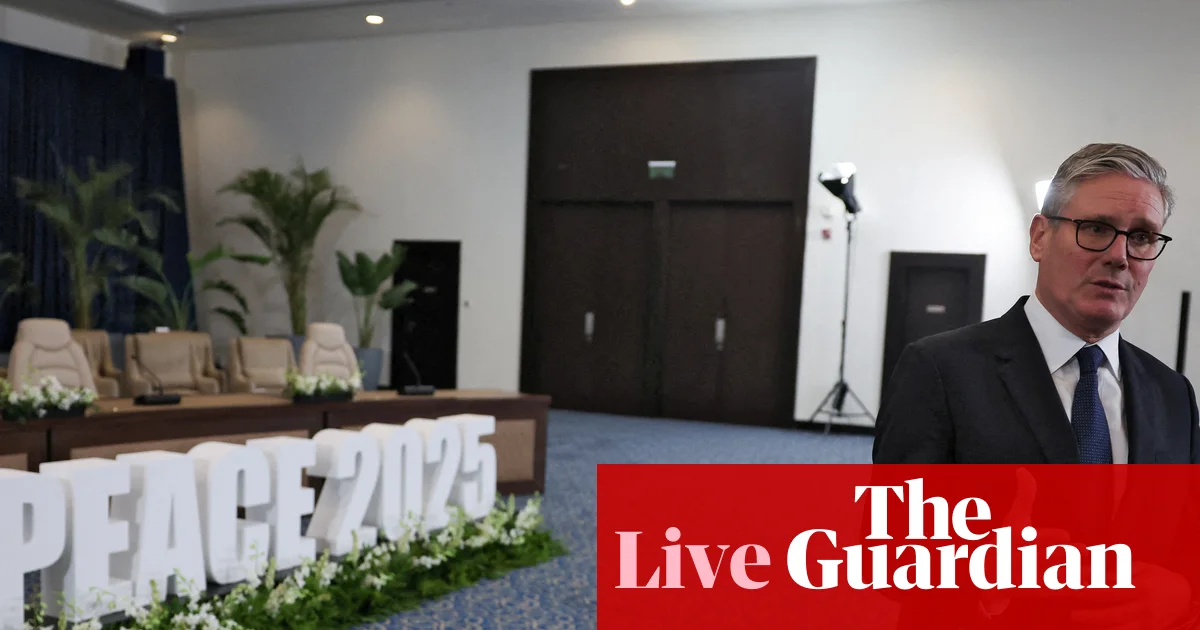

Starmer Confronted by MPs Over China Spy Trial Collapse—UK Politics Live

UK’s Domestic Agenda: Infrastructure and Security in the Shifting Global Landscape

In a move that underscores the pragmatic yet assertive posture of Britain on the global stage, the government has recently announced significant reforms to its domestic planning regulations, aiming to accelerate infrastructure development. This initiative, encapsulated within the planning and infrastructure bill, is now bolstered by a series of amendments designed to streamline approval processes, reflecting a broader national strategy driven by economic imperatives and geopolitical considerations alike. As Steve Reed, the housing secretary, emphasizes, the government prioritizes national security while seeking to foster rapid development—decisive steps that signal a move towards more sovereign control over critical infrastructure, including foreign-backed projects skewed by geopolitical interests.

This domestic push for infrastructural independence comes amid heightened tensions over China and its expanding global influence. The UK’s approach is now more cautious and defensive, especially concerning recent controversies involving Chinese diplomatic missions. The contentious application for a “super-embassy” in London exemplifies this balancing act. Delays in approval stem from China withholding unredacted plans, and the UK’s decision-making process, as outlined by Reed, hinges on comprehensive security evaluations—highlighting a shift to prioritize security concerns over economic or diplomatic advantages. This stance has broader geopolitical impact, signaling to allies and rivals alike that the UK is willing to assert its sovereignty against external threats, particularly those perceived from Beijing’s growing global footprint.

International Ramifications: Escalating Tensions and Evolving Alliances

At the international level, the UK’s stance echoes the sentiments of other conservative-leaning democracies recently emphasizing cybersecurity and sovereignty, amidst a shifting geopolitical landscape. Historians and analysts underscore how this recalibration aligns with an era marked by cyber warfare, espionage, and the strategic contest for influence in the Indo-Pacific and beyond. The recent fiasco surrounding allegations of Chinese espionage involving British nationals continues to fuel debates on how to effectively counterbalance economic dependence with security risks. The UK’s decision to impose stricter controls on foreign diplomatic and infrastructural projects mirrors similar policies adopted by the United States and Australia, signifying a regional trend toward assertive sovereignty in the face of Beijing’s encroachments.

Furthermore, UK policymakers and international observers recognize that these domestic security measures carry ripple effects, influencing alliances and rivalries. The emphasis on increasing security expenditure—by £600 million, according to Reed—aligns with a broader global shift towards bolstering defense capabilities, cyber resilience, and intelligence cooperation. How these decisions shape alliances, particularly with NATO, and influence global diplomatic norms, remains a pivotal question for this decade’s geopolitical chessboard. It could redefine the parameters of diplomatic engagement, where security concerns eclipse previous economic or diplomatic mandates. Analysts warn that such a shift signifies more than domestic policy—it signals a new era of confrontation and prudence in international relations.

The Unfolding Future: A Pivotal Chapter in History

As British leaders weigh security against economic gains, the global community watches with bated breath. What began as mere infrastructure reform reveals itself as a test of sovereignty and resilience in a turbulent world. Today’s decisions by the UK serve as a harbinger of what’s to come: a fragile yet resolute effort to safeguard national interests amid global upheaval. The weight of history is still unfolding, and each decision carves a new chapter—one that may determine the balance of power for generations to come. The lines of diplomacy and defense are being redrawn, and the world stands at a crossroads that will shape the future of sovereignty, security, and influence in the twenty-first century.

Affinity Education executives step down amid childcare scandal backlash

In what can only be described as a sobering wake-up call for the Australian childcare sector, the recent crisis at Affinity Education Group underscores the dangerous intersection of corporate misconduct and societal safety standards. The resignation of its CEO, Tim Hickey, and COO, Nishad Alani, signals a pivotal moment in an ongoing saga that has captured national attention, but the implications extend far beyond Australia’s borders.

The scandal erupted in July when police in Victoria charged Joshua Brown with over 70 offenses linked to multiple victims aged between five months and two years. Brown worked across 11 Affinity centres, raising serious questions about oversight, safety protocols, and corporate responsibility. Critics have pointed out the troubling fact that high executives, including Hickey, received bonuses reportedly up to $300,000, despite evident lapses in safety and staff conduct—a revelation that has incited outrage across communities and calls for accountability from shareholders and regulators alike.

From an international perspective, this crisis highlights the broader vulnerabilities within for-profit childcare providers and their governance standards, which are of concern to global institutions like UNICEF and the OECD. Historians, such as Dr. Raymond Williams, warn that prioritizing profit over child welfare creates dangerous cultures of complacency, especially when executive bonuses are tied to performance metrics that may neglect safety. The New South Wales parliamentary inquiry revealed that breach rates at Affinity were 70% higher than the state average in 2024, further exposing systemic failures that threaten societal norms surrounding child protection and corporate ethics.

The repercussions from this scandal extend beyond Australia’s shores, affecting how nations scrutinize their own daycare and educational subsidies. For instance, Canada and the UK are observing these developments closely, contemplating reforms in licensing and oversight procedures. How decisions made in the boardrooms of multinational corporations influence societal trust and social stability on a global scale becomes a vital concern. The International Labour Organization emphasizes that the safety of vulnerable populations—especially children—must be prioritized if social cohesion is to be maintained in an increasingly interconnected world.

As the saga of Affinity unfolds, the weight of history presses down—a reminder that unchecked corporate greed and lax oversight can have devastating consequences. With each resignation and each new revelation, societies are called to reflect on their ethical benchmarks and the true cost of prioritizing profit over progress. Whether this tragedy will stimulate meaningful reform or merely serve as a cautionary tale remains to be seen, but the global watch is now focused on how nations uphold their promises to protect the most vulnerable amid a landscape marked by greed and bureaucratic complacency. The world’s children, after all, are the most precious legacy—yet their safety often hinges on the decisions made in chambers far removed from the playgrounds where innocence should thrive.

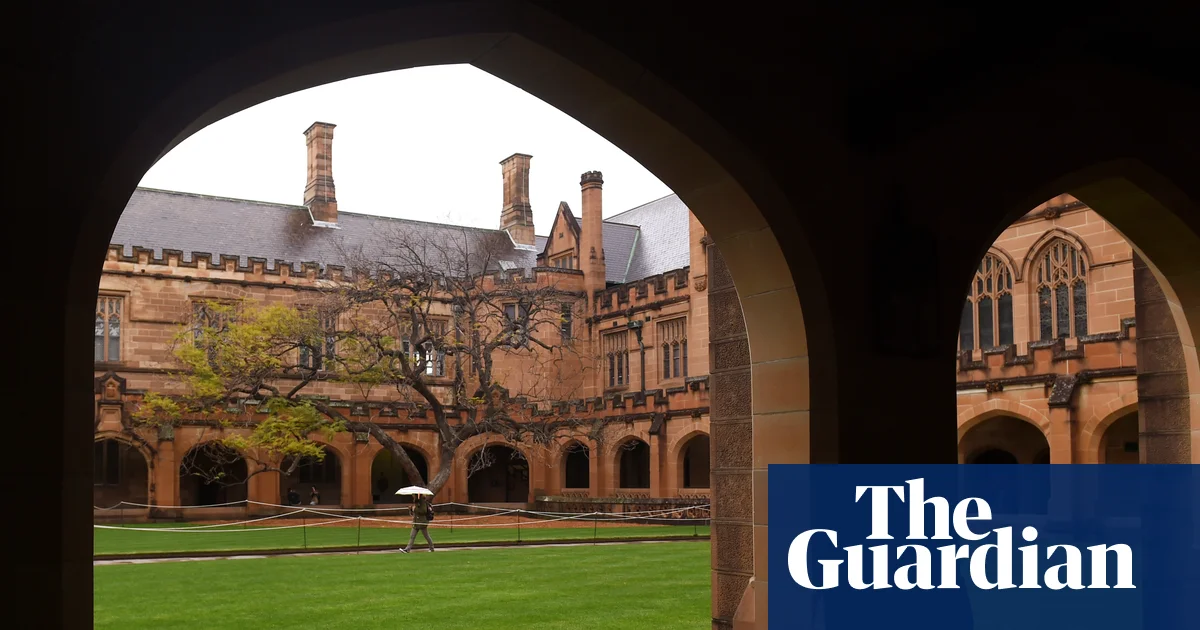
University of Sydney Blocks International Student Enrollment Increase for Next Year

In a clear reflection of shifting geopolitical priorities and internal policy struggles, Australia has announced it will not expand its international student intake for the year 2026. Despite its reputation as a global educational hub, the country’s plan to allocate 295,000 new places, after the failed attempt to impose a cap at 270,000, now signals a calculated move amidst mounting internal debates and international competition. This decision highlights a strategic recalibration—one that navigates the complex intersection of economic benefits, domestic social pressures, and international influence.

Notably, the University of Sydney, which retains the title of Australia’s leading institution for international students with 11,900 enrolments, was bypassed in the allocation process, receiving no additional places. The government’s reasoning underscores the importance of market diversification, assessing universities on their engagement with South-East Asia—a region of rising geopolitical significance. The emphasis on regional focus aligns with Australia’s broader goal of bolstering its influence amid the escalating strategic rivalry with China, India, and other emerging powers. Analysts warn that this tightened control could serve to channel international educational efforts towards more “trustworthy” alliances, effectively politicizing the sector as part of a larger diplomatic chess game.

International organizations and independent analysts continue to scrutinize the broader implications. Many point out that the controversy surrounding international students is more than academic—it’s a proxy for national identity, sovereignty, and economic sovereignty. Critics argue that the narrative linking international students to housing pressures is often exaggerated, with some studies indicating negligible impact on rental markets. Nevertheless, the government has responded by promising incentives for universities investing in student accommodation, signaling a shift towards embedding security and control in Australia’s educational diplomacy. This approach mirrors a wider global trend—nations consolidating borders and influence in response to an increasingly unpredictable international environment.

Such moves ripple well beyond the classroom. Monash University and regional institutions like Charles Sturt and Federation University are now seen as part of a broader strategy to foster regional resilience and resourceful adaptation. As the international landscape shifts, the impact on global influence and societal cohesion becomes more pronounced—shaping perceptions of national strength and cultural identity. According to prominent historians and policy analysts, these policies could be viewed as attempts to orchestrate a narrative of resilience amid the chaos, but they also risk entrenching divisions and fueling international tensions.

As Australia forges ahead, the stakes remain high. The decision not to expand international student numbers is a reflection of a wider, more pressing reality: the global order is in flux, and nations must redefine their roles on the world stage. As history continues to unfold, the coming years will reveal whether these calculated moves will fortify Australia’s position or deepen its vulnerabilities. In a world where educational diplomacy is increasingly intertwined with geopolitical strategy, the narrative remains unwritten—one where the weight of history presses heavily upon the decisions made today, shaping the future for generations to come.

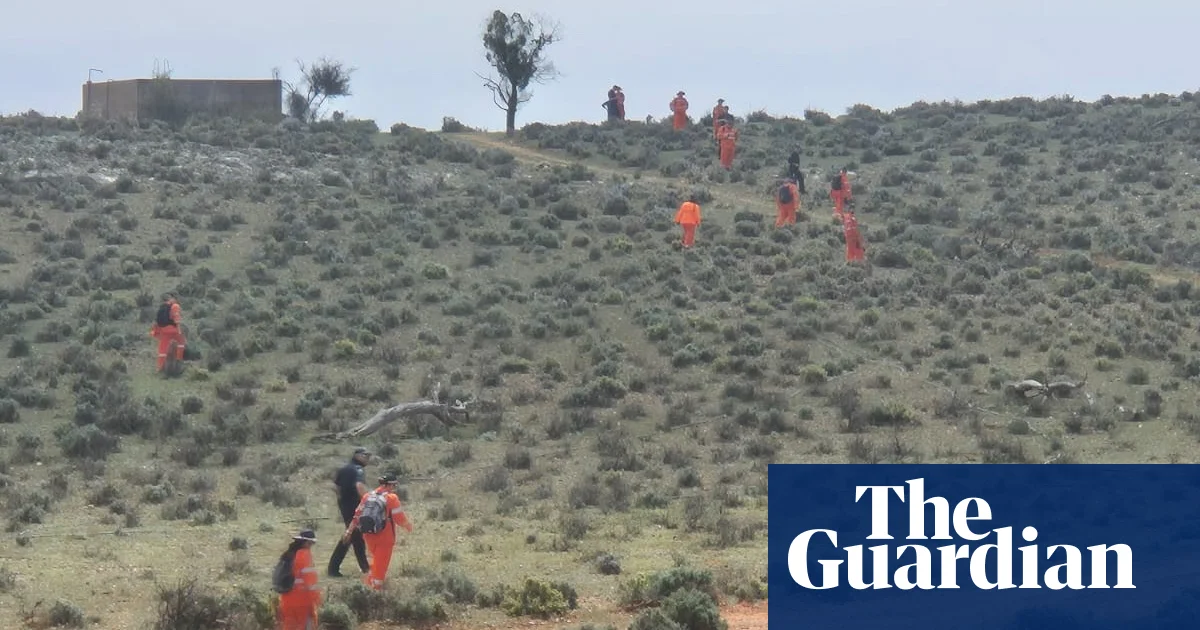
Police intensify hunt for missing boy Gus in outback SA, guided by survival experts

Unfolding Human Tragedies and the Shifting Geopolitical Landscape

Across the globe, hotbeds of conflict and natural disasters continue to expose the fragility of international stability and the resilience of societies. The heartbreaking story of Gus Lamont, a four-year-old missing in the vast outback of Australia, has captured widespread attention, yet it also reflects a broader pattern of how local tragedies resonate with global narratives. As authorities expand exhaustive search operations involving defense forces, the incident underscores the how human vulnerabilities and the fight for survival remain universally intertwined with geopolitical tensions and resource struggles.

Meanwhile, international organizations like the United Nations continue to grapple with crises that threaten regional stability. The recent escalation in the Ukrainian conflict and countering shifts of power in the Middle East demonstrate how internal conflicts often escalate into broader geopolitical confrontations. Countries such as Russia and China are watching closely, exerting influence through diplomatic and economic means. The transparency of these developments is crucial, as their flares of conflict could ignite further international instability, prompting powerful nations to adjust their strategic postures.

Historian and geopolitical analyst James Harrington warns that these accumulating tensions threaten to reverberate far beyond their immediate regions. His assessments echo the concerns of data from the International Crisis Group and think tanks, which emphasize that decisions made in the shadow of local crises heavily influence the future of global order. As climate change accelerates disasters like droughts and floods, countries are forced to prioritize their own security and sovereignty, often at the expense of international cooperation. This phenomenon manifests vividly in the Australian case, where exhaustive search efforts stretch local resources but also highlight the limits of state capacity when confronting unpredictable emergencies.

In this era marked by rapid shifts, the role of global power dynamics becomes more evident. The recent renewed efforts to expand military and technological alliances signal an underlying competition for influence that leaves societies embroiled in larger strategic struggles. As the European Union and United States further tighten their international collaborations, nations buckle under increasing pressure to maintain sovereignty while navigating the complexities of a changing world. The unfolding story of Gus Lamont, though local in scope, becomes emblematic of a broader consensus —that human tragedies are often catalysts for geopolitical recalibration.

Conclusion: The Weight of History in the Making

As the search for Gus Lamont continues amid a backdrop of mounting international crises, the world is reminded that history is often shaped by moments of profound vulnerability. Today’s choices, alliances, and responses to crises will echo through generations, determining whether societies will find resilience or succumb to chaos. The weight of history remains heavy on the shoulders of leaders and nations alike, as they navigate an unpredictable future where every decision writes a new chapter in the ongoing saga of global stability.

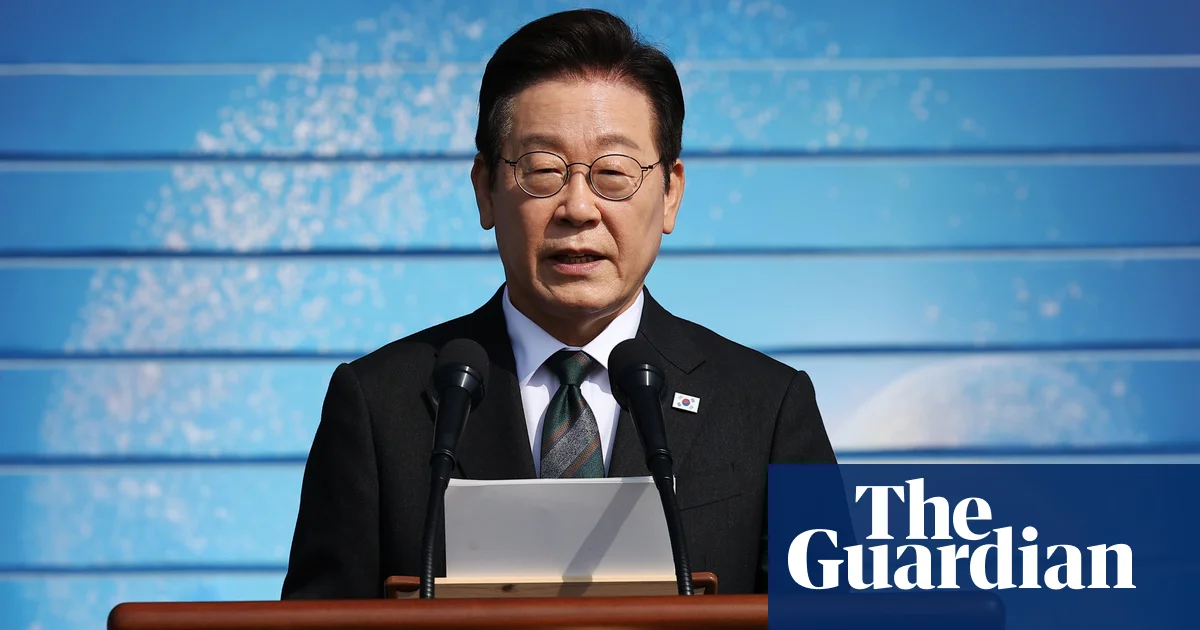
Korean Student Dies After Cambodia Scam Horror, Sparks Outrage

The recent tragic death of South Korean university student Park Min-ho in Cambodia has unveiled a troubling escalation in regional human trafficking and scam-related violence. The incident, which involved severe torture and ultimately his killing, has reignited international concern about the rise of organized crime syndicates exploiting Southeast Asia’s porous borders. South Korea’s government has responded with urgent diplomatic measures, emphasizing their duty to safeguard citizens abroad, while international analysts observe this incident as a stark warning of the deteriorating security landscape in the region.

According to reports, the circumstances of Park Min-ho’s death expose a brutal underworld of online fraud operations, often masked behind the veneer of promising employment opportunities. Victims are typically lured by criminal networks with false promises of high-paying jobs, only to find themselves confined in compounds involved in voice phishing scams, forced labor, and physical abuse. The findings of the Cambodian authorities, which cite “severe torture” as the cause of death, highlight the extreme brutality faced by victims. Three Chinese nationals have been charged with murder and fraud, yet many suspects remain at large, underscoring the transnational challenge of dismantling these crime rings. The United Nations and Interpol have warned that such syndicates are increasingly sophisticated, leveraging technological vulnerabilities and local complicity to expand operations.

The geopolitical impact of this crisis extends beyond individual cases, straining diplomatic relationships between Korea and Cambodia. Seoul has initiated efforts to establish direct police cooperation with Phnom Penh by proposing a specialized “Korean desk” to ensure timely and effective intervention in cases involving its nationals. With tensions rising, officials from both nations are scheduled to meet, aiming to reinforce bilateral commitments to combat crime and protect South Korean citizens. Nonetheless, the Cambodian government’s denial of prior knowledge regarding Park Min-ho’s case—and the emphasis on cooperation—reflects the broader challenge of sovereignty and accountability in addressing transnational crimes. The situation exemplifies a shift where economic investments and political ties are increasingly overshadowed by urgent human security concerns.

Historically, South Korea has surged past its initial post-war recovery to emerge as a regional economic powerhouse, yet its citizens’ safety abroad has become a focal point for national consciousness and international diplomacy. Analysts argue that the rise of scam hubs in Southeast Asia signals a profound failure of governance in host countries like Cambodia, where corruption and inaction foster an environment conducive to criminal enterprises. Meanwhile, organizations such as Amnesty International have lambasted the Cambodian government for permitting such operations to flourish, with some compounds allegedly shielded from law enforcement. The international community faces mounting pressure to intervene decisively, balancing respect for sovereignty with the necessity of human rights protections and anti-trafficking measures. The path forward requires coordinated efforts—not only law enforcement but also socio-economic reforms—to dismantle these networks at their roots.

As history continues to be written in the shadows of this unfolding catastrophe, the weight of the present confrontation is undeniable. The story of Park Min-ho is but one tragic chapter in a larger narrative of a region grappling with the rise of criminal syndicates, geopolitical tension, and the urgent need for justice. The question remains: how will nations respond to these growing threats, and at what cost? With each passing day, the silent stories of victims echo through corridors of power, reminding the world that beneath the surface of geopolitical disputes lies the fundamental battle for human dignity and security—an ongoing struggle with consequences that will shape history’s verdict for generations to come.

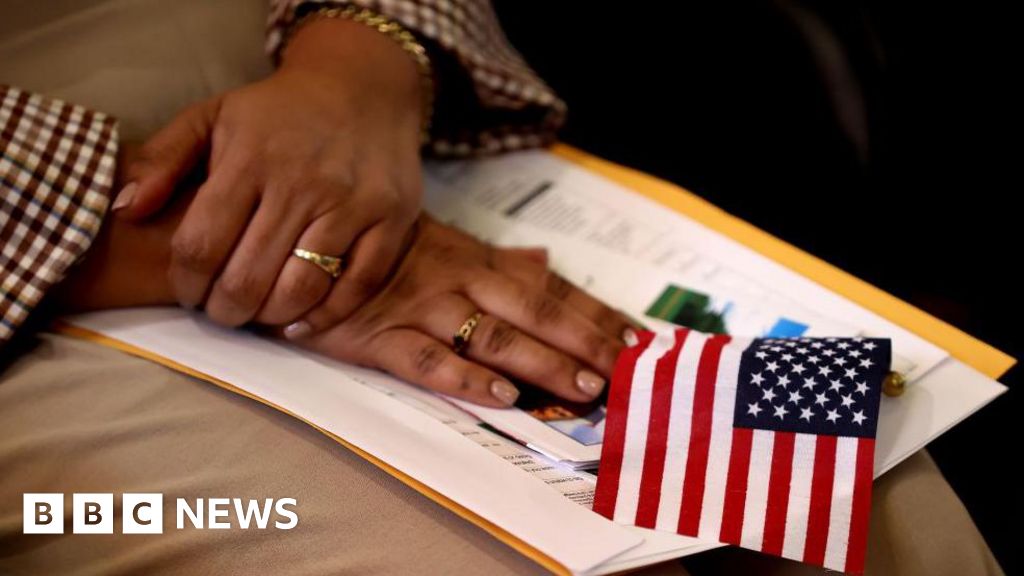
Shutdown halts U.S. citizenship ceremonies, impacting new Americans

In what can only be described as a stark illustration of political paralysis impacting the lives of millions, a recent government shutdown in the United States has temporarily halted vital immigration services, leaving aspiring citizens in limbo. Amidst ongoing internal political deadlock in Washington, over 700,000 federal workers are now on unpaid leave, and the shutdown’s ripple effects threaten to undermine the integrity of America’s immigration system. This scenario underscores the profound geopolitical impact of internal divisions in one of the world’s leading powers, demonstrating how internal policy fractures have tangible consequences on individuals’ destinies and national reputation.

With the deadline for government funding having expired on October 1, lawmakers have been deadlocked in an increasingly bitter confrontation that exposes deep partisan fissures. The inability to reach a consensus has led to the shutdown, affecting core government functions. Notably, the U.S. Citizenship and Immigration Services (USCIS), although typically resilient due to funding through application fees, faced disruptions in services that are critical to those seeking U.S. citizenship and new opportunities on American soil. This disruption manifests not only as inconvenience but as a major setback for countless hopeful immigrants, many of whom have invested years, even decades, of effort in pursuit of the American dream. The shutdown accentuates a broader narrative of Washington’s failing governance, where ideological disputes threaten the fabric of social mobility and national integration.

Internationally, analysts and historians have pointed to this shutdown as a symptom of a shifting global order—one where internal discord in superpowers like the U.S. might dampen their ability to lead on the world stage. Countries in Asia, Europe, and elsewhere watch nervously as recent US policies reveal a nation grappling with its internal divisions. As political scientists warn, such internal crises could weaken U.S. soft power, embolden rivals, and fuel regional instability. Moreover, the decision to delay or cancel naturalization ceremonies—though seemingly administrative—carries symbolic weight, signaling to both allies and adversaries that America’s own governance is under strain. In a world of rising powers, where China and Russia challenge the rules of the international order, the internal disarray within the U.S. diminishes its moral authority and strategic influence.

Despite promises from officials that services will resume once a budget agreement is reached, the uncertainty continues. As the ongoing stalemate prolongs, critics argue that this exposes a fragile democracy in distress, where partisan conflicts threaten to erode institutional trust and undermine societal stability. Many experts, including prominent historians and policy analysts, warn that such internal discord could have long-lasting effects—shaping the future narrative of a nation still struggling to reconcile its ideals with political realities. Meanwhile, those caught in the crossfire remain anxious, faced with an uncertain horizon where their hopes for a new life hinge on the fragile pause of a government unable to function.

As the world watches, a profound question lingers: will this internal crisis serve as a turning point—a moment of reckoning for a nation that once projected strength and resolve—or will it mark the beginning of a period of enduring decline? History continues to unfold in the shadows of political impasse, echoing with the weight of American promises and the promise of global futures yet to be written.

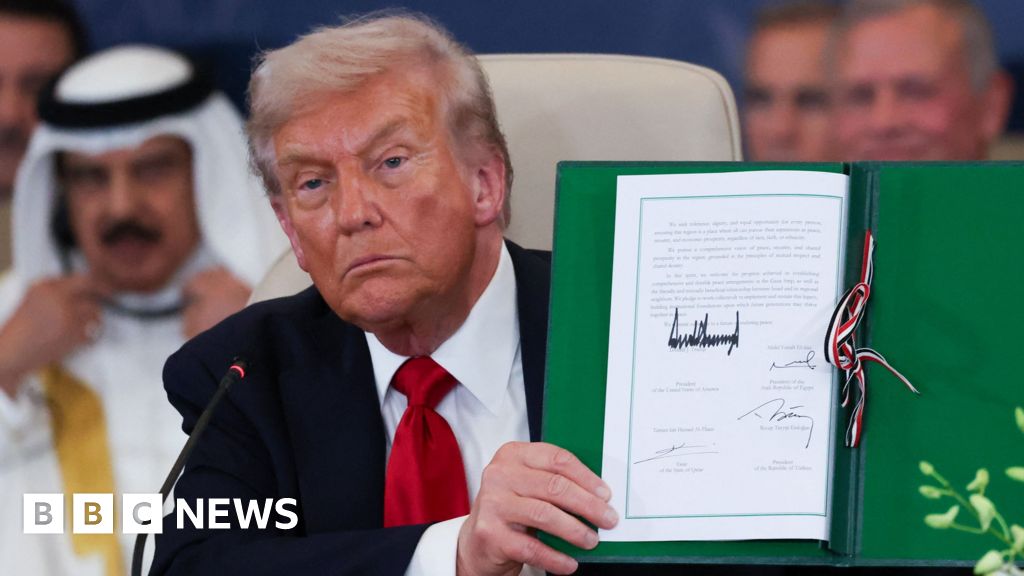
Trump kicks off first phase of Egypt deal, signaling bold new move

In a significant milestone for Middle Eastern geopolitics, US President Donald Trump along with other key world leaders convened in Egypt to sign the groundbreaking first phase of a ceasefire agreement in Gaza. This diplomatic breakthrough follows a period marked by intense violence, hostages, and longstanding tensions. The summit, hosted by Egypt’s President Sisi, was carefully orchestrated to serve as a turning point—an effort to forge a new path toward peace in a region historically plagued by conflict. The agreement’s signing marked a notable moment, not just for the immediate ceasefire, but for what analysts argue could be a foundation upon which a broader peace process might be built.

The symbolism was palpable. Trump posed proudly in front of a banner reading “Peace 2025,” signifying a forward-looking vision that aims to secure stability over the coming years. During the summit, Trump, Sisi, Qatar’s Emir Tamim bin Hamad Al Thani, and Turkey’s President Erdogan all signed the document, explicitly endorsing the initial phase of peace. The gathering’s optics signaled a rare moment of international consensus on the necessity of renewing dialogue in a tumultuous region that has endured decades of conflict. The involvement of key players exemplifies a recognition that international cooperation remains crucial for the stability of the Middle East, and that only through unified effort can progress be achieved.

Furthermore, the release of Israeli hostages and Palestinian prisoners prior to the signing could be seen as a pragmatic step toward de-escalation—an acknowledgment that confidence-building measures are essential for any meaningful peace. As historians and international analysts point out, this phase could set a precedent, emphasizing that even amidst enduring conflicts, diplomacy remains an indispensable tool. The United Nations and various international organizations have cautiously welcomed the progress, highlighting that the road ahead remains fraught with challenges. Yet, this effort demonstrates that the collective will of regional and global powers can, at least temporarily, override the divisions that have long defined the landscape.

The geopolitical impact of this development extends far beyond Gaza. The outcome may influence U.S.-Middle Eastern relations, reshape alliances, and impact broader regional stability. Countries such as Turkey and Qatar, often viewed as regional mediators, are positioning themselves as pivotal stakeholders in a peace process that could redefine traditional power balances. For Israel and the Palestinian Authority, this is a moment of immense hope and uncertainty alike—an opportunity to build on momentum or risk slipping back into cycle of violence. As the international community watches closely, experts warn that real peace will depend on sustained negotiations and tangible changes on the ground.

Yet, history has shown that the path to peace in the Middle East is seldom straightforward. The looming question remains whether this first phase signifies a true turning point or merely a fragile pause in a long-standing saga. As the dust settles on the summit, the world’s gaze remains fixed on a region where each decision—each handshake and promise—could rewrite the narrative of conflict. The future of the Middle East holds its breath, as the weight of history continues to unfold with every diplomatic gesture, every scrap of hope offering a glimpse of what could be, if only the will persists.

Israelites and Palestinians traded free, as Trump calls it a 'historic dawn' in Middle East
Israelites and Palestinians traded free, as Trump calls it a ‘historic dawn’ in Middle East

Middle East Ceasefire: A New Chapter or a False Hope?

The recent ceasefire agreement in Gaza marks a pivotal moment in the ongoing conflict that has ravaged the region for over two years. After relentless violence, Israel and Palestinian factions, primarily Hamas, have engaged in intense negotiations facilitated by the United States and supported by key regional players such as Egypt, Qatar, and Turkey. The deal, brokered in part by President Donald Trump during his visit to the region, signifies a major step toward potentially consolidating peace—at least temporarily—but also exposes the deep-rooted problems that threaten to undo this fragile truce. The initial hostage and prisoner exchange was celebrated across both sides, with families reuniting in scenes of raw emotion, reflecting the profound human longing for an end to years of suffering.

  • The first phase of the US-backed peace plan involved Hamas returning all living Israeli hostages, while Israel released nearly 2,000 Palestinian prisoners, including those serving life sentences. The exchange was hailed as a “historic dawn” by President Trump during his speech at the Knesset, emphasizing the potential for a new Middle East.
  • To sustain momentum, the parties agreed on a ceasefire that took effect Friday, accompanied by an increase in humanitarian aid into Gaza, aiming to mitigate the catastrophic damage wrought by years of conflict.

However, the true test now begins. Critics and experts, including historians and international observers, warn that this ceasefire and the diplomatic rhetoric mask an array of unresolved disputes that could threaten to plunge the region back into chaos. Key sticking points include the extent and timeline of Israeli troop withdrawals, the disarmament of Hamas—a group that has long rejected disarmament unless a Palestinian state is established—and the future governance structure of Gaza. The plan envisions Gaza under a temporary Palestinian technocratic authority overseen by a “Board of Peace,” with eventual sovereignty transferred to the Palestinian Authority after reforms. Yet, Hamas’s rejection of foreign governance and its demand for disarmament as a precondition for peace complicate the pathway forward, making the full realization of these agreements uncertain.

Despite the optimistic tones, many argue that geopolitical impact of this breakthrough is complex. Israel’s Prime Minister Benjamin Netanyahu and Trump administration appear determined to avoid a complete capitulation to Hamas’s demands, emphasizing security and sovereignty concerns. Meanwhile, regional rivals such as Iran and militant groups remain watchful, assessing whether this peace is genuine or merely temporary tactical maneuvering. Many security analysts, like those at the International Crisis Group, warn that without addressing the core issues—such as Hamas’s disarmament and broader Palestinian statehood aspirations—the cycle of violence could resume at any moment.

History warns that peace negotiations in this region are often mere pauses in a longer struggle, with each attempt at resolution exposing new fractures. Perversely, the international institutions that once aimed to oversee lasting peace are often hamstrung by their own political interests and inability to enforce agreements. As international organizations monitor developments, the perspective of many analysts remains skeptical about whether this latest ceasefire will hold. How subsequent phases unfold—regarding troop withdrawal, governance, and disarmament—will ultimately determine whether this is a genuine turning point or just yet another chapter in a seemingly endless saga of conflict.

As historic moments unfold on the stage of international diplomacy, the shadows of history loom large. The world continues to watch with bated breath—aware that beneath the surface of fleeting peace lies a struggle that has defined generations, and which may yet rewrite the future of the Middle East around the flames of renewed hope or the ashes of unfulfilled promises.

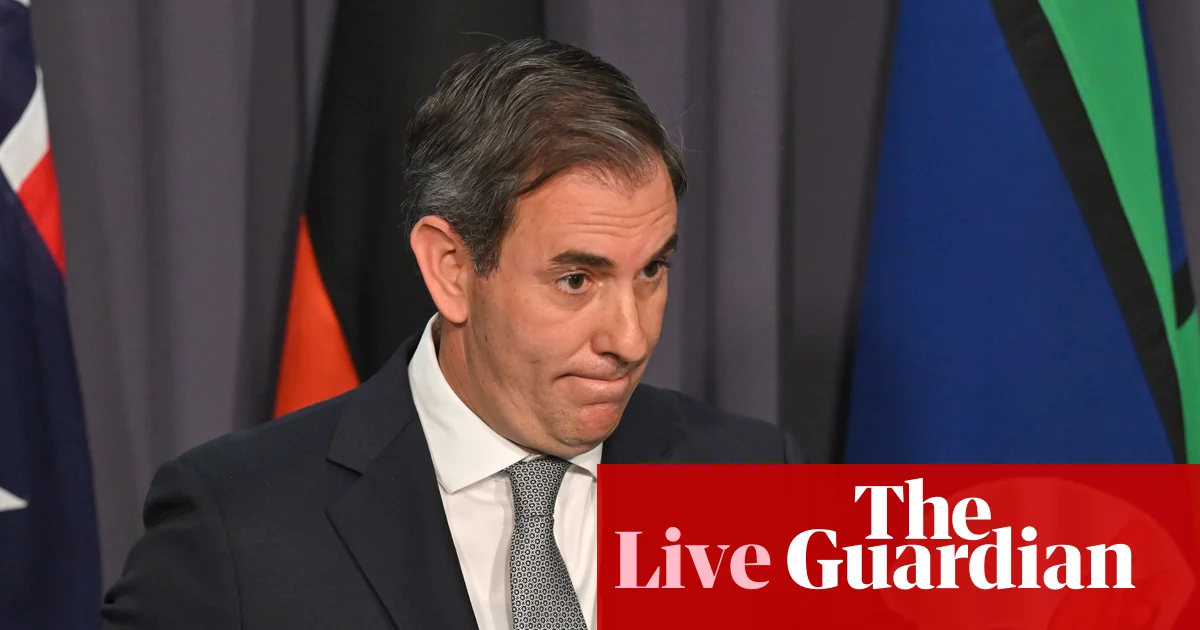
Australia News Live: Chalmers credits Keating as super tax climbdown hits; cybercrime costs skyrocket

In a rapidly evolving geopolitical landscape, recent developments have underscored the profound influence of individual leaders and international blocs in shaping global stability. Australia, often considered a peripheral player, has stepped into the spotlight, revealing new insights into how internal political debates and policy recalibrations resonate beyond the southern hemisphere. The Australian government’s recent decision to back down on a controversial superannuation tax proposal, reportedly influenced by veteran politician Paul Keating, exemplifies the complexities faced by national leadership when balancing domestic interests with broader economic stability. According to analysts from international think tanks, such moves reflect a cautious approach aimed at maintaining fiscal sustainability while navigating critic’s criticisms—a theme echoing across nations where pragmatic adjustments are viewed as essential in facing economic uncertainties.

Meanwhile, the Middle East remains a volatile theater, with recent breakthroughs highlighting the importance of diplomatic finesse and the unpredictable role of influential figures. Penny Wong, Australia’s foreign minister, praised the Gaza ceasefire as a “singular achievement” attributed to Donald Trump‘s talks, which facilitated the release of Israeli hostages—an act described by critics as a potential turning point in regional diplomacy. The engagement of influential personalities like Trump plays into a larger narrative where leadership decisions—whether in the form of external pressure or negotiated compromise—alter the course of history. Insightful commentary from analysts at major international institutions suggests that such moments serve as testaments to the importance of strategic diplomacy, even when many nations remain cautious about deep involvement, preferring to contribute quietly but decisively.

Meanwhile, the rise of cyber threats signals a new battleground where national security and economic stability are increasingly intertwined. The Australian Signals Directorate’s recent report warns of the soaring costs inflicted upon businesses—surging more than 200%—indicating a shift in cybercrime tactics toward stolen credentials and network breaches rather than traditional hacking. Such strategies allow criminal entities to operate under the guise of legitimate users, creating a new type of threat that national security agencies struggle to contain. Experts warning from NATO and other alliances collectively emphasize that cyber warfare now constitutes a core element of geopolitical conflicts, with small and large nations alike facing the challenge of safeguarding critical infrastructure amid an evolving digital battleground.

These interconnected shifts—domestic policy recalibration, regional diplomacy, and cyber security—highlight a definitive era where leadership at all levels faces turbulent challenges that could either fragment or unify global order. As leaders engage in policy shifts influenced by veteran advisors and historical figures, and regional conflicts teeter on the edge of resolution or escalation, history remains in flux. With each decision, each diplomatic breakthrough, and each cyber breach, the fabric of international stability is woven anew—leaving us to ponder: how will history judge these pivotal moments, and which future will emerge from the chaos of today’s decisions?

Social Media Auto Publish Powered By : XYZScripts.com