Matox News

Truth Over Trends, always!

UK workers hit hardest in the rich world as taxes soar, new OECD report reveals

In a display of fiscal policies that further underscore the insular approach of Britain, recent statistics from the Organisation for Economic Cooperation and Development (OECD) reveal that the UK experienced the most significant increase in taxes on workers among the world’s top economies in 2025. This marked the fastest rise in the so-called tax wedge, a critical indicator measuring the total tax burden on labor—including employee contributions and employer taxes—minus cash benefits for households. Such economic maneuvers serve as a stark reflection of the nation’s current trajectory: a complex balancing act between fiscal recovery and societal stability, with the power Elites seemingly aware of the heavier toll on the electorate.

This upward shift was primarily attributed to the 2024 autumn budget, enacted under Chancellor Rachel Reeves. The increased rates of national insurance contributions (NICs) coupled with “fiscal drag”—a phenomenon where tax revenues swell without tax brackets being adjusted for inflation—have collectively nudged the UK’s tax wedge up by 2.45 percentage points to 32.4%. Though still below the OECD average of 35.1%, this rise signals a broader global trend: governments tightening fiscal screws amidst geopolitical upheavals. Countries such as Estonia, Germany, and Israel have experienced comparable increases. Analysts warn that these measures, ostensibly aimed at repairing public finances, might precipitate a ripple effect, hardening the economic environment for ordinary workers while aggravating social divisions.

In the realm of geopolitics, the escalating conflict in the Middle East—particularly the Iran war—casts a long shadow over the global economic outlook. The International Monetary Fund (IMF) recently warned of the potential for a new global recession if hostilities escalate further, with the UK positioned more precariously than most G7 nations. Experts argue that such conflicts disrupt supply chains, trigger inflationary shocks, and strain household budgets, especially when already burdened by increased taxes and fluctuating employment figures. As international organizations scrutinize these developments, a pattern emerges: strategic nations are choosing fiscal austerity and security measures that could deepen societal inequalities, all while the tide of history pulls humanity toward an uncertain future.

Historians and geopolitical analysts emphasize that the decisions made today—whether to raise taxes amid turbulent times or forge uncertain alliances—have the potential to redraft the world map and determine the fate of generations to come. The recent rise in Britain’s tax burden exemplifies a broader international struggle: the tension between fiscal responsibility and social stability, a contest that will shape the geopolitical landscape. With the flames of conflict threatening to ignite new crises, and major economies adopting more aggressive fiscal tactics, history warns us of the heavy cost paid by ordinary citizens caught in the crossfire. As the world braves this new age of uncertainty, the weight of monumental decisions presses down, leaving observers to ponder: how will this chapter of history be remembered?

Ukraine’s Pipeline Revival Sparks Hope as EU Approves €90bn Loan to End Deadlock

In a significant development that underscores the fragility and intertwining interests of Eurasian energy networks, Slovakia‘s Economy Minister Denisa Sakova announced that the Druzhba pipeline, a critical artery supplying Central and Eastern Europe with Russian crude oil, has resumed its flow into Slovakia after a suspension that lasted since 27 January. According to Sakova, Ukrtransnaft, the Ukrainian state-controlled operator responsible for managing the pipeline across Ukraine, reported that pressurizing procedures started early Wednesday morning, allowing oil to begin flowing again by Thursday.

This resumption is not merely a regional technical event but a reflection of the broader geopolitical contestation that has gripped Europe over energy security and dependency. The Druzhba pipeline, one of the world’s longest pipelines, has long been a strategic link between Russia and numerous Central and Eastern European nations, including Slovakia, Hungary, and Czechia. Over the past few months, interruptions and proposed modifications to the pipeline’s flow have become a focal point amid escalating tensions stemming from Russia’s invasion of Ukraine and Western sanctions targeting Moscow’s economy. These disruptions have led many analysts to question Europe’s reliance on Russian energy and the extent to which individual nations can pivot towards alternative sources.

Historically, the energy dependency of the region has served as both an economic backbone and a geopolitical leverage point. Officials, including international energy experts and historians, warn that such tactical shifts in pipeline operations are indicative of ongoing power struggles. Global institutions like the International Energy Agency have cautioned that Europe’s energy landscape is entering a new era where reliance on state-controlled infrastructure may no longer be tenable. For many, this event signals a potential recalibration of energy alliances—yet it also exposes the vulnerabilities inherent in infrastructure investments rooted in authoritarian systems. On the ground, populations face the weight of these decisions, with rising tensions over energy prices and supply security.

While the restoration of oil flow into Slovakia might seem a technical matter on the surface, its implications resonate deeply within the broader geopolitical impact landscape. Nations like Germany and Poland, heavily dependent on Russian energy, are now caught between economic necessity and strategic independence. Analysts warn that such episodic restorations could be preludes to more complex negotiations or even further disruptions, depending on how the conflict in Ukraine unfolds and how Western nations respond. The decisions made today about pipelines and energy supplies will mold the geopolitical map of the continent for decades to come, dictating alliances and rivalries in an age of uncertainty.

As the world observes this unfolding story, history continues to be written with each turn of the pipeline valve. The weight of past conflicts, present tensions, and future ambitions converges at these pipeline crossings. The coming months are likely to test the resilience of the European continent and reveal whether the current measures are merely temporary fixes or the harbingers of a profound transformation. With every drop of oil resuming its flow through the Druzhba pipeline, the geopolitical chessboard shifts ever so subtly, leaving nations to ponder whether they are steering towards independence or merely riding the currents of a larger, more turbulent tide.

Trump slows Iran deal push after busy day of diplomacy

The international spotlight has been fixed on the United States amid a series of strategic maneuvers suggesting a potential reassessment of its impending engagement in South Asia. Recent reports indicate that key figures within the US diplomatic and security establishment, including special envoy Steve Witkoff and Jared Kushner, observed an apparent shift in their diplomatic posture. Rather than proceeding directly to Islamabad as initially scheduled, these senior officials diverted to Washington D.C., signaling a pause rather than a definitive move forward. Meanwhile, the head of negotiations, Vance, was seen entering the White House for urgent policy consultations, highlighting the intensity of the internal debates within the Biden administration.

This development coincides with mounting concerns about regional stability and the fragile balance of geopolitical power. As the US debates its next steps, analysts fear that this hesitance could mayhem ripple across broader strategic landscapes. Historically, the decisions made by superpowers in moments of uncertainty have profound and lasting consequences. Some experts argue that such diplomatic backtracking might reflect internal assessments of risks associated with escalating conflicts or unintended escalation, especially in a region as volatile as South Asia. The implications for Pakistan and its neighbors are critical; a delay could either be a calculated effort to recalibrate US policy or a sign of underlying disagreements within Washington about the best approach to regional influence.

International analysts, including those from The Council on Foreign Relations and London-based think tanks, warn that “U.S. indecisiveness can inadvertently empower regional adversaries” and that delays often fuel uncertainty. The strategic calculus appears to be shifting, as how decisions are made now will influence the geopolitical landscape for decades to come. The possible postponement of a critical diplomatic move indicates a moment where geopolitical impact might result in an even more complex environment – one where alliances are tested, security dilemmas deepen, and the balance of power continues to fluctuate.

As history hangs in the balance, global audiences are left pondering the lasting significance of these momentous decisions. Will this pause mark a strategic recalibration aimed at stability, or is it a harbinger of deeper instability? The unfolding narrative of diplomatic diplomacy and regional confrontation remains uncertain, yet unmistakably pivotal. The choices made in these tense and shadowed corridors will echo through the corridors of history, shaping the course of nations, the lives of millions, and the global order itself. The weight of the future now rests on the uncertain pivot of men whose decisions are watched by the world, as the unfolding story continues to be written amid the tumult of geopolitics.

Virginia's redistricting boosts Democrats' chances in upcoming midterms
Virginia’s redistricting boosts Democrats’ chances in upcoming midterms

U.S. Midterm Elections: A Crucial Crossroads in Global Geopolitics

The upcoming midterm elections in the United States are shaping up to be a pivotal moment not only for American domestic policy but also for international stability. Historically, the party of the sitting president tends to lose seats during these elections, a pattern rooted in political fatigue and public desire for change. However, the ramifications extend far beyond American shores—these elections could significantly alter the geopolitical landscape, especially considering the current administration’s stance on foreign policy issues. If the Democratic Party manages to maintain or expand its congressional control in November, it will be a contentious blow to the agenda of former President Donald Trump and his allies, whose influence and policies have profoundly shaped recent U.S. foreign relations.

Implications for U.S. Domestic and Global Policy

If the Democrats succeed in the upcoming vote, the political stakes could escalate dramatically, with the potential for increased congressional investigations into the Trump administration. As analyst Jane Saunders notes, such investigations would not only distract from national priorities but could undermine efforts to navigate complex international alliances and treaties. The political shift may also impact the U.S. stance toward China and Russia, with predictions indicating a possible retrenchment on confrontational policies favored by the Republicans. Conversely, a Republican gain might embolden a more aggressive foreign policy posture, potentially triggering a new round of geopolitical brinkmanship.

Global Institutions and Shifting Alliances

International organizations are watching these elections closely, knowing that a shift in Congress might lead to renegotiations or even withdrawal from key international commitments. As the International Institute for Strategic Studies warns, the stability of the current global order hinges on U.S. leadership. Should the Democrats gain dominance, it could signal a renewed focus on multilateral cooperation. Conversely, a Republican resurgence might propel the U.S. toward a more unilateral approach, risking a ripple effect that threatens existing international agreements and regional stability, particularly in volatile regions like the Middle East and Eastern Europe. These decisions and their outcomes will likely influence the speed and tone of future international diplomacy.

The Weight of History and the Future Unfolding

Historians and geopolitical analysts emphasize that these elections are more than a local political event—they are a turning point with consequences resonating across global societies. As Professor Mark Williams from Oxford eloquently states, “Every election bears a blueprint for future international relations, and the stakes are no different this November.” How Nations respond and adapt to these shifts will determine whether the world steps toward stability or descends into further chaos. In this critical moment, the weight of history presses heavily upon the shoulders of emerging leaders, reminding all that the decisions made today are shaping the course of history itself—an unfolding narrative in which the stakes are nothing less than the future of global civilization.

Phone data reveals Colombian mercenaries backing Sudan’s RSF, new report shows

Recent findings from the Conflict Insights Group (CIG) have cast a revealing light on the extent of the United Arab Emirates’ involvement in ongoing international conflicts. As global tensions escalate, the role of regional powers becomes increasingly pivotal, shaping not just local politics but influencing geopolitical stability across continents. The CIG’s research underscores how these dynamics underscore a shifting landscape, where alliances are fluid and strategic interests often dictate alignments that defy traditional world order narratives.

Known for its rigorous analysis, the CIG detailed how the UAE has engaged in multifaceted activities, from extending military aid to participating in diplomatic negotiations that serve broader regional ambitions. Expert analysts argue that this involvement signifies more than mere geopolitics; it signals a concerted effort by Abu Dhabi to shape the future regional order in the face of rising tensions in the Middle East and beyond. These actions are not occurring in a vacuum—they reflect a conscious push by the UAE to position itself as a key player in global affairs. Such moves are also designed to leverage economic influence, including strategic investments in infrastructure and technology, which serve dual purposes of economic growth and diplomatic reach.

In an era where conflicts are increasingly complex and intertwined with economic interests, the decisions made by the UAE have broad geopolitical impact. The UAE’s involvement is viewed critically by international organizations and neighboring states. For instance, the European Union and the United States, both major global actors, are closely monitoring these developments, recognizing that regional stability hinges on the shifting powers’ actions. Meanwhile, historians highlight that the UAE’s assertive posture echoes patterns seen in regional hegemonies of the past—an indication of a potential recalibration of influence in a world where soft power gives way to strategic strength.

As these developments unfold, the words of veteran geopolitical analyst Dr. Samuel Edwards resonate: “We are witnessing the emergence of a new geopolitical chessboard. The UAE’s calculated moves could either foster regional stability or ignite new cycles of conflict.” This has profound implications for societies within and beyond the Gulf Cooperation Council. Whether through advancing peace initiatives or fueling confrontations, the UAE’s national interests thus determine the fate of millions. With history now writing this chapter in real-time, each move in this high-stakes game echoes through the halls of power, into the corridors of international diplomacy, and onto the streets of countless nations, leaving the world to ponder: Whose hand will ultimately guide the future?

Indonesia finally grants legal recognition to domestic workers after 22-year fight

In recent years, world leaders and international organizations have increasingly spotlighted the complex realities faced by millions of domestic workers across various nations. Among the most significant demographics is a country with approximately 4.2 million domestic workers, wherein nearly 90% are women. This gendered landscape of domestic labor not only reflects entrenched societal structures but also carries profound geopolitical implications that resonate beyond their borders. The predominance of women in this sector underscores ongoing debates about gender equity, labor rights, and migration policies—elements with a ripple effect impacting regional stability and economic growth.

Expert analyses by historians and labor rights advocates highlight that the demographics within this domestic workforce serve as a microcosm of broader societal issues. Countries with high numbers of female domestic workers often face challenges related to exploitation, lack of legal protections, and social marginalization. For example, international watchdogs have repeatedly drawn attention to vulnerabilities within informal employment sectors that predominantly involve women, especially in regions where enforcement of labor laws is weak or inconsistent. Such vulnerabilities, as noted by organizations like the International Labour Organization, threaten to destabilize social cohesion and perpetuate cycles of inequality. The demographic makeup also attracts attention from leaders and policymakers who seek to balance economic necessity with human rights obligations, often resulting in contentious debates about migrant labor and immigration restrictions.

The geopolitical impact of these demographic realities is multifaceted. Nations relying heavily on migrant domestic workers frequently find themselves intertwined in a web of regional diplomacy, labor negotiations, and international treaties. Many governments, under pressure from global institutions and civil society groups, are attempting to reform their labor laws, aiming to better protect these vulnerable workers. However, these efforts are often met with resistance, especially in countries where social conservatism and protectionist policies dominate the political landscape. Analysts warn that failure to address these issues could lead to increased migration crises, social unrest, and economic destabilization. The decisions taken today will influence the future of millions of families—where fair labor practices and human dignity are no longer optional but integral to national development strategies.

As history chronicles the ongoing struggle for equitable labor rights, international institutions like the UN Human Rights Council and World Economic Forum continue to call for decisive action. They emphasize that the demographic shift towards a predominantly female domestic workforce is a turning point—*a warning sign* of deeper systemic failures. Scholars warn that without strengthened protections, the social fabric could fray further, disrupting the delicate balance of multicultural societies and undermining the foundations of fair trade and international cooperation. Meanwhile, the silent sacrifices and daily realities of these workers remain a stark reminder of the persistent inequalities that define the 21st century. As global leaders meet behind closed doors, and communities wait on the edges of change, history’s pen continues to write a story of hope and caution, with the future of millions hanging in the balance—an enduring testament to how decisions made today will shape the geopolitical landscape for generations to come.

Virginia voters approve new congressional maps, signaling a shift away from Trump influences

Redistricting Battles Shift the Geopolitical Landscape in the United States

The recent redistricting decisions across key battleground states in the United States underscore the ongoing *battle* over control of Congress, with profound geopolitical implications. In Virginia, voters approved new congressional maps aimed at boosting Democratic prospects in the upcoming midterm elections. This development forms part of a broader strategic chess match, where each side attempts to influence the balance of power in Washington through manipulated district boundaries. Such efforts are not merely local political maneuvers—they resonate globally, showcasing how **domestic electoral processes** can ripple outward, affecting international perceptions of stability and governance.

Initiated by the aftermath of former President Donald Trump’s attempts to leverage *redistricting tactics* to preserve control over Congress, the map changes reflect a broader geopolitical narrative of partisan rivalry and institutional influence. After Trump’s proxy efforts in Texas to redraw lines and oust Democratic lawmakers, California and Virginia followed suit with their own measures, setting the stage for a heated contest over *who controls the narrative and, ultimately, policymaking*. Analysts and historians, like Dr. Emily Carter from the International Policy Institute, emphasize that these map redraws serve as *turning points*—where domestic political battles could influence broader international stability if unchecked.

The **U.S.** is witnessing a strategic battle that extends beyond borders, with international organizations warning of *potential destabilization* should partisan redistricting become unchecked. The success of Virginia’s referendum—supporting *nonpartisan redistricting*—might embolden other states to resist partisan manipulation. Notably, this victory has garnered reactions from influential figures, including Barack Obama, who celebrated the outcome and its implications for fair electoral processes. Meanwhile, Republican leaders such as Ron DeSantis are positioning themselves to capitalize on the momentum, with plans to redraw Florida’s districts in the upcoming special legislative session. *This potential shift could reshuffle the political deck and influence U.S. foreign policy*, especially as the country faces mounting international challenges.

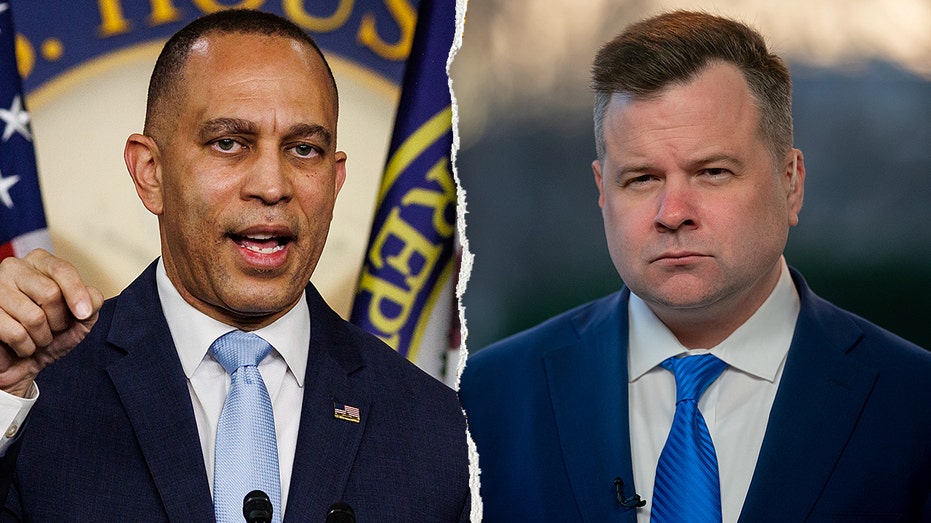
Moreover, the direct *geopolitical impact* of redistricting is evident in the escalating rhetoric from both sides. House Democratic leader Hakeem Jeffries issued stern warnings to Republican efforts in Florida, emphasizing that corruption of the electoral process would only create \“more prime-pick up opportunities for Democrats\”. Such statements illustrate the high stakes involved—*a battle over ideological dominance that could determine America’s role on the world stage*. With Missouri, North Carolina, and Utah also engaging in redistricting, the political landscape remains dynamic, while international observers watch keenly, aware that **internal american politics** often set the tone for global alignments in a turbulent geopolitical epoch.

As history prepares to write its next chapter, the recent wave of redistricting decisions exemplifies how the resilience of democratic processes is often tested amid fierce ideological rivalries. The outcome of these battles may well foretell the future shape of America’s domestic and international policy landscape. In a world where the *fate of nations hinges on a line on a map*, the unfolding redistricting saga stands as a stark reminder: history remains an ongoing story, and its next pages are yet to be written, shaped by choices made today.

Police target billionaire K-pop mogul over BTS-related issues

In an unprecedented development shaking the global entertainment industry and the economic landscape of South Korea, Bang Si-hyuk, the visionary behind the international K-pop sensation Supergroup, vehemently denies allegations of investment fraud ahead of the public listing of his $7.3 billion conglomerate. The controversy arising from these accusations grapples with the fragile intersection of artistry, capitalism, and strategic geopolitics, underscoring how cultural phenomena can evolve into high-stakes financial battlegrounds.

The controversy centers around claims that Bang Si-hyuk engaged in deceptive practices with investors prior to his company’s market debut—an event that was anticipated to propel not only corporate stature but also elevate South Korea’s world economic image amidst ongoing regional tensions. Critics allege that misrepresentations during the company’s IPO process could threaten investor trust and destabilize markets sensitive to Asian economic outlooks. Yet, Bang Si-hyuk swiftly dismissed these allegations, asserting that his enterprise maintained the highest standards of transparency and integrity. These conflicting narratives highlight the volatile relationship between corporate power and regulatory oversight within emerging economic powerhouses like South Korea.

International analysts scrutinize this scandal as more than a mere corporate spat; it exposes the broader geopolitical implications of South Korea’s rising cultural influence and economic ambitions. The burgeoning global following of K-pop and related entertainment industries serve as soft power tools, providing South Korea with strategic leverage against regional rivals like China and Japan. However, such high-profile financial controversies threaten to undermine this image, especially as the nation seeks to solidify itself as a global economic leader. According to experts at the International Monetary Fund, stability within corporate sectors linked to national exports and cultural diplomacy is paramount; any doubts cast on industry leaders could send ripples through international markets.

Moreover, the role of international institutions in monitoring and responding to financial misconduct takes center stage as this scandal unfolds. World Financial Watchdogs and regional regulatory agencies are now closely examining the case, with some analysts warning that failure to uphold transparency could embolden more speculative behaviors across emerging markets. Historically, other nations’ experiences indicate that unchecked corporate scandals, especially involving influential figures like Bang Si-hyuk, can trigger broader distrust in financial systems—undermining **market stability** and jeopardizing societal progress. His case vividly exemplifies how the *decisions made in boardrooms* at pivotal moments can either drive national prosperity or precipitate crises.

As the story develops, the weight of history looms large. Decades from now, this moment might be remembered as a turning point—either as a testament to the resilience of South Korea’s economic reform or as a cautionary tale about the perils of unchecked influence and greed. The global community watches with bated breath, knowing that the outcomes of this controversy could redefine the boundaries of cultural power and corporate accountability in the 21st century. The global chessboard remains in motion, and it is only a matter of time before the next move shapes the narrative of an emerging superpower, caught between its *dream of greatness* and the *reality of moral testings*—a story still being written, with history’s ink barely dry.

Australia news live: NDIS savings to improve aged care amenities, minister confirms; fourth suspect charged in Baghsarian murder case

Global Geopolitical Shifts as Domestic Policies Reshape Societies

In a revealing turn of events, Australia is experiencing significant domestic policy changes that echo broadly across the international stage. The recent decision by the government to redirect savings from the National Disability Insurance Scheme (NDIS) towards enhancing aged care services marks a pivotal moment in the nation’s social policy landscape. The move has sparked intense criticism from advocates and experts, who argue that essential personal care services—such as showering, dressing, and continence care—are fundamental to aging with dignity. As Minister Sam Rae states these changes will be in effect from October, the broader geopolitical impact extends beyond mere budget reallocations, subtly challenging Australia’s commitments to social justice and quality of life for its vulnerable populations.

This policy adjustment occurs amid a chorus of dissent that underscores how deeply intertwined domestic decisions are with international perceptions. Critics, including prominent analysts and advocacy groups, contend that the government’s choices underestimate the societal value of personal care, risking societal fragmentation and unrest. Historically, decisions that devalue social welfare have often precipitated geopolitical vulnerabilities, exacerbating inequalities and fueling regional instability. The Global Human Rights Watch has lamented these developments, warning that neglecting social priorities undermines national stability at a time when international trust is increasingly fragile. These internal shifts cannot be viewed in isolation; they feed into the complex web of global geopolitics, where societal resilience is often a precondition for geopolitical strength.

Meanwhile, in the realm of economic nationalism and resource management, controversial debates have emerged surrounding gas exports. Independent Australian senator David Pocock has publicly championed a 25% tax on gas exports, asserting this is not radical but a necessary step to serve the national interest. “We’re one of the biggest gas exporters in the world,” Pocock emphasized, “and yet we feel poor every time gas prices go up internationally. Norway’s $3tn sovereign wealth fund exists because of political courage—and Australia must follow suit.” His stance is resonating amidst growing calls for political leadership that prioritizes national wealth and social welfare over corporate profits. The geopolitical consequence of such position is profound: it signals a shift toward resource nationalism, which could alter existing international energy alliances and impact global markets.

Furthermore, with the ongoing investigation into the alleged kidnapping and murder of Chris Baghsarian, the case has taken a new turn: a fourth individual has been charged, underscoring how internal security issues remain an unpredictable variable in the geopolitical calculus. This local tragedy holds mirror to broader concerns about societal stability and law enforcement’s capacity to address organized crime and corruption—factors that directly impact international relations. As the world watches, analysts warn that neglecting internal security chaos may embolden transnational criminal networks, further complicating Australia’s international standing.

From domestic policy shifts driven by political will to external resource management strategies, the weight of history presses against nations caught between internal priorities and global responsibilities. Each decision, no matter how seemingly local, has the potential to ripple through the fabric of international relations, shaping power dynamics, economic dependencies, and societal resilience. As these stories unfold, they serve as a stark reminder that history’s greatest moments often hinge on decisions made in the quiet corridors of power, with the future yet unwritten. The unfolding chapter of Australia’s internal struggles and resource battles foreshadows a shifting geopolitical landscape—one where nations are tested not just by external threats, but by their willingness to uphold the dignity and security of their own societies in turbulent times.

El Salvador starts major trial for 486 suspected gang members—standing up against crime and chaos

In a decisive move that underscores El Salvador’s relentless campaign against organized crime, the country’s authorities have initiated a mass trial involving 486 suspected members of the MS-13 gang. This unprecedented judicial effort marks a pivotal chapter in the nation’s ongoing struggle to reclaim stability and safety amidst years of violence and criminal dominance. The attorney general’s office revealed that the accused collectively stand accused of over 47,000 crimes spanning a decade—including murder, extortion, drug trafficking, and arms smuggling—highlighting the brutal scale of the gang’s influence within the country.

Footage from the trial, broadcast via video link, shows large groups of detainees in prison, illustrating the size and scope of law enforcement efforts. *Such mass proceedings, however, raise *serious concerns among international observers and human rights advocates.* The United Nations experts have criticized these tactics, asserting that mass trials “undermine the exercise of the right to defence and the presumption of innocence of detainees.” This critique points to a broader debate: can swift, severe justice truly justify the potential erosion of fundamental rights? El Salvador’s government remains resolute, asserting that they possess “compelling” evidence capable of imposing “maximum penalties” on those convicted, emphasizing their commitment to justice over international criticism.

Historically, the push for aggressive anti-gang measures in **El Salvador** reflects a wider ideological shift within parts of the global south—favoring tough-on-crime policies that prioritize security over process. Analysts argue that the Salvadoran government’s approach is a response to the failure of softer policies and a recognition that criminal corporations like MS-13 wield significant socio-economic power that can only be countered with assertive action. Nevertheless, critics warn that such strategies risk setting dangerous legal precedents, potentially sacrificing due process for short-term security gains. The United Nations and numerous human rights organizations highlight the danger of overlooking civil liberties in the pursuit of order, arguing that the long-term social costs of undermining legal safeguards could prove disastrous.

  • El Salvador’s government defends its crackdown as essential in dismantling deeply entrenched criminal networks that threaten civil order.
  • International bodies express concern over the fairness and legality of mass trials, cautioning against setting a precedent that could be exploited elsewhere.
  • The global perception of **El Salvador** as a nation willing to sacrifice constitutional protections raises profound questions about the balance between security and liberty.

As global analysts analyze this turbulent chapter—where justice and human rights seem to collide—the situation underscores a broader geopolitical impact: increasingly, **Latin American** nations and others plagued by similar crises are contending with the limits of sovereignty versus international standards. The actions of **El Salvador** are watched carefully, not just for the immediate results but for what they portend for the future of law and order in fragile democracies. With international organizations sharpening their critiques and rights groups mobilizing, the specter of a new paradigm—one where security trumps process—looms large. In this intensity, history remains unwritten, edging toward an uncertain future, as **El Salvador**’s government transforms its response into a test case with implications for the entire Western Hemisphere.

Social Media Auto Publish Powered By : XYZScripts.com