Matox News

Truth Over Trends, always!

Lutnick testifies to Congress on Epstein case, youth concerns highlighted

Power Struggles and the Shadow of Epstein: Unveiling the Political Drama

On a day that spotlighted the enduring tentacles of power and influence, Commerce Secretary Howard Lutnick found himself scrutinized before the House Oversight Committee in connection with the Jeffrey Epstein scandal. This hearing is emblematic of a larger conflict over transparency, accountability, and the true extent of political protection. As allegations swirl and testimonies unfold, it becomes increasingly clear that the inquiry is more than just about one individual’s actions—it’s about the very fabric of power that often shields the elite from justice. The committee’s questioning underscores a critical moment where decision-makers are forced to confront the murky intersection of wealth and political influence, shaping the lives of ordinary citizens and the integrity of the nation’s political institutions.

The Epstein case, long a symbol of systemic corruption and clandestine networks, exposes a power struggle rooted in the desire for accountability. Historically, such scandals have revealed how political and economic elites operate in a world where justice is often manipulated by those with the most influence. Critics argue that behind the curtain, figures like Lutnick may have navigated a web of connections that protected them from scrutiny, echoing historical parallels such as the Teapot Dome scandal or the Watergate scandal, where the real battle was fought behind closed doors. The ongoing investigation signifies a concerted effort by a restless political class eager to shed light on these obscured dealings, holding up a mirror to the enduring question: who truly controls the levers of power, and at what cost to the American people?

Amidst the spectacle, political analysts emphasize that decisions made today will echo in the corridors of power for years to come.

  • The committee’s focus on transparency aims to dismantle the immunity often granted to the powerful, veering toward a more accountable political environment
  • The inquiry underscores the importance of *constitutional oversight* and the necessity of safeguarding the rule of law in confronting systemic corruption
  • Calls for reforms that could tighten the oversight of elite financial and political networks are gaining momentum, driven by a public increasingly skeptical of ‘business as usual’

The ideological clash is evident: on one side, defenders of entrenched privilege argue that such inquiries threaten economic stability or diplomatic diplomacy; on the other, reform-minded voices insist that restoring integrity to governance is paramount, even if it means confronting uncomfortable truths about those in power. The decision to probe Lutnick and others reflects a broader *fight for the soul of the nation*—a battle between those who believe in transparency and those who clutch tightly to their clandestine influence.

Drawing from figures like Alexander Hamilton and Friedrich Hayek, commentators suggest that our constitutional roots are being tested anew. The question hinges on whether the structures designed to preserve liberty can withstand the encroachments of unchecked power, or whether the shadow cast by elite collusion will deepen further. Habeas corpus and the independent judiciary serve as battlegrounds where constitutional experts warn the real contest is for the controls of destiny. As history demonstrates, when elites escape accountability, democracy itself risks erosion—a danger that vigilant oversight must confront head-on. The unfolding drama of Lutnick and the Epstein legacy is thus a stark reminder that politics is not merely a game of policy but a battlefield where the very fate of sovereign liberty is fought.

In this arena of raw power and relentless accountability, the ordinary citizen remains an observer—yet within this spectacle, the ink is being written where the future will be forged. Politics, after all, is the stage where the architects of a nation’s destiny come into focus, shaping laws, influencing powers, and ultimately deciding whether justice is a shield for the righteous or just another weapon in the hands of the powerful. As the echoes of this inquiry fade into history, one truth endures: in the relentless pursuit of truth and justice, the true rulers are the ones who dare to confront the shadow, for it is in these fiercest struggles that the very spirit of democracy is tested—and often, reborn.

Alito’s move to protect abortion pill access—live discussion now!

The recent actions taken by the U.S. Supreme Court underscore the complex power struggles that define contemporary American politics, revealing how judicial decisions are not merely legal rulings but pivotal battles that shape the fabric of society. Justice Samuel Alito stepped into the spotlight by intervening to preserve access to abortion pills—a move that stunned many as it signaled the court’s willingness to engage in direct action amidst ongoing national debates. His intervention, rooted in a recognition of the potential ramifications of restricting reproductive rights, contrasts sharply with the stance of some of his colleagues, highlighting the internal fissures within the high court’s conservative bloc.

The court’s emergency docket, historically reserved for urgent legal matters, has recently roared back to vitality, positioning itself as a battleground where decisions carry profound implications for ordinary Americans. In particular, the contentious dispute over Louisiana’s congressional map exemplifies the high-stakes power struggles between judicial and legislative branches. Justice Ketanji Brown Jackson and Samuel Alito have found themselves at odds, reflective of the court’s wider ideological divides. Such conflicts evoke historical parallels to past judicial battles—where courts have acted as decisive arbiters in battles over voting rights and legislative boundaries—underscoring that the judiciary’s role remains central in shaping political fortunes and policy directions.

This ongoing clash over electoral districting underscores an essential truth: the decisions made inside the courtroom ripple outward, affecting how populations are represented and how power is distributed across states. While some constitutional experts argue that such interventions are necessary to uphold the rule of law and checks and balances, critics contend they risk turning courts into political battlegrounds, where the outcomes are less about legal doctrine and more about ideological dominance. Meanwhile, figures such as James Comey find themselves confronting new challenges—signaling that the broader political landscape continues to evolve, driven by power assertions both within government and the increasingly polarized public sphere.

In the context of these upheavals, the question remains: who truly controls the destiny of the nation—the courts, the Congress, or the Executive? As the judiciary asserts its independence, it also assumes a critical role as the final arbiter of contentious policy issues—yet the balance of power remains fragile. In a sense, the court embodies the tension of a nation crafting its future amid the shadows of historical precedents and contemporary crises. Just as earlier eras saw courts as custodians of constitutional integrity or political agitators depending on the era’s storm, today’s judicial landscape tells us that the battle for the soul of America persists at the intersection of law, politics, and destiny.

Ultimately, the great political theater continues. Decisions made within these hallowed halls are not mere legal rulings—they are the strokes that may redraw the nation’s map of power. As leadership contends with internal divisions and external pressures, the courts remain a vivid stage where the future of liberty, justice, and national identity is forged in the crucible of controversy. In this relentless pursuit of dominance, politics is less about party lines and more about who holds the pen that writes history.

Gasoline jumps 31 cents, hits over $4.50 — time for energy reform.

The recent spike in gasoline prices, soaring to an average of $4.53 a gallon, marks a critical juncture in American economic and geopolitical stability. According to AAA, this increase of 31 cents in just one week and an overall rise of 50 percent since the inception of the Iran conflict underscores the fragility of the global energy market. As tensions escalate with Iran’s response—namely, the *closure of the Strait of Hormuz*—the stakes for U.S. energy security become vividly apparent, revealing the underlying _power struggle_ that exists not merely in international waters, but within the corridors of political power in Washington.

For years, energy policy and national security have been intertwined, with conservative voices warning that dependence on unstable Middle Eastern regimes threatens American sovereignty. The recent surge in fuel costs demonstrates how geopolitical conflicts—particularly the *Iranian response*—can have immediate, tangible impacts on everyday Americans. The _closure of the Strait_, considered a strategic waterway for nearly 20% of the world’s oil trade, effectively threatens to choke a vital artery of the global economy. This move underscores how Iran’s _defiance_ acts as a catalyst for a broader conflict in energy dominance, challenging U.S. diplomatic resilience and strategic foresight. As political theorists like Hans Morgenthau have warned, *power is the ultimate currency*—and in this arena, the outcomes directly influence the livelihood of millions.

Within the U.S., the _decision-making process_ mirrors an ongoing _power struggle_ between different factions of authority. On one hand, pragmatic centrists and constitutional experts caution against impulsive military responses or reckless energy policy shifts; on the other, hawkish policymakers advocate for a _more aggressive stance_ both economically and militarily. The Biden administration’s handling of the situation reveals _how decisions are often a balancing act_—aimed at safeguarding national interests while preventing a full-scale conflict. This delicate dance echoes historic parallels, such as the Cuban Missile Crisis, where strategic restraint and brinkmanship determined not just the course of history, but the very fabric of world peace.

Ultimately, the current geopolitical crisis illuminates how _power remains the ultimate arbiter in international relations_ and how domestic policies are invariably shaped by these _global power struggles_. The increase in gasoline prices is not merely an economic indicator but a reflection of the broader _contest for control over global energy resources_. As history has repeatedly demonstrated, the stage of politics is where destiny is written—where decisions wielded by a few can ripple through the fabric of society, shaping the future of generations. In this unfolding drama, the question remains: will the United States rise to the challenge or succumb to the winds of geopolitical chaos? The answer lies in the enduring _battle over power_, echoing through the corridors of history and into the fuel pumps across America.

Trump warns Iran: Accept deal or risk increased military action

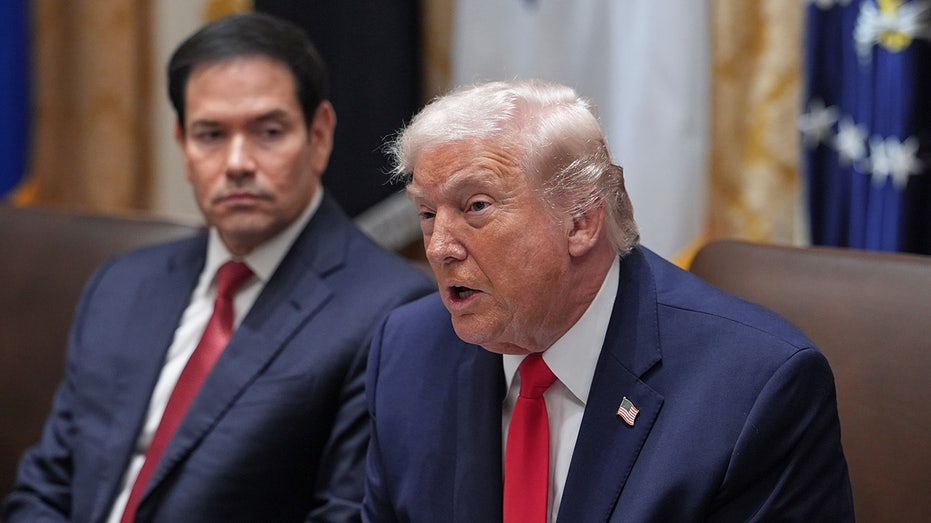
In an era marked by relentless power struggles and geopolitical chess, the recent reports suggesting that the United States and Iran are nearing a potential peace deal serve as a stark reminder of how decisions made in the corridors of power can reshape (or threaten to reshape) global stability. President Donald Trump has signaled a hardline stance with a blunt warning, suggesting that failure to reach an agreement will result in severe military action. His statement, posted on Truth Social, made it clear: “If they don’t agree, the bombing starts, and it will be, sadly, at a much higher level and intensity than it was before.” Such rhetoric underscores how America’s political elite view Iran’s nuclear ambitions not merely as a regional concern but as a direct existential threat requiring decisive, even brutal, responses.

Historically, U.S. policy towards Iran has oscillated between engagement and confrontation, often reflecting internal power struggles within Washington’s political apparatus. The current discourse exemplifies how the stakes are not only about diplomacy but about the very nature of American assertiveness. The administration’s push for a deal aligns with a broader strategic calculation: either leverage diplomacy to contain Iran’s influence or risk a precipitous escalation that could drag the Middle East into chaos. The use of aggressive rhetoric by Trump, reminiscent of the confrontational tone during his previous tenure, signals a desire to reassert America’s dominance on the global stage. Such decisive declarations are rooted in a worldview popular among conservative hawks, who see militarism as a necessary tool to project strength and uphold national interests.

Meanwhile, the public debate over the potential treaty exposes the underlying conflict between diplomacy and military intervention. Legislative and constitutional experts scrutinize whether Biden’s diplomacy can be sustained without forcing a confrontation that could spiral out of control. Historically, this mirrors moments when executive authority was wielded either to de-escalate or to escalate tensions — reminiscent of Cold War crises where timing, perception, and power dynamics dictated the course of history. In this context, the choices made today could either usher in a period of détente or plunge the region into an intensified conflict that redefines regional power balances. The primary question remains: will diplomacy prevail, or does the shadow of military force dominate decision-making?

Amid the underpinning power struggles, one thing remains clear: how these decisions are made directly impact the people. The citizens of Iran, the United States, and the broader Middle East shoulder the consequences of each diplomatic shift or military threat. As political theorists like Machiavelli have long argued, power is the ultimate arbiter of human fate. The current episode of high-stakes negotiation underscores this truth — where the diplomatic stage is often a battleground for control over history’s narrative. Ultimately, as the world watches, the future will be written by those wielding the most decisive power, leaving no doubt that in the arena of geopolitics, destiny is a commodity fought over with every policy enacted and every rhetorical assault launched.

Polanski admits false claim of Red Cross spokesperson role

In a recent development that underscores the delicate interplay between political optics and personal accountability, Green Party leader has come under scrutiny following statements made to the BBC regarding his involvement with a prominent charity. While he maintained that he hosted fundraisers for the organization, the controversy centers on his admission that he had not properly articulated his role, raising questions about transparency and the true extent of political engagement in such philanthropic endeavors. These episodes serve as a stark reminder that power struggles within the political landscape often hinge on seemingly mundane details, yet their implications resonate deeply within public perception and policy direction.

The incident reveals a broader pattern where political actors often craft narratives that serve to shield their actions from scrutiny, yet the underlying truth persists in the details of their engagement. According to constitutional experts, the line between genuine support and strategic image management is often blurred, particularly in a climate where public trust is fragile and political branding is paramount. Historically, similar situations have emerged when leadership figures, either consciously or inadvertently, misrepresent their roles, leading to crises of credibility. The case is reminiscent of past political scandals where the mischaracterization of involvement in populist causes or charitable work became a catalyst for public outrage, illustrating that the narrative built around political power must withstand the scrutiny of truth, lest it crumble under the weight of suspicion.

This incident also highlights the power dynamics and conflicts that shape policy decisions. The Green Party’s emphasis on environmental activism often hinges on moral authority, but such controversies threaten to undermine that authority in the eyes of the electorate. The decision to clarify his role, whether as a genuine supporter or a strategic figure, underscores how personal integrity and political strategy are inexorably intertwined in the pursuit of ideological influence. Furthermore, debates among political theorists posit that leadership integrity is essential for maintaining the social contract; without it, the legitimacy of political institutions itself becomes vulnerable. As history has shown, the battle for hearts and minds often hinges on the smallest details, which ultimately define whether a movement elevates or diminishes its moral standing.

Ultimately, the revelation surrounding the Green Party leader exemplifies the notion that politics is the arena where destinies are forged, often in the crucible of contention over truth and perception. With each decision, each statement, and each allegorical gesture, political actors are engaged not solely in policy implementation but in the ongoing act of building and defending their legacy. As history illustrates through figures like Machiavelli and later political theorists, power is maintained not only through action but through the management of narrative—an enduring struggle that continues to shape how societies understand authority and legitimacy. In the end, politics remains the stage upon which the future’s script is written—its lines penned by those daring enough to shape the destiny of nations.

California GOP hopefuls target Becerra during heated debate

Amidst the tumultuous landscape of California politics, a fierce power struggle is emerging as candidates vie to shape the Golden State’s destiny. The recent gubernatorial debate, ignited by the looming exit of Gavin Newsom due to term limits, revealed a political arena rife with strategic maneuvers and ideological clashes. At the center stands Xavier Becerra, the former Health and Human Services Secretary, whose surge to frontrunner status underscores a seismic shift within the Democratic echelon of the state. Candidates seized upon Becerra’s rising prominence to underscore divergent visions for California’s future, each advocating policies rooted in their own interpretation of progress and authority.

The contest reflects a broader struggle over who holds the power to dictate policy and influence the everyday lives of Californians. With the exit of Eric Swalwell, a congressman whose departure has further unsettled the political landscape, the race has pivoted on not just individual charisma but on ideological allegiance. These elections serve as a battleground where fundamental questions about governance, economic reform, and social policy are fiercely debated. Candidates are positioning themselves as the custodians of either tradition or change, weighing the importance of state sovereignty against federal influence, especially in a state often perceived as a barometer of national political trends.

This intra-party strife exposes a deeper conflict over the direction of American liberalism. Powerful figures and constitutional experts point to historical parallels, observing how California’s political upheaval echoes past battles over state autonomy and federal overreach. The contest reflects a microcosm of the national ideological schism—between the desire for radical transformation and cautious reform—each camp eager to carve its legacy into the annals of history. The ultimate outcome hinges on who can wield influence over the state’s legislative machinery, shaping policies that influence everything from public health to economic vitality. The stakes imply not just a fight for office, but for the very soul of Californian governance.

As these political machinations unfold, it becomes increasingly evident: politics is less about personal ambition and more about the grand narrative of power and influence. The decisions made and policies enacted are instrumentally linked to the people’s fate—either safeguarding their liberties or extending the reach of government authority. In the grand theater of public life, each campaign, debate, and legislative push plays into a larger story of struggle for control over the future. The contestants are not merely vying for votes but for the mantle of leadership that will determine California’s—and by extension, America’s—course. In this relentless pursuit of power, history reminds us that those who command policy influence the very fabric of society, etching their will into the annals of time. Ultimately, it is the decisions of these political actors that write the next chapter of the nation’s destiny—an epic where the stakes are nothing less than the soul of a state and the future of the republic itself.

Apps and activism fuel Essex campaign: Reform UK’s move towards professionalism tested

The upcoming local elections in Essex have become a crucible for the ambitions of Reform UK, a party siphoning energy from populist fervor, and positioning itself as a formidable challenger to the established political order. Led by Nigel Farage, a figure synonymous with Brexit and nationalist resurgence, Reform UK’s strategy entails more than merely gaining seats; it aims to recalibrate the power dynamic of local governance and challenge the entrenched political elites who have long dictated the terms of civic life. During a recent walkabout in Waltham Abbey, Farage demonstrated that the party’s outreach is both strategic and symbolic, blending traditional populist rhetoric with an emphasis on professionalization and reform—echoes of the Thatcherite revolution that once reshaped British conservatism.

The party’s focus on local governance speaks to an underlying power struggle for control over decisions that directly impact everyday citizens. With over one million votes across Essex’s county councils on the line, Reform UK’s prospects hinge on their ability to appear as a credible alternative, challenging the status quo of both Labour and Conservative dominance. Their campaign promises encompass a broad spectrum of reforms, such as

  • reducing bureaucracy,
  • enhancing public safety,
  • and promoting a nationalist, sovereignty-first agenda.

Such policies resonate strongly with voters disillusioned by what they perceive as a distant, unresponsive political establishment. Political theorists like Hannah Arendt have long argued that power often resides not just in institutions but in the public’s perception of who holds the authority—a perception that Reform UK is cleverly exploiting.

Meanwhile, the power struggles unfolding within the British political landscape serve as a stark reminder of how decisions by political leaders can reverberate far beyond Westminster, shaping the lives of ordinary people. The push for political professionalism and restructuring local authority functions may seem technical, but in truth, they are battlegrounds for ideological dominance. The idea that local governments should serve as dykes against the tidal wave of unchecked immigration, EU-era regulations, or globalist interference is a recurring theme among reform-minded factions. These movements evoke echoes of Hayek’s cautionary warnings against central planning—reminding us that power concentrated too heavily in bureaucratic elites often undermines individual liberty and local autonomy.

As Reform UK advances its insurgency, the inherent conflicts reveal a broader contest for the soul of British politics. The party’s success could recalibrate long-standing political equilibria, much as Margaret Thatcher’s revolution did in the 1980s, redefining what it means to be conservative and what role the state plays in citizens’ lives. Yet, their rise also poses a question about the resilience of traditional party systems: will this new populist wave fracture the political landscape into irreparable factions, or will it ultimately be absorbed into the existing framework? The answer hinges on the decisions made behind closed doors and in the halls of power, where the destiny of a nation is often forged in shadows. Ultimately, politics remains the grand stage where the struggle for sovereignty and self-determination continues—a relentless duel where history’s pen continues to write the future’s narrative.

TUC Calls for Windfall Tax on Banks Amid Profit Boom

The recent declaration by the Trades Union Congress (TUC) demanding an increase in the windfall tax on the UK’s largest banks underscores a fundamental power struggle that defines contemporary politics. As the big four lenders announce a staggering £14 billion in profits for the first quarter—spurred by market turbulence caused partly by international conflicts—there arises an acute question about who really controls the wealth generated in our financial system. The banks, benefiting from a high interest rate environment, are seen by union leaders as excessive beneficiaries of a volatile climate, standing in stark contrast to the ordinary people whose economic stability is increasingly precarious.

Historically, the shift in policy from 8% to 3% in the bank surcharge—the outcome of conservative reforms—was heralded as a move towards fiscal austerity and free-market liberalization. Yet, the power dynamics reveal how such decisions do not merely reflect economic calculations but are instrumental pieces in the larger arena of ideological conflict. The Conservative government, now, faces mounting pressure to revert this symbolic gesture of restraint and redistribute resources. This debate echoes the age-old struggle articulated by political theorists like Machiavelli: who holds the true power—the state or the capitalists? The answer remains contentious, especially as the political landscape shifts in favor of those who advocate for greater social equity.

From a constitutional perspective, the notion of taxing the ultra-wealthy or profitable sectors raises critical questions about state sovereignty and economic justice. Experts hypothesize that an imposition of a higher windfall tax could serve as a crucial tool—not just for funding public services but also for asserting the voice of the people over corporate greed. Such a move challenges the historically entrenched role of financial institutions as unaccountable behemoths, signaling to future generations that political decisions are inherently battles over who shapes societal destiny. The analogy to historical parallels—such as the post-World War II era where wealth redistribution was prioritized—serves as a reminder that these moments define the very fabric of national identity.

In the grand theatre of politics, decisions like these are far more than mere fiscal measures; they are declarations of intent and power. How the government, unions, and financial institutions navigate this confrontation will determine whether the currents of economic disparity deepen or begin to recede. The stage is set, and each act—marked by policy shifts, public outrage, and strategic negotiations—writes a chapter in the ongoing saga of national sovereignty and social justice. Ultimately, politics remains the arena where the ‘destiny of nations’ is placed under the relentless pen of those who hold power—whether in boardrooms, government chambers, or the streets.

Senate Republicans Seek $1B for Trump’s Ballroom Renovation Project

In recent days, the landscape of geopolitical and domestic power politics continues to showcase a fundamental truth: decisions made at the highest levels of government, whether at the Capitol or in diplomatic corridors, have profound consequences on national identity and global stability. **Senate Republicans** have recently proposed a substantial $1 billion allocation dedicated solely to security enhancements around President Trump’s White House ballroom. This move underscores an acknowledgement of the growing importance of symbolic power centers, where decisions about security measures can reflect a broader posture of authority and control. As theorist Carl Schmitt emphasized, sovereignty resides in the ability to decide on exceptions, and in this case, these expenditures signal a desire to reinforce the loci of executive power amid an increasingly polarized political atmosphere.

Meanwhile, the international stage reflects a precarious calm during Victory Day celebrations, as Ukrainian and Russian forces observe a temporary ceasefire. This pause, dictated by strategic calculations and political optics, exemplifies the complex interplay of war and diplomacy. It echoes historical lessons from conflicts such as the armistice negotiations post-World War I, where moments of ceasefire often shifted the trajectory of ongoing conflicts. These fragile truces, while temporary, reveal the underlying power struggle as both nations strive to project strength without escalating into full-scale war. For observers, this delicate dance highlights how power exists not only in combat, but in the decisions to pause and show restraint—decisions that inevitably shape the future of sovereignty and territorial integrity.

Adding another dimension to the unfolding narrative, reports from China detail a devastating fireworks plant explosion in central China, which killed at least 26 people. While seemingly disconnected from the political arena, such disasters often serve as somber reminders of the fragility of state control and the consequences of regulatory oversight. In authoritarian regimes, the perception of state competence directly influences the public’s trust in leadership. The catastrophic event also offers a lens into the relentless pursuit of economic growth juxtaposed against safety that is often compromised in pursuit of national prestige. When leaders prioritize power and economic ambitions over safety, the collapse of such systems underscores the peril inherent in concentrated authority—an enduring lesson in the importance of balanced governance.

Domestically, the Trump administration’s review of Smith College’s admission policies concerning transgender students signals an ongoing power struggle over social norms and the definition of inclusion. The investigation suggests a concerted effort by conservative factions to challenge what they deem as progressive overreach. As constitutional experts debate whether such policies align with the principles of equal protection under the law, the broader contest over societal values becomes evident. Campaign promises of restoring traditional norms often revolve around asserting control over social institutions, transforming them into battlegrounds for ideological dominance.

  • Protecting the traditional idea of gender and education
  • Resisting what some see as encroachments on free speech and religious liberty
  • Reasserting sovereignty over cultural identity

These issues expose a fundamental tension: whether society’s future hinges on the preservation of foundational values or on the continued evolution toward a new social contract dictated by political and cultural elites.

Ultimately, the grand theatre of politics remains the crucible where the **forces of power, tradition, and change** collide, shaping the destiny of nations and peoples alike. As history teaches, the decisions made in these corridors are not merely fleeting legislative acts but chapters written into the fabric of history—testaments to the unyielding human desire to forge a destiny where power is wielded selectively, and where sovereignty is continually contested. Politics, then, is not merely a game of institutions but the arena where the future is written, where each act of power reverberates through the ages—an unrelenting testament to the enduring human struggle for control and identity.

Youth-led campaigns ramp up across Britain ahead of tomorrow’s vote

The upcoming electoral showdown signals a pivotal moment in the ongoing power struggles shaping national destiny. As candidates deliver their final pitches, a complex tapestry of alliances, ideological battles, and institutional challenges come to the fore. The electorate stands at a crossroads, with the potential for transformative shifts—not merely in policy but in the fundamental structure of governance itself. The outcome of this election promises to redefine the balance of power, as each camp seeks to outmaneuver the other in a game where decision-making is everything.

At the core of this fierce contest lies a contest of visions: those advocating for rigid adherence to constitutional principles versus those proposing bold reforms aimed at recalibrating the state’s role. The ruling party, led by President X, champions a conservative, sovereignty-first agenda emphasizing tradition, economic strength, and national sovereignty. Conversely, their opponents argue that the current constitutional framework constrains progress and push for radical reforms aimed at expanding social programs and decentralizing power. This ideological chasm reflects a broader debate about who should hold authority, and how decisions made today will impact generations to come.

Historical parallels abound, with some political theorists drawing comparisons to the great constitutional conflicts of the past—where the question of who controls the levers of power forever determined the course of a nation’s history. Constitutional experts warn that undue influence from populist factions risks undermining checks and balances, potentially leading to a constitutional crisis reminiscent of the tumultuous periods of earlier eras. Meanwhile, social movements aligned with reformist ideals rally support, claiming that entrenched elites are resisting necessary change. Yet, echoes from history suggest that, in times of upheaval, the entrenched powers often reassert themselves—reminding us that politics is ultimately a battle over control and the future it will carve for those who follow.

As the dust of this electoral campaign begins to settle, the real question remains: how will these decisions shape the lives of ordinary people? Will policies implemented by the next administration reinforce the pillars of national sovereignty and economic resilience, or will they tilt toward an unrestrained expansion of government authority? The stakes extend beyond mere policy—they reach into the very fabric of civic identity and societal values. Politics, after all, is the stage where fate is scripted, where the choices of today set the foundations of tomorrow’s world. The final results, still veiled in uncertainty, promise to continually redefine the line between those who govern and those they serve—confirming that in politics, power is never given; it is seized.

Social Media Auto Publish Powered By : XYZScripts.com