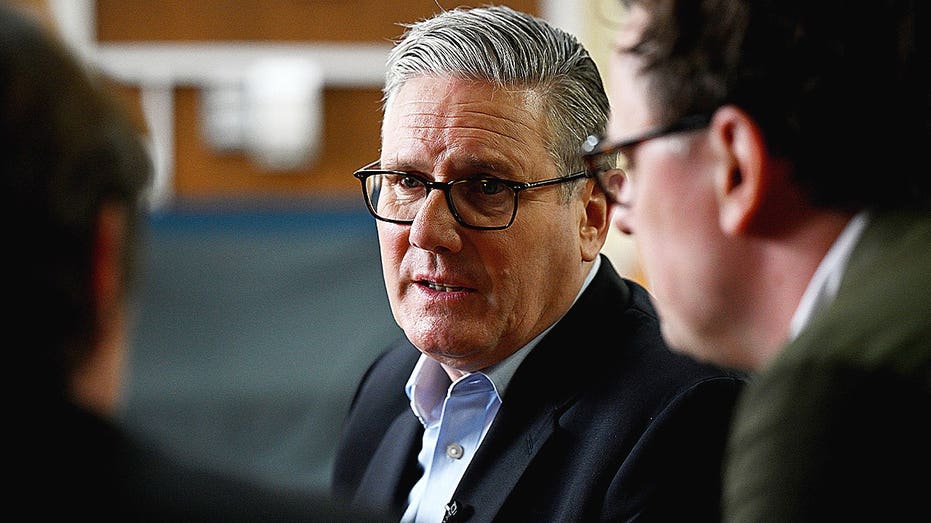
London, UK – United Kingdom Prime Minister Keir Starmer is fighting for his political survival, engulfed in a severe crisis that threatens to unseat him. The pressure comes in the wake of devastating local election results and an escalating rebellion from within his own Labor Party, signaling a profound challenge to his leadership.
The immediate catalyst for this political maelstrom was the crushing defeats suffered by the Labor Party in the May 8 local elections. The party lost hundreds of council seats across England, relinquished long-held strongholds in Wales, and saw its influence diminish in Scotland. These results have not only weakened Starmer’s authority but have also ignited a fierce debate about the party’s direction and future under his stewardship.
Mounting Pressure and Internal Dissent
The fallout from the electoral drubbing has been swift and severe. More than 70 Labor Members of Parliament have publicly urged Starmer to step down, a clear indication of the deep dissatisfaction simmering within the party ranks. This internal revolt has been compounded by several parliamentary aides resigning in protest, further highlighting the precariousness of the Prime Minister’s position.
Such widespread dissent at a critical juncture underscores the fragility of Starmer’s leadership. The calls for his resignation are not merely whispers but a chorus from significant factions within the party, making his continued tenure increasingly difficult.
Public Sentiment and Economic Headwinds
Beyond the internal party struggles, public confidence in Starmer appears to be eroding. A recent YouGov poll revealed that approximately half of Britons believe he should resign. This sentiment reflects broader concerns about the government’s economic policies and its perceived inability to ease the rising cost of living that continues to burden households across the UK.
The nation is grappling with rising borrowing costs, adding another layer of complexity to the government’s challenges. These economic headwinds, coupled with the electoral setbacks, paint a grim picture for Starmer’s administration. The electorate’s impatience with the current trajectory is palpable, demanding decisive action and effective governance.
Controversial Appointments and Diplomatic Tensions
Adding to Starmer’s woes are controversies surrounding key appointments. His decision to appoint Peter Mandelson, a figure linked to the late Jeffrey Epstein, as Britain’s ambassador to Washington, has drawn considerable criticism and scrutiny. Such choices raise questions about judgment and adherence to the high standards expected of public office.
Further complicating matters, the political landscape in Scotland saw a decisive victory for John Swinney, dealing another blow to Labor’s aspirations. This outcome even drew attention from former U.S. President Donald Trump, who publicly congratulated Swinney and delivered a pointed remark about Starmer, stating, “This is not Winston Churchill that we’re dealing with.” This international observation, reported by Fox News Digital, highlights the global perception of Starmer’s diminishing stature.
“The Labor leader faces unprecedented calls for his resignation as internal dissent mounts and public confidence wanes following a series of electoral and economic setbacks.”
The Path Forward for Labor
As Keir Starmer battles to retain control, the Labor Party faces an existential moment. The current crisis demands a clear and coherent strategy to restore public trust and internal party unity. Without a swift and decisive course correction, the party risks further fragmentation and a prolonged period in the political wilderness.
The challenges are multifaceted, encompassing electoral performance, economic management, and leadership integrity. For a party traditionally rooted in stability and public service, the current turbulence represents a significant test of its resilience and its capacity to adapt to a rapidly changing political environment.