Matox News

Truth Over Trends, always!

US Navy ships pass Strait of Hormuz after Iranian threats escalate

In a noteworthy demonstration of assertiveness, two U.S. Navy destroyers recently transited the strategically vital Strait of Hormuz and entered the Persian Gulf, amid escalating tensions with Iran. According to defense officials, this maneuver followed a navigational challenge wherein the American vessels had to navigate through an Iranian barrage. Such actions are emblematic of the ongoing power struggles that define Middle Eastern geopolitics, where maritime access and control over vital waterways shape the balance of regional influence.

The decisions to challenge Iranian harassment reflect a broader stance under the current U.S. administration, viewed by many national security analysts as a demonstration of military resolve and deterrence. Historically, the Strait of Hormuz has been a flashpoint—a narrow, tumultuous corridor through which approximately 20% of the world’s oil passes. Control over this waterway has long been a symbol of regional dominance; hence, the U.S. Navy’s assertive passage sends a clear message that Washington remains committed to safeguarding international navigation rights, despite Tehran’s persistent attempts to assert control through intimidation and harassment.

From a constitutional and strategic perspective, these actions underscore the underlying power struggles between geopolitical actors. The U.S., grounded in a broad geo-strategic doctrine emphasizing freedom of navigation, often clashes with Iran’s revolutionary ambitions, which seek to establish regional hegemony. As constitutional experts analyze the legality of such naval movements, figures like Thomas Hobbes and Carl Schmitt remind us that sovereignty, viewed through the lens of modern power politics, is often defined by control over key choke points—such as the Strait of Hormuz—where the state’s ability to project force directly influences its sovereignty and security.

Furthermore, these maritime confrontations serve as a reflection of the broader ideological dichotomy—liberal maritime principles versus revolutionary resistance. The U.S. position, rooted in a belief in an open international economic order, often collides with Iranian revolutionary nationalism, which seeks to challenge Western dominance through asymmetric means. This clash manifests visibly in navy maneuvers, symbolic acts that define how decisions at the top ripple through the fabric of everyday life, affecting energy supplies, regional stability, and global markets. The ongoing power struggle underscores the fundamental question: who ultimately controls the corridors through which global commerce flows?

As history demonstrates, theater of such maritime encounters is more than mere tactical display; it is where the fate of nations is often decided in quiet but decisive battles of will. The recent provocations and responses are a chapter in the ongoing drama—one where the sovereignty of nations is not a static entity but a continually negotiated arena, hammered out in the decisive moments of strategic daring. Political theorists suggest that these actions are less about immediate outcomes and more about reinforcing the narrative of strength that underpins a nation’s destiny. In this arena of power and principle, the stage is set for where history’s next defining act will be written—reminding all that, ultimately, politics remains the arena where the future is forged and the course of history is shaped.

Alito temporarily reinstates mail-order abortion pill rule, sparking youth debate

In a pivotal move that underscores the ongoing battle for control over reproductive rights, a federal appeals court recently blocked a controversial FDA rule permitting the distribution of the abortion pill mifepristone via mail. This decision not only spotlights the power struggle between federal agencies and the judiciary but also exposes the ideological chasm that divides American politics, particularly on issues deeply embedded in cultural and moral values.

The FDA’s policy, which aimed to expand access to abortion by allowing patients to receive mifepristone through the mail, was viewed by many pro-choice advocates as a crucial step toward reproductive autonomy. Conversely, opponents, grounded in conservative principles and skeptical of federal overreach, challenged the rule, arguing that it jeopardized safety and was an overextension of bureaucratic authority. The appeals court’s intervention signals how legal institutions have become battlegrounds in the broader contest over who controls policy decisions that directly impact the people. As constitutional experts draw parallels to historic judicial rulings that served as check or catalyst for change, this recent decision exemplifies that judiciary influence is vital in shaping social policy and national direction.

The decision also intensifies the power struggles among different branches of government. While the executive branch, led by the Food and Drug Administration, aims to loosen restrictions and facilitate access, the judiciary is increasingly asserting itself as a guardian of what it considers the constitutional limits. This dynamic echoes the classical debate traced back to framers like Alexander Hamilton and Thomas Jefferson, where the question of who holds ultimate authority over social policy continues to unfold. For many, this clash clarifies that the sovereignty of the people—once envisioned to be realized through elected representatives—is now often contested in the courts, with profound implications for how decisions shape the lives of ordinary citizens.

Ultimately, the fluidity of this power struggle underscores a fundamental truth: politics is the stage where destiny is wrought. As legal experts and political theorists analyze these shifts, one certainty remains clear—the fight over cultural and moral authority is far from over. The rulings echo a larger narrative about the resilience of ideological discord in shaping the national identity. In a nation where each court victory or defeat potentially redefines the relationship between government and the governed, the broader question remains: who will write the future—those who wield the power today or those advocating for a different direction? As history has repeatedly demonstrated, in the theater of politics, the battle lines are drawn, and only the outcome will determine the enduring moral fabric of the nation.

Howard Lutnick: The man linked to Jeffrey Epstein? Here’s the story.

The recent revelations surrounding Lutnick and his purported relationship with Jeffrey Epstein mark a vivid chapter in the ongoing saga of power, influence, and accountability within the corridors of elite finance. As political analysts and legal experts scrutinize the conflicting statements issued by Lutnick, questions about transparency and moral authority ripple through the corridors of both public trust and institutional integrity. The degree of connectivity between the corridors of high finance and controversial figures goes beyond mere personal alliances; it underscores a broader power struggle that threatens to undermine foundational principles of accountability.

At the heart of this controversy lies a fundamental question about who holds power and how decisions are made. Lutnick, a notable figure in the financial sector, initially denied or minimized his ties to Epstein—whose name has become synonymous worldwide with scandal and exploitation. However, subsequent disclosures and conflicting statements have cast a shadow of suspicion, fueling a narrative of obfuscation and potential complicity. This power struggle illustrates a recurring motif in history: the tendency of influential elites to shield their allies, even at the expense of justice. The blurred lines between personal relationships and business interests serve as a stark reminder of how elite networks can subvert the rule of law and distort the democratic process.

Legal scholars and constitutional experts often compare such conflicts to historic cases of corruption and elite collusion, where the veneer of transparency is undermined by behind-the-scenes compromises. Political theorists, from Tocqueville to more contemporary analysts, warn that unchecked influence wielded by financial magnates risks eroding civic institutions, turning public power into a shadow game of clandestine deals. This scenario emphasizes that decisions made at the top resonate heavily on the populace, shaping their social fabric and perceptions of justice. Whether Lutnick’s contradictory claims become a catalyst for broader reform or mere spectacle remains to be seen—but what is undeniable is that the struggle for truth and integrity is a defining battleground in the modern age.

Ultimately, the unfolding narrative exemplifies politics as a high-stakes arena where destiny is written by those wielding power behind the curtain. As the public demands accountability, and as investigations threaten to crack open the veneer of elite impunity, the question lingers—will the machinery of justice prevail, or will entrenched interests continue to steer the course of history? Politics, in its rawest form, is a battlefield—where the future of societal justice, liberty, and order are contested with every disclosure and every decision. In this relentless pursuit of dominance and truth, the stage remains set for a narrative that will echo through generations, defined by those who dare to shape the destiny of their nations.

Cabinet warns rebellious MPs against ousting Keir Starmer

Labour Party in Flux: Leadership Challenges and the Fight for Control

In a climate of mounting political volatility, the Labour Party finds itself at a crossroads, teetering on the brink of internal chaos sparked by recent electoral setbacks. The aftermath of disastrous local poll results has ignited a power struggle within the party, with some MPs questioning the leadership of Keir Starmer. Despite official declarations of stability, cabinet ministers have reportedly warned rebellious backbenchers that any move to remove Starmer may unleash a wave of destabilization that could irrevocably fracture the party’s unity. This internal tug-of-war underscores a fundamental truth of modern politics: leadership often becomes a battleground where ideological loyalties clash with pragmatic power, shaping the direction of national discourse.

The question remains: how will the internal power dynamics within Labour influence the wider political landscape? Historically, party leadership crises serve as a reflection of the broader societal tensions. As political theorist Daniel Bell once argued, parties are inherently *representative institutions*, yet their internal struggles often reveal underlying conflicts of power, ideology, and public trust. In this context, the possibility of Starmer’s ousting unveils a deeper struggle over the party’s future orientation—whether it will continue along a centrist path or shift toward a more radical, grassroots-driven agenda. The external pressures of an electorate disillusioned by economic instability and insecure social cohesion only intensify this contest of wills, transforming party politics into a microcosm of national identity and destiny.

Indeed, the internal conflict highlights the delicate balance between conservative institutionalism and progressive reforms. The Labour leadership’s current predicament echoes early 20th-century debates over party loyalty versus reformism, reminiscent of ideological struggles faced by Labour pioneers like Ramsay MacDonald and Nye Bevan. Today, decision-makers are caught in the vise of public disenchantment and internal discord. Any move to replace Starmer risks spawning chaos, akin to the historical upheavals that have long defined the nature of party politics—a reminder that elections are not just about voter sentiment but also about who controls the narrative and, ultimately, the power to shape policy and society.

As the battle lines are drawn, it becomes clear that the stakes extend beyond mere leadership. The outcome will inevitably influence how the people are governed, how rulings are made, and which visions of the nation are prioritized. Power struggles like this, between entrenched elites and reformists, serve as a crucible for the future of democracy itself. The quote from constitutional experts reminds us that parties are the vessels of ideological contestation, where the fate of democracy hinges on choices made behind closed doors and the willingness, or unwillingness, to accept the democratic will. In this high-stakes arena, decision-making is no longer just about winning votes but about defining the very fabric of the nation’s future—where political destiny is written in the crucible of conflict.

Ben Jennings on Reform UK and local elections: a youth-focused perspective (cartoon)

In the aftermath of the recent local elections, the political landscape is once again illuminated by power struggles that reveal the ongoing tug-of-war between traditional conservative values and renewed calls for reform. As youth-oriented factions within parties cast a watchful eye on leadership decisions, the trajectory of Reform UK emerges as a pivotal element shaping national discourse. The party’s recent campaigns have emphasized a direct challenge to what they term “the status quo,” positioning themselves as the vanguard of fundamental political recalibration. This societal battle for influence underscores how decisions driven from the top ripple throughout the fabric of local governance, echoing historical parallels where upheaval in leadership catalyzed widespread societal change.

The political debates currently unfolding are emblematic of a deeper conflict over constitutional authority. Through strategic reforms, some factions aim to recalibrate the customary distribution of power—an attempt to empower local communities or, critics argue, to centralize control in the hands of a reformist elite. These moments echo the writings of classical theorists like John Locke and Montesquieu, who championed the decentralization of authority as essential to safeguarding liberty. Yet, opponents contend that such restructuring may serve as a pretext for consolidating power under the guise of progressive change. The current ideological clashes are emblematic of a broader debate on whether reforms are truly designed to enhance democratic participation or to redefine the very Constitution itself.

Centers of influence, from parliamentary corridors to the grassroots, are witnessing power struggles that cast their shadows over future legislative pathways. The recent push by reformists to implement sweeping policy shifts on local governance exemplifies how political actors craft decisions that resonate far beyond ballot boxes. Their choices directly impact the lives of citizens — influencing everything from public services to political representation. Such decisions shape the people, forging a new social contract that could redefine the relationship between government and citizenry. As constitutional experts scrutinize these developments, it becomes clear that these battles are not merely about policy but about the very essence of sovereignty and individual rights, reminiscent of historical upheavals in constitutional democracies.

Ultimately, politics remains the theater where the stories of destiny unfold—each decision a stroke on the canvas of history. When leaders and ideologues carve their visions into legislation, they do more than amend statutes; they inscribe the future’s shape, inviting us to contemplate whether the course of a nation is determined by tradition or the relentless push of reform. As the stage shifts with each election and manifesto, it becomes apparent that the ongoing dynamics are not about mere governance but about who wields power to etch our collective fate, revealing that in politics, the future is always being written — often with the ink of conflict and conviction.

GOP Faces Uncertain Future After Trump’s Controversial Reckoning

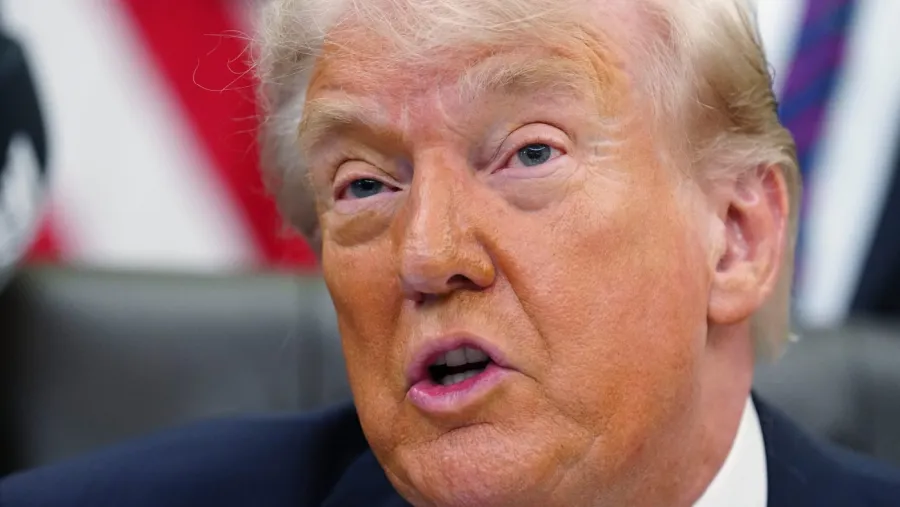
Recent developments in American politics underscore a defining moment where power struggles and ideological battles continue to shape the nation’s future. While Donald Trump remains a formidable figure in the political arena, evidence suggests that the majority of Americans have grown increasingly opposed to his policies. This shift in public sentiment signals a crucial turning point, one that will influence the ongoing contest between traditional conservatism and progressive reform. The political landscape is effectively a chessboard where each move reverberates through the fabric of American society, influencing policy outcomes and the lives of citizens.

At the center of this turbulent scene are Trump’s policies, which many perceive as divisive and out of step with evolving societal values. His approach to immigration, economic management, and national identity has sparked fierce debates, setting the stage for a broader power struggle. Political theorists like Carl Schmitt have long articulated how such conflicts are inherent to democratic systems, as decision-making is often driven by sovereignty—the ultimate authority to decide. In this context, the rejection of Trump’s policies by a significant demographic underscores a shift towards a preference for policies perceived as more inclusive or aligned with contemporary values. Yet, this does not necessarily signal an outright rejection of all conservative ideals but rather an evolution within the ideological spectrum, with younger voters, in particular, advocating for reforms that challenge the traditional power structures.

The contemporary political contest is further complicated by the push for constitutional reforms and judicial decisions that shape the limits of presidential authority and legislative scope. Legislative bodies and courts wield their power to check or expand executive influence, often resulting in intense power struggles where outcomes directly impact the day-to-day lives of Americans. For example, recent court rulings have challenged executive orders or legislative agendas, illustrating how constitutional law remains a battleground for competing visions of governance. Political analysts often draw parallels to historic moments such as the New Deal era, where judicial activism and presidential authority clashed, ultimately transforming the role of government in American life. Today, such conflicts underscore the importance of constitutional adherence and the unpredictable nature of political power—transforming the abstract struggle for control into tangible reforms that shape the nation’s destiny.

Ultimately, the political stage is a battleground for **how decisions made today** will echo through generations. The shifting allegiances and ideological battles reveal that the future of American governance hinges on the strategic positioning of power and policies. As the nation continues to grapple with divisive issues, it becomes clear that politics is not merely about immediate gains but about the long arc of history. Leaders and citizens alike are engaged in a tense struggle to write the chapters of tomorrow, understanding that in this arena, power is the pen—guiding the narrative of a nation standing at the crossroads of tradition and transformation. The question remains: who will ink the pages of America’s future—the champions of progress or the custodians of enduring principles? In the end, it is where the true fight for destiny unfolds, each decision a stroke on the vast canvas of history.

Reform plans may trigger Truss-style chaos, warns renewable industry experts

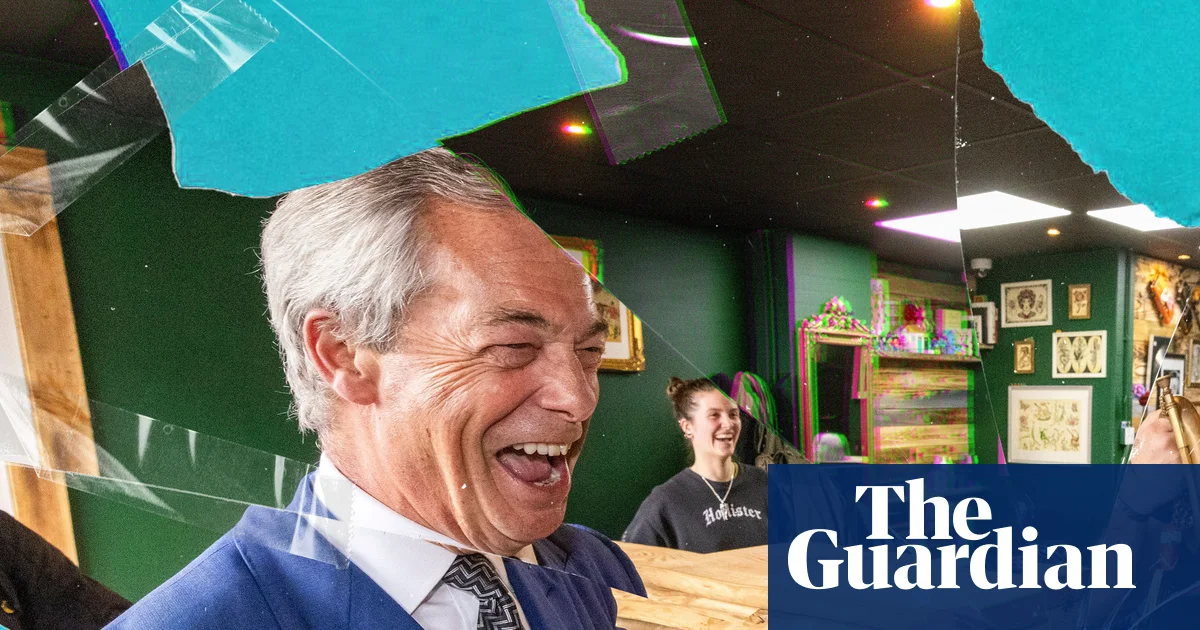
The landscape of British politics is currently witnessing a striking power struggle, where the principles of free enterprise clash sharply with mandates for governmental intervention. At the heart of this turbulence stands Reform UK, a populist force led by Nigel Farage, whose latest platform calls for an overhaul of renewable energy subsidies. This campaign signals a clear departure from conventional sector support and evokes echoes of the aggressive deregulation seen during previous conservative reforms. Yet, the implications reach deep: the potential unraveling of investor confidence, economic destabilization, and even a reversion to the turmoil akin to the chaos under Liz Truss’s tenure.

The industry’s chief lobbyist for RenewableUK has sounded the alarm, emphasizing that such policies threaten to undermine not only the renewable sector but the very fabric of UK’s economic stability. The anti-renewables stance proposed by Farage’s movement could significantly deter foreign and domestic investment, sending ripples throughout the broader economy. Historically, decisions to pull back on energy subsidies echo moments of political volatility and economic recklessness, where the short-term gains mask long-term consequences—a pattern that echoes the failed policies of the recent past. The question emerges: are these policies merely a reflection of populist rhetoric, or are they a destructive recalibration of Britain’s energy future, with the people (and their economic well-being) as collateral?

Legal and constitutional experts warn that such radical policy shifts risk undermining the rule of law and disrupting the delicate balance of government intervention and free markets established through generations of constitutional development. Historical parallels—such as the austerity-driven reforms of the post-2008 crisis or the chaotic deregulation of the 1980s—serve as warnings. These episodes reveal a recurring theme: when political leaders prioritize ideological purity over economic stability, the outcomes are often turbulent, leaving citizens to bear the brunt of high energy bills and economic uncertainty. As Thatcher’s economic reforms demonstrated, decisive shifts away from state-led support can indeed invigorate industries, but only if guided by prudent, risk-aware policies rather than populist bravado.

This power struggle is more than a mere policy debate; it is a battle for control over Britain’s economic destiny. Decisions made today will resonate through generations, reshaping the role of government and redefining the social contract in the process. As the political stage prepares for yet another pivotal act, the people stand as witnesses to a reality where ideologies clash and destinies are written. In this moment, the true question is whether Britain’s leaders will rediscover wisdom through the lens of history or succumb to the siren call of populist peril—knowing full well that in the theatre of power, every decision inscribes the future in stone.

Labour’s plan: Young saplings in prisons, nature zones on military lands

In the current political landscape of the United Kingdom, the struggle for power and ideological dominance continues to define the direction of governmental policies. Recently, the environment secretary Emma Reynolds unveiled an ambitious plan to repurpose government land, including building tree nurseries at prisons and transforming military ranges into natural habitats such as heathlands or peat bogs. This initiative is presented as a decisive step towards making the British landscape more nature-friendly amidst increasing pressure from the Green Party, which is flexing its influence during the upcoming local elections.

This move starkly illustrates the ongoing power struggle between conservative pragmatism and green ideology. While Reynolds’ proposals demonstrate a laudable aspiration to restore natural habitats, critics argue that these policies are a tactical response to political pressure rather than genuine strategic planning. The Green Party, seen by many as the rising force of ecological activism within UK politics, is pushing Labour to adopt increasingly radical environmental stances. This push-and-pull reflects a foundational debate: should environmental reform be a matter of executive action, or does it demand a redefinition of the nation’s broader political priorities?

Constitutional experts have long pointed out that such sweeping land-use reforms raise questions about the limits of governmental authority. Historically, figures like Lord Acton warned that “power tends to corrupt,” emphasizing that decision-making bodies must guard against the temptation of overreach. Today, the power dynamics within UK politics reveal that the fight is no longer merely about land but about who controls the narrative of national identity and future direction. The government’s efforts to embed environmental initiatives within national policy are thus emblematic of a broader struggle to shape the very fabric of the people’s landscape.

Ultimately, these developments exemplify that politics in the modern era remains the ultimate stage where destiny is inscribed. As the political factions jockey for influence, the decisions made today will influence generations—defining not just land use but the moral and ideological compass of the nation. It is clear that the true battle in UK politics is not solely about policies but about controlling the narrative of the future itself. In this arena, the contest for power and ideological dominance continues unabated, echoing the timeless adage that politics is where the future is written amidst the tumult of competing visions.

New footage of Correspondents’ Dinner shooting sparks security concerns for president

The recent security breach at the White House Correspondents’ Dinner has ignited a fierce debate on the robustness of protective measures around the nation’s highest office. The disturbing footage released by the Justice Department depicts an armed individual bypassing security protocols and storming past guards, an event that exposes serious vulnerabilities in the security apparatus tasked with safeguarding the Commander-in-Chief. This breach, occurring at a symbolically significant event, underscores the persistent power struggles between security agencies and political agendas, reminding us that in the terrain of national security, no institution is infallible.

Security experts and political analysts are quick to analyze the incident’s implications concerning how decisions shape the people’s confidence in leadership. As Juliette Kayyem of the Homeland Security Project at Harvard Kennedy School emphasizes, such lapses reveal the need for rigorous reforms in protocol, particularly at venues where history and risk intersect. Critics argue that the breach underscores a broader trend—a decline in vigilance amidst rising political polarization and ideological conflicts that distract from core security responsibilities. The incident can be viewed as a concrete example of the ongoing struggle for supremacy between security priorities and political spectacle, a contest that defines the limits of authority in contemporary governance.

Throughout history, echoes of similar vulnerabilities burst onto the national stage, prompting fundamental questions about who holds power and how institutions adapt to rising threats. Influential theorists such as Carl Schmitt have long warned of the decisionist moment: a point where crisis accelerates the concentration of power within executive authority, often leading to questionable expansions of state power or lapses in democratic accountability. In this tense environment, the current security failure could catalyze calls for bold reforms or even shifts in constitutional understanding—debates that threaten to redefine the balance of power between the presidency, security apparatus, and the citizenry. Yet, amid this chaos, the overarching question remains: who truly governs the narrative, and whose safety is prioritized?

As the nation observes the unfolding fallout, one thing becomes clear: politics is not merely a game but a stage where the fate of collective destiny is scripted. Whether through reforms, policy shifts, or institutional reconfigurations, what happens next will determine how future threats are confronted and who ultimately bears responsibility. When security collapses at such a high-profile event, it signals that the battle for America’s soul—whether through policy, power, or principle—continues unabated. To understand this event is to understand that in the arena of politics, the stakes are eternally existential, for history favors those who grasp that the decisions made today carve the foundations for the world of tomorrow.

May 3, 2026: Tourists Clash, Warbirds Fly, Perfume Capital Battles Challenges

Recent developments reveal a complex and tempestuous landscape where power struggles and ideological shifts define the trajectory of nations. The surprising presence of a white nationalist volunteer assisting in hurricane relief efforts exposes the deep currents of societal division. It underscores a broader narrative: in times of crisis, nationalism and populism often gain traction, as certain segments of the population seek to reaffirm identity and sovereignty amidst chaos. Critics argue that such figures exemplify **the dangerous allure of identity politics**, which threaten to fracture social cohesion, while advocates claim they embody a raw, authentic response to perceived neglect by elites.

Meanwhile, the influx of birdwatchers—**”birders”**—who have flocked to regions following recent disarmament of guerrillas, signifies a **shift in local stability and security**. This phenomenon illustrates how conflict resolution, when accompanied by policy reforms or disarmament initiatives, can have broader societal effects, attracting new economic activities and altering demographic compositions. However, the presence of armed insurgent groups often serves as a reminder of ongoing state fragility. The decision to disarm guerrillas, championed by certain governments under international pressure, echoes historical parallels such as post-conflict demilitarization efforts in the Balkans or South America—acts fraught with both promise and peril. The question remains: will these reforms lead to lasting peace, or will they embolden factions to reemerge?

Turning our gaze toward Europe’s venerable city of Grasse, often dubbed the perfume capital of the world, we observe a different dynamic. Here, history and commerce intertwine — a narrative reflecting how economic identity can serve as a symbol of resilience amid geopolitical upheaval. The city’s prosperity is rooted in centuries of craftsmanship, yet recent global trends demonstrate how *cultural pride and economic policy* can be used as tools within larger ideological battles. The local push to safeguard traditional industries against rapid globalization echoes the conservative defense of sovereignty and cultural preservation.

In this landscape, political theorists like Carl Schmitt underscore the importance of **decisionism**: when democracies face existential threats or unprecedented challenges, sovereignty is tested by decisive action. As constitutional experts debate the limits of executive powers, the emergent theme is how states navigate the delicate balance of authority and liberty. Just as historical parallels—such as the emergence of nation-states in turbulent eras—highlight the importance of leadership during crisis, today’s decision-makers are shaping a future where the **stakes are nothing less than national identity and global stability**. Politics, therefore, is not merely the pursuit of power but the imperial arena where destiny is scripted with each act of governance, where the echoes of yesterday’s choices orbit into tomorrow’s destiny.

Social Media Auto Publish Powered By : XYZScripts.com