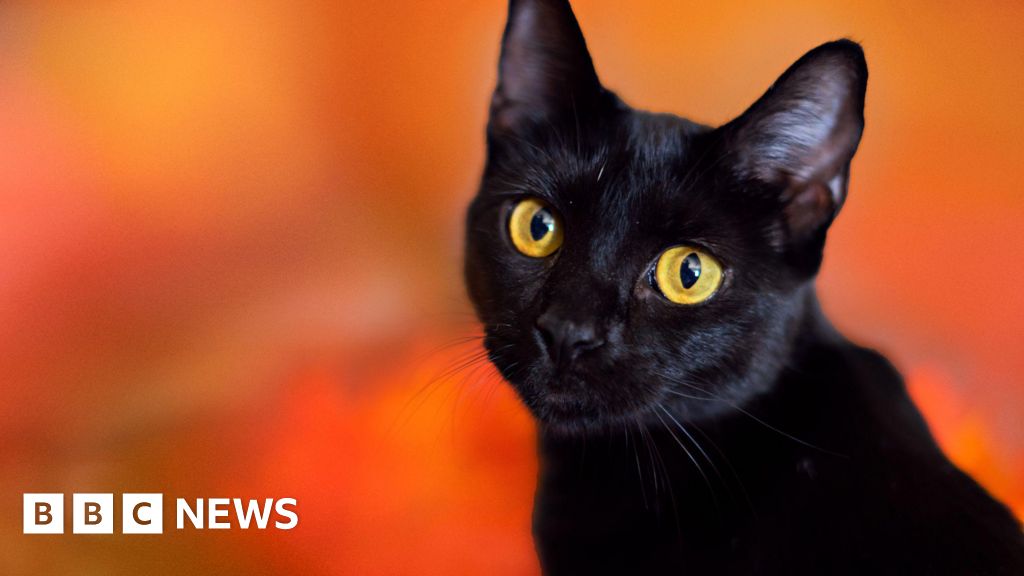
Shadows of Tradition and Modern Morality: The Black Cat Ban in Terrassa
In a world increasingly attuned to the nuances of culture, animal welfare, and security, Terrassa, a historic town in Catalonia, has taken a controversial step that underscores the global tension between tradition and modern-day safety concerns. The town’s decision to temporarily ban the adoption of black cats during Halloween—set to last from October 6 to November 10—has sparked debates that reach far beyond its provincial borders. This measure, justified by local authorities as a safeguard against potential ritualistic abuse, embodies a broader societal shift where concerns for animal welfare increasingly influence policy-making amid fears of exploitation.
While Terrassa’s city council reports no local record of cruelty toward black cats, the decision aligns with a rising wave of precautionary policies motivated by incidents elsewhere—an approach reinforced by warnings from international animal rights organizations. European and Western communities have long associated black cats with superstitions rooted in witchcraft and misfortune, yet in many other cultures, such as in Japan and Egypt, these animals symbolize prosperity and good luck. The contrasting symbolism underscores how cultural perceptions can influence policy decisions that, ostensibly, aim to protect animals but also reflect societal fears and prejudices. Prominent historians and analysts suggest that such actions are frequently reactions to heightened societal anxieties, especially amid cultural shifts emphasizing safety and morality over centuries-old traditions.
Geopolitical Impact and Society’s Response to Cultural Shifts
The black cat ban in Terrassa could be viewed as emblematic of a larger global trend in which local authorities adapt policies based on perceived threats—whether they stem from cultural misunderstandings or real incidents—meanwhile influencing international standards. Such measures might appear minor, but they carry significant geopolitical implications. When a European town adopts an anti-\u201crituals\u201d stance without evidence of actual abuse, it adds to the narrative of a continent increasingly cautious—or perhaps afraid—of its own cultural rituals and symbols. Analysts warn that this could set a precedent, encouraging other jurisdictions to implement similar restrictive policies rooted in moral panic rather than factual crime rates.
Organizations like the World Animal Protection have expressed concerns about such bans, emphasizing that they often obscure deeper societal issues of superstition and misinformation. Yet, the decision’s impact on society reaches beyond animal welfare, touching on broader matters of cultural identity, immigration, and the ongoing clash between tradition and modern modernization. This is a reflection of how international communities are increasingly caught in debates where security and morality are prioritized over cultural diversity and historical significance. Political commentators argue that such measures, while temporary on the surface, could deepen divisions within Europe, particularly amid the continent’s ongoing struggle with multicultural integration and societal cohesion.
Yesterday’s Traditions, Today’s Fear: The Unfolding Tale of Cultural Evolution
As Terrassa‘s measures take hold, history will record whether this is a fleeting precaution or a sign of deeper societal transformation. The city’s decision to restrict animal adoptions during Halloween, though presented as an “extra precaution,” hints at a broader narrative echoed across borders: the ongoing effort to reconcile age-old cultural symbols with modern moral standards in an interconnected world. International organizations monitor these shifts, warning that too often, fear-driven policies obscure genuine cultural exchange and risk marginalizing traditions that have defined societies for centuries.
Indeed, as history continues to unfold, the world stands at a crossroads—where decisions on seemingly minor issues like the fate of black cats embody the profound tensions shaping the future of cultural identity, security, and morality. This is not just about animals or superstition; it is about how societies choose to navigate the complex dance between honoring the past and protecting the present, with the specter of history hovering in the background as an unyielding witness to all that is lost and gained in the march forward.