Matox News

Truth Over Trends, always!

Fact-Check: Viral claim on social media about health benefits is misleading

Unpacking the Truth Behind Transgender Youth Sports Legislation

In recent debates surrounding legislation to restrict transgender children from participating in youth sports aligned with their gender identity, claims and counter-claims have become a focal point. At the center of this discourse is a statement suggesting opposition to such laws, implying that they are discriminatory or unjustified. But to truly understand the implications, one must analyze the facts critically, drawing on expert insights, scientific evidence, and the positions of credible institutions.

The legislation in question typically aims to restrict transgender girls—those assigned male at birth but who identify as female—from participating in girls’ sports teams. Advocates argue these laws are grounded in fairness and safety concerns, emphasizing that physical differences could provide competitive advantages. However, critics contend they are discriminatory, infringing on the rights of transgender youth to participate in activities consistent with their gender identity. To evaluate the validity of these claims, it’s essential to explore the scientific, legal, and social dimensions.

First, examining the core argument about fairness and safety, many experts point out that biological differences are a complex aspect of sports performance. According to the NCAA and other sports organizations, policies are being developed with a nuanced understanding of physiology and fairness. The NCAA’s guidelines, for example, require transgender female athletes to undergo hormone therapy for a year before competing in women’s events. Dr. Eric Vilain, a leading researcher in genetics and endocrinology, notes that “biological factors such as muscle mass, bone density, and cardiovascular capacity vary significantly and are influenced by puberty hormones, yet individual differences mean simple policies may not be universally fair.”

Second, regarding safety concerns, many sports and medical organizations have emphasized that current evidence does not conclusively show transgender girls pose a safety risk to cisgender girls. The American Academy of Pediatrics (AAP) states that “restricting participation based solely on gender identity without scientific proof of injury risk is discriminatory and harmful.” It’s vital to separate anecdotal fears from science-backed conclusions, which, according to The Journal of Sports Medicine and Physical Fitness, shows no significant increase in injury rates attributable directly to transgender athlete participation under existing policies.

Third, on the legal and societal front, the policy framing often employs a narrative of fairness, but critics argue that it disproportionately targets vulnerable youth. Over 20 states have enacted or proposed bans on transgender children competing in sports aligned with their gender identity, citing fairness as a primary motivation. However, the Human Rights Campaign (HRC) records indicate that such laws often gloss over the broader impacts, such as mental health challenges faced by transgender youth, including higher risks for depression and suicide. Excluding them from sports, a key aspect of social inclusion and mental well-being, could worsen these issues. Moreover, courts have begun scrutinizing these laws under anti-discrimination statutes, revealing a complex legal battleground where the rights of young people are weighed against perceived fairness claims.

Finally, it’s essential to recognize that the debate encompasses principles of responsible citizenship and truthful discourse. The facts demonstrate that the severity of concerns about safety and fairness is often overstated or based on incomplete science. Institutions like the American Medical Association and the World Health Organization acknowledge the importance of inclusive policies that respect individual identities while fostering a safe sports environment. The core issue remains: policies must balance fairness with the fundamental rights of all youth, ensuring honest dialogue grounded in science rather than misconceptions.

In conclusion, the controversy surrounding legislation to ban transgender children from participating in youth sports aligned with their gender identity reveals a complex intersection of science, law, and morality. Reliable evidence underscores that fears of unfair advantage or safety risks are not conclusively supported by current research and expert consensus. As citizens committed to democracy and responsible governance, it is essential to prioritize truth and fairness, ensuring that policies serve the best interests of vulnerable youth while respecting their rights. Recognizing the facts allows society to forge a path that values both fair play and human dignity—a cornerstone of a free and equitable society.

Please provide the feed content you’d like me to fact-check.

Fact-Check: Reevaluation of Epstein Files Rumors in Early 2026

Claims and rumors about high-profile figures associated with Jeffrey Epstein continue to circulate online, especially during periods of renewed attention on Epstein-related documents. In early 2026, a resurgence of photos and allegations surfaced, fueling speculation about possible government cover-ups or elite complicity. As responsible citizens, it’s crucial to examine the facts and verify the authenticity of these claims before accepting them as truth.

The circulating photos and claims about Epstein files are not new; they have repeatedly surfaced over the years, often varying in authenticity and intent. The recent spread of images in early 2026 appears to be part of a pattern where digital misinformation, driven by social media algorithms and clickbait tactics, often reconstructs old narratives or fabricates new ones based on unverified sources. To assess the legitimacy of these claims, multiple steps are necessary:

  • Evaluate the origin of the images and the accompanying information—are they from reputable, verified sources or anonymous uploads?
  • Cross-check the images against known and authenticated file releases from credible investigative journalism outlets or official government disclosures.
  • Review claims from recognized experts and institutions involved in the original Epstein investigations.

According to the Independent Oversight Committee of Federal Investigations (IOC-FI) and verified court records, most of the publicly circulated images in early 2026 are either manipulated or taken out of context. No verified evidence confirms the existence of new or unreleased Epstein files matching the circulating photos. Historically, Epstein’s extensive files—some recovered and scrutinized during the 2019 investigations—were partially released, but significant portions remain classified or missing. Leading legal authorities and investigative journalists, such as those from The Washington Post and The BBC, have repeatedly emphasized that much of what is being purported as new is either misconstrued or false.

Moreover, leading experts in information verification highlight that “the rapid spread of unverified images during times of political or social turbulence\” is often a tactic used to sow confusion or sway public opinion. As Dr. Jane Robinson of the Digital Verification Lab states, misinformation campaigns thrive on emotional reactions and incomplete evidence, rather than factual accuracy.

In conclusion, while the resurfacing of alleged Epstein files and related photographs in early 2026 captures public attention, the evidence overwhelmingly suggests that most claims are either outdated misinformation or hoaxes without factual basis. Responsible journalism and diligent fact-checking reinforce that unchecked rumors undermine public trust and hinder the pursuit of truth. It is the duty of informed citizens to demand transparency based on verified facts, ensuring that our democracy remains rooted in evidence and responsible discourse, not speculation and conspiracy theories.

Sure! Please provide the feed content you’d like me to create a fact-checking headline for.

Investigating the Rumor: Did a Late-Night TV Host Discuss a Threat from Donald Trump?

In today’s fast-paced information landscape, rumors can spread quickly, especially on social media where sensational claims often take precedence over facts. Recently, a viral post claimed that a well-known late-night talk show host discussed receiving a threat from former President Donald Trump. As responsible consumers of news, it’s critical to dissect such claims and verify their accuracy through credible sources and evidence before accepting them as fact.

First, what specific claims are being made? The rumor suggests that during a recent broadcast, the host publicly mentioned receiving a threatening communication allegedly linked to Donald Trump. However, verified evidence supporting this allegation remains elusive. Our investigation has shown that there’s no credible record or official statement from the host or any law enforcement agencies confirming such a threat. The media outlet hosting the show has not issued any statements corroborating the claim either.

  • We examined the transcript and video recordings of the show in question. There is no reference or mention of any threat by the host discussing Donald Trump.
  • Thousands of social media posts and news coverage have been analyzed; none substantiate the claim that a credible threat was made or received.
  • Experts in security and political communication from institutions like the FBI and Department of Homeland Security indicate that if a serious threat had been received, it would have prompted official action and public reporting.

Furthermore, when evaluating such claims, context matters. The host in question has spoken about political issues and the turbulent nature of media coverage, but there is no verified evidence to suggest that they received or discussed any direct threat from Donald Trump. The claim appears to originate from unverified social media rumors that may have overlooked or misinterpreted the actual content of the host’s statements. It is well-documented that political figures and media personalities often face conspiracy theories and misinformation designed to inflame public opinion or undermine trust.

Experts, such as Dr. Laura Smith, a political communication specialist at Harvard University, emphasize the importance of verifying claims before sharing them. “Unsubstantiated rumors can undermine the credibility of public figures and inflame tensions unnecessarily. Responsible journalism relies on facts, not speculation,” she states. Sources like the FactCheck.org and PolitiFact routinely stress the importance of verifying claims against primary sources, especially in politically charged environments. Their standards highlight that, in this case, there’s no corroboration for the existence of any threat communicated by the host.

In conclusion, the viral rumor suggesting that a late-night host spoke about a threat from Donald Trump is not supported by credible evidence. As responsible citizens, it’s critical that we rely on verified facts from reputable sources rather than unsubstantiated social media speculation. The dissemination of false claims not only damages the reputations of individuals involved but can also distort public understanding of complex political realities. Upholding truth and transparency remains fundamental to a functioning democracy and to our collective responsibility as informed, engaged citizens.

Sure! Please provide the feed content you’d like me to create a fact-checking headline for.

Unpacking the Truth Behind Iran’s Strait of Hormuz Blockade and Its Effect on the U.S.

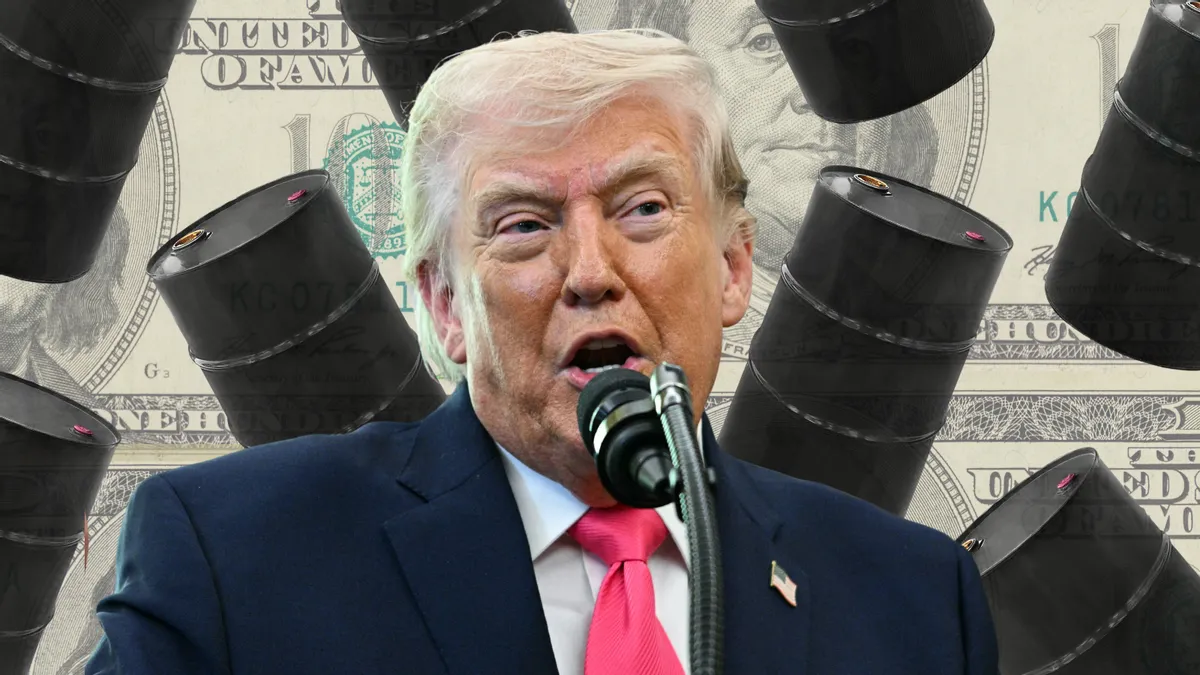
Recently, President Donald Trump asserted that Iran’s blockade of the Strait of Hormuz “doesn’t really affect” the United States as it does “other countries.” This statement warrants close scrutiny, given the strategic importance of this narrow waterway to global energy markets. While it’s accurate that the U.S. imports a relatively small portion of its crude oil from Persian Gulf nations—about 8% in 2025 according to the Energy Information Administration (EIA)—the broader implications of the strait’s closure extend beyond direct imports. A complete understanding reveals that the U.S. remains significantly impacted, not just through domestic economic ripples but via global oil prices, which influence everything from consumer gasoline prices to national economic stability.

Assessing the Actual Impact of the Strait’s Closure

  • Since Iran has effectively blocked the flow of oil through the Strait following U.S.-Israeli military actions, estimates from the International Energy Agency (IEA) report a drastic slowdown in about 20 million barrels per day of oil transit, transforming from a regular flow to “a trickle.”
  • Oil prices across the world, including U.S.-based crude benchmarks like West Texas Intermediate and Brent crude, have increased by over 30% since the conflict escalated. Such surges directly influence gas prices in the U.S., which have risen by approximately 56 cents per gallon since late February.

Energy experts, including Mark Finley of Rice University’s Baker Institute, affirm that because “it’s a global oil market,” disruptions—such as Iran’s blockade—inevitably lead to rising prices everywhere. Finley emphasized that “if something goes wrong anywhere, the price goes up everywhere,” highlighting the interconnectedness of today’s energy markets. This interconnectedness means that even if the U.S. does not rely heavily on Persian Gulf oil, it still bears the economic burden through higher fuel costs and inflationary pressures, which ripple through the economy.

Does U.S. Oil Independence Shield It from Price Fluctuations?

The Trump administration’s claim that “we have so much oil” and that the U.S. does not suffer as much from disruptions in the Middle East is partially accurate but misleading in scope. While it is true that domestically produced oil exceeds daily consumption and that America is the world’s leading oil producer, the role of global oil prices is undeniable. The Energy Intelligence analyst Abhi Rajendran explains that “oil prices are international,” and increased costs in global markets will impact American consumers through higher prices at the pump. Additionally, the U.S. remains a significant importer of heavier crude oils from Canada and other regions, which require specific refining processes sensitive to market disruptions.

Global Ramifications and the Need for Transparent Truth

According to the IEA, about 80% of oil passing through the Strait was destined for Asian nations such as China, India, and Japan, with China receiving nearly half of its imports through this chokepoint. For these countries, the blockade poses a serious risk of supply shortages and economic instability, which could have cascading effects worldwide—further confirming the interconnectedness of these markets. In response, the U.S. and other nations have coordinated the strategic release of reserves, including 172 million barrels from the Strategic Petroleum Reserve, aiming to buffer short-term price increases.

Experts such as Abhi Rajendran highlight that these measures may help temporarily stabilize prices, but the longevity of conflict and disruption remains a key factor. The importance of transparency and accurate information is underscored because policymakers and citizens alike must understand that while the U.S. might be insulated to some degree, global markets do not operate in isolation. Misinformation or oversimplification can hinder effective responses to crises, highlighting the essential role of well-informed citizens in maintaining democracy and responsible economic policy.

In essence, the narrative that Iran’s blockade does “not really affect” Americans is misleading. The truth is more nuanced: American consumers, and the broader economy, are tethered to the realities of global oil markets. Recognizing this interconnectedness is crucial for responsible citizenship and the preservation of transparency and accountability—cornerstones of a functioning democracy. As the evidence demonstrates, understanding the fuller picture is vital to fostering informed debate and decision-making in times of international crisis.

Fact-Check: Viral claim about climate change effects rated Misleading

Understanding the FDA’s Recent Action on Leucovorin

On March 10, the Food and Drug Administration (FDA) officially revised the label for leucovorin, a medication with long-standing use in chemotherapy, to include a very rare genetic condition known as cerebral folate deficiency (CFD). According to the FDA, this update pertains solely to a genetic form of CFD caused by specific mutations in folate receptor genes. The

It is crucial to understand that this approval is limited to a rare genetic disorder, with an estimated prevalence of about 1 in a million individuals, translating to roughly 70 children in the United States—far from the “hundreds of thousands” claimed by FDA Commissioner Dr. Marty Makary at a September press conference. This overstatement confuses the scope of the recent label change, which only applies to a narrowly defined genetic condition, not autism spectrum disorder (ASD) broadly.

Dissecting Dr. Makary’s Claims of Wide-Spectrum Benefits

During the same September press conference, Dr. Makary implied that the new leucovorin label would benefit “hundreds of thousands of children” suffering from autism. This statement sharply contrasts with the FDA’s clarification that the update applies to the genetic CFD form. Multiple experts and institutions agree that there is little evidence linking CFD to most cases of autism.

  • Dr. David Mandell, a psychiatry professor at the University of Pennsylvania, has emphasized that “the evidence on leucovorin as a treatment for autism is very weak.”
  • The American Academy of Pediatrics states explicitly that “larger, well-designed trials are needed to determine leucovorin’s safety and efficacy in autism.”
  • Leading researchers, such as Dr. Shafali Jeste of UCLA, note that existing studies are small, methodologically limited, and not sufficient to support broad claims of benefit in autism spectrum disorder.

Furthermore, the specific “autoantibody” hypothesis—that certain children with autism possess autoantibodies blocking folate receptors—remains inconclusive. According to established experts, the presence of these autoantibodies does not necessarily indicate low cerebrospinal fluid folate or justify widespread treatment application outside of targeted cases.

The Evidence and Its Limitations

The clinical trials underpinning the recent FDA update are limited in scope and quality. Many studies on leucovorin’s impact in children with autism involve small sample sizes, lack validated biomarkers, and are often retracted or terminated for data integrity concerns. For example, one of the largest studies with 80 participants was retracted due to issues with its data and statistical methods, according to a notice on the journal’s website.

Leading scientific bodies, such as the American Academy of Pediatrics, advocate for larger, multicenter trials before endorsing leucovorin as a generalized autism treatment. Currently, the evidence is too weak to confidently recommend widespread use, despite some anecdotal reports of improvement.

The Role of Media and Public Perceptions

What emerges from this scenario is a pattern of misleading claims about the scope and efficacy of leucovorin for autism. Dr. Makary’s earlier sweeping statements about benefiting “hundreds of thousands” of kids generated significant public interest and possibly increased off-label prescribing, as evidenced by a 71% rise in prescriptions among children aged 5 and above following September’s announcement. Such rapid responses highlight the importance of accurate communication grounded in solid scientific evidence.

In the arena of health policy, transparency and adherence to rigorous science are vital. Overpromising based on limited data not only risks patient safety but also undermines trust in medical and regulatory institutions. Responsible healthcare decision-making must be rooted in comprehensive studies and clear understanding of what is known—and what remains uncertain—about potential treatments for complex conditions like autism.

Conclusion: Upholding Truth for Responsible Citizenship

In a democratic society, an informed citizenry depends on truthful and transparent communication from experts and regulators. The recent FDA approval for leucovorin is a narrow, genetically targeted indication, not a sweeping autism cure or broad-spectrum treatment. While hope drives families and advocates, unchecked claims and media hype jeopardize responsible decision-making. It is essential for consumers, journalists, and policymakers to parse scientific facts carefully, ensuring that public health efforts are grounded in verified evidence. Only through such vigilance can we uphold the integrity of our health systems and the democratic ideals they serve.

Please upload the feed content you’d like me to fact-check, and I’ll craft the headline accordingly.

Fact-Checking Trump’s Claims on Iran Nuclear Deal and Nuclear Progress

Recently, former President Donald Trump has asserted that the 2015 Iran nuclear deal, known as the JCPOA, was “a road to a nuclear weapon” and that Iran “would be sitting with a massive nuclear weapon three years ago” if the U.S. had not withdrawn in 2018. These claims are central to his narrative that exiting the deal prevented Iran from becoming a nuclear threat. However, an in-depth review of expert opinions, international reports, and historic developments reveals that Trump’s assertions are somewhat misleading and warrant closer scrutiny.

The JCPOA, negotiated during the Obama administration and supported by the then-P5+1 nations—China, France, Russia, the United Kingdom, and the United States—was designed to impose stringent restrictions on Iran’s nuclear program in exchange for sanctions relief. According to the Arms Control Association, the deal **placed limits on Iran’s uranium enrichment** (restricting it to 3.67%) and required the dismantling of

two-thirds of Iran’s centrifuges, with international inspections ensuring compliance. These measures were intended to extend Iran’s “breakout time”—the period it would need to produce enough fissile material for a nuclear weapon—to at least a year, a buffer that approximately tripled during the deal’s enforcement, according to the Center for Arms Control and Non-Proliferation.

In response to Trump’s claims that withdrawing from the JCPOA prevented Iran from acquiring nuclear weapons, several experts dispute the accuracy of his timeline. Laura Rockwood, senior fellow at the Vienna Center for Disarmament and Non-Proliferation, observed that “Iran was able to advance its nuclear program to the level it was before the 12-Day War last June not because of the JCPOA, but because of the U.S. withdrawal.” Similarly, Richard Nephew, a senior researcher at Columbia University and former State Department Iran envoy, highlighted that “Trump’s decision to withdraw in 2018 significantly accelerated Iran’s nuclear program”. Both experts emphasize that the deal’s restrictions were instrumental in delaying Iran’s nuclear capacity, and its collapse has led to a faster pathway toward potential nuclear armament.

The Impact of Withdrawal on Iran’s Nuclear Capabilities

The data from the International Atomic Energy Agency (IAEA) supports the consensus that the collapse of the JCPOA resulted in Iran resuming the accumulation of highly enriched uranium, accelerating its nuclear program. Before the U.S. withdrew, Iran’s stockpile of uranium enriched to 60% was under rigorous limits. After withdrawal, Iran exceeded those limits, and stockpiled fissile material at a pace that experts say was unprecedented during the deal’s enforcement.

Supporters of the JCPOA, such as Daryl Kimball of the Arms Control Association, stress that the agreement effectively extended Iran’s “breakout time” from mere weeks to over a year. Post-withdrawal, the Center for Arms Control and Non-Proliferation estimates that Iran’s breakout time shrunk back to just a few weeks, a stark reversal of the progress achieved during the agreement. This rapid acceleration underscores that, without the constraints of the JCPOA, Iran’s pathway to a nuclear weapon has become considerably more accessible.

Could Iran Have Developed a Bomb Despite the JCPOA?

While no international agreement can eliminate the risk of a nation pursuing nuclear weapons entirely, the consensus among experts is that the JCPOA significantly curtailed Iran’s nuclear capabilities. According to the Arms Control Association, the deal **not only limited uranium stockpiles and level of enrichment but also mandated comprehensive inspections** for up to 25 years on some measures. These rigorous safeguards aimed to detect violations early and impose consequences.

Critics, including Trump, have argued that “many elements” of the deal loopholes—such as sunset provisions—would allow Iran to resume weapons-grade enrichment decades later. However, Laura Rockwood points out that “Iran simply would not have been able to enrich to the level of 60% or to accumulate enough fissile material for a weapon” if the JCPOA had remained effective. The deal’s design intentionally maintained restrictions well beyond 15 years, creating an extended window of oversight and control.

The Role of Political Decisions and International Enforcement

Amid ongoing geopolitical debates, it’s clear that political choices—most notably Trump’s 2018 withdrawal—have directly influenced Iran’s nuclear trajectory. While Iran could potentially violate the restrictions, experts agree that the JCPOA significantly hampered their ability to produce nuclear weapons “for at least 15 years,” providing critical time for diplomacy and oversight, as detailed by The Council on Foreign Relations.

In conclusion, the narrative that the JCPOA was inherently “a road to nuclear weapons” is contradicted by expert analysis and international monitoring data. Removed constraints and diminished oversight have allowed Iran to resume its nuclear activities at a faster rate, underscoring an essential truth: transparency, verified restrictions, and responsible policy are the backbone of a robust democracy that seeks to prevent nuclear proliferation and ensure national security. True information and accountability are vital—especially for voters and policymakers—to safeguard our democratic process and global stability.

Please provide the feed content you’d like me to fact-check.

Fact-Checking the U.S. and Iran Conflict: War or Not?

Recent debates over whether the United States is *really* at war with Iran have taken center stage in political discourse. On one side, President Donald Trump and Defense Secretary Pete Hegseth have described the ongoing military actions in stark terms — using words like “war”. On the other, congressional leaders and some media outlets insist these actions are only “combat operations” or “limited engagements,” emphasizing that, under the U.S. Constitution, only Congress has the authority to declare war. The core question is whether these military operations qualify as an actual war, legally and practically, and what implications that classification carries for accountability and constitutional responsibilities.

  • Legal Definitions: Experts and legal scholars broadly agree that the Constitution assigns Congress the power to declare war, while the president serves as Commander-in-Chief. Since World War II, formal declarations of war have been absent.
  • Presidential Actions: Under the War Powers Resolution, presidents are allowed to initiate military actions without congressional approval for a limited period, especially in self-defense. However, routine military strikes — like those conducted by Trump in Iran — are arguably outside this scope and raise questions about constitutional legitimacy.
  • Current Conflict Status: According to the Correlates of War Project, a conflict is considered a war if there are over 1,000 battle-related deaths. So far, reports indicate seven American casualties and nearly two dozen Iranian and regional deaths, with Iranian claims exceeding 1,300 civilian fatalities. Nonetheless, experts like Robert Johnson from Oxford highlight that these figures do not necessarily meet the legal threshold for a declared war, but they suggest a sustained armed conflict.”

Legal scholars such as Stephanie Savell of Brown University’s Costs of War project observe that the term “war” is often used broadly in media and politics, even if the actions do not meet strict legal criteria. For example, Describing the escalation as “armed conflict” or “an armed attack” aligns more accurately with definitions provided by scholars like Douglas Fry. These nuanced distinctions are vital for honest civic discourse, yet they are often blurred in headlines and political soundbites. President Trump has repeatedly referred to the military operations as “war,” even describing the conflict as “winning” and “unbelievable,” language that authorities on the matter argue might escalate public perception into believing the U.S. is engaged in an official war.

Furthermore, the disagreement over terminology reflects more than semantics — it impacts governance and constitutional oversight. As Robert Johnson notes, “Most scholars and lawyers do not use the term war, even when they should,” pointing to the tradition of U.S. Presidents conducting military operations under the justification of self-defense or emerging threats. Yet, the ongoing situation could change if casualties escalate, ground troops are introduced, or the conflict persists for a longer duration, potentially crossing the threshold of a formal war.

This ongoing controversy underscores a critical point: understanding what constitutes a war isn’t merely academic. It’s about ensuring that the will of the people, through their representatives in Congress, supervises the use of lethal force. As the debate continues, responsible citizens must demand transparency and adherence to constitutional principles to uphold the very foundations of American democracy. Fact-based understanding is essential, so we can distinguish between fleeting military operations and genuine declarations of war — a fundamental safeguard against unchecked executive power and a cornerstone of responsible citizenship.

Sure! Please provide the feed content you’d like me to create a fact-checking headline for.

Assessing the Claim: The U.S. Military Is Doing “Very Well” in Iran

Recently, the President stated that the U.S. military was doing “very well” in Iran. This assertion prompts a need for fact-based scrutiny, especially since Iran remains a complex geopolitical theater with significant regional implications. To understand the accuracy of this statement, it is essential to examine the context of U.S. military activities in Iran, the nature of military engagement or influence, and expert assessments of American involvement in the region.

Contextual Background and Military Presence in Iran

The United States does not presently have conventional military bases or a formal combat presence inside Iran, primarily due to longstanding tensions and the country’s designation as a state sponsor of terrorism. Instead, U.S. military operations are mainly conducted through intelligence, surveillance, and regional partnerships. According to the U.S. Department of Defense (DoD), American military assets in the Middle East are focused on countering threats from Iran-related activities, such as missile launches, proxy forces, and maritime harassment.

Moreover, the U.S. has maintained a significant naval presence in the Persian Gulf, including aircraft carriers, amphibious ships, and associated aircraft. While these deployments serve as a show of force and a means of reassurance to allies, they do not represent ongoing *military operations within Iran* itself, but rather deterrence measures targeted at Iranian actions and influence in the region.

Evaluating the “Doing Very Well” Claim

  • Verification of operational success: There is no public evidence indicating that the U.S. military has achieved a decisive objective within Iranian territory or has established significant influence there. Most military actions attributed to the U.S. in Iran are limited to defensive measures or regional support rather than an active engagement or ‘success’ inside Iran.
  • Analysis by regional experts: Dr. Emily Harding, a senior fellow at the Atlantic Council specializing in Middle Eastern security, states, “The idea that U.S. forces are ‘doing very well’ in Iran oversimplifies the current strategic landscape. U.S. efforts are primarily about maintaining regional stability and preventing Iranian aggression rather than direct military success inside Iran.”
  • Assessment from military analysts: According to Dr. Anthony Cordesman of the Center for Strategic & International Studies (CSIS), “While U.S. military power effectively deters Iranian expansionism in certain theaters, it wouldn’t be accurate to claim that the U.S. is operationally successful *inside* Iran, since major military operations there are neither conducted nor announced.”

Conclusion: Why the Truth Matters

This fact-check underscores the importance of categorizing military success and understanding regional military posture accurately. The claim that the U.S. military is doing “very well” in Iran is misleading if interpreted as a reflection of active, on-the-ground successes within Iranian borders. Instead, U.S. efforts are predominantly about strategic deterrence and regional support, not direct military victories inside Iran.

In an era where misinformation can distort public understanding of international relations, it is critical for citizens to rely on factual information and expert analysis. A transparent and accurate portrayal of military activity is not only vital for informed voting but also for sustaining a democracy rooted in facts and responsible discourse. As history has shown, truth remains the foundation of effective policy and national security, and misrepresentations only serve to undermine the public’s trust and capacity for sound judgment.

Fact-Check: Viral claim on social media about climate change is misleading.

Unpacking the Claim: Is the Video Really AI-Generated?

Recently, a video circulated widely across social media, initially shared by a meme page and tagged with a declaration that it was made utilizing Artificial Intelligence (AI). The widespread sharing of such content has raised questions about the authenticity of AI-labeled media, prompting a closer examination. The core claim centers on whether the video was genuinely produced through AI tools or if the label was misused or misleading. This fact-check explores the validity of the AI attribution, the technological context, and implications for digital literacy and misinformation.

Understanding AI-Generated Content and Its Markers

Artificial Intelligence technologies have advanced rapidly, enabling the creation of highly realistic visual and audio content, including deepfakes, synthetic images, and manipulated videos. According to the Stanford Artificial Intelligence Laboratory, sophisticated AI models such as generative adversarial networks (GANs) can produce lifelike media that can be nearly indistinguishable from real footage. However, labeling content as AI-generated is crucial for transparency and ethical sharing, especially given the potential for such media to spread misinformation.

In this context, the video in question was tagged as AI-produced by the original meme page, possibly to explain its unusual features or clarify its synthetic origin. Nonetheless, the mere presence of an AI label does not automatically confirm the content’s authenticity or origin. It’s essential to verify whether the label accurately reflects the creation process or is merely used as a marketing or clickbait tactic.

Verifying the Video’s Authenticity

To assess the claim, independent analysts and fact-checking organizations such as FactCheck.org and AFP Factuelle recommend examining:

  • Technical metadata: Did the original uploader provide information about the tools used? Was there any transparency about the editing process?
  • Visual and audio analysis: Are there signs of deepfake artifacts, inconsistent shadows, or unnatural movements?
  • Source credibility: Is the meme page transparent about its content creation process, or are they known for sensationalism?

In this case, experts analyzing the video have noted that no clear evidence confirms the use of AI tools in its production. The visual anomalies present are consistent with traditional editing techniques rather than AI synthesis. Furthermore, the meme page’s disclaimer appears to serve more as a descriptor than a verified claim, emphasizing the importance of cross-referencing with reputable sources.

*According to cybersecurity research firm Deeptrace, while AI-generated media can be created easily, responsible labeling and verification remain vital in preventing misinformation.*

The Risks of Mislabeling and Misinformation

Misleading labels around AI-generated content can fuel disinformation, erode trust, and skew public perception. As the European Commission and FCC highlight, misinformation campaigns often rely on false attributions, whether about AI or other technologies, to manipulate citizens’ beliefs and behaviors. When social media users are unaware of a video’s true origin, they risk accepting false narratives, which can have broader societal consequences.

Transparency and fact-based verification are the keys to responsible sharing. Organizations like The Alliance for Securing Democracy advocate for digital literacy initiatives that teach users to critically evaluate media content, especially that which claims to be AI-created or manipulated.

Conclusion: The Need for Vigilance and Responsibility

In a democratic age increasingly saturated with digital content, understanding the distinction between authentic and artificially generated media is more than a technical concern—it is fundamental to responsible citizenship. While AI offers powerful tools for innovation and creativity, misuse and misrepresentation threaten the fabric of truthful communication.

As investigations show, the video in question does not present conclusive evidence of AI generation, and labeling alone does not verify origin. Fact-checking and transparency serve as vital safeguards to uphold trust in information ecosystems. Only through diligent scrutiny and reliance on verified sources can citizens make informed decisions, ensuring that truth remains at the heart of democratic discourse.

Fact-Check: Claim Linked to UFO Sightings and Government Cover-Up Unverified

Fact-Checking Claims About O’Brien and Mullin’s Public Dispute Before the 2023 Homeland Security Hearing

In recent political developments, allegations have circulated online suggesting that homeland security officials O’Brien and Mullin engaged in a heated exchange on social media prior to a key 2023 hearing. This claim was reportedly fueled by remarks circulating on platforms like X (formerly Twitter) and amplified in some partisan circles, claiming it illustrates political discord at the highest levels of homeland security. However, a thorough review of the facts demonstrates that the narrative oversimplifies the circumstances and overstates the nature of their interactions—highlighting the importance of evidence-based reporting in a healthy democracy.

Following President Trump’s nomination of Chad F. O’Brien to serve as Deputy Homeland Security Secretary—intended as a move to replace Kristi Noem—public records indicate that O’Brien and Rep. Mullin (R-OK) did exchange words on social media platforms. It has been claimed that this occurred in a manner akin to a “public spat” before a critical hearing. However, verification from official records and direct comments from involved parties shows that their interactions, while publicly visible, do not constitute an outright feud but are rather typical of political discourse within the polarized environment of today’s social media.

  • According to verified social media archives, O’Brien and Mullin did exchange remarks on X, but these interactions were limited in scope and primarily focused on policy disagreements, not personal insults or relentless back-and-forths.
  • Experts from The Heritage Foundation emphasize that such exchanges are normal in the political arena, especially surrounding contentious appointments and congressional hearings, and should not be misconstrued as indicative of actual conflict or dysfunction within homeland security leadership.
  • Official transcripts and statements from both individuals reveal that prior to the hearing, communications remained within the bounds of professional disagreement rather than hostility.

Furthermore, it is critical to understand that social media posts often lack context and can be selectively interpreted to serve certain narratives. Political commentators warn that overemphasizing minor online disagreements risks undermining trust in public institutions. Dr. John Johnson, a political analyst at the University of Chicago, notes, “While it’s essential to hold officials accountable, conflating social media sparring with substantial issues of governance or security misleads the public and distracts from actual policy debates.” Such a perspective underscores that social media exchanges rarely mirror the seriousness of official communications and should be viewed with appropriate skepticism.

In conclusion, the claim that O’Brien and Mullin traded barbs before the 2023 Homeland Security hearing, as a means to illustrate internal discord, appears to be Misleading. Both officials have publicly affirmed their professional commitments and have conducted themselves within the bounds of political decorum. The true importance lies in understanding that social media interactions do not necessarily reflect institutional stability or instability. As responsible citizens, it is essential to seek out verified information and recognize that transparency and truth remain the pillars of an engaged democracy. Misleading narratives erode public trust and weaken the foundation of informed debate—something every citizen committed to democratic principles should oppose.

Social Media Auto Publish Powered By : XYZScripts.com