Matox News

Truth Over Trends, always!

Georgia Republican Secretary of State Runoff Set Amidst Lingering 2020 Election Claims

Key Republican Primary Heads to Runoff as Voters Weigh Candidates’ Stances on Election Oversight and Past Controversies.

The critical Georgia Republican Secretary of State runoff is officially set, with Vernon Jones and Tim Fleming advancing to a decisive second round after neither secured a majority in Tuesday’s primary. This closely watched contest continues to be significantly shaped by the enduring debates and claims stemming from the 2020 presidential election, underscoring the deep impact of election integrity discussions on the state’s political landscape. The winner of this runoff will proceed to the November general election, vying for an office central to Georgia’s electoral administration.

A Divided Primary Paves the Way for Runoff

The initial Republican field for Georgia’s top election officer was crowded, featuring several prominent figures alongside Jones and Fleming. Candidates Gabriel Sterling, Kelvin King, and Ted Metz also sought the nomination, highlighting a diverse range of conservative perspectives within the party. With neither Jones nor Fleming reaching the necessary 50% threshold, the upcoming June 16 runoff becomes a pivotal moment for Republican voters to consolidate their support. This outcome reflects a primary electorate still grappling with various approaches to election oversight and the future direction of the party.

2020 Election Claims Define the Contest

The shadow of the 2020 presidential election looms large over this Georgia Secretary of State runoff. Claims regarding the integrity of that election, particularly those voiced by former President Donald Trump, have become a defining characteristic of the race. Vernon Jones, a former Democratic state lawmaker who aligned with President Trump, has campaigned as a staunch critic of Georgia’s current election system. Conversely, Gabriel Sterling, who served as Georgia’s former chief operating officer in the Secretary of State’s office, gained statewide recognition for publicly defending the state’s handling of the 2020 election, though he did not advance to the runoff. This dynamic illustrates the ongoing internal party debate regarding past election administration and future reforms. The winner will inherit an office under intense scrutiny, tasked with upholding the integrity and transparency of Georgia’s voting processes.

The Crucial Role of Georgia’s Secretary of State

Beyond the immediate political drama, the office of the Secretary of State holds immense institutional importance for Georgia. This position is responsible for a broad array of critical functions that underpin the state’s democratic process. These include:

  • Overseeing voter registration processes and maintaining accurate voter rolls.
  • Administering and certifying all statewide elections.
  • Managing ballot access and regulating election procedures across Georgia.

The role demands a steady hand and a commitment to fair and transparent elections, ensuring public confidence in the outcomes. The upcoming general election, following the Republican runoff, will determine who leads these vital efforts in one of the nation’s most competitive battleground states.

The runoff underscores how past election disputes continue to influence current debates over voting laws and election security, shaping the future of election oversight in Georgia.

As the June 16 runoff approaches, both Vernon Jones and Tim Fleming will intensify their campaigns, each aiming to convince Republican voters they are the best choice to lead Georgia’s election administration. The stakes are high, not only for the future direction of the Republican Party in Georgia but also for the continued strength and public trust in the state’s electoral institutions. The outcome of this contest, and the subsequent general election, will undoubtedly be watched closely by citizens and political analysts nationwide, eager to see how Georgia navigates these complex issues. Reporting from the Fox News Desk indicates the race will remain a tightly contested battle.

Idaho Gubernatorial Race: Governor Brad Little Set for Third Term Bid Against Democratic Foe

The stage is now set for Idaho’s upcoming gubernatorial election, with incumbent Governor Brad Little, a Republican, preparing for his pursuit of a third term in office. Governor Little will face Democratic challenger Terri Pickens, a private practice attorney and small business owner who successfully secured her party’s nomination this week. This contest unfolds against the backdrop of Idaho’s deeply conservative political leanings, presenting a significant and historically challenging endeavor for any Democratic candidate aspiring to statewide leadership. The election will test the enduring strength of Republican dominance in the Gem State.

Governor Little’s Conservative Platform and Primary Triumph

Governor Brad Little, a seasoned rancher and veteran of Idaho politics, decisively secured the Republican nomination after navigating a crowded field of primary challengers. His campaign has consistently championed policies deeply aligned with established conservative principles. Key among these are his strong advocacy for deregulation to foster economic growth, significant initiatives for tax relief aimed at benefiting Idaho families and businesses, and strategic investments in public education funding. These actions collectively underscore his administration’s commitment to cultivating a robust economic environment and ensuring judicious fiscal management within the state.

A notable legislative achievement during Governor Little’s tenure includes the signing of a comprehensive law addressing bathroom access. This measure, which applies to both public and private establishments, seeks to ensure facilities correspond with biological sex. It stands as one of the nation’s most stringent, reflecting a broader commitment to traditional social values and public order. Furthermore, President Donald Trump’s endorsement of Governor Little has further solidified his standing within the Republican base, signaling strong national support for his brand of conservative governance and leadership. The Governor’s ability to unite various factions of the GOP signals a strong position heading into the general election.

Democratic Challenger Terri Pickens Faces Formidable Odds

Terri Pickens emerged victorious from a competitive Democratic primary, stepping forward as her party’s nominee to challenge the well-established incumbent. A private practice attorney and small business owner, Pickens brings a professional and entrepreneurial background to her campaign. However, the electoral landscape in Idaho presents a formidable, perhaps unprecedented, hurdle for any Democrat. The state holds a long-standing record of not electing a Democratic governor for 36 years, a historical trend that vividly illustrates the entrenched dominance of the Republican Party within its borders.

Political analysts across the spectrum, including the widely respected nonpartisan Cook Political Report, have consistently rated Governor Little’s re-election bid as “Solid Republican.” This assessment strongly indicates a high probability of victory for the incumbent. Pickens’ prior attempt at statewide office, running for lieutenant governor in 2022, resulted in a substantial defeat by 34 points. This electoral history underscores the significant and deeply rooted Republican advantage she now endeavors to overcome in the Idaho gubernatorial race, making her campaign an undeniable uphill battle against strong institutional currents.

The Broader Political Landscape and Independent Contenders

Beyond the two principal parties, the upcoming election will also feature former Idaho Supreme Court Justice John Stegner, who has announced an independent bid for the governorship. While independent candidacies can occasionally introduce an element of unpredictability into state races, Idaho’s remarkably consistent voting patterns suggest a particularly challenging path for any candidate operating outside the established two-party system. The state’s political demographics have historically and overwhelmingly favored Republican candidates, a trend underscored by President Trump’s commanding victories in Idaho in every election cycle since 2016.

The general election in November will serve as a critical test of whether any challenger, whether Democratic or independent, can meaningfully alter this long-standing political dynamic. For a conservative publication like Matox News, the stability of institutions and the adherence to established order are paramount, making Idaho’s consistent political alignment a point of interest. The outcome will not only determine the state’s leadership for the next term but also provide insights into the enduring strength of the conservative movement in the Gem State.

“Governor Little’s re-election bid is rated as ‘Solid Republican’ by the nonpartisan Cook Political Report, underscoring the formidable challenge faced by Democratic nominee Terri Pickens in a state that has not elected a Democratic governor in 36 years.”

As the campaign intensity builds towards the November election, the focus will remain sharply on Governor Little’s proven record of conservative governance and his forward-looking vision for Idaho’s continued prosperity. For Terri Pickens, the task ahead involves not only mobilizing her party’s base but also effectively appealing to the crucial bloc of independent and moderate voters in a state where such efforts have historically yielded limited success. The Idaho gubernatorial race will undoubtedly serve as a significant indicator of the state’s enduring political alignment and the strength of its conservative mandate. Observers will be keen to discern if any shift, however minor, emerges from this deeply conservative stronghold, or if the established order will once again prevail. The results will shape Idaho’s trajectory for years to come.

Former Prosecutor Cites DOJ Weaponization Claim as Catalyst for Congressional Bid in Kentucky

Zach Dembo, a former federal prosecutor and Navy JAG officer, has successfully clinched the Democratic primary for Kentucky’s 6th Congressional District, paving the way for a closely watched general election this November. Dembo’s Tuesday evening victory places him directly against Republican Ralph Alvarado, a prominent state senator who enjoys the strong backing of former President Donald Trump. Central to Dembo’s unexpected political rise is his public declaration that his entry into electoral politics was directly spurred by what he perceives as the “weaponization” of the Justice Department during the previous presidential administration. This potent claim immediately elevates the discourse beyond typical campaign rhetoric, focusing on fundamental questions of governmental impartiality and the proper function of federal institutions, a core concern for Matox News.

Dembo’s Diverse Background and Primary Success

Dembo’s path to the Democratic nomination was built upon a diverse professional career that distinguishes him from many political newcomers. He began his public service journey not in law, but as an eighth-grade English teacher, demonstrating an early commitment to education. Subsequently, he pursued a legal career, serving in the esteemed United States Navy Judge Advocate General’s (JAG) Corps. His experience further expanded with a significant tenure as a federal prosecutor in 2017, where he gained direct insight into the workings of the nation’s justice system. More recently, he served as a policy advisor and legislative director for Kentucky Governor Andy Beshear, refining his understanding of state-level governance and policy-making. This rich tapestry of experiences has been a key component of his appeal, presenting him as a candidate with both practical and principled credentials.

Financially, Dembo’s campaign has shown considerable strength. By the close of April, Federal Election Commission (FEC) records indicate he had amassed just shy of a million dollars, specifically $956,000. This substantial war chest signals the Democratic Party’s serious intent to contest a district that has historically been a Republican bastion, highlighting the high stakes involved in this particular congressional race.

The Allegation of Institutional Misuse: A Campaign’s Cornerstone

The defining characteristic of Zach Dembo’s campaign narrative is his direct and forceful accusation regarding the Department of Justice. He has publicly stated that his resignation from his federal prosecutor position was a direct consequence of his concerns over the Trump administration’s alleged actions. In a widely circulated campaign video, Dembo articulated his profound motivation: “When Donald Trump started using your justice department to go after his political enemies, I resigned. Our system is broken.” This powerful, fifteen-word statement, reported by News Desk, encapsulates the core of his political platform, presenting him as a guardian of the rule of law against perceived political interference.

For Matox News, a publication committed to upholding the integrity of governmental institutions, such claims are of paramount importance. The potential politicization of justice, regardless of the administration involved, represents a significant threat to public trust and the foundational principles of American governance. Dembo’s campaign, by centering on this critical institutional issue, directly challenges the notion of impartial federal agencies and promises to ignite a robust debate on these vital matters throughout the general election cycle.

Facing a Steep Climb in Kentucky’s 6th District

With the primary behind him, Dembo now confronts the formidable task of unseating Republican nominee Ralph Alvarado. Alvarado, a respected state senator, secured his party’s nomination with a powerful endorsement from former President Trump, who lauded him as a “true friend.” This endorsement signifies the unified Republican front and the national party’s investment in retaining the seat. Kentucky’s 6th Congressional District is widely recognized as a deeply conservative area, consistently favoring Republican candidates in past elections.

  • The race is for an open seat, as the current Republican incumbent, Rep. Andy Barr, is not seeking re-election, theoretically offering an opportunity for a challenger.
  • However, the district’s electoral history presents a significant hurdle, with a strong preference for Republican leadership evident across multiple cycles.
  • Notably, Democratic Governor Andy Beshear of Kentucky chose not to endorse any candidate in the Democratic primary, a decision that some observers interpret as a recognition of the challenging political landscape for Democrats in this particular district.

The general election will serve as a crucial test of whether Dembo’s focus on institutional integrity can resonate sufficiently with voters to overcome the district’s ingrained conservative leanings and the formidable support commanded by former President Trump within the Republican base.

“When Donald Trump started using your justice department to go after his political enemies, I resigned. Our system is broken.” – Zach Dembo, Democratic Nominee, Kentucky’s 6th Congressional District

The Stakes for November’s General Election

The upcoming contest in Kentucky’s 6th Congressional District is poised to be more than just a battle for a single seat in the House of Representatives; it represents a significant ideological confrontation. Zach Dembo’s campaign, built on the profound allegation of federal institutional politicization, will square off against Ralph Alvarado, a candidate strongly aligned with the “America First” movement and former President Trump. As voters across the district prepare for November, the themes of governmental accountability, the sanctity of the justice system, and the balance of political power are set to dominate the discourse. The outcome will not only determine who represents the 6th District but will also provide valuable insights into the national political temperament and the ongoing debate surrounding the independence and integrity of America’s key institutions.

Texas Democrat's Extreme 'Zionist' Remarks Spark Widespread Condemnation
Texas Democrat’s Extreme ‘Zionist’ Remarks Spark Widespread Condemnation

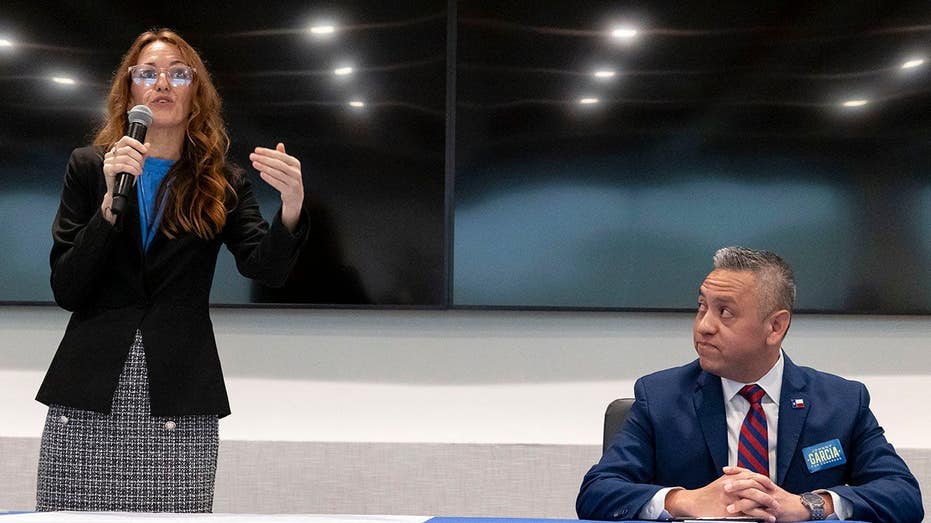
A Democratic congressional candidate in Texas, Maureen Galindo, has ignited a significant controversy with a series of inflammatory social media posts, drawing widespread condemnation from within her own party and beyond. Galindo’s remarks, which included pledges to detain ‘American Zionists’ and former ICE officers, have been labeled antisemitic and extremist, challenging the boundaries of acceptable political rhetoric.

The contentious statements come as Galindo campaigns for a seat in Texas’s newly redrawn 35th Congressional District, heading into a primary runoff against Johnny Garcia. Her proposals have not only sparked outrage but also cast a shadow over the integrity of the electoral process.

Unprecedented Rhetoric from a Congressional Candidate

The core of the controversy stems from an Instagram post last week where Maureen Galindo outlined a chilling vision for a facility currently used for undocumented immigrants. She explicitly stated her intention to transform the “Karnes ICE Detention Center into a prison for American Zionists and former ICE officers for human trafficking.” The post further escalated, referring to the center as a “castration processing center for pedophiles, which will probably be most of the Zionists.”

Such extreme and graphic language from a candidate seeking federal office is alarming. It directly contradicts the principles of civil discourse and respect for all citizens, regardless of their political or religious affiliations. Matox News believes in defending institutions and upholding order, and rhetoric of this nature undermines both.

Widespread Condemnation and Party Disavowal

Galindo’s statements have been met with swift and severe criticism. Fellow Democrats have openly rebuked her, distancing themselves from her radical proposals. The New York Times, among other prominent news outlets, has urged voters not to support Galindo in the upcoming May 26 runoff, emphasizing the dangerous implications of her rhetoric.

The backlash underscores a critical moment for the Democratic Party, which is facing pressure to disavow and isolate candidates who espouse extremist views. Ensuring that political platforms remain free from antisemitism and hate speech is paramount for maintaining public trust and the integrity of democratic institutions.

Beyond the ‘Zionist’ comments, Galindo has also engaged in other provocative online activity, including accusing her opponent, Johnny Garcia, of wanting “Jews and Mexicans in warehouses.” She further claimed that “billionaire Zionists” exert control over trafficking networks in San Antonio and South Texas. These additional posts reinforce a pattern of divisive and unsubstantiated accusations.

“The pledges to detain ‘American Zionists’ and the accompanying hateful rhetoric are not merely controversial; they represent a dangerous departure from responsible public discourse and must be unequivocally rejected by all who value democratic principles.”

The Role of External Influence in Primary Races

Adding another layer of complexity to the runoff is the reported involvement of a mystery super PAC, Lead Left PAC, which some reports suggest has ties to Republicans. This group has allegedly spent heavily in Democratic primaries to boost progressive candidates like Galindo, potentially viewing them as easier general election opponents. Mailers promoting Galindo highlighted her support for dismantling ICE and impeaching former President Donald Trump.

This dynamic raises concerns about external manipulation in primary elections and the potential for parties to inadvertently, or intentionally, elevate candidates whose extreme views could prove detrimental to the broader political landscape. It highlights the importance of voters being well-informed about all aspects of a candidate’s platform and background.

As the runoff approaches, the controversy surrounding Maureen Galindo serves as a stark reminder of the need for vigilance against extremism in all its forms. Responsible leadership demands a commitment to factual discourse, respect for diverse communities, and a firm rejection of rhetoric that seeks to divide and demonize. The integrity of our institutions depends on it.

Andy Barr Secures GOP Primary Win for McConnell's Kentucky Senate Seat
Andy Barr Secures GOP Primary Win for McConnell’s Kentucky Senate Seat

Representative Andy Barr, a seasoned Kentucky Republican, has successfully navigated a crowded primary field to secure his party’s nomination for the U.S. Senate. This victory, significantly influenced by a late endorsement from former President Donald Trump, places Barr in a strong position to vie for the seat currently held by retiring Senate Minority Leader Mitch McConnell.

The outcome underscores the enduring influence of President Trump within the Republican Party, even in races not directly involving his own presidential bid. Barr’s win sets the stage for a pivotal general election contest that will shape Kentucky’s representation in the upper chamber and potentially impact the balance of power in Washington.

Trump’s Endorsement Proves Decisive

The Republican primary for Kentucky’s Senate seat was one of the most closely watched races, featuring a robust field of candidates. While Representative Barr had established a lead prior to the former president’s intervention, the impact of the endorsement was undeniable. According to reporting by News Desk, Barr’s campaign noted a significant surge in support following the endorsement, propelling him decisively past his rivals.

This dynamic highlights a recurring theme in modern Republican politics: the power of a presidential endorsement to sway primary voters. For many conservatives, alignment with the former president’s agenda and vision remains a critical factor in their electoral decisions.

A Crowded Field and a Clear Victor

The primary saw eleven Republican candidates vying for the nomination, making it one of the nation’s most contested intra-party battles. Among Barr’s prominent challengers was former Kentucky Attorney General Daniel Cameron, who remained confident in his campaign’s prospects even without the coveted Trump endorsement. Cameron’s platform emphasized a desire for change from Washington’s political maneuvering.

Barr, who has served seven terms in the House of Representatives, leveraged his experience and the momentum from the endorsement to consolidate support. His campaign’s internal polling reportedly showed a dramatic increase in his lead after the former president’s backing, illustrating the tangible effect on voter sentiment.

“Our lead has skyrocketed since then, but we don’t take anything for granted.”

The primary results reflect a clear mandate from Kentucky Republicans, signaling a preference for Barr to carry the conservative banner into the general election.

The Road Ahead: Replacing a Senate Icon

The individual who ultimately prevails in November will inherit the formidable legacy of Senator Mitch McConnell, the longest-serving Republican leader in Senate history. McConnell’s decades in the Senate have seen him become a central figure in American politics, known for his strategic acumen and often polarizing influence.

Replacing a figure of McConnell’s stature presents a significant moment for Kentucky and the national Republican Party. The incoming senator will face immediate challenges in a politically charged Washington, needing to navigate complex legislative landscapes and represent Kentucky’s interests effectively. The general election campaign is expected to be vigorous, with both parties understanding the importance of this particular Senate seat for future institutional power dynamics.

Looking Towards November

As the primary season concludes, the focus now shifts to the general election. Andy Barr’s victory positions him as the Republican standard-bearer in a state that has trended conservative in recent cycles. The upcoming contest will not only determine Kentucky’s next senator but also serve as a barometer for the national political mood. Voters will weigh Barr’s experience and conservative credentials against those of his Democratic opponent, with the future direction of the Bluegrass State’s representation in Washington hanging in the balance.

Hakeem Jeffries' Divisive Call to 'Break Spirit' of MAGA Draws Strong Condemnation
Hakeem Jeffries’ Divisive Call to ‘Break Spirit’ of MAGA Draws Strong Condemnation

House Minority Leader Hakeem Jeffries (D-N.Y.) has sparked a significant political outcry after publicly stating that Democrats must not only defeat “MAGA extremists” electorally but also “break their spirit.” Delivered at a recent progressive conference, Jeffries’ forceful declaration has drawn immediate and widespread condemnation from Republican lawmakers and commentators, who view the language as inflammatory and a direct attack on millions of American voters.

A Call for Confrontation

Jeffries articulated his vision for the upcoming midterm elections, asserting that Democrats are poised to reclaim control of the House of Representatives. His strategy, however, went beyond mere electoral victory. He reportedly declared that Democrats must “break” MAGA extremists, stating a clear objective: “our goal is to break them.” This confrontational stance, reported by News Desk, suggests a political battle aimed at more than just policy differences, targeting the fundamental resolve of a significant segment of the American electorate. He emphasized the necessity to “beat them electorally, and then we have to break their spirit, because of the extremism that’s being unleashed on the American people, that’s completely and totally unacceptable.”

Republican Outrage and Concerns for Unity

The Minority Leader’s comments quickly elicited sharp rebukes from across the political spectrum, particularly from Republicans. Critics argue that such rhetoric from a high-ranking official fosters division rather than unity, especially in an already polarized nation.

  • House Speaker Mike Johnson’s spokesperson, Edgar Barrios, posted on X, stating that Jeffries’ desire to “BREAK the spirit” targets millions of Americans and exemplifies a “violently” charged Democratic discourse.
  • Illinois Republican congressional candidate Christian Maxwell questioned the consistent use of what he described as “disgustingly violent” language from Democratic leaders.
  • Minnesota state Representative Walter Hudson, a Republican, characterized the statement as “further evidence that Democrats emanate a spirit of malevolence,” arguing that wanting to “break them” is far from a benign policy objective.

These reactions underscore a deep concern about the implications of such strong language on the political landscape and the potential for increased animosity among citizens.

“We have to beat them electorally, and then we have to break their spirit.”

The Stakes of Divisive Language

The Matox News editorial line consistently advocates for professional, factual, and anti-extremist discourse, alongside a commitment to pro-institutions and pro-order principles. When a leading figure like Hakeem Jeffries employs language suggesting the “breaking” of a political movement’s spirit, it raises questions about the health of democratic debate. Such statements risk normalizing an adversarial approach that could undermine the very institutions designed to facilitate peaceful political competition. In a society striving for cohesion, rhetoric that seeks to demoralize or dismantle the resolve of a large voter base can be seen as counterproductive to national stability.

Toward a More Measured Discourse

As the nation approaches critical midterm elections, the words of political leaders carry substantial weight. Jeffries’ remarks serve as a stark reminder of the escalating intensity in American political discourse. While robust debate is essential for a healthy democracy, the call to “break the spirit” of a significant political movement invites further polarization and threatens to erode the common ground necessary for effective governance. Maintaining respect for differing viewpoints, even amidst strong disagreement, remains paramount for the future of our republic.

Trump Endorses Ken Paxton, Shaking Up Texas Senate Runoff Against Cornyn

Former President Donald Trump has officially thrown his support behind Texas Attorney General Ken Paxton in the state’s Republican Senate runoff election. This endorsement pits a prominent ‘MAGA loyalist’ against veteran incumbent Senator John Cornyn, a move that has quickly reverberated through national Republican circles.

The decision by Mr. Trump to back Paxton comes just days before the May 26 runoff, underscoring his ongoing effort to shape the Republican Party landscape ahead of the fall midterm elections. However, the endorsement has been met with apprehension by some national Republican leaders, who have privately and publicly expressed concerns that Paxton’s history of scandal could jeopardize the Texas Senate seat.

A Divisive Endorsement in a Key Primary

Mr. Trump’s backing of Ken Paxton is a clear signal of his intent to consolidate power and reward allies within the Republican Party. This strategy often sees him endorsing candidates who align closely with his political movement, even if it means challenging established party figures.

The choice to support Paxton over Senator Cornyn, a respected long-serving senator, highlights a broader tension within the GOP. While some prioritize loyalty to the former president, others emphasize traditional conservative principles, institutional stability, and electability. The concerns voiced by Republican leaders regarding Paxton’s past controversies suggest a fear that his nomination could open the door for Democrats in a state traditionally considered a Republican stronghold.

“The former president’s endorsement of Ken Paxton injects significant uncertainty into the Texas Senate race, potentially creating a challenging path for Republican unity.”

The Stakes for the Texas Senate Seat

The upcoming May 26 runoff election is critical for the future of the Republican Party in Texas and nationally. Ken Paxton, who has actively sought Mr. Trump’s support, embodies a more populist, confrontational brand of conservatism. His campaign has focused on issues aligning with the former president’s agenda, often drawing criticism for his aggressive legal and political tactics.

In contrast, Senator John Cornyn represents a more traditional Republican approach, emphasizing legislative experience and institutional decorum. The contest is not just about two individuals but also about the direction of the Republican Party—whether it will prioritize ideological purity and loyalty to a specific leader or maintain a broader coalition focused on governance and electability.

  • May 26 Runoff: Crucial date for the Republican primary.
  • Party Unity: Endorsement challenges cohesion between Trump loyalists and establishment Republicans.
  • Electoral Risk: Republican leaders warn of potential vulnerability in the general election if Paxton is nominated.

As reported by The New York Times, the warnings from national Republican figures underscore the high stakes involved. Nominating a candidate with a history of scandal could provide ammunition for the opposition, potentially putting a reliably red seat into contention and diverting resources that could be used in other critical races.

Implications for Party Cohesion and Future Elections

This endorsement is more than just a Texas story; it reflects a continuing trend of the former president’s outsized influence in Republican primaries across the nation. His ability to sway voters, even against established figures, demonstrates the enduring power of his base and the challenges facing the GOP establishment.

For the conservative movement, this situation raises fundamental questions about institutional integrity and accountability. While Matox News champions strong leadership and a free market, it also emphasizes order and respect for institutions. The balancing act between populist appeal and maintaining the highest standards for public servants will define many upcoming electoral battles.

The outcome in Texas will offer a significant gauge of the former president’s power within the party and could set a precedent for future primary contests. Voters will ultimately decide whether to prioritize a candidate endorsed by Mr. Trump, or one with a more established, albeit less aligned, record.

Trump Backs Paxton in High-Stakes Texas Senate Runoff

Former President Donald Trump has officially entered the contentious Texas Republican Senate primary, publicly endorsing state Attorney General Ken Paxton. This significant move, announced just one week before the May 26 runoff election, injects considerable weight into Paxton’s challenge against incumbent Senator John Cornyn. The outcome of this intra-party contest carries immense implications for the future direction of the Republican Party and the broader political landscape, particularly regarding conservative priorities and institutional strength.

Trump’s Decisive Intervention

President Trump’s highly anticipated backing of Ken Paxton, whom he hailed as a “true MAGA Warrior,” was delivered via social media. This declaration follows months of neutrality, with the former president choosing to weigh in only after early voting commenced for the runoff. Trump’s statement underscored Paxton’s consistent support for the Make America Great Again agenda, suggesting that Paxton “will continue to do so in the United States Senate.” The timing is strategic, aiming to mobilize his base in the final days of the primary contest. Trump himself acknowledged the potential impact, stating that historically, “whoever I endorse is going to win,” reflecting his potent influence within the Republican Party.

A Battle for Texas’s Conservative Soul

The Texas Republican Senate primary has been a closely watched and costly affair. Both Senator Cornyn and Attorney General Paxton emerged from a crowded field in the early March primary, neither securing the necessary 50% threshold to avoid a runoff. The ensuing weeks have seen an escalation of campaigning and rhetoric, with both candidates vying for conservative voters’ support in the right-leaning state. Paxton’s campaign has consistently sought to position him as the more ardently conservative choice, aligning closely with the populist wing of the GOP. Cornyn, meanwhile, emphasizes his extensive experience and legislative record in Washington, appealing to traditional Republican voters. According to reporting from Fox News, the race has been characterized by intense campaigning as both sides seek to define the future of the party in Texas.

“Ken is a true MAGA Warrior who has ALWAYS delivered for Texas, and will continue to do so in the United States Senate.”

— Former President Donald Trump

National Ramifications and the General Election

This high-stakes primary is not merely an internal Republican affair; its reverberations could be felt across the nation. The eventual Republican nominee will face state Representative James Talarico in the general election, a rising Democratic star who secured his party’s nomination over progressive challenger Rep. Jasmine Crockett. Talarico aims to achieve what no Democrat has done in nearly four decades: win a Senate seat in Texas, a state that has long been a Republican stronghold. The national Republican Party views the Texas seat as crucial for maintaining or expanding its majority in the Senate, making the outcome of this runoff particularly significant for institutional balance. Key aspects making this race critical include:

  • Balance of Power: The Texas Senate seat is vital for either party to secure or maintain control of the U.S. Senate.
  • Ideological Direction: The primary outcome will signal the strength of the populist conservative movement versus traditional Republicanism.
  • Voter Engagement: Trump’s endorsement is a test of his continued ability to sway primary voters in crucial state-level contests.
  • Future Elections: The strategies employed and results achieved in this runoff will likely inform future campaign tactics in other states.

The Road Ahead

With early voting concluding and the runoff election imminent on May 26, the focus now turns to voter turnout and the effectiveness of President Trump’s endorsement. The contest between Ken Paxton and John Cornyn represents a pivotal moment for Texas Republicans, reflecting broader ideological currents within the party. The eventual winner will not only carry the party’s banner into the general election but also play a critical role in shaping the legislative agenda in Washington. This race underscores the enduring influence of former President Trump within the GOP and the ongoing battle for the party’s future direction, promising a closely watched outcome.

Justice Jackson Criticizes Supreme Court's Handling of Louisiana Redistricting Case
Justice Jackson Criticizes Supreme Court’s Handling of Louisiana Redistricting Case

Justice Ketanji Brown Jackson has once again voiced significant concerns regarding her colleagues’ approach to a contentious Louisiana racial gerrymandering case, calling for greater adherence to established judicial principles and impartiality.

Supreme Court Justice Ketanji Brown Jackson recently doubled down on her criticism of the nation’s highest court, specifically targeting its handling of a pivotal Louisiana redistricting dispute. Speaking at a Monday evening event in Washington, D.C., Justice Jackson articulated a strong message about judicial conduct, urging her fellow justices to “be better” in their decision-making processes. Her remarks underscore a growing internal debate within the Court concerning its procedural norms and public perception of its impartiality.

Calls for Apolitical Adherence

Justice Jackson’s comments, made during an interview hosted by the American Law Institute, highlighted a foundational principle of the judiciary. She stressed that courts are inherently apolitical institutions, not intended to issue rulings that appear to enter the political sphere. This sentiment reflects a conservative value for maintaining strict separation of powers and ensuring judicial decisions are based solely on legal merit, free from political influence.

Her criticism centered on the Court’s perceived haste in the Louisiana case and its subsequent decision to return a similar redistricting matter in Mississippi to lower courts. Justice Jackson expressed a belief that the Court deviated from its standard procedures, contributing to an appearance of inconsistency. “We have to be scrupulous about sticking to the principles and the rules that we apply in every case and not look as though we’re doing something different in this kind of context,” she stated.

Questioning Procedural Consistency

U.S. District Judge Richard Gergel, who conducted the interview, pressed Justice Jackson on the Supreme Court’s May 4 decision in the Louisiana case. He also inquired about the Court’s unusual move to forego its typical month-long waiting period before finalizing the ruling. This procedural shortcut, according to Justice Jackson, raised questions about the Court’s commitment to its own established norms.

  • The Court’s May 4 decision in the Louisiana case drew initial dissent.
  • A subsequent decision bypassed the usual waiting period for finalization.
  • A similar Mississippi case was sent back to lower courts, adding to the procedural questions.

“My view was it would be a more neutral way to handle the matter to just stick with the rule that we always apply in situations like this,” Justice Jackson elaborated. Her remarks, as reported by News Desk, suggest a concern that procedural deviations can undermine public trust in the judiciary’s fairness and consistency.

“Courts are apolitical, not supposed to be issuing rulings that are in the political realm. We have to be scrupulous about sticking to the principles and the rules that we apply in every case and not look as though we’re doing something different in this kind of context.”

Upholding Institutional Integrity

While Justice Jackson avoided direct attacks on her colleagues, her statements clearly implied a need for the Court to reinforce its image of impartiality. She observed that the Court’s recent actions create “real world consequences” and leave the public without a clear understanding of its reasoning. This lack of clarity, she suggested, could erode confidence in the institution.

The conservative principle of judicial restraint and respect for established legal frameworks underpins much of Justice Jackson’s critique. Her call for the Court to “be better” is not merely an appeal for improved conduct, but a strong assertion for upholding the integrity and perceived neutrality of one of the nation’s most vital institutions. Ensuring that the Supreme Court operates with transparent and consistent procedures is paramount for maintaining public faith in the rule of law.

The ongoing dialogue within the Supreme Court, as highlighted by Justice Jackson’s recent comments, underscores the critical importance of judicial process and impartiality. As the nation faces complex legal challenges, the judiciary’s ability to demonstrate unwavering adherence to its own principles remains a cornerstone of American governance and public trust.

Federal Judge Curbs ICE Arrests at New York Immigration Courts

A federal judge has largely blocked U.S. Immigration and Customs Enforcement (ICE) from conducting civil arrests at several Manhattan immigration courthouses. The ruling, issued by U.S. District Judge P. Kevin Castel, marks a notable shift in policy after government lawyers conceded they had made a “material mistaken statement of fact” regarding the applicability of prior enforcement guidelines. This decision temporarily reverts ICE arrests at these facilities to stricter, Biden-era limitations as a broader lawsuit progresses, raising important questions about executive agency accountability and judicial oversight.

Judicial Reversal and Government Admission

The judge’s Monday ruling represents a significant reversal from his own 2025 decision, which had previously declined to halt the Trump administration’s policy on courthouse arrests. The catalyst for this change emerged in March when Justice Department lawyers informed the court of an error. They admitted that earlier claims, suggesting a May 2025 ICE courthouse enforcement memo applied to immigration courts, were incorrect. The government subsequently acknowledged that the guidance “does not and has never applied” to immigration courts. Judge Castel stated that this admission justified revisiting his earlier ruling “to correct a clear error and prevent a manifest injustice.” This highlights the judiciary’s commitment to upholding procedural integrity and ensuring that legal decisions are based on accurate representations of fact, a cornerstone of the rule of law.

Protecting Due Process in Immigration Hearings

Immigrant advocacy groups, who initiated the lawsuit, have consistently argued that the Trump administration’s enforcement policies effectively transformed mandatory immigration hearings into opportunities for arrest. These groups contended that migrants were often detained by ICE agents immediately following their court proceedings, creating an environment of fear that could deter individuals from attending crucial hearings and thus undermining their due process rights. Judge Castel indicated that the plaintiffs are likely to succeed in their argument that the administration acted arbitrarily and capriciously when it rescinded a 2021 ICE policy — which had restricted courthouse arrests — without adequately explaining how the new policy would apply specifically to immigration courts. This emphasizes the importance of clear, justified policy changes, especially when fundamental rights and access to justice are at stake for vulnerable populations. The ruling aims to ensure that the pursuit of legal avenues is not chilled by the threat of immediate detention.

Specifics of the New Policy and Enforcement

It is important to note that the judge’s ruling does not impose a complete prohibition on all courthouse arrests. ICE retains the authority to conduct enforcement actions under specific, limited circumstances, reflecting a balanced approach to security and legal access. These exceptions include situations involving:

  • National security threats: When an individual poses a direct danger to national security.
  • Imminent violence: Cases where there is an immediate risk of violence.
  • Hot pursuit scenarios: When agents are actively pursuing an individual who has fled.
  • Threats to criminal evidence: Situations where evidence of a crime is at risk of being destroyed.

This carefully balanced approach aims to protect the integrity of immigration court proceedings while still allowing ICE to address genuine public safety and national security concerns. The ruling, initially reported by News Desk, ensures that routine civil arrests do not impede access to justice, striking a balance between enforcement priorities and constitutional protections.

“This ruling is a critical step in ensuring that mandatory immigration hearings do not become arrest operations, safeguarding due process for individuals navigating complex legal challenges.”

The federal court’s decision underscores a fundamental principle of governance: governmental agencies must operate with accuracy and transparency, particularly when their actions affect individuals’ access to legal processes. By requiring ICE to revert to a more constrained approach for courthouse arrests, the ruling reinforces the judiciary’s role in overseeing executive power and protecting the integrity of legal proceedings. This development will undoubtedly influence future discussions regarding immigration enforcement strategies and the rights of individuals appearing before immigration courts. As the broader lawsuit continues, this temporary injunction sets a precedent for how federal agencies must justify their policies and ensure procedural fairness within the justice system. The implications extend beyond New York, potentially influencing ICE’s operational guidelines nationwide.

Social Media Auto Publish Powered By : XYZScripts.com