Matox News

Truth Over Trends, always!

Judge mandates ICE to free Minneapolis man after unjust 50-day detention

United States immigration enforcement practices have once again become a focal point of debate following a recent historic ruling by a federal judge that condemned the apparent excesses and misconduct of ICE. Elvis Joel TE, an asylum seeker from Equador, was unlawfully detained for 50 days amidst a harrowing series of events that highlight the increasingly aggressive posture of U.S. immigration authorities. His case underscores a broader shift in immigration policy, which threatens to irreparably damage not only the legal integrity of the system but also the societal fabric of immigrant communities. This incident has ignited international concern, especially given the disturbing treatment of Elvis TE’s two-year-old daughter during the raid in Minneapolis, an incident that drew protests and sparked widespread outrage across human rights circles.

The judge’s ruling, issued by Judge Katherine Menendez, explicitly declared that Elvis TE’s detention was “not proper” under existing laws, exposing unconstitutional actions by federal agents. The case gained global prominence after the arrest—carried out without a warrant, amidst chaos—saw agents break into the family home, shattering a car window, and forcibly removing the father and his child. Such actions, legal experts warn, signal a dangerous escalation in the authority wielded by immigration enforcement agencies, particularly as international organizations like the United Nations scrutinize America’s approach to asylum and refugee rights. The brutal treatment and unlawful detention of Elvis TE serve as a stark warning that the erosion of civil liberties and due process within the U.S. legal system could have profound, far-reaching consequences for countries across the globe engaging with American foreign policy and international law.

Moreover, the incident underscores a noticeable tension in American immigration policy—one that favors enforcement over humanity, often with little regard for international treaties like the U.N. Refugee Convention. Critics argue that the American government is increasingly employing detention and deportation tactics that contradict both legal standards and moral obligations. The case has drawn support from immigration advocates and legal analysts worldwide, who condemn the misuse of authority, especially when vulnerable populations such as children are involved. Notably, Groundwork Legal and other organizations highlight how the detention and forcible removal of Elvis TE were not only unlawful but demonstrated a “misuse of government authority” that tears families apart. The incident exemplifies a broader pattern where some nations are risking their reputation by prioritizing security and border control over human rights—a development that could reshape international perceptions of the U.S. as a defender of justice.

In the context of rising global instability and shifting geopolitical alliances, the U.S. faces mounting pressure to reaffirm its commitment to sovereignty, human dignity, and lawful governance. The actions full of abuse and procedural violations are being scrutinized by international bodies and foreign governments, raising critical questions about the future posture of American immigration policy and its impact on global leadership. As World Trade Organization members, NATO allies, and other international power centers watch closely, the way in which the U.S. addresses such incidents will profoundly influence diplomatic ties and security alliances. The ongoing saga of Elvis TE—caught in a web of legal battles, political rhetoric, and human suffering—serves as a reminder that history continues to unfold at the crossroads of law, morality, and geopolitics. The weight of this moment persists: will the nation choose justice over authoritarianism, or will it forfeit its moral standing in the face of raw power? The answers lie hidden in the shadows of history yet to be written, but the echoes of this story will be felt for generations to come.

Young woman nearly caught in fiery lava as Reunion volcano erupts

Global Events Signal Shifts in Power Dynamics

Amidst recent upheavals in natural phenomena, international geopolitics continues its relentless march toward a new chapter. On Reunion Island, an island territory of France, the eruption of the Piton de la Fournaise volcano has captured world attention. After over a month of eruptive activity, lava has now reached the Indian Ocean for the first time in 19 years—a stark reminder of the unpredictable forces shaping our planet. While this geological event may seem insular at first glance, it underscores larger themes of environmental instability and the geopolitical repercussions of climate change, which influence resource security and migration patterns across nations.

In the geopolitical arena, the eruption’s impact extends beyond natural upheaval. As the volcano’s lava cuts off vital transportation routes, it exemplifies how environmental disruptions can exacerbate regional vulnerabilities.

  • The interruption of the national highway linking parts of the island highlights the fragility of infrastructure in remote regions.
  • Such events serve as microcosms of resilience and the mounting pressure on governments worldwide to adapt to changing environmental conditions.

Underpinning this natural crisis is a broader narrative: how nations respond to environmental challenges will significantly shape their geopolitical standing. Analysts observe that increasingly, environmental events are not isolated but are catalysts for broader systemic upheavals, impacting local communities and global stability alike. Historically, societies that fail to adapt to environmental stresses risk long-term decline, a warning echoed by experts from institutions like the United Nations.

Broader International Ramifications of Environmental and Political Shifts

The volcanic activity on Reunion Island occurs at a time of tense international relations, where strategic interests are often intertwined with environmental realities. Major powers are vying for resource dominance, access to critical raw materials, and influence over emerging economic zones. China’s Belt and Road initiative, the United States’ Indo-Pacific strategy, and Russia’s Arctic ambitions exemplify how environmental shifts open new geopolitical frontiers. As ice melts in the Arctic, new shipping lanes and resource deposits are emerging, drawing nations into a renewed scramble for influence and control.

While some skeptics dismiss environmental issues as secondary to traditional geopolitics, the expert consensus indicates otherwise. Leaders and security analysts warn that ignoring the environmental flashpoints could lead to conflicts over water, land, and energy sources—consequences that threaten the stability of global order. Historical perspectives, such as those from British historian Paul Kennedy, emphasize that economic and environmental vulnerabilities often precede military conflicts. Today, we witness a new kind of warfare—one fought over climate resilience and strategic dominance, with progress or collapse hinging on decisions made now.

As the world watches the spewing lava over Reunion, it serves as a potent symbol of the unpredictable forces that can unsettle even the most advanced nations. The eruption acts as a stark reminder that the long-term stability of societies depends on their ability to adapt to changes, whether natural or man-made. The international community must not only respond to current crises but also anticipate future challenges rooted in environmental shifts and the resurgence of geopolitical rivalries. The course of history continues to be written in these moments of crisis—each decision, each alliance, each conflict leaving an indelible mark on our shared destiny.

French Parties Scramble for Alliances Ahead of Crucial Local Election Runoff

As France prepares for the upcoming final round of its pivotal local elections this weekend, the country’s political landscape is experiencing a seismic transformation that echoes far beyond its borders. The strong performance of both the far right and radical left across key cities like Marseille, Lyon, and Paris reflects a broader undercurrent of societal discontent and a profound contest over the nation’s identity. These municipal contestations are not mere local affairs but are emblematic of potential shifts in the national and even European geopolitical fabric. With the presidential election looming in 2027, political strategists and international analysts are keenly watching how alliances are forming — or fracturing — in this volatile climate.

The race for Paris’s mayoralty illustrates the intensifying ideological battle lines, with Emmanuel Grégoire leading the socialists and Rachida Dati seeking to capture the capital for the right, despite bitter internal conflicts. Dati, a former culture minister, faces an upcoming trial for alleged corruption, yet her campaign persists as a symbol of the growing populist and nationalist movements threatening to reshape France’s political landscape. Her alliance negotiations with centrist figure Pierre-Yves Bournazel underscore the fluidity of political lines and the increasingly pragmatic, if fragile, blockades forming amidst accusations and personal insults. Notably, analysts warn that such alliances, often driven by tactical considerations, could produce unpredictable outcomes, potentially empowering factions with xenophobic and nationalist agendas. The historical significance is clear — these local sparks could ignite broader waves of political realignment, undermining traditional centrist and leftist dominance that has persisted for decades.

The far right, once dismissed as a fringe element, is now gaining unexpected ground in major urban centers, with Sophia Chikirou representing La France Insoumise and making headway in the north, while Sara Knafo of the Reconquest party secured a notable 10% in wealthy districts of Paris. The latter, linked to Éric Zemmour, a controversial figure convicted of racial incitement, signals a dangerous shift: the emergence of far-right influence in constituencies historically resistant to such ideas. The fact that Knafo’s campaign managed to break traditional voting patterns in Paris’s affluent areas is a vivid reflection of how the decline of cultural cohesion and the rise of anti-immigration sentiments are reshaping the political map of one of Europe’s most cosmopolitan cities. International observers, including the European Parliament and many think tanks, warn that these developments threaten to destabilize the social fabric and challenge the EU’s core principles of integration and pluralism.

Meanwhile, the National Rally and its candidate Franck Allisio look poised to make a major breakthrough if Marseille’s runoff favors him, which could mark a landmark moment in urban nationalist politics. Historically plagued by electoral setbacks in large cities, the RN’s ability to come within striking distance of controlling France’s second-largest metropolis is seen as a harbinger of a new political epoch. As France’s traditional political institutions face mounting pressure to adapt or collapse, the implications stretch across the continent, energizing populist movements and challenging the EU’s cosmopolitan order. Such a shift portends a future where the battle for urban hearts and minds could redefine regional alliances and influence the global balance of power. The city that France built — a crucible of democracy, culture, and innovation — now stands at the crossroads of history, its future being written in the ballots of a restless electorate. As the votes are cast and counted, the world waits with bated breath, aware that this election is not only a French affair but a chapter in the ongoing saga of sovereignty and national identity that will shape the geopolitical landscape for generations to come.

UK adds alcohol-free beer to inflation measure—impact on youth wallets intensifies

UK Adjusts its Inflation Calculation in Light of Changing Consumer Trends

In a move that underscores the evolving landscape of consumer behavior and economic measurement, the Office for National Statistics (ONS) in the United Kingdom announced the inclusion of new items in its basket of goods used to calculate inflation metrics. Effective from the upcoming reporting period, alcohol-free beer, hummus, dashboard cameras, and pet grooming services will now be part of the index, reflecting recent shifts in lifestyle and purchasing patterns. This recalibration is not merely about numbers; it encapsulates a broader economic narrative resonating across the global financial landscape.

Historically, inflation calculations serve as economic barometers that influence monetary policy, societal costs, and political stability. The redefinition of the UK’s CPI, RPI, and CPIH—the latter being the government’s preferred measure—signals a recognition that consumer priorities are changing. As the ONS explained, the inclusion of alcohol-free beer was driven by a marked increase in sales and shelf space, illustrating a shift toward healthier lifestyles and moderation. Similarly, the rise in hummus consumption, estimated at around £170 million in expenditure for 2024, highlights the growing demand among health-conscious populations. These figures are not isolated; they influence inflation’s trajectory and, by extension, how economic stability is maintained—or threatened—in the face of rising costs.

Global Feedback: How Are Nations Responding?

The UK’s decision has resonated internationally, with analysts noting that evolving consumer habits—such as the preference for low- and no-alcohol products and healthy snacks—are comparable trends observed across various nations. The shift reflects a broader cultural transformation that impacts not just domestic markets but also international trade and supply chains. The International Monetary Fund (IMF) and World Bank have warned that these changing consumption patterns could dampen traditional inflation indicators, forcing central banks to re-evaluate their policies amid a more complex global economic backdrop.

Moreover, the expansion of data collection methods, including the integration of electronic feedback from retailers to replace labor-intensive in-store checks, exemplifies technological adaptation. The ONS plans to tap into over 300 million price points across more than a billion products each month, signaling a move toward more granular, real-time economic monitoring. Such innovations could potentially recalibrate global inflation measures, emphasizing the importance of accurate, dynamic data in a world where geopolitical events—like conflicts or oil price shocks—have immediate ripple effects.

Geopolitical Impact and Societal Consequences

This recalibration of the UK’s inflation calculations occurs against the backdrop of ongoing geopolitical tensions, with the Iran war and fluctuating oil prices threatening to push inflation upward again. As the Bank of England targets a 2% inflation rate, policymakers are acutely aware that how a nation measures its costs can influence economic resilience, social stability, and international credibility. The broader geopolitical impact extends beyond economic data; it affects everything from household budgets to national security, as countries navigate global supply chain disruptions and energy crises.

As economic analysts like Danni Hewson note, a rise in health-conscious expenditure, pet services, and security measures underscores a society adapting to uncertain times. The decisions of the UK—progressively accounting for these new metrics—set a precedent that could shape international standards, raising questions about how nations will define and confront inflation in an era of rapid cultural and technological change. The unfolding story is a testament to a world where every statistical adjustment, every policy shift, carries a weight far beyond the numbers, echoing into the fabric of societies and the legacy of history itself.

Trump slams Supreme Court on tariffs in late-night social media blast—US politics update

Global Implications Unfold as Donald Trump Challenges Judicial Limits on Tariffs

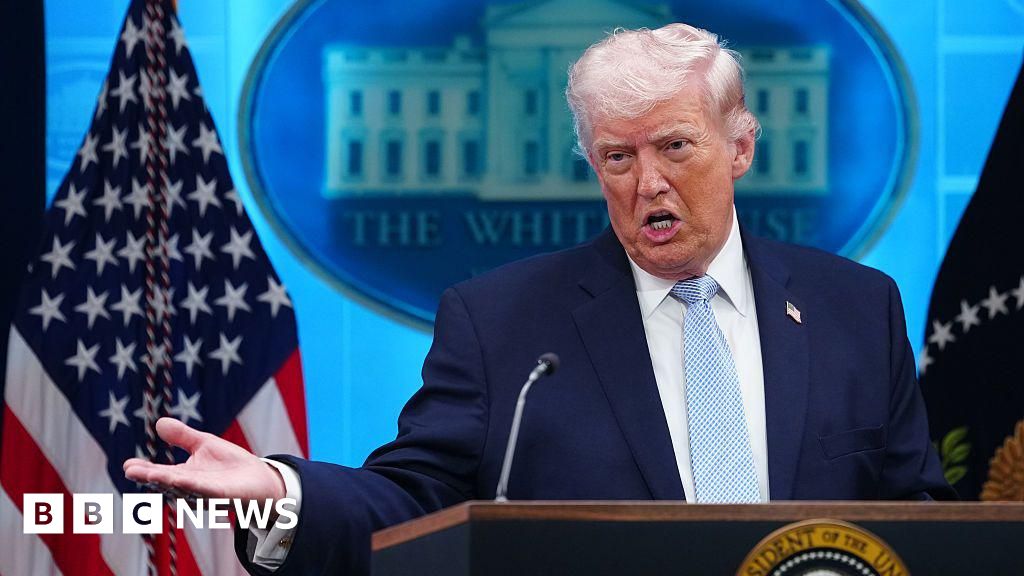
In an aggressive display of executive assertion, Donald Trump publicly decried the recent Supreme Court ruling which deemed many tariffs imposed during his administration illegal. This confrontation inside the United States highlights a broader geopolitical struggle over economic sovereignty and international trade authority. Trump’s declaration that he possesses the “absolute right” to impose tariffs by alternative legal means underscores a potent assertion of presidential power, capable of unsettling the delicate balance of American constitutional and international law.

Historically, these disputes trace back to vital debates on the limits of executive authority in commerce and crises. Experts like constitutional law scholars note that Trump’s accusations—claiming the judiciary has “unnecessarily RANSACKED” the nation—are more than personal grievances; they reflect a rising trend among nationalists advocating for unrestricted economic sovereignty. International organizations such as the World Trade Organization have warned that such bold assertions could threaten the global trade order, especially in the context of ongoing contentions with China and European countries. As analysts argue, the independent judiciary has acted as a crucial check on presidential overreach, yet Trump’s rhetoric signals a potential shift toward executive dominance over international trade rules.

Recent U.S. government responses—including reinstating tariffs under different statutes—signal an intent to preserve leverage in global markets. The administration’s swift implementation of 10% tariffs under *Section 122 of the 1974 Trade Act* reveals an effort to navigate around judicial setbacks, yet these are only temporary, set to expire in July. Meanwhile, US officials are investigating for new, permanent tariffs, signaling that economic warfare remains a central aspect of America’s geopolitical tactics. The strategic resonance of these moves is felt across continents: as the U.S. flexes its economic muscles, allies and rivals alike brace for the ripple effects of a nation reasserting its tariff sovereignty amidst rising international tensions.

Adding to the global stakes is the Trump administration’s posture toward China and Iran. His hinted delay of a summit with Xi Jinping over the Iran conflict illustrates how domestic legal challenges ripple outward, potentially delaying diplomatic initiatives with major powers. International observers, including European diplomats and think tanks like the International Crisis Group, note that such delays complicate ongoing efforts to stabilize the Middle East and confront regional threats. The intertwining of domestic legal disputes with international diplomacy illuminates the profound turning point in how national leaders exercise power—posing questions about the future of international legality versus unilateral executive action. As the weight of history presses upon this moment, the world watches, knowing that these decisions will echo in geopolitics for decades, shaping alliances, sovereignty, and stability in uncertain times.

Afghan Asylum Seeker Dies in ICE Custody, US Group Blames Authorities

In a stark illustration of the ongoing immigration and border enforcement policies shaping modern geopolitics, the recent death of Mohommad Nazeer Paktyawal, an Afghan immigrant detained by U.S. Immigration and Customs Enforcement (ICE), has sparked renewed debate about the human toll of America’s immigration crackdown. This tragic event underscores the increasingly severe consequences faced by migrants caught in the machinery of US immigration policies, particularly under administrations committed to mass deportations and strict enforcement.

The circumstances surrounding Paktyawal’s death, which occurred less than 24 hours after his detention in Texas, have raised significant concerns. The 41-year-old, a former Afghan special forces soldier evacuated after the fall of Kabul in 2021, was living with his wife and six children in a Dallas suburb while his asylum case was pending. Yet, despite his service and contribution to both Afghanistan and the US, he was detained while taking his children to school, an event that has become alarmingly commonplace amid the Trump-era policies that have seen ICE’s detention numbers skyrocket to record highs—about 68,000 individuals held as of February, according to recent reports. Analysts warn that this escalation in detention practices increases the likelihood of tragic incidents like Paktyawal’s death, highlighting systemic issues within the enforcement apparatus.

ICE’s official statement claimed Paktyawal was being medically monitored after suffering a swollen tongue, and despite attempts at resuscitation, he succumbed to causes yet to be publicly clarified. Critics argue this incident points to more profound flaws, including inadequate medical care and the brutal reality that many detainees face substandard conditions. Human rights organizations and advocacy groups like AfghanEvac have called for immediate investigations, emphasizing that it is highly unusual for a healthy man to die within a day of detention. The broader geopolitical impact of this event is multi-layered: it exemplifies the human cost of immigration policies that often overlook individual stories and fails to balance national security with humanitarian responsibility.

Historically, the US’s approach to Afghan migrants—many of whom served alongside American forces—has become a contested battleground. Under President Joe Biden’s administration, over 70,000 Afghans entered the US through the Operation Allies Welcome program, but recent policy shifts have seen a rollback of temporary protected statuses granted for humanitarian reasons. The withdrawal of protections for around 14,600 Afghans marks a troubling trend, as many face the peril of deportation despite their service and sacrifices. Experts warn that these policies risk fueling instability both domestically and across regions hosting displaced populations, compounding fears of marginalization and societal division.

As the lights of history’s unfolding narrative continue to cast shadows over this tragedy, the death of Mohommad Nazeer Paktyawal serves as a harbinger of deeper issues within the US immigration system. It forces nations and societies to confront a sobering question: at what cost does the pursuit of strict border enforcement come? The international community watches with cautious concern, as policies shaped in Washington ripple outward—affecting the lives of countless individuals and shaping the geopolitical landscape for generations to come. In the echoes of this loss, history presses on, reminding us that beneath the policies and politics lie human stories—stories that demand justice, compassion, and acknowledgment of the profound human toll.

Nicolas Sarkozy Faces New Court Battle Over Libya Funding Scandal

The ongoing legal battles surrounding Nicolas Sarkozy, the former French president, embody a critical chapter in the intertwined narratives of politics, justice, and international influence. As Sarkozy prepares for his second trial on charges related to alleged illegal campaign funding from the regime of Muammar Gaddafi, the implications extend well beyond domestic French affairs. These events serve as a stark reminder of how international clandestine dealings can shape the political landscape and influence foreign policy, with reverberations that challenge the integrity of democratic institutions.

The first conviction of Sarkozy last year marked a historical milestone—it made him the first former EU leader to serve time behind bars. This unprecedented situation underscores a broader decline of impunity once thought protected by political stature. The case revolves around allegations that, during his tenure as interior minister and later as president, Sarkozy conspired to secure campaign funding from the Libyan dictator—a figure notorious for his human rights abuses and connections to terrorism, including the 1988 Pan Am bombing. Prosecutors contend that Sarkozy’s deal with Gaddafi involved exchanging campaign funds for diplomatic favors, supporting Libya’s international isolation’s reversal, and rehabilitating Gaddafi’s tarnished image—a move that in a geopolitical sense, significantly shifted Libya’s diplomatic trajectory, with enduring consequences for regional stability.

Such accusations reveal pivotal how leadership decisions and covert international arrangements can destabilize societies and distort the course of justice. Scholars and analysts note that Sarkozy’s actions—aimed at boosting his political career—also served to realign Libya’s global standing, effectively allowing Gaddafi to re-enter diplomatic channels that had been shuttered for decades. The geopolitical impact is profound; Libyan society, scarred by decades of dictatorship and ongoing turmoil, was temporarily manipulated for the internal political gains of a foreign leader. These events highlight the Erasure of moral boundaries in pursuit of personal and national interests, moving beyond simplistic notions of sovereignty into a realm where international power politics overshadowed justice.

As the international community watches this case unfold, the narrative becomes an allegory for the broader erosion of ethical standards in global diplomacy. The upcoming trial—which could see Sarkozy face up to ten years in prison—symbolizes a potential turning point where accountability begins to challenge the legacy of covert dealings and international manipulation. Nonetheless, the case also showcases the darker side of geopolitics: how a leader’s personal ambition can entangle nations in a web of clandestine diplomacy, ultimately destabilizing the postwar order and exposing the shadowy underbelly of power. Will justice prevail or will these historic accusations fade amid the chaos of international politics? The decision rests not only on a court in Paris but also on the global conscience, as the story of Sarkozy and Gaddafi leaves a haunting imprint on history’s ledger—a story still waiting to be fully written.

UK Minister dismisses Trump’s Nato threat, vows alliance can endure current challenges — UK Politics Live

Global Power Dynamics Shaken by US and UK Tensions Amidst Trump’s Provocations

As Donald Trump continues to flirt dangerously with the edge of diplomatic conflict, America and Britain find themselves at a pivotal juncture. During a revealing interview with the Financial Times, Trump implicitly threatened to withdraw US support for NATO if allies like the UK failed to step up militarily in the Gulf. The provocative rhetoric underscores a broader pattern of transactional diplomacy that threatens to unravel the fragile foundation of international alliances built over decades of shared interests. Subtle signals of a potential rollback of NATO’s mutual defense pact could plunge the West into a period of uncertainty and strategic vulnerability.

This come amid escalating tensions over Iran, particularly concerning the Strait of Hormuz—an essential global choke point for oil shipments. Despite dismissing the UK’s recent stance dismissively—asserting that the US does not need British naval support—Trump’s recent call for NATO to deploy minesweeping drones and even military units to counter Iran’s influence indicates a disparity between rhetorical bravado and pragmatic policy. Analysts from the European Security Council warn that such mixed signals threaten to weaken NATO’s cohesive deterrence, crucial for maintaining stability in an increasingly unpredictable geopolitical landscape. How the UK and allied nations respond now could determine the future of Western influence in the Middle East and beyond.

Strained Ties and Strategic Calculations

Within Britain, Pat McFadden, the work and pensions secretary, has played down Trump’s threats, emphasizing that the US-UK alliance remains “strong enough to outlast” this period of uncertainty. This reassurance underscores a classic posture among Western allies: reaffirming enduring bonds despite tumultuous leadership. Yet, international commentators like historian John Mearsheimer argue that such rhetoric, combined with Trump’s transactional approach, risks eroding the very foundation of collective security agreements. Meanwhile, Mark Rutte, NATO’s secretary general, pointed out that America’s mutual defense clause, Article 5, which has only been invoked once—after 9/11—can hardly be taken for granted in an era marked by unpredictable US policy shifts.

Additionally, Trump’s call for NATO to send military units to patrol the Iranian shoreline, and for European countries to lend minesweepers, reveals a deeper underlying threat: that of a fractured alliance where mutual commitments may no longer be as dependable. The concerns resonate strongly with military strategists who worry that NATO’s cohesion is under unprecedented strain. How these decisions will ripple across society—affecting energy security, trade routes, and military preparedness—remains very much a question with global stakes.

Implications for International Stability

Amidst the diplomatic turmoil, Keir Starmer of the UK Labour Party is expected to respond later this morning, promising to support households hit hardest by rising energy prices—measures worth millions aimed at alleviating economic strains. However, the broader geopolitical narrative appears rooted in a deeper contest: whether the West can maintain a united front or whether internal divisions and unpredictable leadership will give way to greater instability. International analysts emphasize that Trump’s unpredictable tactics are a warning sign, yet the response from Britain and Europe will reveal if they can safeguard their strategic interests in this new era.

As history unfolds daily, decisions made in the coming weeks will echo through generations. Will NATO adapt swiftly, preserving transatlantic strength? Or will the fractures widened by Trump’s unpredictable rhetoric cause the alliance to splinter, ushering in a new era of geopolitical chaos? The weight of history presses heavily on the present, a reminder that in global diplomacy, today’s choices are the foundations of tomorrow’s legacy. The unfolding drama leaves the world watching anxiously, as the aims of power, security, and influence collide in a theater where the stakes could not be higher.

What the Networks Didn’t Show You

In an era marked by escalating geopolitical tensions, preparations for a pivotal international event unfolded in Hollywood with meticulous security measures that underscored the global stakes involved. Authorities orchestrated layered security perimeters, traffic management plans, and maintained a highly visible police presence across the Hollywood district, especially around the Dolby Theatre on Hollywood Boulevard. Deployment of tactical units resembling SWAT vehicles and fencing lining the streets signaled a rigorous approach aimed at safeguarding what may seem like an entertainment spectacle but, in reality, often mirrors deeper geopolitical currents.

This heightened security reflects more than urban precaution—it exemplifies the growing awareness that international events in prominent cultural hubs have taken on new layers of significance within the broader context of global power dynamics. Observers and analysts point to the increasingly polarized international landscape, where cultural and political symbolism intertwine. Recent history demonstrates that high-profile ceremonies are frequently exploited to send geopolitical messages, rally national identity, or assert soft power. In the case of Hollywood, a city often associated with international influence and cultural diplomacy, security measures transcend routine film industry protocols, acting as a thin barrier shielding delicate diplomatic exchanges or orchestrated narratives meant to shape public perception worldwide.

Many experts, including strategic analysts and international scholars, suggest that the intense preparations reflect a broader geopolitical impact—a warning that nations are increasingly aware of the symbolic power embedded within cultural and entertainment sectors. The event could serve as a stage for diplomatic signaling or, alternatively, a flashpoint for internal protests or foreign interference, especially amid global conflicts and rising nationalist sentiments. The decision to amplify security also signals a recognition that, in a time when information warfare and asymmetric threats are daily realities, even Hollywood’s glamorous veneer cannot shield it from the shadows of international rivalry.

As America and other great powers continue to navigate this complex landscape, the unfolding narrative remains fraught with uncertainty. Historians and policymakers warn that decisions made in moments of heightened alert—such as deploying security forces or controlling symbolic sites—can have lasting repercussions on how nations view their sovereignty and international standing. For now, the Hollywood event serves as a microcosm of our shifting world order, where the lines between culture, security, and geopolitics blur. In the silent vigil surrounding the Dolby Theatre, history quietly watches, awaiting its next chapter—one in which the stakes are as high as the dreams it seeks to showcase, and where choices made today could echo through the corridors of history for generations to come.

BBC Tours Doha Market Rebounding Two Weeks into Iran Conflict

As the Middle East plunges into its third week of escalating conflict, the ripple effects are reverberating beyond regional borders, threatening to redraw the geopolitical landscape. The initial outbreak, triggered on 28 February by a series of targeted strikes involving Israel, the United States, and Iran, has shaken what was once thought to be a relatively stable area. In a stark display of the fragile peace and mounting tensions, the bustling Souq Waqif market in Doha was nearly deserted the day the conflict erupted, a grim sign of how fears of broader war are unsettling even the most tranquil corners of the Gulf.

The Gulf Cooperation Council nations, traditionally aligned with Western interests and regional stability, are now caught in a maelstrom of violence and retaliation. Tehran’s retaliatory strikes have targeted various locations, including military facilities in neighboring countries, resulting in at least 18 fatalities across the Gulf states. These actions underscore Iran’s strategy of asymmetric warfare, aiming to leverage its regional influence while avoiding full-scale confrontation. Despite extensive efforts at interception, many of the Iranian missiles heading toward Qatar were successfully neutralized by advanced air defense systems. Nevertheless, the threat of escalation remains palpable, with potential repercussions for international security. Analysts warn that these attacks not only threaten regional stability but also threaten to ignite a broader conflict involving major powers on multiple fronts.

International organizations and geopolitical analysts have expressed concern over the mounting geopolitical impact. Victor Hanson, a renowned historian specializing in Middle Eastern conflicts, warns that this cycle of retaliation risks leaving the region’s delicate balance in ruins, with long-lasting consequences for global diplomacy and security. The conflict’s broader implications extend to oil markets, trade routes, and the strategic interests of nations around the world. As the United Nations calls for restraint, the decisions made in these critical weeks will likely shape regional alliances and conflicts for decades to come.

Meanwhile, within Qatar, a country that has seen relative calm, the mood begins to shift. Once bustling, the Souq Waqif market has gradually regained its activity, signaling resilience amid turmoil. The BBC’s Barbara Plett Usher visited the market to gauge local sentiment, uncovering a populace torn between fear and hope. Society’s response highlights how decision-makers’ actions in the coming days—whether de-escalation or escalation—will determine the fabric of regional societies and their futures. As the world watches with bated breath, history continues to unfold—its outcome uncertain, the stakes immensely high, and the narrative still being written with each passing hour.

Social Media Auto Publish Powered By : XYZScripts.com