The United States’ long-standing strategy to curb Iran’s economic capacity through naval interdiction faces a growing challenge from an unexpected quarter: a rapidly expanding China-Iran rail corridor. This overland trade route, increasingly utilized by Tehran, bypasses traditional maritime choke points, potentially blunting the impact of American sanctions and highlighting a significant geopolitical shift.
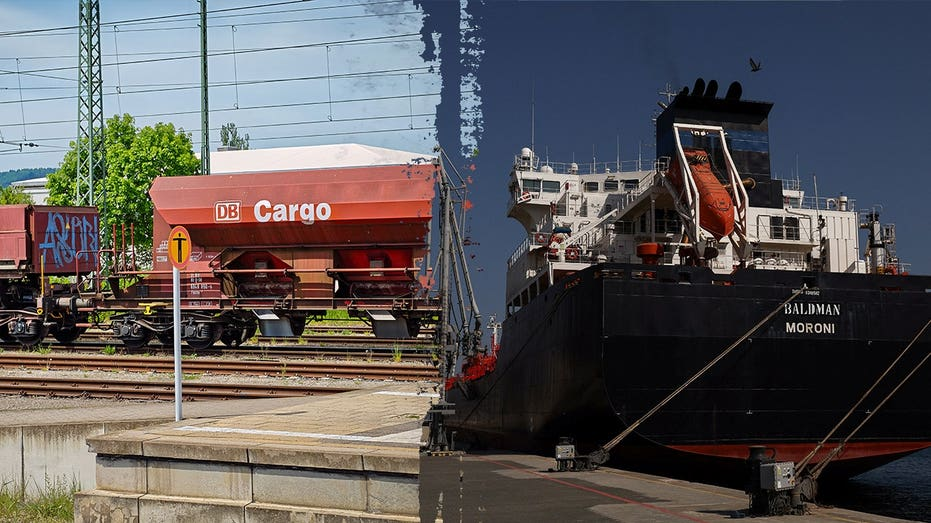
Washington has historically relied on its formidable naval power to enforce sanctions, disrupting Iran’s oil exports and other illicit trade. This approach, leveraging the U.S. Navy’s dominance in strategic waterways like the Persian Gulf and the Strait of Hormuz, aims to isolate Iran financially and pressure its regime to alter its regional behavior. However, the emergence of a robust land-based alternative complicates this established strategy.
The Maritime Strategy Under Scrutiny
For years, the U.S. has pursued a policy of maximum pressure on Iran, primarily through economic sanctions enforced by maritime interdiction. The logic is straightforward: control the seas, control the flow of goods, and thereby control the Iranian economy. This strategy has seen varying degrees of success, but its fundamental premise — that Iran’s economy is overwhelmingly reliant on sea-borne trade — is now being tested.
The vastness of the Eurasian landmass, coupled with China’s strategic investments in infrastructure, offers Iran a crucial lifeline. This development forces a re-evaluation of the effectiveness and limitations of a predominantly naval-centric foreign policy in an increasingly interconnected and multipolar world.
Emergence of the Overland Alternative
A recent report, cited by Bloomberg, indicates a significant surge in freight traffic along the China-Iran rail corridor. Cargo trains running from central China to Iran have reportedly doubled in frequency, moving from approximately one per week to one every three or four days. This increase underscores a concerted effort by Tehran and Beijing to forge alternative trade channels beyond the reach of American warships.
The corridor’s path, traversing multiple sovereign countries including Kazakhstan and Turkmenistan, makes it profoundly complex to disrupt. Any direct attempt to interfere with this overland network would risk widening the conflict, potentially escalating tensions with Beijing, which has meticulously invested in such trade routes as part of its broader Belt and Road Initiative. This intricate web of geography, diplomacy, and the potential for escalation explains why Washington has largely focused on maritime interdiction, rather than attempting to shut down land-based trade.
“There’s no substitute for a very large crude carrier.”
Strategic Limitations and Economic Realities
While the emergence of this rail corridor is strategically significant, experts caution against overstating its immediate economic impact, particularly concerning Iran’s primary oil exports. Isaac Kardon, a senior fellow focused on Chinese strategy and maritime security, has noted that the rail capacity remains limited. He estimated that perhaps only one percent of Iran’s typical oil exports through the Strait of Hormuz could be rerouted overland. The sheer volume of oil moved by very large crude carriers remains unparalleled by land routes.
Nonetheless, the corridor provides a crucial alternative for non-oil goods, demonstrating Iran’s adaptability in the face of sanctions. It also signals Beijing’s willingness to support Tehran’s economic resilience against U.S. pressure, even if indirectly. This dynamic complicates U.S. foreign policy objectives and highlights the challenges of enforcing comprehensive sanctions in a globalized economy with powerful, competing interests.
Adapting to a Changing Geopolitical Landscape
The rise of the China-Iran rail corridor underscores the evolving nature of global geopolitics and the limitations of traditional power projection. Washington faces a complex dilemma: maintain its current maritime pressure, or confront the considerable risks associated with disrupting overland trade, potentially widening conflicts and straining international relations. Ensuring stability and effective foreign policy in a multipolar world demands a nuanced understanding of these emerging challenges, requiring adaptive strategies that account for both conventional and unconventional avenues of trade and influence. The ability of nations to circumvent sanctions through innovative land-based routes will continue to test the resolve and ingenuity of global powers.