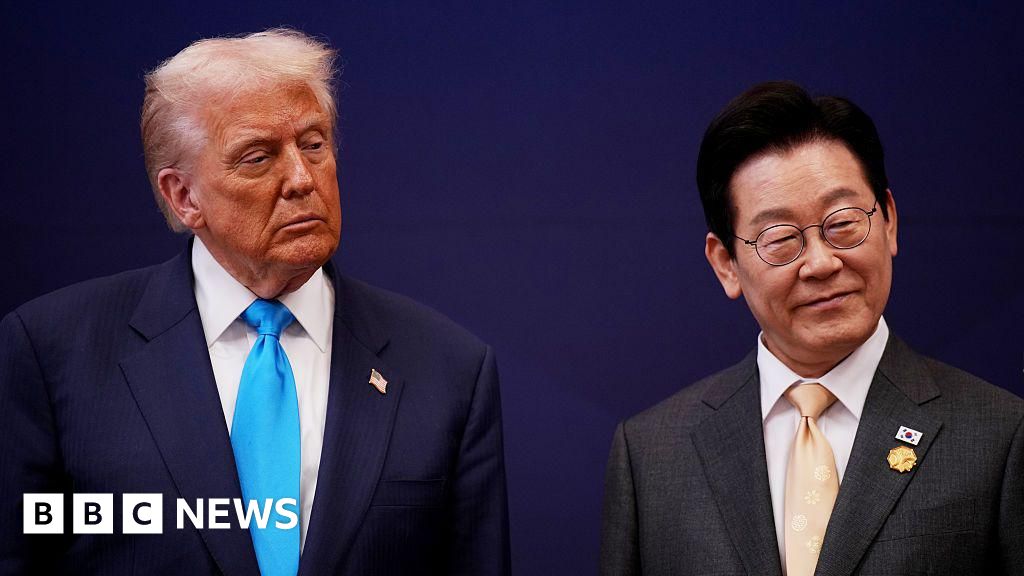
The recent negotiations between the United States and South Korea mark a significant shift in the ongoing battle for economic and geopolitical influence in the Indo-Pacific region. After prolonged discussions, the two nations announced a broad trade deal that exemplifies the delicate balance of power, alliances, and economic interests in a troubled global landscape. The accord, characterized by the preservation of reciprocal tariffs at 15% while strategically reducing taxes on automobiles and parts, signals a cautious yet strategic move by both sides. While the agreement fosters economic cooperation, it also underscores the complex geopolitics at play, particularly as the U.S. continues to assert dominance amidst rising tensions with China and North Korea.
- South Korea committed to investing $350 billion in the U.S., including $200 billion in cash investment alongside a substantial $150 billion in shipbuilding and industrial capacity. Conversely, President Trump highlighted the importance of national security in trade, emphasizing that the deal, while primarily economic, also contains vital dimensions of security cooperation. Yet, this accord doesn’t come without controversy, as Trump’s initial tariffs of 25% on Seoul—negotiated down from higher rates—reveal the ongoing tug-of-war over trade policies and the broader competition for global economic primacy.
Despite the positive outlook conveyed by the leaders, the negotiations were marred by underlying tensions and shifting demands. The White House’s later escalation of demands for cash investments highlights the unpredictable geopolitics that have come to define Trump’s America-first approach. Amid these negotiations, South Korea’s industries—especially electronics, chips, and automotive sectors—remain cautious, torn between hope for clarity and the risks of a trade environment still fraught with tariffs and uncertainty. Analysts warn that such trade deals, while beneficial in the short term, are part of a larger contest for influence in Asia, where every tariff and investment decision echoes through the geopolitical corridors of power.
As Trump prepares to meet Xi Jinping in Busan on the sidelines of the Asia-Pacific Economic Cooperation (Apec) summit, the stakes could not be higher. This confrontation between the world’s two largest economies symbolizes the unfolding battle over global dominance, with both leaders touting hopes of securing a “good deal”—a phrase loaded with both optimism and suspicion. Many strategic analysts see this as a crucial juncture; the meeting will test whether the U.S. can recalibrate its approach to China amid rising competition, or if the divergence will deepen, sowing chaos and uncertainty across the entire Asia-Pacific region.
Meanwhile, amid the diplomatic dance, fragile peace on the Korean Peninsula hangs in the balance. Trump’s visit was marked by a notable gesture—he became the first U.S. president awarded the Grand Order of Mugunghwa, symbolizing a recognition of his efforts toward peace. Yet, the headlines are overshadowed by renewed tensions: North Korea’s recent missile tests and the ongoing division of the Korean people, a reminder that decades of conflict simmer just beneath the surface. In public, protests erupted, some protesting Trump’s policies while others rallied in his support, revealing the societal rifts and conflicting loyalties that frame this geopolitical theater.
As the world watches, the ancient echoes of history remind us that these moments are pivotal—each decision, each summit, could tilt the scales toward stability or chaos. The unfolding saga of America’s strategic recalibration, China’s assertiveness, and South Korea’s delicate diplomacy is a testament to a new chapter in global power dynamics. The weight of history presses down, unyielding, as the powers of today carve the contours of tomorrow—each move etching itself into the fabric of history’s relentless march forward. In the final analysis, the stakes are no longer confined to nations alone but are a battle for the very soul of the modern world, where peace, prosperity, and even survival hang in the balance amid the unpredictable currents of geopolitics.