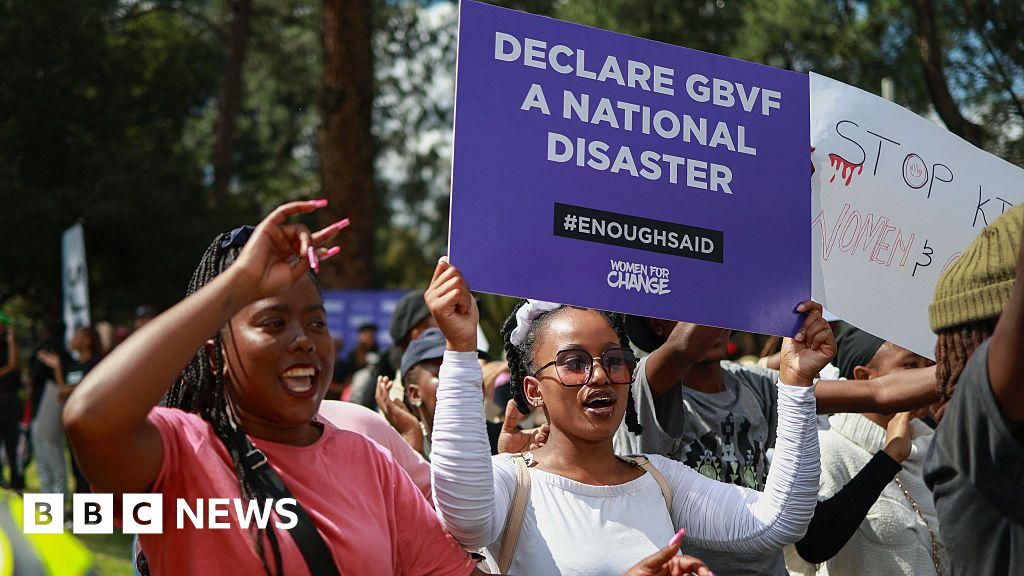
South Africa Declares Gender-Based Violence a National Disaster Amidst Growing Protests and International Concerns
In a decisive move reflecting the gravity of its ongoing crisis, South Africa has officially declared gender-based violence (GBV) a national disaster. The decision follows an unprecedented wave of public outcry and countrywide protests urging the government to confront a crisis that has persisted for decades, yet remains alarmingly unresolved. This escalation in official recognition underscores how deeply entrenched violence against women has become within South African society—a reality that international organizations, including UN Women, have long warned about. With women murdered at a rate five times higher than the global average, the country’s plight not only sparks domestic outrage but also highlights the broader geopolitical impact of failed governance and social norms.
The protests, notably dubbed the G20 Women’s Shutdown, saw thousands of women and allies in major urban centers like **Cape Town**, **Durban**, and **Johannesburg** engaging in a symbolic act—lying down for fifteen minutes at noon, as a gesture of mourning and resistance. This coordinated effort was supported across borders, with formations in **Eswatini**, **Kenya**, and **Namibia** expressing solidarity. Significantly, the movement drew momentum from social campaigns where celebrities and ordinary citizens changed profile pictures to purple, symbolizing awareness and unity against GBV. Such mass mobilizations have begun to force the hand of a government historically reluctant to classify the violence as a crisis, despite repeated warnings from activists, legal experts, and international observers.
The launch of this declaration comes with a stark recognition of systemic failures. South Africa’s Ministry of Cooperative Governance and Traditional Affairs announced the classification after *”a thorough reassessment of previous reports”* and a push from civil organizations demanding action. Yet, despite a wide array of legislation aimed at curbing violence, critics argue that implementation has been lackluster—making the classification a symbolic victory rather than a tangible solution. Analysts from institutions like *International Crisis Group* suggest that such declarations, while crucial, often risk becoming mere gestures unless accompanied by concrete policy shifts. History warns that without action, the risk is a continued cycle of violence, societal normalization of fear, and a weakening of the social fabric.
This alarming situation has spurred individual action as well. Women’s organizations like Girls on Fire advocate for armed self-defense, with many women learning to wield firearms legally, hoping to shift the balance of power in their favor. The tragic stories of survivors like Prudence—who was raped and faced a bureaucratic nightmare to seek justice—highlight the urgent need for societal and legal reform. These grassroots efforts emphasize a crucialNational geopolitical impact: the ongoing struggle in South Africa is emblematic of broader regional instability, where governance gaps foster environments ripe for violence, often spilling over borders and exacerbating migration, refugee crises, and regional insecurity. Experts warn that unless national leadership prioritizes genuine change, South Africa risks further deterioration, with repercussions rippling across the continent and beyond.
As the weight of history presses down and the world watches, the question remains whether this declaration marks a genuine turning point or a fleeting political gesture. The unfolding narrative will test whether international solidarity, grassroots resilience, and government accountability can ultimately confront a societal scourge that threatens to erode the very foundations of a nation struggling to reconcile its promise with its harsh realities. In the shadows of the Union Buildings, beneath the banner of mourning and defiance, the battle for South Africa’s soul continues—its outcome uncertain, its significance immense.