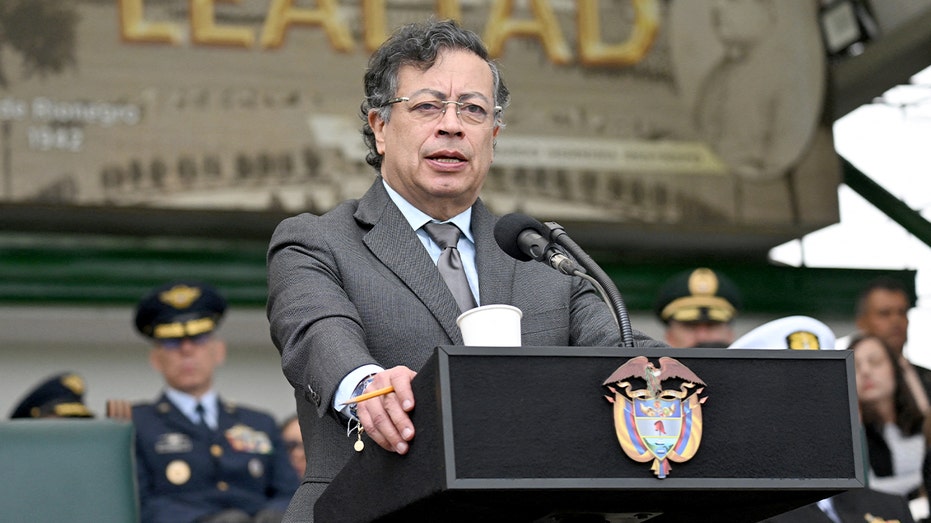
Colombian President Gustavo Petro faces a significant challenge as lawmakers initiate a process to temporarily suspend him from office over allegations of improper intervention in the nation’s ongoing presidential election. This move comes amid an investigation into claims that President Petro engaged in political meddling during the current campaign, raising questions about institutional integrity and electoral fairness.
A formal motion was filed by Gloria Arizabaleta, president of Colombia’s Commission of Investigation and Accusation, seeking to suspend President Petro from his duties through June 21. This proposed suspension aligns with the timeframe leading up to a crucial runoff election, underscoring the gravity of the accusations and their potential impact on the country’s democratic processes.
Allegations of Electoral Interference
The core of the controversy centers on allegations that President Petro improperly involved himself in the presidential campaign of leftist candidate Ivan Cepeda. Mr. Cepeda represents Petro’s own Pacto Historico coalition, and the accusations describe the conduct as “extremely serious or serious.” Such interventions, if proven, would represent a concerning breach of presidential decorum and potentially undermine public trust in the electoral system.
President Petro, whose four-year term concludes in August, has been under scrutiny regarding his administration’s actions and influence. The ongoing investigation by the Commission of Investigation and Accusation aims to determine the extent and nature of any alleged meddling, ensuring due process while upholding the principles of a fair and transparent election.
The Path to Suspension and Political Ramifications
For the proposed suspension to take effect, it must navigate significant legislative hurdles. First, the measure requires approval from all 16 members of the Commission of Investigation and Accusation. Should it pass this initial stage, it would then advance to Colombia’s Senate for further consideration and a final decision.
As of now, President Gustavo Petro remains in office, with commission members emphasizing that no suspension has been enacted. This procedural complexity highlights the robust institutional checks and balances within Colombia’s political system, designed to ensure that such serious actions are undertaken with thorough deliberation and broad consensus. The unfolding situation underscores the importance of upholding legal and constitutional frameworks, particularly in times of political contention.
A Pivotal Election for Colombia and U.S. Ties
The political drama unfolds as Colombia heads towards a critical June 21 runoff election. Ivan Cepeda, representing the leftist Pacto Historico, is set to face conservative attorney Abelardo De La Espriella. This election is being closely watched internationally, particularly in Washington, D.C., given Colombia’s enduring status as one of the United States’ closest security partners in Latin America.
Colombia has historically been a central ally in U.S.-backed efforts to combat drug trafficking and organized crime throughout the region. The outcome of this election and the stability of Colombian institutions carry significant weight for regional security and counternarcotics initiatives. Any perception of instability or compromised democratic processes could have broader implications for these vital international partnerships.
“The integrity of our electoral process is paramount for the stability and future of Colombia. Accusations of executive interference demand thorough investigation and adherence to institutional norms.”
The current situation in Bogota highlights the delicate balance between executive authority and the independence of democratic institutions. As the investigation proceeds and the nation prepares for its pivotal runoff, the focus remains on ensuring a fair electoral outcome and maintaining the rule of law. The international community, including the United States, will continue to monitor these developments closely, recognizing their strategic importance for both Colombia and the broader Western Hemisphere.