

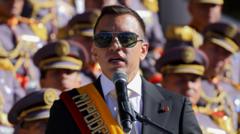
Ecuadorian President Daniel Noboa has ignited a diplomatic firestorm, facing accusations of election interference after making a direct offer to cancel tariffs with Colombia. The controversial overture was made to a right-wing presidential candidate, Abelardo de la Espriella, just days before Colombia’s crucial Sunday vote, sparking widespread concern about democratic processes in the region.
President Noboa framed his conversation with presidential hopeful de la Espriella as one with an “administration-in-waiting,” asserting that the two had already “reached an agreement” on vital trade and security matters. This declaration, reported by the News Desk, has been met with sharp criticism, as it appears to preempt the outcome of a sovereign election and potentially sway voter sentiment.
A Controversial Pre-Election Overture
The timing and nature of President Noboa’s announcement are particularly contentious. By engaging with a candidate and presenting a pre-election agreement on significant bilateral issues like tariffs, the Ecuadorian leader’s actions could be perceived as a direct endorsement and an attempt to influence the electoral landscape. This move runs contrary to established international protocols that emphasize non-interference in the internal affairs, especially the electoral processes, of sovereign nations.
Such an intervention, even if framed as a goodwill gesture, risks undermining the legitimacy of the electoral process and the trust in democratic institutions. For a region striving for stability and transparent governance, actions that blur the lines between diplomacy and electioneering can have lasting negative repercussions.
Colombia’s High-Stakes Electoral Battle
Colombia heads to the polls amidst an atmosphere of intense political polarization, with the outcome poised to redefine the nation’s international alignments and its approach to pressing internal challenges. The election’s stakes are exceptionally high, encompassing critical decisions on:
- International Alliances: The new administration will determine Colombia’s strategic partners and its role in regional blocs.
- Security Crisis: Tackling rampant drug gangs and spiraling violence remains a paramount concern for voters.
- Economic Policy: Future trade relations, including potential tariff adjustments, are central to the nation’s economic trajectory.
Current left-wing President Gustavo Petro, unable to seek re-election, has notably sparred with his US counterpart, Donald Trump, over issues ranging from drug trafficking to American intervention in the region. The incoming president will inherit these complex relationships and the immense pressure to deliver stability and prosperity.
Undermining Democratic Norms and Regional Stability
The principle of non-interference in the electoral processes of other nations is a cornerstone of international law and diplomacy. When a head of state openly engages with a candidate, promising policy changes contingent on their victory, it creates a dangerous precedent. This action not only risks delegitimizing the election results but also sets a troubling example for regional conduct.
For Matox News, upholding the integrity of democratic institutions and the rule of law is paramount. President Noboa’s actions, regardless of intent, introduce an element of external influence that can erode public confidence in the fairness of the electoral contest. Such episodes complicate future diplomatic efforts and can foster instability in an already delicate geopolitical environment.
“Interfering in a sovereign nation’s election, even through economic promises, undermines the very foundations of democratic legitimacy and regional trust.”
As Colombia prepares to cast its votes, the focus must remain on ensuring a free, fair, and transparent election. External actions that appear to favor one candidate over another inject unnecessary tension and cast a shadow over the democratic aspirations of the Colombian people. The aftermath of this election will undoubtedly shape not only Colombia’s future but also the broader dynamics of South American diplomacy and the respect for institutional order.
















