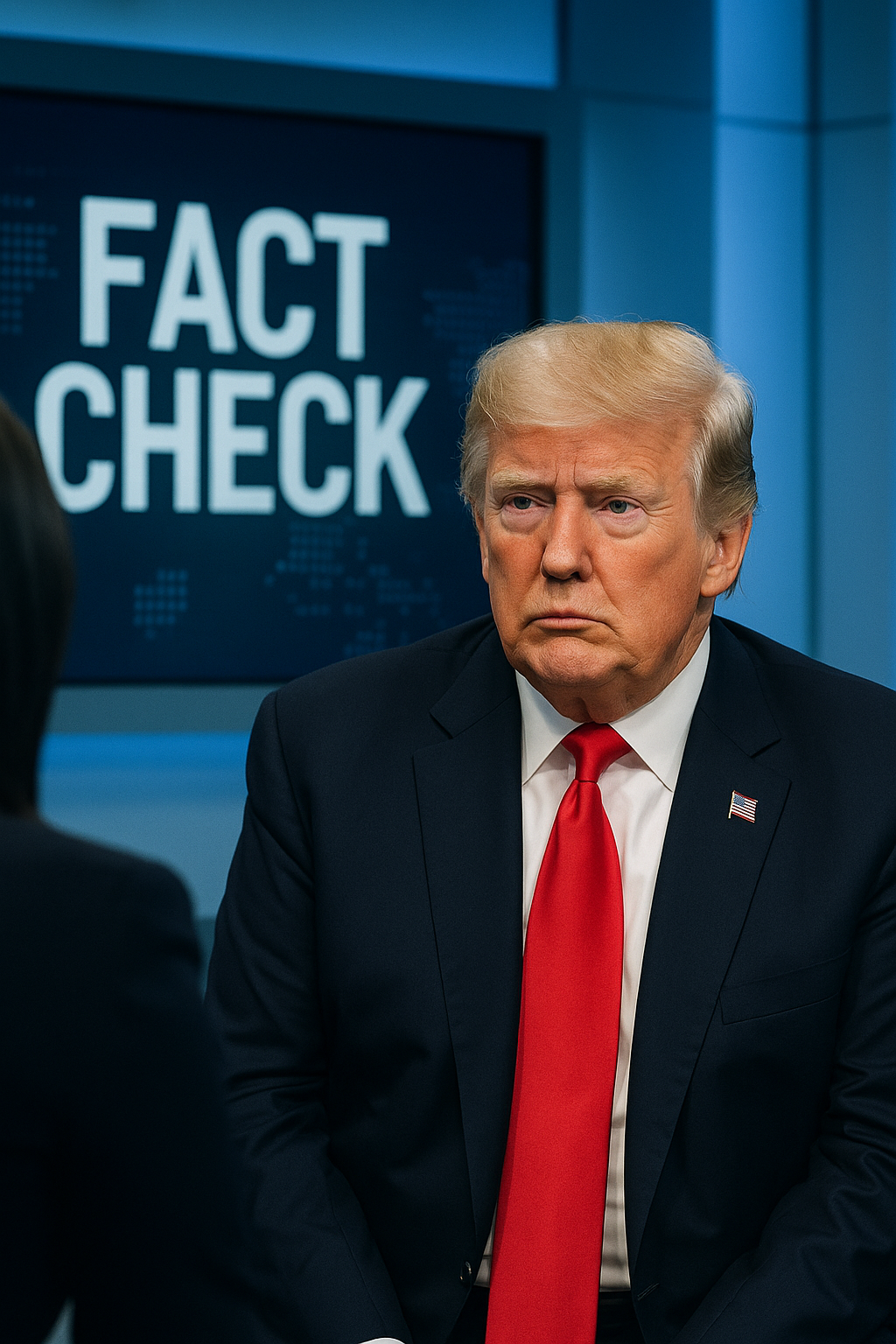
Fact-Check: AI-Generated Rumors and Their Impact on Political Discourse
In recent months, circulating claims about high-profile political figures have gained traction across social media platforms. Many of these narratives, often alarmist in tone, are being scrutinized amid rising concerns about misinformation. A common pattern in these stories is their attribution to artificial intelligence (AI) technology, which purportedly enables the creation of fake images, videos, or statements. The question now is: are these claims truthful, or are they manipulated stories fed to the public under the guise of technological innovation?
One such example involves claims that AI tools have been used to generate fake speeches by political leaders, suggesting that these generated content pieces are convincing enough to sway public opinion. According to experts at the Federal Trade Commission (FTC) and the Electronic Frontier Foundation (EFF), while AI can produce very realistic images and voices, the fabricated or manipulated content often leaves digital footprints or exhibits signs of inconsistency upon rigorous examination.
The Reality of AI-Generated Content
It is important to recognize that AI technologies such as deepfakes, generative adversarial networks (GANs), and sophisticated voice synthesis are genuine tools in the digital toolbox. Researchers at Stanford University and the MIT Media Lab warn, however, that the mere existence of such tools does not automatically mean that current content is fake. Instead, the challenge lies in distinguishing between authentic and AI-generated media, especially when malicious actors intentionally create deceptive content to mislead or manipulate.
The claim that “high-profile political figures” are routinely replaced or misrepresented through AI is an oversimplification. Forensic analyses conducted by the Independent Media Verification Initiative have shown that many suspected AI-generated videos or images can be identified using specific markers, such as inconsistent facial movements, irregular blinking patterns, or mismatched audio-visual synchronization. These indicators are detectable with current forensic tools, challenging the narrative that AI-generated content is passing unrecognized in mainstream media.
Legitimate Concerns Versus Conspiracy Theories
While AI is capable of producing convincing fakes, the assertion that entire campaigns or significant political events rely solely on these tools is misleading. Verifiable evidence and expert consensus indicate that most political content circulated online still originates from authentic sources, with AI-generated misinformation representing a small but growing fraction of the landscape. The US Department of Homeland Security emphasizes that awareness, media literacy, and technological vigilance are key strategies in combating misinformation, but claims of widespread AI-powered deception should be scrutinized and corroborated with credible evidence.
Furthermore, numerous fact-checking organizations such as PolitiFact and FactCheck.org have repeatedly found that sensational stories about AI manipulating high-profile figures are often exaggerated or unfounded. These outlets have debunked several rumors by providing clear forensic analyses and expert opinions that show many “AI-generated” claims are either misinterpreted or deliberately distorted.
Conclusion: The Importance of Transparency and Critical Thinking
In an era where technology advances faster than public understanding, it is vital to approach sensational claims with a critical eye. The truth remains that AI tools are powerful but not invincible, and malicious actors’ capacity to produce convincing fake content does not mean such content is pervasive or uncontestable. As responsible citizens, the task is to harness scientific expertise, rely on verified sources, and support transparency to safeguard the integrity of our democratic processes. Only through a dedicated effort to understand and verify information can we defend ourselves against manipulation and preserve the principles of truth upon which free societies depend.