Unpacking the Truth Behind Project 2025’s Cultural Agenda
In recent political discourse, the Heritage Foundation’s Project 2025 has become a focal point, promising a “culture war” agenda aimed at rolling back various federal policies related to social issues. Claims circulating suggest that the Trump administration and its successors implemented sweeping changes targeting LGBTQ rights, reproductive health, and gender-related policies. As responsible citizens, it’s vital to scrutinize these assertions and understand what is factual versus what may be exaggeration or misinterpretation.
Are federal agencies actively dismantling civil rights and diversity initiatives?
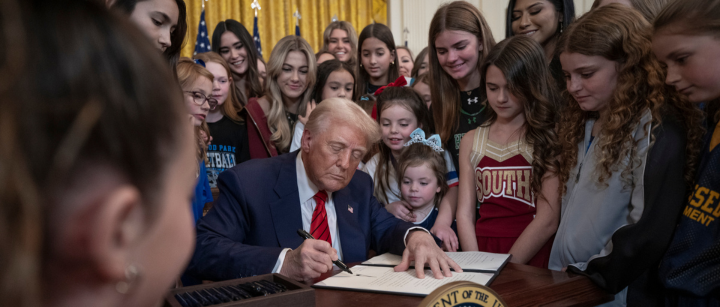
Claims allege that President Donald Trump’s executive orders and subsequent actions have systematically eliminated protections for transgender individuals, DEI programs, and civil rights enforcement. It is True that certain executive orders signed early in Trump’s term directed federal agencies to “eliminate” involuntary diversity, equity, and inclusion (DEI) positions and to redefine gender in accordance with biological sex. For example, the order from Jan. 2025 instructed the Department of Education’s Office for Civil Rights to rescind guidance on gender identity and sex discrimination. Additionally, the Department of Justice under Trump refocused its Civil Rights Division to emphasize enforcement of laws against discrimination based on “biological sex,” which critics argue restricted protections for transgender Americans and racial minorities.
However, some of these policies faced legal challenges. Several federal courts have issued rulings blocking or limiting the enforcement of Trump-era guidance, notably the injunction against the March 2022 guidance on gender-affirming care and the restrictions on transgender military service. For instance, the U.S. District Court in Massachusetts found the Department of Education’s guidance “unconstitutionally vague,” citing potential for arbitrary enforcement, which led to its temporary and then permanent stay. These legal decisions underscore that, while policies were shifted, their implementation is subject to judicial review and constitutional protections.
Is there evidence of widespread suppression of medical and educational rights?
Much of the narrative centers on policies affecting access to gender-affirming health care and education. Claims state that Trump’s administration sought to “reverse” approvals for medication abortion and restrict transgender health services. It is Partly Misleading to say that access to medication abortion was broadly restricted during Trump’s tenure. Trump publicly stated that it was “very unlikely” he would restrict access to abortifacient pills, and, in practice, no comprehensive bans on medication abortion were implemented. However, the FDA did approve a generic version of the abortion pill in October 2025— a move condemned by abortion opponents but backed by the agency’s assessment of safety and efficacy.
Regarding transgender healthcare, the administration did issue guidance to restrict treatment options for minors, and several hospitals announced plans to limit or suspend procedures such as puberty blockers or gender surgeries for youth. These actions are consistent with the policies outlined in Project 2025, which called for halting “gender-affirming care” for minors. Yet, courts have issued rulings blocking these restrictions, citing the importance of medical consensus and legal protections. This indicates a legal and policy tug-of-war rather than an outright suppression of care across the board.
Are efforts being made to limit data collection on gender identity?
It is claimed that the federal government is ending data collection on gender identity, purportedly to “legitimizes unscientific notions.” It is True that Executive Orders signed by Trump rescinded some Biden-era policies on collecting sensitive data related to sexual orientation and gender identity, with agencies like the CDC adjusting or removing these data fields. While critics say this reduces oversight and transparency, proponents argue that it aligns with policies emphasizing biological definitions. Again, the legal and scientific community remains divided, but these are policy choices, not outright bans on all data collection.
Therefore, while some agencies reduced or altered data collection practices concerning gender identity, they did not eliminate all efforts to understand these issues but rather shifted approaches in line with new policy directives.
Conclusion: The Complex, Legal Landscape of Cultural Policies
It’s clear that the policies under the banner of Project 2025, influenced heavily by conservative and Republican priorities, aim to reshape American social institutions—sometimes legally contested, sometimes implemented with caution. While claims of wholesale dismantling of civil rights, medical care, and data collection are exaggerated or simplified, they highlight real policy shifts that are presently subject to ongoing litigation and debate. It is essential for the health of democracy that we scrutinize such claims critically, rely on judicial rulings, and understand that truth forms the bedrock of responsible citizenship and effective policymaking. Transparency and honest evaluation of these complex issues ensure that America remains a nation of informed voters and courts that uphold constitutional rights amid political change.