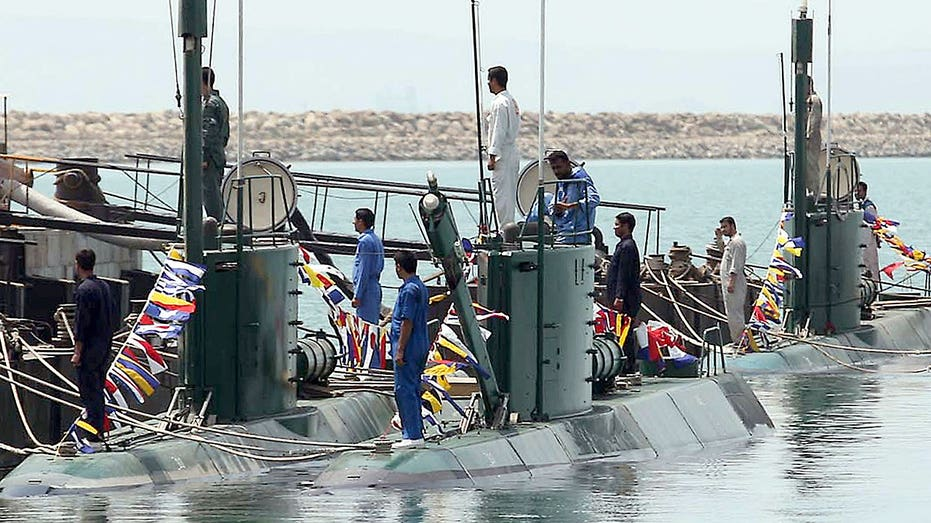
Iran has announced the deployment of its Ghadir-class mini-submarines to the strategically critical Strait of Hormuz, branding them an “invisible guardian” of the waterway. This declaration, initially reported by the semi-official Tasnim News Agency, comes amidst heightened tensions and a series of rejected peace overtures between Tehran and Washington. While Iranian Rear Admiral Shahram Irani, commander of Iran’s navy, described these vessels as the “dolphins of the Persian Gulf,” Western defense analysts are quick to temper concerns, pointing to inherent limitations that diminish their strategic threat.
Tehran’s Bold Claims and Regional Control
The Islamic Republic’s recent move appears to be a calculated effort to project strength and reinforce its asserted dominance over the Strait of Hormuz, a narrow maritime passage through which a significant portion of the world’s oil supply transits daily. Tehran has increasingly sought to define the strait as a larger zone under its influence, a stance that challenges international maritime conventions and raises alarms among global powers. The deployment claim is presented as a demonstration of Iran’s resolve to safeguard its interests and maintain a strong naval presence in the region.
This development follows a period of diplomatic impasse, with U.S. and Iranian talks having reportedly collapsed. For Matox News readers, understanding the regional context is crucial: Iran’s actions are often interpreted as responses to international pressures and as attempts to gain leverage in broader geopolitical negotiations. The rhetoric surrounding these mini-submarines, however, contrasts sharply with expert assessments of their actual capabilities.
Expert Scrutiny: Operational Limitations and Vulnerabilities
Despite Iran’s boasts, defense analysts offer a more pragmatic view of the Ghadir-class mini-submarines. Tom Shugart, a retired U.S. Navy submarine warfare officer, conveyed to Fox News Digital that while these vessels could pose a localized threat to U.S. naval forces, their strategic impact would be severely blunted by several operational constraints. These limitations include:
- Limited Endurance: The mini-subs are believed to have a restricted operational time, likely just a “couple of days at the most” before needing to recharge.
- Vulnerability to Detection: When their diesel engines are engaged to snorkel and recharge batteries, the generated sound can be detected by sophisticated anti-submarine warfare assets. Furthermore, their snorkel masts, projecting from the water, are susceptible to detection by patrol aircraft or helicopter radars.
- Confined Role: Designed primarily for shallow waters, such as those found in the Strait of Hormuz, they can operate quietly for limited periods on battery power, but this specific design also limits their broader operational scope.
These expert opinions suggest that while the deployment is a symbolic gesture of Iranian resolve, it does not fundamentally alter the naval balance of power in the Persian Gulf. The Ghadir-class, though potentially stealthy in specific conditions, remains vulnerable to modern detection technologies and lacks the sustained operational reach of larger, more advanced submarines.
“If they run their diesel engines to snorkel and recharge batteries, that could generate sound that could be detected.”
Broader Geopolitical Context and Economic Stability
The Strait of Hormuz is not merely a regional waterway; it is a critical artery for global energy markets. Any escalation of tensions or perceived threat to its navigability sends ripples through the international economy. Iran’s latest announcement, therefore, must be viewed within the larger framework of its ongoing confrontation with the United States and its allies, as well as its attempts to assert regional hegemony.
For Matox News, the emphasis remains on the importance of maintaining international order and ensuring the free flow of commerce. While Iran’s actions are a concern, the measured analysis of defense experts provides a crucial counterpoint to potentially inflammatory rhetoric. The international community continues to monitor the situation closely, advocating for diplomatic solutions to prevent any miscalculation that could destabilize this vital region.
The deployment of these mini-submarines underscores the persistent challenges in the Persian Gulf, where geopolitical rivalries intersect with global economic interests. Ensuring stability and preventing extremist actions remains paramount for all stakeholders.