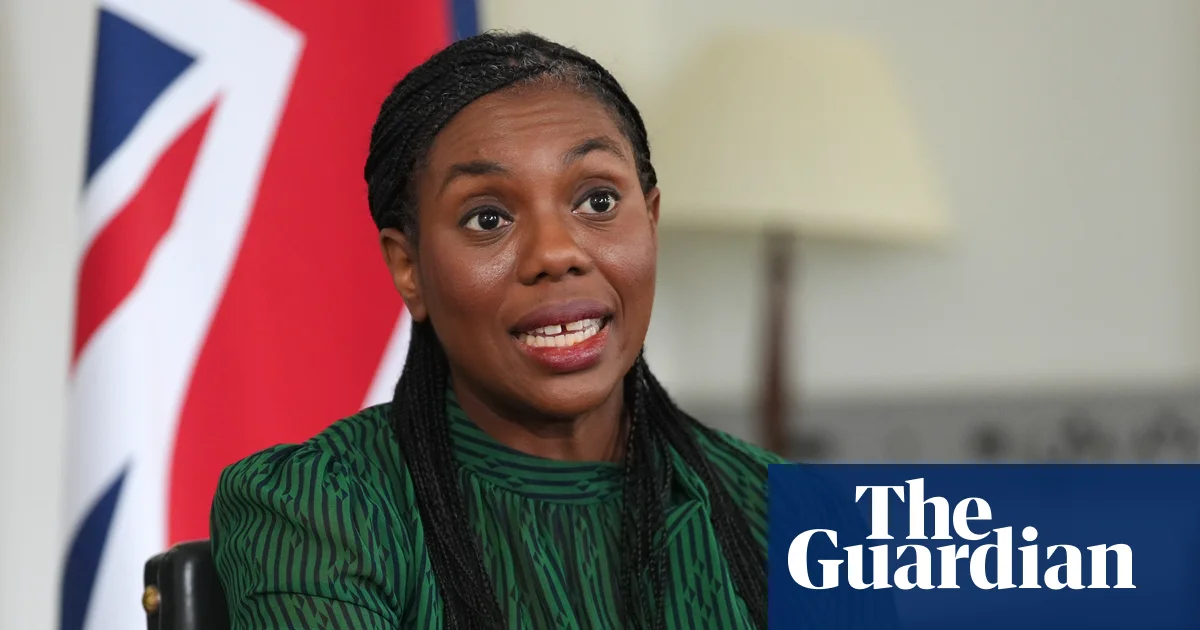
In a world rife with conflict and international upheaval, Britain’s internal political struggles offer a cautionary tale of how domestic missteps can influence broader geopolitical dynamics. As Kemi Badenoch publicly commits to leaving the European Convention on Human Rights (ECHR) and hints at revisiting international treaties to bolster the Conservative Party’s waning support, global observers watch with a mix of concern and skepticism. Such policies, driven by populist rhetoric, threaten to destabilize Britain’s standing within Europe and could set a dangerous precedent for nations contemplating similar nationalist shifts. Analysts warn that these decisions, while domestically popular among certain factions, risk isolating the UK from longstanding alliances and diminish its influence on international legal frameworks.
Meanwhile, across the world, the Israel-Gaza conflict continues to shape regional stability. Negotiations in Cairo aim to broker the release of hostages held by Hamas, as Israel’s relentless strikes deepen tensions and casualties in Gaza. This confrontation is not isolated; it reverberates through the Middle East’s geopolitical fabric, challenging the United States’ and Europe’s diplomatic efforts to contain the violence. Never before has a regional conflict held such potential to spill beyond borders, drawing in global powers and testing international institutions’ resolve. The United Nations and other bodies remain hamstrung by geopolitical interests—weakening their ability to enforce peace—highlighting once again how international diplomacy is often a chess game manipulated by larger powers’ strategic interests rather than genuine peacekeeping efforts.
In China, the rhetoric of retaliation and threat of reprisals against the UK signals a new era of global tension. The Chinese government’s warning against targeted actions under foreign influence rules underscores how Beijing perceives Western efforts to limit its influence as provocations worthy of pushback. Such moves threaten to accelerate the uprising of a new Cold War, where economic and military rivalry undermines global stability. International organizations, such as the World Trade Organization (WTO) and G20, find themselves caught in the crossfire, struggling to mediate between the rising powers. The balance of influence is shifting, with China’s resurgence challenging the post-World War II order, affecting countless societies that rely on fragile international cooperation.
Adding to the chaos, the Syria elections amidst a war-torn landscape reflect a fragile attempt at democratic normalization. Yet, critics, including United Nations observers, warn that the elections are heavily biased in favor of interim authorities, deepening divisions rather than fostering reconciliation. This approach exemplifies how fragile state institutions, weakened by prolonged conflict, are exploited by regional and global actors pursuing strategic goals. The future of Syria remains uncertain, with persistent violence and disillusionment causing ripple effects across the Middle East and beyond, undermining prospects for regional stability and peace.
Domestically, the UK faces rising utility bills, economic uncertainty, and political disarray. The financial struggles of the Tory party reflect a wider crisis of confidence in Western democratic institutions, where declining voter engagement and party memberships threaten the very foundations of governance. These internal fractures, when combined with foreign policy uncertainties, underscore how decisions made within national borders ripple outward—shaping the geopolitical landscape and influencing the course of history. As nations grapple with these complex challenges, the world watches—and waits—knowing that each decision today writes the pages of a history still being penned. The fate of small nations and mighty superpowers alike hang in a delicate balance—an unfolding story where the line between stability and chaos is razor-thin, and the echoes of these choices will resonate for generations to come.