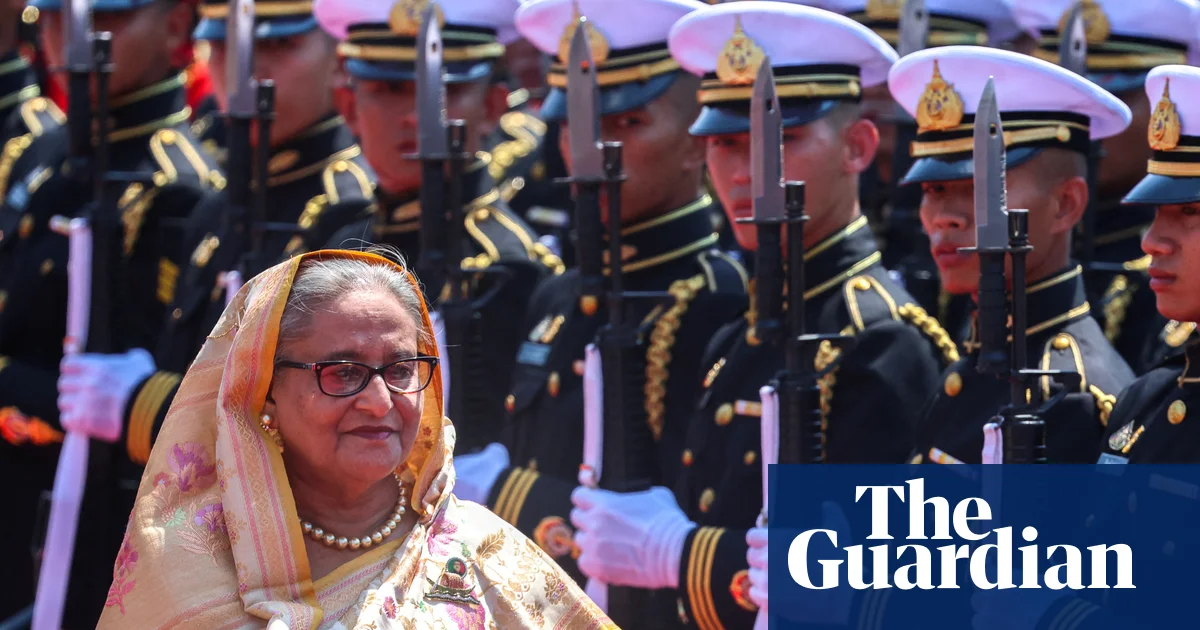
The recent sentencing of Bangladesh’s former prime minister Sheikh Hasina to death in absentia has sent shockwaves across the global geopolitical landscape. Convicted by a Dhaka tribunal for crimes against humanity related to a brutal crackdown on student-led protests, this verdict underscores a turbulent chapter in the nation’s ongoing struggle with authoritarianism and political instability. As international institutions and human rights organizations weigh in, the case exemplifies a broader shift in how emerging democracies are navigating the preservation of justice amid internal conflicts and external pressures.
- The tribunal accused Hasina of incitement, ordering executions, and negligence—charges rooted in her alleged direct involvement in a deadly crackdown that left up to 1,400 dead during a year-long uprising.
- Despite her vehement denial, claiming the proceedings as a “politically motivated charade,” the verdict has ignited fierce reactions, including nationwide protests and heightened security alerts in Dhaka.
- Her exile in India and the refusal of extradition by New Delhi reflect the complex, multi-layered geopolitics at play, where regional alliances influence justice and accountability.
From the perspective of global analysts, this case reveals a pattern of rising authoritarian tendencies cloaked under the guise of judicial reform. Historians warn that such politically charged trials risk destabilizing fragile democracies, especially when the judicial process is perceived as a tool for political retribution. The United Nations has expressed concern over the death penalty, emphasizing that international standards demand fair trials and judicial transparency. Yet, the tribunal’s transparency—broadcast live and scrutinized by observers—has not assuaged critics who see the proceedings as a spectacle designed to eliminate political rivals rather than deliver justice.
In the wider geopolitical context, India’s role remains ambiguous. While claiming neutrality, New Delhi’s refusal to extradite Hasina underscores its strategic calculus—balancing regional stability against Islamabad’s interest in destabilizing Bangladesh through influence over opposition factions. Consequently, neighboring countries are closely watching the unfolding political storm, with many fearing that escalation could destabilize the region further. With China and the United States weighing competing interests, Bangladesh finds itself caught in a geopolitical tug-of-war that could have ripple effects across South Asia and beyond.
The verdict also reaches into the societal realm, stirring deep wounds among families of the slain protesters. For many, including Golam Rahman, whose son Nafis was shot during the crackdown, justice is a long-awaited step towards catharsis. Yet, the pensive shadows of repression remain, with critics warning that a harsh, punitive crackdown might suppress dissent temporarily but exacerbate long-term instability. The upcoming election, now stripped of most opposition parties, will be a litmus test of Bangladesh’s political future—whether it will drift further into authoritarianism or attempt genuine reform amidst swirling chaos.
As Hasina’s supporters and critics ultimately face at the crossroads of history, the global community remains vigilant. The unfolding story of Bangladesh is emblematic of a world where rising nationalism, regional rivalries, and internal strife threaten to rewrite the narrative of democracy and justice. In this moment of palpable tension, it is clear that the repercussions of this verdict—whether a step towards justice or a catalyst for further turmoil—will resonate far beyond the boundaries of Dhaka, shaping the course of history in South Asia and challenging the foundations of international law itself. Only time will reveal whether Bangladesh’s future will be molded by the rule of law or the relentless tides of political upheaval, as a nation stands on the precipice of its own destiny, teetering between the shadows of oppression and the hope for lasting change.