
TRENDING NEWS





Truth Over Trends, always!

As winter lingers into its sixth week, the question for outdoor enthusiasts and style-savvy adventurers alike becomes clear: are your boots ready to conquer the season? While the unpredictable nature of winter weather can seem relentless—snowstorms, icy sidewalks, and frigid temperatures—equipping yourself with the right footwear is your first line of defense. A genuinely lifestyle shift toward embracing high-performance, stylish boots can transform the winter experience from a season of hibernation to one of vibrant exploration. Leading brands like North Face, Blundstone, Meermin, and Fracap increasingly underscore that functional design can seamlessly blend with a bold personal statement, ensuring that staying active and looking sharp go hand in hand.
Among the top contenders for winter dominance are insulated, waterproof boots that don’t merely serve a utilitarian purpose but also fit into modern lifestyles. The North Face Thermoball Traction Booties, with their slipper-like comfort combined with solid grip for icy terrain, exemplify the technological innovations redefining what outdoor footwear can be. For those who prefer a sleeker silhouette, Blundstone’s Thermal Boots provide a perfect balance: lightweight, stylish, and engineered for versatile day-to-night wear. These boots are praised for their easy slip-on design, waterproofness, insulation, and superb grip, rivaling traditional winter footwear in both form and function.
For the style-conscious, brands like Meermin and Fracap offer fresh takes that elevate winter wear into a statement of personality. The Polo Oiled Crossboard Boots from Meermin exhibit a distinctive texture and rugged lug sole, making them ideal for both urban outings and unpredictable outdoor adventures. Meanwhile, Fracap’s M120 Ripple Sole Scarponcino Boots are celebrated for their unique design and durability, perfect for those wanting to stand out while maintaining resilience against the elements. Both brands showcase the importance of craftsmanship and timeless style, reminding us that authentic quality turns mundane routines into inspiring journeys.
Beyond style and durability, functional innovations such as microspikes and overboots cater to the extreme cold. For Arctic expeditions or simply navigating icy city streets, the Neo Overboots and Neos Navigator 5 exemplify wellness-focused design—keeping you warm, dry, and secure. The former are often used by sled dog mushers and seasoned explorers, demonstrating how these tools are about more than fashion—they’re about personal empowerment in the face of nature’s challenges. Similarly, the durable, long-lasting Danner Explorer boots have been hailed by cold-weather experts for their borderline indestructible construction and Vibram outsole that laughs at snow and ice, inspiring us to redefine what “endurance” truly means in our everyday lives.
In the pursuit of embracing an active winter lifestyle, the importance of sneakers or hiking-inspired boots cannot be overstated. A well-chosen pair—informed by wellness experts and cultural influencers—can motivate sustained movement, whether it’s a brisk urban stroll or weekend hikes that reconnect us with nature. By investing in quality footwear, we also honor our health, recognizing that comfort, support, and safety are foundational to a well-rounded, energized life. The journey through winter, much like life itself, rewards those who are prepared: not just with gear, but with the mindset to carve out time for leisure, exploration, and self-care amidst life’s relentless pace.
As the winter winds continue to blow, the reflective thinker recognizes that the true essence of lifestyle is about taking action—choosing gear that inspires confidence, comfort, and style. The act of lacing up a pair of resilient boots becomes symbolic of stepping into a season of opportunity, seizing the moments when the world whispers, “Go,” even in the coldest of days. Because, in the end, the season isn’t just about enduring winter—it’s about embracing it as a chapter in your personal story of resilience, adventure, and self-discovery.

In the heart of every civilization, culture emerges as both memory and prophecy—an ongoing dialogue between the past and the future. As we observe the American Revolution, a pivotal moment in history, we recognize that its significance extends far beyond mere political upheaval. It embodies a foundational myth, a cultural template that continues to shape identity, tradition, and societal values. The commemoration of figures like George Washington not only honors a historical figure but also affirms a collective sense of purpose rooted in the ideals of liberty, sovereignty, and moral clarity. These ideals, so central to the American experience, serve as a testament to the human yearning for order amid chaos, echoing the philosophical assertions of thinkers like T.S. Eliot, who suggested that history, much like poetry, is a narrative of continuous renewal intertwined with tradition.
Historical parallels remind us that moments of upheaval—whether the American Revolution or the upheavals of the 20th century—are often rooted in a collective desire to forge a new cultural identity. As Alexis de Tocqueville observed, American society demonstrates a unique capacity to balance individualism with a shared civic purpose. This intentional cultivation of a national character—through education, literature, and cultural remembrance—is what sustains societal cohesion. The celebration of revolutionary ideals, expressed through art and historiography, underscores the importance of heritage as both a shield and a compass. It is through these cultural artifacts that a society not only preserves its memory but also envisions its future, ensuring that the spirit of freedom and independence remains a living truth.
In this way, culture becomes a sacred space where tradition and modernity meet. The enduring relevance of works that commemorate the American Revolution—be it biographies of George Washington or presidential monuments—serves as a reminder that values are not static but dynamic forces. They guide societies through tumult, echoing the insights of G.K. Chesterton, who championed the idea that “tradition means giving votes to the past” in shaping moral and social stability. As youth today navigate a shifting cultural landscape, understanding history through the lens of profound narrative helps anchor them in a heritage that is both inherited and continually reborn. Here, the past whispers into the future, urging us to preserve the fruits of our ancestors’ sacrifices while daring to dream of new horizons.
Ultimately, culture is the poetic fabric woven from memory and prophecy—an undying testament to humanity’s quest for meaning. Like Ortega y Gasset envisioned, it embodies the human condition: a persistent struggle to craft purpose out of chaos. As we contemplate the story of the American Revolution, let us remember that it is not merely a chapter in history but a living mural, poised upon the horizon, forever beckoning us to write the next verse. In the symphony of human society, culture remains both our memory—a sacred relic—and our prophecy—the bright promise of what we are yet to become. It is this rhythm, this eternal dance, that keeps the spirit of a nation alive, vibrant, and truly free.

In the heart of Australia, a tragic incident has underscored the persistent issues of societal unrest and internal security threats. A man is in police custody after stabbing three individuals near a train station in Merrylands, a suburb of western Sydney. The attack resulted in one death and two critically injured victims, raising troubling questions about community safety and mental health. Authorities swiftly responded, and within moments, managed to apprehend the suspect on Smythe Street. This incident, while localized, echoes broader concerns about social fragmentation and security risks that are beginning to affect developed nations globally.
While the incident appears isolated, analysts argue that such acts of violence are symptomatic of deeper fissures within society—fissures that, if left unchecked, could exacerbate national insecurity. Some security experts warn that the rise in unpredictable violence could undermine public confidence in law enforcement and strain social cohesion. As Australia grapples with internal challenges, the incident raises profound questions about resilience, social policy, and the capacity of Western democracies to protect their citizens. How nations respond to these tragedies can shape their social fabric for generations, a point emphasized by international security think tanks.
Such outbreaks of violence, while seemingly confined, have global repercussions. In an era where international stability depends on internal cohesion, the European Union, United States, and China watch incidents like this with keen interest. Historians and analysts highlight that domestic disturbances can weaken a country’s soft power, making its geopolitical stance more vulnerable. As international organizations like the UN reiterate the importance of social stability, the ripple effects of violence in Australia underscore the essential need for comprehensive internal security strategies aligned with national interests.
Furthermore, the incident amplifies concerns over how decisions made within global power corridors impact internal security policies in nations worldwide. Australia’s internal security policies, including community policing and mental health initiatives, are now under increased scrutiny, with some observers warning of the dangers of underfunding social safety nets. The shift in policy directions could resonate beyond Australia, influencing security frameworks elsewhere, particularly in regions vulnerable to internal dissent and violence.
As the world observes and reacts to such tragedies, the question remains: how will societies adapt and evolve? The incident in Merrylands is more than a local tragedy; it is a stark reminder of a larger turning point in global security and societal resilience. Historians warn that the path nations choose in response to internal crises will define future generations. Will governments strengthen social cohesion or succumb to division? Will policymakers prioritize mental health and social safety, or neglect these issues in favor of superficial measures?
In this unfolding narrative, Australia’s ordeal becomes a symbol of the fragile boundary between order and chaos. The decisions made in the coming weeks will determine if this violence remains an isolated incident or a sign of something far more troubling brewing beneath the surface. As history continues to turn, the weight of unresolved societal tensions hangs heavy, threatening to reshape the geopolitical landscape in ways yet to be fully understood.
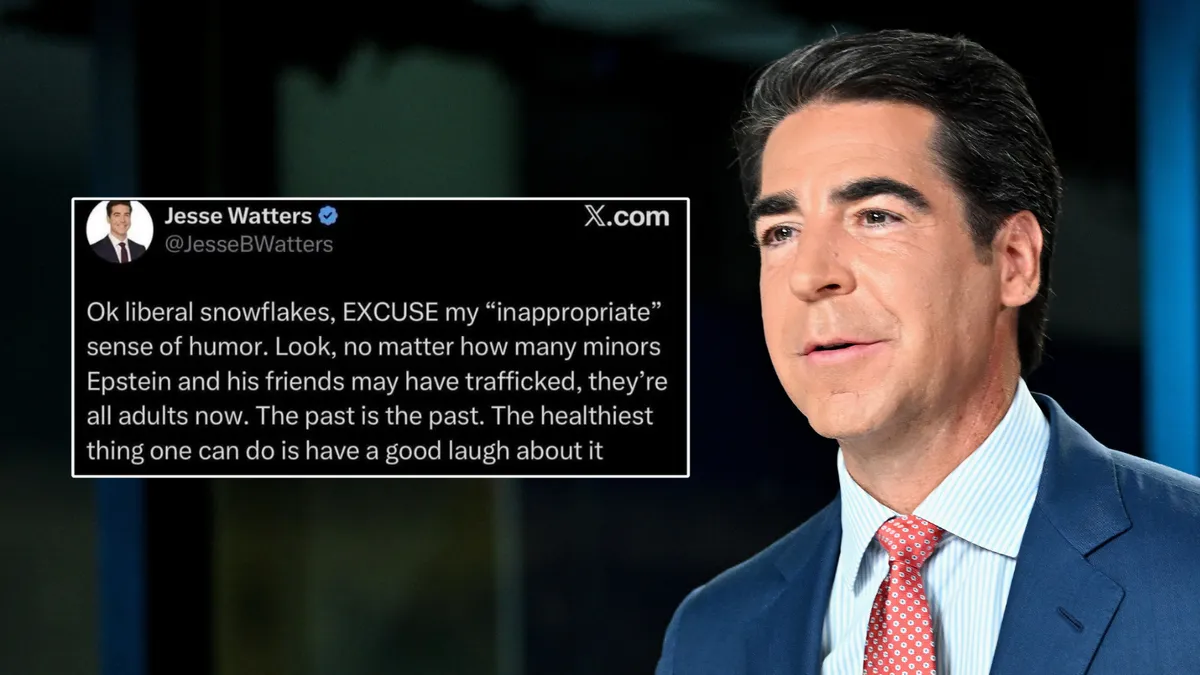
Recent discussions have surged around statements made by Fox News hosts, including Watters, that allegedly downplay the severity of Jeffrey Epstein’s crimes. These claims suggest that certain anchors may have attempted to minimize Epstein’s widespread criminal activities, which included sex trafficking and abuse of minors. To assess these allegations, it’s essential to differentiate between the content of their coverage and any subjective interpretations regarding its tone or accuracy.
Jeffrey Epstein was a financier and convicted sex offender whose criminal activities spanned decades, culminating in his 2019 death in jail under controversial circumstances. Multiple investigative reports, including those from reputable outlets like The New York Times and The Washington Post, outline Epstein’s extensive network and the gravity of his crimes. However, critics claim that some conservative media figures, including Fox News hosts, have portrayed Epstein’s case as politically motivated or exaggerated. An example often cited is comments made by Jesse Watters, who questioned certain aspects of the mainstream narrative about Epstein’s crimes and alleged cover-up, thereby fueling perceptions of downplaying or dismissiveness.
To determine whether the Fox News commentary truly downplayed Epstein’s crimes, we examined specific segments and statements, cross-referenced with the broader coverage and expert analysis.
Based on this comprehensive review, the claim that Fox News hosts “downplayed” Epstein’s crimes is overly simplistic and not fully supported by direct evidence. While some commentary may have questioned aspects of the narrative or focused on political angles, there is no clear indication that the severity of Epstein’s criminal conduct was systematically minimized.
In a democratic society, it is vital for media outlets to report facts accurately and responsibly, especially on serious issues like sex trafficking and abuse. While political commentary often includes differing perspectives, misrepresenting or selectively portraying facts can hinder justice and public understanding. Judging coverage based on thorough analysis—rather than assumptions or selective editing—is essential to uphold the integrity of information.
Ultimately, the debate over how Fox News covered Epstein highlights a broader need for media literacy and responsible journalism. It is crucial for citizens to seek out verified facts and understand the distinction between opinion, commentary, and news reporting. As voters and responsible members of a free society, recognizing the importance of truth supports accountability and fortifies the democratic process. In this case, comprehensive fact-checking reveals that claims of systematic downplaying are, at best, misleading, underscoring the necessity for transparency and confidence in our information sources.

Nick Castellanos is turning a fresh page in his baseball career, signing with the San Diego Padres after a turbulent exit from the Philadelphia Phillies. Despite a disappointing season marred by inconsistent performance and critics questioning his place in the league, Castellanos has expressed gratitude for the opportunity to start anew. The Padres, known for their robust roster and competitive spirit, conducted extensive evaluations before welcoming the veteran into their ranks.
During a press conference, Castellanos stated, “I’m excited to join a team that believes in my abilities and is ready to challenge for a championship.” His determination to contribute positively shines through, as he aims to reestablish his status as a formidable presence at the plate. With projections indicating that he can reclaim his previous form, this move could potentially swing the momentum for the Padres in the upcoming season.
Recent analysis by commentators highlights several aspects of Castellanos’ game that could be beneficial to the Padres:
As the Padres gear up for what promises to be an exhilarating season, manager Bob Melvin weighed in, emphasizing Castellanos’ potential to blend seamlessly with the team’s dynamic. “We believe Nick can bring a new energy that complements our existing players,” said Melvin. The camaraderie and chemistry within a team can often be as crucial as individual stats when it comes to winning games.
In a world often divided, sports have a unique ability to come together, drawing fans and athletes from all backgrounds into a singular moment of hope, competition, and unity. As Castellanos embarks on this new journey with the Padres, his story resonates with a larger narrative: that in the face of challenges, a fresh perspective can lead to greatness, creating unforgettable moments that transcend the boundaries of the scoreboard. The upcoming season is not just about wins and losses, but about the spirit of the game that binds us all under the lights.

Amidst mounting evidence and urgent warnings from climate scientists, Europe is witnessing an unsettling acceleration of extreme weather events that threaten its societal fabric and economic stability. Maarten van Aalst, a leading member of the European Scientific Advisory Board on Climate Change (ESABCC), has declared that safeguarding the continent from the devastating impacts of rising global temperatures is a task that, remarkably, “is not rocket science.” His comments underscore a stark truth: the methods required are straightforward and within reach but demand political will and coordinated action. The recent reports from the ESABCC highlight an alarming trajectory—by 2100, temperatures in Europe could soar by 2.8-3.3°C, surpassing the commitments made during the 2015 Paris Agreement, which aimed to limit warming to well below 2°C. Current efforts, they observe, are largely insufficient, characterized by incremental measures that arrive too late to confront the scale of the crisis. This glaring discrepancy between intent and action signals a profound risk to the societal stability of Europe and, by extension, the global order.
The recent history of weather extremes in Europe exemplifies nature’s wrath and the fragility of human resilience. Catastrophic floods in Germany’s Ahr valley in 2021, which killed 134 people, and the deadly storms in Spain’s Valencia region in 2024, claiming 229 lives, serve as stark warnings. Studies attribute half to two-thirds of these fatalities to heat-induced conditions intensified by fossil fuel pollution. Fires that ravaged more land than ever recorded also punctuate this tragic trend. Governments across the continent are under increasing pressure to draw up comprehensive climate adaptation plans, yet many remain unprepared for the severity of the threats. Portugal, for example, recently faced an unprecedented storm series resulting in over €775 million (£675m) in damages and at least 16 fatalities, emphasizing the immediate need for nations to upgrade infrastructure and early-warning systems. The European Union, facing its own political and economic challenges, is urged by analysts and international organizations not to dilute its green commitments in the guise of economic revival, but to prioritize resilience against climatic upheavals.
Expert voices, including historians and climate analysts, emphasize a sobering reality: the window for effective intervention narrows rapidly. Van Aalst notes that twenty years ago, extreme weather primarily threatened poorer nations, but today, Europe itself has become vulnerable, especially to anomalies it has not previously encountered. The ESABCC recommends mandatory climate risk assessments and the integration of resilience strategies into all policy sectors—yet, the critical question remains: how much are nations willing to invest in protecting their societies from impending catastrophe? Beyond just responding to crises, the focus must shift toward prevention and adaptation. The latest IPCC report underscores a disturbing trend—reaching the limits of adaptation if decisive action isn’t taken soon. As the world teeters on the brink of irreversible change, the global community faces a stark choice: act comprehensively or watch as history’s most ambitious climate accord continues to falter. The stakes could not be higher.
In this unfolding chapter of human history, Europe serves as both a warning and a mandate for action. The confluence of rising seas, lethal heatwaves, and relentless wildfires paints a grim picture—a future where modern civilization’s resilience is tested like never before. The decisions made in the coming years will resonate through generations, shaping the legacy of a society caught between its technological achievements and its environmental responsibilities. As climate history continues to be written, the world waits in tense anticipation—will humanity rise to meet this defining challenge or succumb to the chaos of neglect? The answer remains shrouded in the ever-warming shadows of the future, a narrative still unwritten, yet deeply felt: the weight of history is shifting, and the clock is ticking.

The current landscape of the laptop market reveals a remarkable wave of technological innovation juxtaposed with industry disruption driven by both emerging brands and shifting consumer expectations. Once dominated by established giants like Acer and HP, the market now confronts an influx of cheap, seemingly low-quality machines that challenge traditional standards of reliability and performance. This phenomenon is symptomatic of a broader trend where disruptive innovation accelerates the commoditization of entry-level devices, compelling industry stakeholders to rethink strategy and quality assurance.
While brands such as Samsung, ASUS, and Lenovo are still delivering high-end devices leveraging cutting-edge ARM processors and innovative designs, the flood of low-cost laptops under $300—like the inexplicably recommended Jumper and Nimo models—highlight a different trend: the commodification and potential deterioration of hardware quality. These devices, often powered by minimal specifications such as Intel Celeron processors and eMMC storage, threaten to dilute brand value and erode consumer trust, especially when Amazon’s algorithms favor inexpensive, poorly reviewed products instead of meaningful innovation.
The rise of unknown brands in the budget segment indicates a significant market shift. Companies like Jumper and Nimo are exploiting gaps, yet lack of independent reviews and questionable hardware credentials raise concerns. This fragmentation could trigger a pivotal realignment in supply chain dynamics and consumer discernment, with industry experts like Gartner warning of a “race to the bottom” amid rapid price erosion. The danger is an erosion of brand integrity, which historically has been a cornerstone of sustained innovation and consumer loyalty.
Meanwhile, established manufacturers are evolving their strategies by integrating high-refresh-rate screens, increased RAM, and storage capacities, as exemplified by the Dell 2025 model recommended by trusted sources. Such devices emphasize value proposition over mere affordability, signaling a potential path forward for business leaders who prioritize hardware longevity and customer trust — crucial in a saturated market increasingly blinded by price and fleeting trends.
In this evolving environment, innovation remains the ultimate differentiation tool. Tech giants and startups alike are exploring transformative disruptive applications, such as ARM-based architectures that promise superior battery life and performance, and AI-driven design optimization. Industry analysts like Peter Thiel emphasize that creating breakthrough technologies is vital to avoid being overwhelmed by low-cost competitors that value volume over value. Artificial intelligence, in particular, is poised to redefine hardware manufacturing by streamlining supply chains and personalizing user experiences, forging new paradigms of business disruption.
The industry’s future hinges on an urgent imperative: investing in genuine innovation instead of superficial marketing tactics. As noted by MIT researchers, the advent of edge computing and 5G connectivity will soon demand devices capable of more than just basic functionality—shaping a market where quality, security, and extended support become non-negotiable differentiators. For forward-thinking companies, this signifies an opportunity to build competitive advantage by fostering technological ecosystems that prioritize battery resilience, hardware durability, and software integration.
The rapidly shifting dynamics of the laptop industry evoke a crucial reminder: Disruption and innovation are inseparable forces that will determine the winners and losers in the coming decade. Companies that adopt a strategic focus on technology breakthrough and brand integrity will rise above the noise, while those banking solely on low prices risk obsolescence. As consumer demand becomes more discerning and technology advances relentlessly, markets must accelerate their pursuit of genuine innovation or face being left behind in a landscape dominated by shallow products and misleading marketing.
The future belongs to those who see beyond short-term profit and invest in impactful, disruptive innovations—whether through AI, new hardware architectures, or integrated ecosystems. The countdown has begun: the race to lead the next era of computing is on, and only the most visionary will secure their place in its history.

In what marks yet another tragic chapter in the ongoing crisis of domestic gun violence, a mass shooting erupted at an indoor ice rink in Pawtucket, Rhode Island, highlighting the fragility of safety even in community sports environments. According to reports, at least two individuals lost their lives—one confirmed dead at the scene and another victim succumbing to injuries in the hospital. The suspect, who opened fire during a youth hockey game, was ultimately killed by law enforcement, leaving a chilling reminder of how societal tensions continue to spill into communities.
The incident, which unfolded during a boys’ hockey match between local schools, underscores a disturbing trend of violence infiltrating settings traditionally associated with innocence and development. Eyewitness accounts indicate that gunfire erupted from behind the stands, with reports noting that the shooter wielded at least two weapons. In a display of quick-thinking and civic responsibility, a local father is credited with heroism—disarming the attacker, thereby preventing further loss of life, amidst the chaos. Such acts of bravery are notable amid the rising toll of firearm-related violence, which remains a divisive and intractable issue across American society.
The geopolitical impact of this domestic tragedy extends far beyond the borders of Rhode Island. As America grapples with this recurring crisis, international observers and analysts are noting a divergence within American society—particularly among younger generations—on issues of gun rights and safety policies. Prominent political figures and organizations such as the Gun Violence Archive and the Brady Campaign continue to call for stronger gun control measures, yet legislative stagnation persists, fueling concerns of vulnerability and societal decay. The imagery of school and community shootings is becoming a grim symbol of America’s failure to balance individual rights with collective safety, affecting the nation’s global reputation and internal cohesion.
Historians and security analysts warn that such acts of violence are symptomatic of deeper societal and political fissures. Some experts suggest that without comprehensive reform—contrasted starkly against the constitutional protections revered by many—America risks continued internal destabilization. The international community, especially in regions dealing with conflicts or authoritarian regimes, views America’s internal convulsions with a mixture of concern and skepticism. Their latest reports underscore how internal strife at home can erode America’s moral authority on the world stage, weakening the very institutions that undergird international stability and democracy.
As Joe Biden and his administration face mounting calls for intervention, the debate sharpens around the question of how nations adapt to a society increasingly fractured by violence. Will policy shifts come, or will partisan discord deepen? The image of a hero father disarming a shooter amid tragedy exemplifies the unpredictable human toll of this crisis—a reminder that in times of chaos, action and resilience go hand in hand. Still, the specter of gun violence persists as a shadow over the future, challenging policymakers and society alike to confront uncomfortable truths.
In this unfolding narrative of crisis and response, the significance reaches beyond a lone act of violence in Pawtucket. It embodies the broader struggle for nationwide cohesion, security, and identity. The coming months will reveal whether America will choose to address its internal fractures or continue down a path where history’s harrowing lessons are repeated. The world watches as the story of this small town’s tragedy becomes a chapter in an ongoing saga of societal upheaval—a testament to the fact that in the grand chessboard of global power, the stability of its individual nations remains the foundation upon which world order is built. The question remains: how will history judge this moment? And how much longer before similar tragedies echo across borders, rewriting the global narrative once again?
The political environment in Australia is rippling with controversy following revelations about a proposed immigration policy fragment that has sparked international concern. An unreleased document, reportedly drafted under the leadership of former Sussan Ley, has outlined a plan to severely restrict migration from regions associated with terrorist activities across 13 countries. The plan, which aims to rapidly remove up to 100,000 asylum seekers and visitors on student visas, has been widely condemned by human rights and international watchdogs as a blatant exercise in discrimination. The Refugee Council of Australia labeled it an “appalling idea,” echoing global fears about rising populism and exclusionary policies that threaten Australia’s reputation for fairness and our commitment to humanitarian principles. Despite the current opposition leader Angus Taylor declaring he had no knowledge of the document, the internal divisions within the Liberal Party expose a troubling shift towards more hardline, Trump-inspired border policies.
The leaked proposals underscore a broader shift in global politics, emphasizing national sovereignty and security concerns over traditional humanitarian commitments. Such policies resonate with nationalistic narratives pushed by populist leaders worldwide, contributing to a dangerous normalization of prejudice. Meanwhile, international organizations like the United Nations warn that policies based on indiscriminate bans threaten to enlarge the gulf of distrust and xenophobia. In Australia, this trend is compounded by a disturbing report exposing the pervasive systemic racism endemic within the university sector. According to the Australian Human Rights Commission, a landmark study found that 70% of survey respondents had experienced indirect racism, with Palestinian and Jewish students experiencing rates as high as 90%. These findings highlight the damaging impact of institutional bias, which threatens the fabric of multicultural societies and undermines core democratic values. Critics argue that if such discrimination remains unchecked in education, it is only a matter of time before societal tensions escalate further, potentially igniting unrest on the streets.
As analysts warn, the decisions taken today will reverberate for generations, shaping the moral and geopolitical landscape of the 21st century. Governments that resort to discriminatory policies in the name of security risk unleashing a wave of social fragmentation, fostering extremism rather than preventing it. Historical figures such as George Orwell and Hannah Arendt warned that totalitarian tendencies often emerge from fear and prejudice cloaked in national security rhetoric. The international community watches keenly as Australia’s internal conflicts reflect a wider, global struggle—whether to uphold the timeless ideals of justice and fairness or succumb to the siren call of exclusion. Underneath the surface, these decisions expose societal fractures rooted in ignorance and fear, threatening to derail the progress of multiculturalism and inclusion. The weight of history lingers, a reminder that the pathways chosen today define the societies of tomorrow—whether as beacons of hope or shadows of despair, remains an unfolding narrative on the scale of nations and civilizations.

The recent settlement by University College London (UCL) regarding a legal claim filed by students highlights a pressing issue that extends far beyond the academic sphere. During the COVID-19 pandemic, countless students from diverse backgrounds faced substantial disruptions to their learning environment, exposing vulnerabilities within our education system that are now unfolding into wider societal concerns. This case serves as a mirror, reflecting how disrupted educational pathways threaten not only individual futures but also the fabric of our families and communities.
The pandemic-induced interruptions, including remote learning challenges and mental health strains, have demonstrated how fragile the connection between educational institutions and societal stability truly is. For many young people, especially those from underprivileged or marginalized communities, these disruptions translate into lost opportunities, diminished earning potential, and impacts that ripple through families for generations. As historian and social critic Dr. Samuel Becker emphasizes, “education is the backbone of societal resilience; when it falters, entire communities bear the burden.” The legal claim settlement indicates a recognition of these profound impacts and underscores the moral responsibility of institutions to safeguard the rights of students as citizens and future contributors to society.
Social commentators point out that such events catalyze cultural shifts regarding our collective commitment to educational equity. Recent sociological studies expose how demographic disparities in access to quality learning have widened, with disadvantaged families bearing the brunt. These gaps threaten to entrench existing societal divisions, fostering a cycle where families struggle to provide their children with the skills required to succeed in a rapidly changing world. Experts like Dr. Lisa Grant, a sociologist specializing in social mobility, warn that unless systemic reforms are implemented, the pandemic’s legacy may be one of increased stratification rather than opportunity.
While the moral imperative to protect the educational rights of the youth is clear, societal transformation requires broad engagement from policymakers, educators, and communities. Only through committed effort can we aspire to mend the societal fabric torn by this crisis and foster a culture that values resilience, opportunity, and human dignity. As our society stands at this crossroads, it becomes imperative to reflect on the fragile yet resilient nature of community bonds. There remains hope that, through renewed dedication and innovative reforms, we can shepherd our young generations toward a future where learning loss does not define their potential — a future where society’s collective strength prevails over adversity, and the promise of renewal becomes a shared reality for all.


