
TRENDING NEWS





Truth Over Trends, always!

Recent claims circulating online suggest that Senator Elizabeth Warren, colloquially referred to as the “Cleaning Fairy,” pleaded guilty to charges of burglary and trespassing. This assertion has sparked confusion and curiosity among citizens seeking the truth behind her reputation and legal history. To clarify these claims, we undertook a detailed investigation into publicly available records, reputable news sources, and official legal documents.
The initial premise—that Warren was involved in criminal activities such as burglary and trespassing—appears to originate from misinformation rather than verified facts. According to comprehensive searches through law enforcement databases, court records, and credible news outlets, there is no documented evidence linking Elizabeth Warren to any criminal charges, let alone pleading guilty to such offenses. The assertion that Warren was known as the “Cleaning Fairy” and pleaded guilty to burglary appears to be unfounded and represents a distorted narrative or a misinterpretation of unrelated rumors. It is essential to differentiate between politically motivated misinformation and factual reporting, especially when it concerns a prominent public figure.
Disinformation about political figures often uses fabricated stories or exaggerated narratives to sway public opinion. In this case, the nickname “Cleaning Fairy” does not historically connect to or originate from any credible source to describe Warren’s behavior or legal history. It seems to be a playful or satirical moniker popularized in some online circles, but it has no bearing on her personal conduct or legal status. Experts from The Center for Investigative Reporting warn that such tactics are designed to manipulate voters through misinformation, emphasizing the importance of relying on verified facts before forming opinions.
In a democratic society, transparency and factual integrity are vital for informed citizenship. The false claim that Elizabeth Warren pleaded guilty to burglary and trespassing is not supported by any factual evidence. Relying on verified information not only preserves individual reputations but also strengthens the foundations of trust between leaders and the public. As responsible consumers of information, citizens should scrutinize sensational claims, consult reputable sources, and anchor their judgments on verified facts. Only then can we ensure that our democratic processes are guided by truth, fairness, and accountability.

In an era where cultural exchanges increasingly influence international diplomacy and societal perceptions, the work of pioneering musicians often transcends entertainment to shape global narratives. A notable figure—an accomplished guitarist, composer, and band leader—has emerged as a symbol of this cultural diplomacy. Fusing Ghanaian music with funk, this artist has crafted tracks that resonate far beyond the stage, echoing in global markets, diplomatic circles, and cultural exchanges. This fusion exemplifies how artistic innovation can serve as a subtle yet potent form of soft power, influencing societal perceptions and fostering cross-cultural understanding amid a turbulent geopolitical landscape.
The genre-bending music of this Ghanaian artist underscores the enduring importance of cultural sovereignty as nations seek to preserve their identity while engaging with global audiences. His work, sampled worldwide, showcases the interconnectedness of contemporary societies and highlights the strategic importance of cultural exports. Analysts and historians observe that while music may seem apolitical, its reach and influence ripple through geopolitical currents, offering nations a platform to assert their unique identities on the world stage. In a time of rising nationalism, the ability to export cultural artifacts becomes both a soft power tool and a subtle act of resistance against homogenizing forces of globalization.
International organizations and regional alliances are increasingly cognizant of cultural diplomacy’s importance. By integrating traditional Ghanaian sounds with global genres like funk, the musician not only elevates his homeland’s cultural profile but also subtly alters international perceptions. Such artistic endeavors complement diplomatic efforts, revealing the nuanced layers of influence that shape geopolitical realities. Experts from think tanks and diplomatic institutions argue that the sustained global popularity of such musical acts signals a shift—soundtracking a new era where cultural influence is intertwined with political strategy. In this context, the musician’s success could be seen as a modern form of soft power, echoing historical instances where cultural exports served as diplomatic leverage during Cold War rivalries or post-colonial nation-building efforts.
As the world watches with cautious optimism and strategic skepticism, the ongoing influence of this artist highlights a larger truth: history is still being written, and cultural symbols often carve the path of international relations as much as treaties or military alliances. His music, a vibrant tapestry woven from Ghanaian roots and global funk, embodies a broader narrative where art and geopolitics are inseparably linked. The outcomes of these cultural exchanges could yet shape future alliances, redefine national identities, and influence the societal fabric across continents. In the unfolding story of the 21st century, this fusion of sound reminds us that history’s next chapter is always in motion—its pen held loosely in the hands of those who dare to innovate.

In what many analysts describe as a pivotal moment in the ongoing battle over the influence of tech giants on society, legal proceedings against Meta, YouTube, Snap Inc, and TikTok are taking center stage. Dubbed the “social media addiction trials”, these lawsuits are rooted in allegations that these platforms have caused significant harm to minors’ mental health, including depression, eating disorders, and catastrophic cases of self-harm and suicide. While the scientific community remains divided on whether social media can truly be classified as “addictive,” the legal actions highlight a broader concern: how these platforms leverage neurobiological techniques akin to those used by gambling and tobacco industries to captivate vulnerable users.
This legal confrontation extends beyond individual cases, touching on deep issues of international influence and corporate responsibility. The plaintiffs argue that these platforms borrow heavily from the behavioral techniques exploited by slot machines and cigarettes to extend engagement—techniques that manipulation experts warn could be steering billions into digital dependency. Major global institutions and watchdogs, such as the World Health Organization and American Psychological Association, are scrutinizing the role social media plays in the emerging youth mental health crisis. The lawsuits, therefore, serve as a flashpoint revealing how social media giants might be undermining societal health for profit, drawing parallels with past industry influences that shaped public health policy.
The firms have forcefully rejected the allegations, defending their role in providing “safer, healthier experiences” for young users, but the controversy cuts deeper than corporate PR. The European Commission’s recent move to examine TikTok’s “addictive design” reflects a continent-wide shift toward regulating digital platforms under the premise of protecting societal well-being. This European stance bears not just moral weight, but significant geopolitical implications: as the European Union begins to regulate and potentially restrict certain features, the fight over digital sovereignty heats up, with Western and Eastern blocs vying for control over the future digital landscape.
Historically, major international institutions have shown a tendency to regulate industries once the harmful impacts become undeniable—initially facing resistance from corporate interests eager to preserve profits. Similar patterns emerged during the tobacco wars and the regulation of chemical substances, with industry-funded studies attempting to obscure health risks. Today, the tech giants’ vehement denials echo those historical tactics, as they aim to sideline regulations while continuing to defend their vast markets and influence over youth populations across the globe. This contest over mental health, digital control, and cultural influence signifies a shift with profound geopolitical resonance: amid rising tensions between Western democratic values and authoritarian state models, who controls the digital space becomes a strategic battleground.
As the debate intensifies among scientists and policymakers, the broader question remains: how will nations respond to the challenge of regulating social media without infringing on individual liberties?
Many experts warn that unchecked corporate influence can lead to societal fragility, especially among the youth, whose brains are still in formative stages. The revelations about platforms’ neurobiological techniques and the potential for dependency draw stark parallels to previous industries that prioritized profits over public health. Turel, a neuroscientist, compares social media’s addictive features to the “intermittent reinforcement” mechanisms exploited in gambling, emphasizing the need to understand addiction as a multifaceted issue that influences both reward systems and self-control in the brain. The stakes now extend beyond health— the battle for digital sovereignty and cultural integrity is intertwined with questions of national security.
In the unfolding narrative of this new digital age, history may yet record these legal battles as the moment when society drew the line against corporate manipulation—on the brink of a new era of accountability or unrestrained tech dominance. The choices made today, regarding regulation and societal resilience, will either safeguard future generations or consign them to a landscape where addiction, misinformation, and social fragmentation define the human condition. As history watches silently, the story of digital society is still being written, its ending yet unwritten but inevitably decisive in shaping the course of human civilization.

The recent alpine skiing race, marked by the dramatic crash of American skier Lindsey Vonn, underscores not only the peril inherent in high-stakes sports but also reflects broader themes of resilience, international competition, and the shifting landscape of global leadership. Vonn’s bold decision to compete despite a torn ACL—claiming her injury was “100% torn” and her determination to replicate her 2010 Olympic gold—embodies the fiercely competitive spirit that dominates international sports today. Her defiance, showcased through social media and gym training videos, inspired fans worldwide and highlighted the intense personal sacrifices athletes make on the global stage.
Yet, the crash exposed more than just individual resolve; it revealed the inherent risks that accompany the pursuit of national pride and international dominance in sports. Commentary from British Olympian Chemmy Alcott and experts on the BBC highlighted the brutal conditions of the piste and the perilous nature of alpine downhill racing, especially amid unpredictable weather changes. The fact that the snow was melting due to midday sun and long delays added an unpredictable element that could tilt the outcome against even the most skilled competitors. Such risks—metaphorically echoing geopolitical tensions—underscore how nations push their limits in pursuit of supremacy, often at the expense of safety and stability.
Analysts and international organizations have long warned of the *”costs of relentless competition,”* both in sports and geopolitics. The incident at the race becomes a pressing reminder of *how decisions and risks taken on the international stage* directly influence societal perceptions and policy directions. The crash of Vonn, with another skier, Cande Moreno, similarly injured and airlifted, symbolizes the volatile nature of modern competitive environments—where prestige is often achieved at extreme costs. As one historian, Dr. Laura Mitchell, notes, “Such moments are turning points—reminding us that even in the pursuit of glory, human vulnerability remains paramount, and the price of ambition can be high.”
In a broader geopolitical context, this event mirrors the dynamics of *renewed global rivalry and uncertain stability*. Countries are investing heavily in their athletes and national image, paralleling strategic investments in military and diplomatic spheres. The *“risks,”* both physical and political, are interconnected—what happens in the icy slopes of a ski course today echoes in the corridors of power tomorrow. As international analysts pace the shifting chessboard of power, the question remains: how much longer can nations continue to push boundaries before the inevitable reckoning?* The story of Vonn’s crash is not merely about sports; it is a poignant chapter in the ongoing saga of a world balancing on the edge of progress and peril, where every fall echoes across the geopolitical landscape—reminding us that history is still unfolding in the most unexpected of arenas, often with devastating consequences.

In an exhilarating clash that echoed through college basketball history, the North Carolina Tar Heels claimed a dramatic victory over the Duke Blue Devils on Saturday night. The game, held at the Dean Smith Center, ended with a sensational last-second three-pointer that sent the home crowd into a state of frenzy. This victory not only marks another chapter in the storied rivalry but also highlights the intense passion that characterizes collegiate sports.
North Carolina’s late-game heroics were led by standout player Caleb Love, whose sharpshooting catapulted his team into the spotlight. Commenting on the victory, Love expressed, “It was a team effort, but we never doubted ourselves. We knew we could pull through.” As the clock wound down, moments like these made a decisive impact. A foul from Duke’s *Jordan Goldwire* gave *Love* the opportunity to seal the game. Their victory was so electrifying that the fans surged onto the court to celebrate, demonstrating the unyielding spirit that defines the rivalry between these two powerhouses.
However, the celebration was met with controversy. Duke’s head coach Jon Scheyer expressed his discontent over the chaotic situation, stating that multiple staff members experienced physical altercations as fans flooded the floor. Coaches on both sides are all too familiar with the environment of this fierce rivalry, but the spike in hostility raises questions about fan conduct in such tense moments. Scheyer mused, “People deserve to enjoy the moment, but safety should always come first.” His sentiments highlight an ongoing discussion on the fine line between passion and aggressive behavior in sports culture.
As the dust settles over this fantastic encounter, it’s essential to recognize that sports often serve as a unifying force, transcending the final score. Whether clad in Carolina Blue or Duke Blue, fans rallied together, echoing the sentiments of eagerness, anticipation, and ultimately shared humanity. Sports not only challenge us but also remind us that, at their core, they foster connections and rekindle pride within our communities.

The international community continues to grapple with the ramifications of a recent attack that has sent shockwaves through geopolitical circles. At the heart of the narrative is Lyubomir Korba, identified as the alleged gunman, whose whereabouts remain a focal point of concern for authorities worldwide. According to reports from Russia, Korba fled the scene of the incident and has reportedly crossed into the UAE, raising complex questions about border security, international law enforcement cooperation, and the shifting allegiances in a turbulent geopolitical landscape.
The incident itself—while details remain emerging—has profound implications for regional stability and the delicate balance of power. Experts and international agencies are closely scrutinizing whether this was an isolated act of violence or part of a broader pattern indicative of escalating internal or external pressures on nations involved. Russia, a key player on the global stage, has explicitly stated its concerns over the suspect’s escape, urging UAE authorities to apprehend Korba and facilitate an extradition process. The case underscores how conflicts or unrest in one nation inevitably ripple outward, impacting diplomatic relations, border policies, and security alliances.
Historian and geopolitical analysts caution that the fallout from this event may signal a turning point in how nations view security and sovereignty in an interconnected world. Historically, such incidents often serve as catalysts for deeper alliances or, conversely, point to vulnerabilities that adversaries can exploit. International institutions, tasked with maintaining peace and stability, must adapt quickly to these evolving threats. The case of Korba’s escape underscores the importance of international intelligence-sharing networks and the need for nations to reassess border protocols that have long relied on outdated frameworks.
The suspect’s flight into the UAE also sparks questions about the political and economic relations between Russia and Arab nations, as well as the influence of emerging global powers vying for dominance. The fallout from this incident could serve as a precedent for future cooperation—or conflict—that may redefine the international order. With each passing day, the weight of history presses down, and the world watches as the unfolding story continues to shape the trajectory of geopolitical stability or chaos.
In an era where conflicts are no longer confined within borders but extend across continents via digital, diplomatic, and clandestine channels, the significance of this event cannot be overstated. From the corridors of power in Washington and London to the diplomatic neighborhoods of Dubai and Moscow, the echoes of this case reverberate far beyond the immediate incident. The question remains: will this be a catalyst for renewed international cooperation or a harbinger of a fractured world landscape still waiting to be redefined?

The landscape of household cleaning technology might seem mundane at first glance, yet beneath the surface, the latest innovations signal a broader wave of disruption sweeping through the consumer appliance industry. Brands like Dyson, BISSELL, and Tineco are pushing forward with advanced cordless and robotic models that exemplify how technology-driven innovation is replacing traditional upright vacuums. These developments are not just about convenience—they are redefining the very fabric of how businesses approach product design, security, and future scalability in a fragmented yet fiercely competitive market.
Recent market shifts pointed out by industry analysts from Gartner highlight that cordless stick vacuums now dominate revenue streams, challenging the legacy supremacy of upright models. They combine portability, multifunctionality, and AI-powered features, allowing consumers to perform targeted, efficient cleaning without being tethered to outlets. This segment’s growth underscores a fundamental trend: disruption fueled by mobility and smart technology. Furthermore, the incorporation of self-emptying dock stations like Tineco’s, and power-packed handheld models from Dyson, signals that consumer preference is rapidly evolving toward integrated, maintenance-free solutions.
However, these innovations carry significant business implications. Traditional vacuum manufacturers, often rooted in decades-old designs, face existential challenges if they fail to innovate rapidly. Startups and tech giants outside the hardware space—like Elon Musk’s Tesla or Peter Thiel-backed ventures—are already showing interest in applying AI, IoT, and machine learning to consumer appliances, creating a potential nexus for *disruption on a massive scale*. The market is already witnessing a shift where AI-powered maintenance, predictive diagnostics, and subscription-based services could become standard, fundamentally altering revenue models. These trends echo the MIT research on ‘Industry 4.0’, emphasizing that smart, interconnected products will become the norm rather than the exception.
The disruption extends beyond product innovation into the business model space. Companies that successfully leverage IoT data and integrate AI to enhance after-sales support will have a competitive advantage. As Gartner notes, the era of ‘product-as-a-service’ is upon us, urging firms to rethink how they generate recurring revenues. Meanwhile, consumer demands for smarter cleaning devices—integrating voice commands, automation, and health monitoring—drive this technological evolution rapidly. This scenario defies complacency: companies not embracing these shifts risk falling behind in an industry where innovation cycles are getting shorter and where the future belongs to pioneers capable of integrating AI, hardware, and service platforms.
Looking ahead, the industry’s trajectory suggests a convergence where disruption fuels innovation across every facet of household tech. The influx of AI, robotics, and IoT into everyday appliances will likely extend into broader sectors—smart kitchens, connected security, even personal health. To stay competitive, firms must prioritize agility, investment in R&D, and strategic partnerships with AI and hardware developers. Those who do will not only reshape the market but could gain unparalleled market dominance in the next decade. The clock is ticking for legacy players and newcomers alike: the future is being written now, and only the most innovative will thrive in the face of relentless technological advancement.
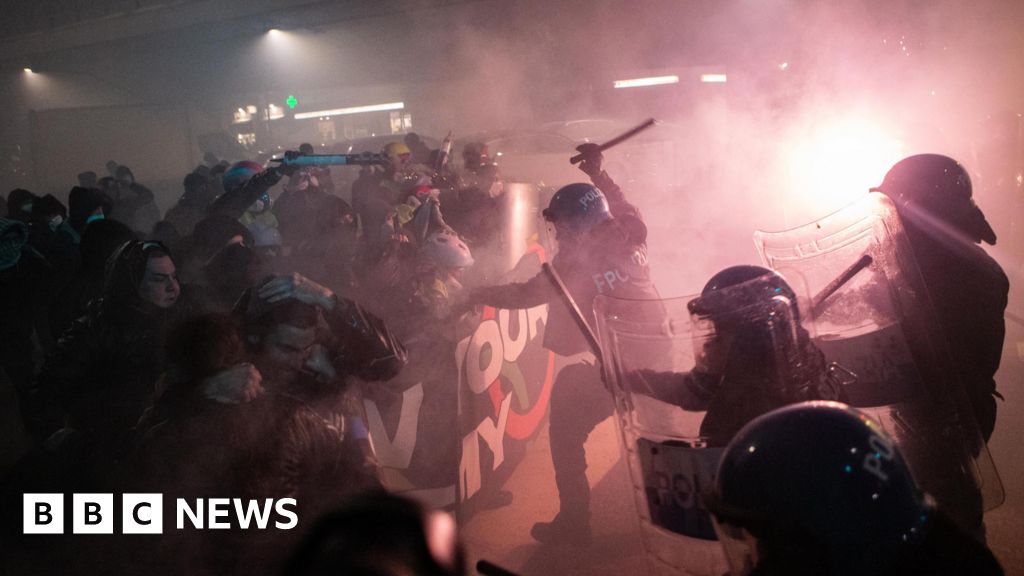
In an unfolding development that underscores the persistent volatility of civil unrest across Europe, authorities in Italy have reported the detention of at least six individuals following a recent demonstration in Turin. This protest, initially intended as a rally for economic reform and social justice, swiftly escalated into violence, raising alarm across both national and international spheres. Such incidents highlight the fragile state of social cohesion in parts of the continent and draw renewed scrutiny on the government’s approach to civil dissent.
The violence erupted unexpectedly amidst a context of mounting economic pressures and political discontent, which have been vastly magnified by global uncertainties. The Ufficials confirmed that the unrest in Turin was not an isolated event but part of a broader wave of demonstrations sweeping through parts of Europe, fueled by frustration over rising inflation, unemployment, and perceived government indifference. Analysts from international think tanks are warning that these tensions may escalate if the underlying issues are not addressed, potentially destabilizing long-standing social contracts within European nations.
International organizations, such as the European Union and the United Nations, have issued cautious statements underscoring the importance of dialogue and restraint. However, the recent arrests in Italy serve as a stark reminder of how fragile the situation remains. Despite the government’s efforts to quell unrest, critics argue that heavy-handed security measures risk alienating the very populations they aim to pacify, potentially fueling further unrest. How this delicate balance will unfold could reshape the social fabric of the region for years to come.
Historians and geopolitical analysts increasingly warn that incidents like the Turin demonstrations are more than isolated clashes—they are emblematic of deeper, systemic shifts within the European order. As nations grapple with rapid economic and demographic changes, the decisions made today will determine the future of governance and social stability. Governments are under mounting pressure to find effective, just solutions that respect civil liberties while maintaining law and order.
As the world watches, the *story of Turin* continues to unfold, a powerful reminder that history is always in motion—each protest, each arrest, shaping the narrative of a continent at a crossroads. The tension in Italy echoes across borders, a stark warning that if policymakers do not heed the underlying issues, the consequences could ripple outward, threatening the very foundations of democracy and social harmony. The weight of history presses heavily, and the future remains uncertain, written in the choices made in these critical moments.

In a move that underscores how geopolitical decisions are increasingly intertwined with domestic controversies, the case of Peter Mandelson has taken center stage in British political discourse. Once a leading figure in UK politics, Mandelson’s recent fallout over a taxpayer-funded payoff—reportedly up to £55,000—after being sacked as ambassador to the United States has sent shockwaves through Westminster. The controversy hinges on his association with Jeffrey Epstein, the late accused child sex offender, raising serious questions about judgment and integrity within the ruling circles. This incident is not just a domestic scandal but a test case for how international relations and internal political stability are now dangerously linked in an era of shifting global alliances and transparency demands.
While the Foreign Office claims proper procedures were followed in Mandelson’s termination, the revelation of his sizeable payoff—whose details are still to be fully disclosed—poses a critical question of cost and morality for government transparency. Analysts warn that such payouts, especially in high-profile diplomatic posts, can undermine public trust and usher in a wave of political instability. The incident also casts a shadow over Keir Starmer’s leadership, as he struggles to navigate a political landscape riddled with ongoing scandals. The international community watches with keen interest, knowing that in the ripples of this controversy lie repercussions for alliances, trade negotiations, and diplomatic reputation.
Prominent voices—including Pat McFadden, the Work and Pensions Secretary,—have called for Mandelson to return or donate the payoff to charity, emphasizing the moral duty in these turbulent times. European and transatlantic analysts suggest that this domestic scandal comes at a concomitant moment of geopolitical realignment. With Rising Powers like China and Russia recalibrating influence, Western nations are under increasing pressure to demonstrate strength and integrity. The question remains: Will such incidents weaken Western diplomacy or serve as a catalyst for tougher scrutiny of government officials’ conduct in the age of international transparency?
Historians like Sir John Bew and geopolitical analysts argue that how Western democracies handle scandals of this nature will define their global standing for decades to come. The ongoing review by the Foreign Office, which aims to reassess Mandelson’s pay and conduct, signals an understanding that the failure to uphold standards can embolden competitors. In a world where public opinion is increasingly shaped by scandals and transparency, the weight of history presses down on leaders who must decide whether to embrace accountability or risk history’s verdict of corruption and ethical failure. As the case unfolds, the question remains: Will this be a moment of reflection and reform or a harbinger of more unrest as international affairs grow ever more complex and unforgiving?

In the wake of Chadwick Boseman’s tragic death at just 43 from colorectal cancer, society must confront the deep social and cultural issues surrounding health disparities, especially within Black communities. Boseman’s story illustrates a broader pattern—despite his global stardom, his diagnosis remained a private personal battle, illustrating how families often bear the burden of illness in silence. As sociologists like Dr. Michelle Owens highlight, the stigma surrounding health issues and limited resources—particularly in underserved communities—can hinder early diagnosis and treatment, exacerbating social inequalities. Boseman’s health journey, kept largely private, underscores the importance of raising awareness and expanding access to healthcare resources so that others don’t face similar silent struggles.
Moreover, Boseman’s legacy reveals how social issues deeply impact families, education, and community cohesion. His wife, Ledward Boseman, exemplifies resilience, yet also sheds light on the challenges faced by families when coping with loss—especially under societal pressures for public mourning. Her movement from Los Angeles to Vallejo signals a desire to reconnect with her community, demonstrating that personal grief intersects with collective healing. The revival of Boseman’s play Deep Azure, which deals with themes of grief after the death of an unarmed Black man, symbolizes the power of art to process trauma and foster community dialogue. Historians note that artworks rooted in social suffering often serve as pivotal catalysts for societal change, urging collective acknowledgment and action.
Decades of social commentary from figures like W.E.B. Du Bois warn us that the cultural shifts and demographic changes within society often reflect in the health and well-being of marginalized populations. The continued stratification—where Black Americans lack equitable access to healthcare—fuels cycles of suffering and inequality. Addressing these issues requires systemic reform:
. Empowering families through education, investments, and cultural competence can transform communities into resilient entities capable of confronting adversity together. As history reminds us, societal transformation begins when we recognize that the human experience is interconnected—when mourning for one is mourning for all, and healing for one nurtures healing for many.
As society continues to grapple with loss, resilience, and the pursuit of justice, there remains a spark of hope. Boseman’s legacy, carried forth by his loved ones and community, exemplifies the power of remembering that societies are not static but capable of profound transformation. In each act of raising awareness, in every effort to bridge gaps in healthcare, and in the stories of families enduring grief, society is forging a more equitable future—one where the spirit of hope and change can endure beyond the shadows of tragedy, illuminating a path toward unity and resilience.


