
TRENDING NEWS





Truth Over Trends, always!

The recent release of approximately 100 children abducted from St. Mary’s Catholic School in Nigeria signals a temporary relief in a broader wave of terror that has gripped the nation. According to officials, the government, with invaluable assistance from the Office of the National Security Adviser, managed to secure the children’s return amid a perilous climate of escalating violence. This incident underscores a distressing truth: Nigeria’s security dilemma has transformed into an international crisis, threatening stability at a regional and global level.
Despite the partial breakthrough, details remain murky about whether cryptic negotiations or force secured the children’s freedom, and if any ransom was paid. The federal government remains tight-lipped about their strategy, with some analysts suggesting the behind-the-scenes efforts were complex and politically sensitive. Last week’s high-level visit by National Security Adviser Nuhu Ribadu to Papiri signals the gravity of the situation, emphasizing that the Nigerian state perceives this wave of kidnappings not merely as criminal acts but as a multifaceted threat. Such moves demonstrate the government’s awareness that internal security lapses, if unchecked, could spill into wider regional destabilization, especially as Nigeria’s neighbors grapple with their own insecurity issues.
The surge in violence across Nigeria, with schools and religious sites becoming frequent targets, reflects a disturbing shift in the security landscape. Attacks in places like Kwara and Kebbi involved not only mass abductions but also lethal violence, drawing international scrutiny. These attacks, which have since been followed by the abduction of pastors, worshippers, and civilians in different regions, point to a well-organized network either driven by criminal gangs or violent jihadist groups, as suggested by Nigerian officials. While some analysts argue these groups are motivated by ransom money, others warn that these acts are intricately tied to extremist agendas destabilizing the nation’s fragile socio-political fabric. Such security breakdowns threaten to push Nigeria, Africa’s largest population and economy, into chaos, with ripple effects felt in neighboring countries.
Adding to the geopolitical complexity, United States President Donald Trump recently issued a stark warning, threatening to deploy troops if the Nigerian government fails to curtail violence, especially attacks on Christian communities. This interventionist rhetoric underscores that Nigeria’s internal strife could serve as a catalyst for greater international confrontation if unchecked. Nigeria, a key player in Africa’s geopolitical landscape, has traditionally been seen as a regional hub, but its security decline has raised alarm bells among Western and regional powers alike. Experts argue that the ongoing violence, if left unresolved, could inadvertently fuel radicalization, undermine Nigeria’s sovereignty, and destabilize the West African sub-region.
The repeated emphasis on ransom bans and military interventions reveals the difficult balancing act Nigeria faces. The government’s stance against ransom payments aims to starve kidnapper networks of their funding but faces accusations of being ineffective amid ongoing abductions. The international community, particularly organizations such as the United Nations and regional security alliances, has called for a concerted effort to address root causes—poverty, political corruption, and extremist ideology—yet tangible results remain elusive. These policy choices, weighed down with political risks, directly shape the lives of millions of Nigerians and influence the region’s stability.
In conclusion, Nigeria’s crisis confronts the world with an urgent moral and strategic choice, as a nation torn between internal chaos and international destabilization teeters on the edge of upheaval. The courage and cunning of its leaders, the resilience of its society, and the relentless weight of history now hinge on compelling decisions made in the coming days. As the story continues to unfold, the global community must grapple with a stark truth: the fate of Nigeria is intricately linked to the future of Africa, and their story remains unfinished, etched into the very fabric of history yet to be written.

In a thrilling development on the European football scene, Christos Mouzakitis, the rising star from Olympiacos, is reportedly on the brink of a significant career move. As clubs like Real Madrid and Manchester United vie for his services, the football world is abuzz with speculation regarding his potential transfer.
According to multiple sources, including renowned commentator and football analyst Giorgos Dedes, Mouzakitis has expressed a desire to take the next step in his career, acknowledging that both Real Madrid and Manchester United offer unique opportunities. “He has the talent to make an immediate impact in any league,” Dedes highlighted, emphasizing the midfielder’s adaptability and skill.
According to sources close to the player, the decision is not solely based on finances but also the chance to compete at the highest level. Mouzakitis’ coach at Olympiacos, Pedro Martins, commented, “Every player dreams of playing in a league where they can show their full potential. He deserves the opportunities being offered.” Recent performances, including a standout match against AEK Athens, showcased his effectiveness and tactical awareness on the pitch, solidifying his place among the elite talents in European football.
As the transfer window approaches, fans can only speculate about where Mouzakitis will land. One thing remains clear: his transition could redefine the landscape for whichever club he chooses. The allure of competing for trophies alongside icons is a narrative that resonates deeply with young athletes across the globe. In a sport that transcends borders and unites communities, football continues to serve as a beacon of hope and teamwork, reminding us that it is not just about what happens on the scoreboard, but the shared passion and dedication that bring fans and players together.
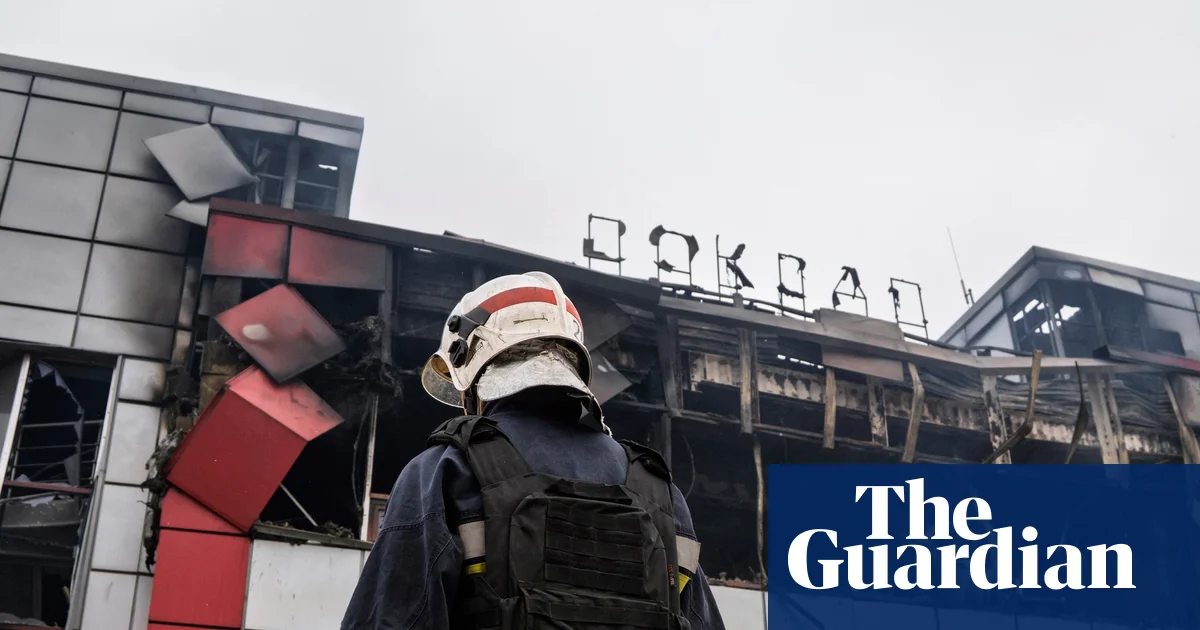
The recent flurry of diplomatic efforts surrounding the ongoing conflict in Ukraine underscores the escalating geopolitical stakes and reveals the deep divisions within global alliances. At the center of this impasse is President Volodymyr Zelenskyy, who appears hesitant to endorse a US-backed peace framework crafted through days of negotiations in Florida. Former U.S. President Donald Trump publicly questioned Zelenskyy’s readiness, suggesting that the Ukrainian leader is holding back progress despite his advisors and international allies advocating for the deal. This internal turbulence within Kyiv, combined with the already strained relations among major powers, paints a picture of a conflict teetering on the edge of a wider geopolitical crisis.
An analysis by international relations scholars highlights that the negotiations over territorial security and the status of Russian-occupied regions remain unresolved, signaling an uncertain future for Ukraine. US envoy Keith Kellogg emphasized that progress was in its final stages, yet key issues such as control over Zaporizhzhia and territorial guarantees continue to hinder an agreement. The conflicting signals suggest that the underlying power struggle is less about diplomacy and more about control and influence—a common theme reverberating through recent history’s most tense conflicts.
The delicate dance between diplomacy and confrontation highlights how decisions in these negotiations ripple across the global stage. The tensions reveal that decision-makers are primarily driven by national interests—Ukraine’s desire for sovereignty, Russia’s quest for regional dominance, and America’s balancing act amid its strategic recalibrations. European leaders like Keir Starmer and counterparts from France and Germany are watching nervously, emphasizing the importance of European security guarantees. Their stance underscores that the future of the continent’s security architecture hinges on these high-stakes negotiations.
Major international organizations, including NATO and the United Nations, are observing with concern, aware that any misstep could ignite a larger confrontation. The tension echoes debates by historians and analysts about last century’s conflicts, where unresolved disputes in Europe precipitated global wars. As world leaders weigh seemingly fragile peace plans, the weight of history presses down, whispering warnings of history repeating itself—if not carefully managed, the current fragile peace could unravel.
In this complex geopolitical chess match, each move shapes the future—not only of Ukraine and Russia, but of the entire international order. As the world watches a narrow window of opportunity closing, the stakes have never been higher. The decisions made today will determine whether this epoch will be remembered as one of reconciliation or catastrophe. The theater of diplomacy remains fraught with danger, and the long shadow of conflict looms large. The story of this war, still unfolding, is a stark reminder that history is never static, and the price of inaction could be the next great epoch of turmoil.”
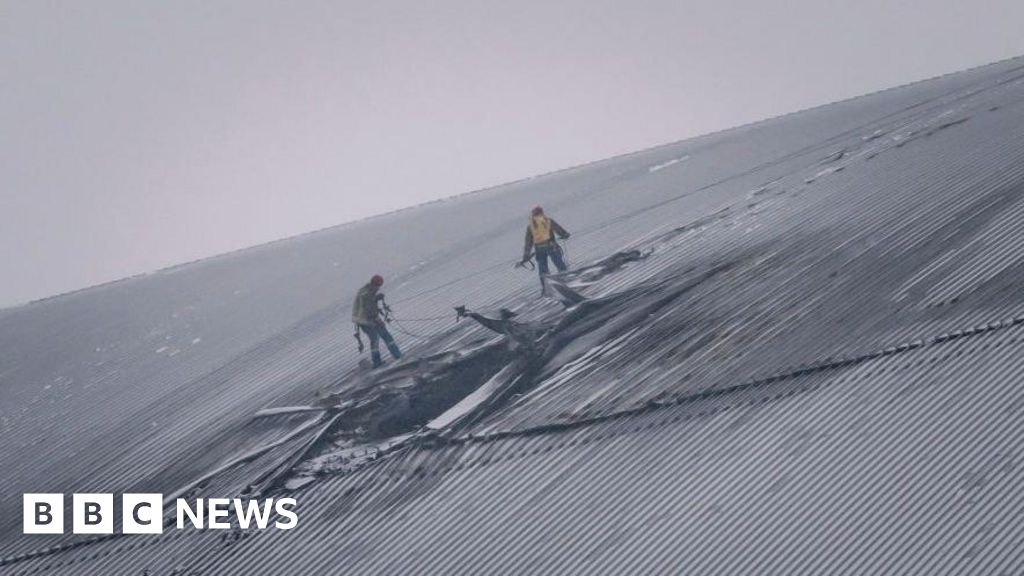
The International Atomic Energy Agency (IAEA) has issued a stark warning about the deteriorating safety conditions surrounding the Chernobyl nuclear power plant, a site forever etched into the history of human error and environmental catastrophe. Following a drone strike earlier this year—an incident that Kyiv accuses Russia of orchestrating—the iconic containment structure, built as a safeguard over the nuclear reactor in 1986, can no longer fulfill its primary safety function. According to recent IAEA assessments, the massive steel and concrete shelter has sustained damage, losing its confinement capability and raising alarming concerns over potential radioactive release—a scenario with catastrophic geopolitical impact.
Ukraine has long been caught in the crossfire of a wider geopolitical conflict between Russia and Western powers, with Moscow denying involvement in the drone attack. The damage to Chernobyl’s shield underscores the broader dangers posed by ongoing hostilities. While environmental experts like Jim Smith from the University of Portsmouth argue that immediate health risks are low—thanks to the still-intact containment sarcophagus—the significance lies in what this incident suggests about security and stability. The IAEA’s recent safety assessment revealed that, despite some repairs, the outer shell suffered severe damage that could, without immediate intervention, lead to further deterioration of the site’s safety infrastructure.
The destruction of the Chernobyl shield comes at a critical juncture for Ukraine, as it grapples with ongoing Russian strikes targeting key energy infrastructure, including electrical substations vital for reactor cooling and power distribution. The IAEA’s ongoing inspections highlight the fragile state of nuclear safety amid escalating conflict. For Russia, the assault on Ukraine’s infrastructure signals a strategy designed to weaken Kyiv’s resilience, yet it also inadvertently elevates the risk of a nuclear incident with far-reaching consequences. The international community watches anxiously, as the fate of Chernobyl and Ukraine’s energy security are intertwined with broader geopolitical shifts.
Historian and international relations analysts warn that the decision to strike such a historically sensitive site isn’t merely tactical—it could soften inhibitions around using nuclear power or weapons in future conflicts. As Rafael Grossi, the IAEA director general, emphasizes, timely restoration and reinforcement are essential to thwart further degradation, but the window for effective intervention is narrowing. The damage underscores the dangerous precedent set when wartime hostilities extend into zones once deemed as symbols of disaster and caution. “An attack on a nuclear site is an attack on humanity itself,” warns numerous scientific voices.
As the world teeters between stability and chaos, the recent assessment at Chernobyl leaves a haunting message: choices made during moments of crisis ripple through history, affecting generations to come. The steel shell that once contained the radioactive debris, now battered by war, is a stark reminder of the precarious balance between technological safeguards and human folly under the weight of international conflict. The escalating violence in Ukraine, exemplified by Russia’s strike on Kremenchuk and damage to vital infrastructure, signals a disturbing trend where the battlefield extends into the domain of nuclear safety.
Until the balance shifts or a new diplomatic path emerges, the shadows of Chernobyl loom large. The world stands at the precipice, witnessing how decisions in distant corridors of power can ignite a chain of events capable of challenging the very fabric of modern civilization. In this unfolding story of risk and resilience, the true test of international resolve remains—will humanity learn from its past, or will it be dragged into a new era of preventable catastrophe?
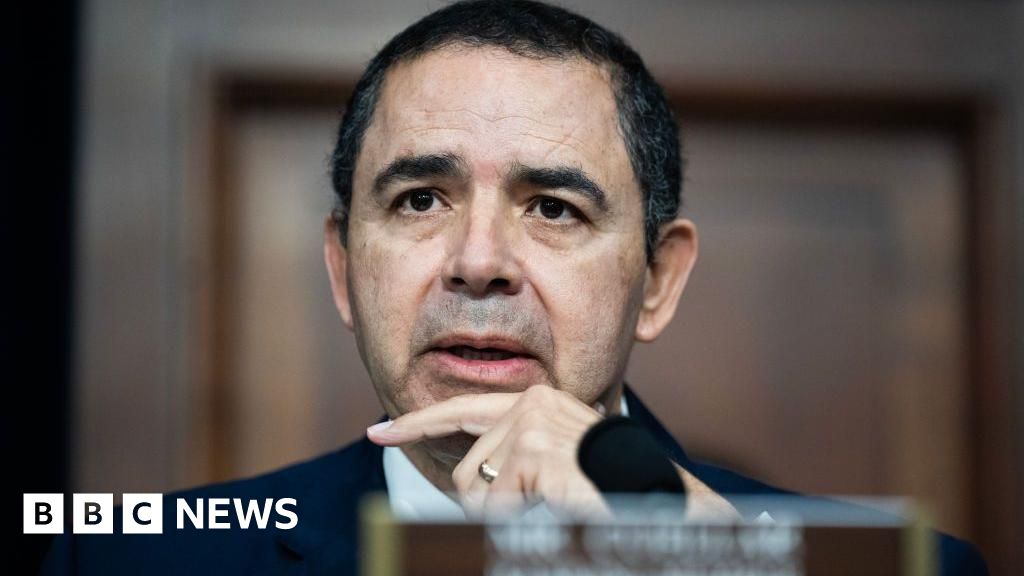
The recent controversy surrounding Donald Trump and Henry Cuellar has exemplified the deep fissures within American political discourse. The former president’s decision to pardon the Texas Democrat, who faces serious charges—including bribery, money laundering, and conspiracy—has ignited a firestorm that extends far beyond the borders of the United States. In a move many analysts deem as a strategic display of loyalty politics, Trump publicly criticized Cuellar for “lack of loyalty,” asserting that the lawmaker’s decision to seek re-election under the Democratic banner, despite being pardoned, reveals a broader pattern of disloyalty to his supporters and allies. This spat has profound geopolitical consequences, highlighting the ongoing struggle for influence and control within America’s domestic corridors, and raising questions about the international impact of U.S. political stability.
At the heart of this controversy is the accusation that Cuellar, along with his wife, accepted over $600,000 from Azerbaijan’s state oil company and an unnamed Mexican bank in exchange for advancing foreign interests in Congress. Charges filed by the Biden administration suggest a disturbing case of foreign influence, a topic of concern for international security experts who warn that political corruption at such levels can embolden foreign adversaries. While Cuellar maintains his innocence, the
indicate the stakes are far higher than mere partisan theater. Global institutions such as the International Monetary Fund (IMF) and Transparency International have long emphasized how domestic corruption can undermine international economic stability, a warning that resonates amid rising geopolitical tensions. The accusations splinter the U.S. political landscape, reflecting a broader temptation among rivals to exploit America’s internal divisions for geopolitical gain.
Meanwhile, Trump’s vigorous public defense, framing the charges as an “evil quest” by the “radical left”, underscores the asymmetrical nature of contemporary geopolitical conflicts—where ideological loyalty often supersedes rule of law. His claim that Cuellar’s loyalty to border security aligns with American national interests echoes a broader narrative favored by right-wing factions worldwide, warning of “cultural and political infiltration” by foreign or domestic “radicals.” As historians debate whether this marks a new era of loyalty-driven politics or an ominous decline into factionalism, the international community watches with growing concern, wary that U.S. internal chaos could ripple outward, destabilizing already fragile regions.
In this stage of American politics, the relentless emphasis on loyalty has broader geopolitical implications. Trump’s endorsement of loyalty as a paramount value echoes a trend seen in other national governments where trust in institutions is declining. The rise of populist nationalists across Europe, Asia, and the Americas signals a shift toward prioritizing national loyalty over transnational cooperation. As the U.S. grapples with internal divisions and questions of allegiance, the potential for these fissures to spill into international relations looms large. The unfolding story of Cuellar, Trump, and their struggle for influence offers a stark reminder that the tides of history are still in motion, and the coming chapters will determine whether the world moves toward unity or chaos—a future shaped by the choices made in these pivotal political battles.

Amidst a rapidly aging society, Japan finds itself at a critical juncture, where demographic shifts threaten to undermine social stability and economic vitality. With over 30% of its population aged 65 and older—second only to Monaco globally—the island nation confronts a mounting crisis in elder care. Last year alone, more than 18,000 elderly individuals with dementia wandered off their homes in search of safety, with nearly 500 succumbing to the risks. Such tragic statistics are emblematic of a society under mounting pressure, worsened by a shrinking workforce and strict limits on foreign workers, which constricts the nation’s capacity to meet the burgeoning demand for elder care services. International experts, including those from the World Bank, have warned that without innovative strategies, the social fabric of Japan could face profound destabilization.
In response, Tokyo’s government is rapidly pivoting towards technological solutions, placing a heavy emphasis on artificial intelligence and robotics to fill the void traditionally occupied by human caregivers. Recent developments include GPS-based tracking systems for wandering seniors, AI tools like Fujitsu’s aiGait that analyze gait and posture to detect early signs of dementia, and humanoid robots such as Waseda University’s AIREC, designed to assist with everyday tasks like dressing, cooking, and even changing diapers. These innovations are intended not merely as conveniences but as essential pillars supporting the nation’s social order. Such strategic shifts reflect a broader recognition within the geopolitical sphere that technological prowess becomes a critical national asset; the ability to develop and deploy affected elder care can serve as a form of soft power, signaling to the world that Japan remains a leader in innovative resilience amidst demographic decline. But these decisions also carry geopolitical weight, with neighboring powers looking on, aware that the technological race in elder care could shape regional influence for decades.
How decisions made now will ripple through future geopolitics is not lost on international analysts. Some experts argue that China and South Korea, watching Japan’s innovations, are likely to accelerate their own technological investments to secure regional dominance. Meanwhile, Western nations face their own aging crises, turning to Japanese expertise and investments as examples of where technology meets social necessity. Reports from institutions like OECD highlight that the integration of AI and robotics into elder care may reshape labor markets across the globe, reducing dependency on human caregivers and redefining societal notions of human interaction and compassion. Whether these advancements will supplement or supplant the human touch remains a contested debate—one that will influence international perceptions of morality, humanity, and technological supremacy.
As Japan’s government invests heavily in robot caregivers and AI early detection systems, the unfolding story encapsulates a broader theme—a society desperately seeking solutions while confronting the harsh realities of a dwindling nation. The world watches as technological milestones are achieved, yet the true test lies in balancing innovation with empathy—an enduring question in the age of automation. In this crucible of societal change, history is forging new chapters, and the weight of what comes next will resonate far beyond borders—shaping the destiny of humanity amidst the relentless tide of time.

In a rapidly evolving landscape of digital optimization and hardware innovation, the printing industry is experiencing pivotal shifts driven by disruptive technologies that challenge traditional manufacturing and usage paradigms. At the forefront of this transformation are two dominant segments: laser printers and inkjet models, each with distinct advantages influencing market strategies and consumer choices. Notably, ink tank printers — with their revolutionary approach to ink delivery — are gaining traction, signaling an inflection point in the hardware supply chain and sustainability practices.
Many industry analysts, including those from Gartner and MIT’s Media Lab, point to this development as a case of technological innovation dismantling established market norms. Traditional laser printers, recognized for their speed and cost efficiency over high-volume use, are now facing stiff competition from ink tanks that offer significantly lower ongoing costs and reduce plastic waste. As Elon Musk often emphasizes, “Innovative disruption is about creating new value networks,” and the rise of refillable ink tanks perfectly exemplifies this principle. While laser printers initially require a higher capital investment, their low per-page cost and speed appeal to enterprise functions, but consumer markets are shifting towards more sustainable, cost-effective solutions.
Moreover, business implications extend beyond device innovation. The focus on sustainability — addressing environmental concerns about plastic waste — aligns with a new consumer expectation for eco-friendly, durable, and cost-conscious products. This shift compels device manufacturers to rethink manufacturing models, logistics, and service support. The growing proliferation of thermal printers for shipping labels and simple prints underscores this trend, targeting niche markets with specialized needs but limited print quality requirements. Such innovations signal a broad industry move towards integrated, smart, and environmentally-aware hardware, which will play a crucial role in defining market winners over the next decade.
Looking ahead, the convergence of hardware innovation with advancements in AI-driven print management and sustainable manufacturing will accelerate industry disruption. Tech giants and startups alike are primed to leverage these trends, pushing for more intelligent, versatile, and eco-conscious solutions. As market analysts warn of potential supply chain bottlenecks, especially for specialized components like toner and ink tanks, the urgency for companies to adapt to rapid technological change becomes evident. The productive integration of these innovations foreshadows a future where printing technology not only disrupts traditional office ecosystems but also influences broader industrial and ecological strategies.
In conclusion, the ongoing innovation cycle in printer hardware exemplifies the broader dynamics at play in today’s tech revolution. Disruptive technologies are transforming not only the products themselves but also the entire ecosystem of manufacturing, supply chain, and environmental sustainability. For youth-focused tech enthusiasts and forward-thinking businesses, this is a call to stay alert and ready to adapt to these seismic shifts—because tomorrow’s winners will be those who embrace innovation with urgency and vision.
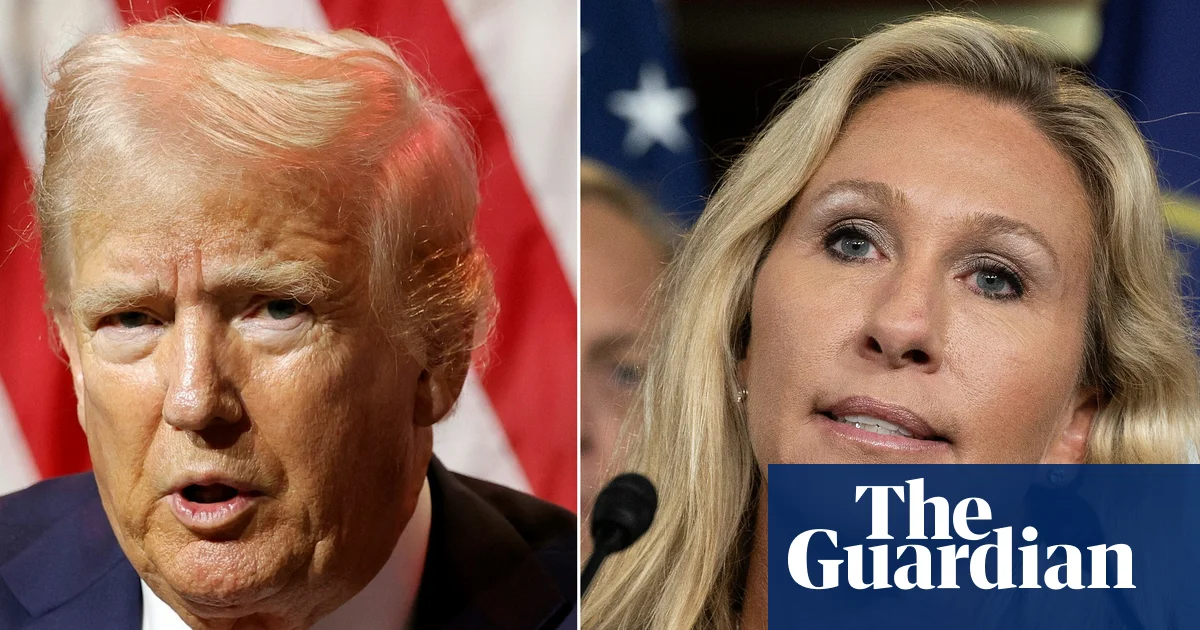
The current state of American politics reveals a startling transformation: what was once mockery and disdain within Congress has now become unwavering support for former President Donald Trump. As evidenced by recent remarks from outgoing GOP House member Marjorie Taylor Greene, many Republican colleagues who previously mocked Trump’s rhetoric and policies have, upon securing their party’s 2024 presidential nomination, pivoted to overtly endorse him. This shift underscores a deeper apprehension among American elites to challenge Trump’s sway—fearing backlash from his dedicated base and social media dominance. Such an internal party realignment portends significant geopolitical impact, as the United States prepares for a presidential race that may consolidate its most contentious, populist elements.
Greene’s disclosures about threats and intimidation reveal the volatile and violent nature of current U.S. political discourse. She reports hundreds of threats directed both from the political left and right, including personal attacks amid controversies over her stance on Jeffrey Epstein’s victims. These allegations have become tangled in the broader narrative of Elites versus populists, fueling polarization that extends beyond American borders. Historians like F. H. Buckley warn that such internal fracturing risks undermining America’s international credibility—especially as allies and adversaries watch to see if the U.S. remains a stable beacon of democracy or succumbs to internal chaos.
The ongoing political turmoil in Washington holds profound implications for the international order. As Europe and Asia analyze the events surrounding Trump’s resurgence, concerns grow over the potential reemergence of America’s unilateralism and disregard for traditional alliances. The United Nations and other transnational organizations have issued cautious statements, emphasizing the importance of strong democratic institutions. Meanwhile, analysts suggest that if America’s internal conflict escalates, it might embolden authoritative regimes globally—precisely what many globalists seek to avoid amid rising geopolitical conflicts in Eastern Europe, the Indo-Pacific, and the Middle East.
The geopolitical impact of this American political schism cannot be overstated. If the U.S. swings further into populism and internal instability, it risks losing its moral authority and strategic edge—potentially destabilizing alliances and emboldening adversaries like China and Russia. According to recent reports from the International Crisis Group, sustained American chaos could provide a fertile ground for geopolitical shifts that threaten the stability of entire regions. The outcome rests on whether American leaders can contain internal divisions or if those divisions evolve into a broader crisis that redraws the global power hierarchy.
As this chapter of American politics unfolds, historians and international observers understand that the course of the United States will shape the fates of nations worldwide. The confrontations, threats, and shifting allegiances in Washington reflect a broader struggle—one that echoes through the corridors of power in capitals across the globe. The narrative remains unwritten, yet its potential to alter the fabric of international stability teeters on the brink. Will the U.S. emerge united and resilient, or will it succumb to the chaos of a fractured democracy—turning the pages of history into a warning for generations to come?
Only time will tell, but the weight of current events is undeniable. The story of America’s internal struggles no longer remains isolated; it is now a precursor to a new chapter in global history—one where alliances are tested, ideologies clash, and the fate of democracy itself hangs in the balance.
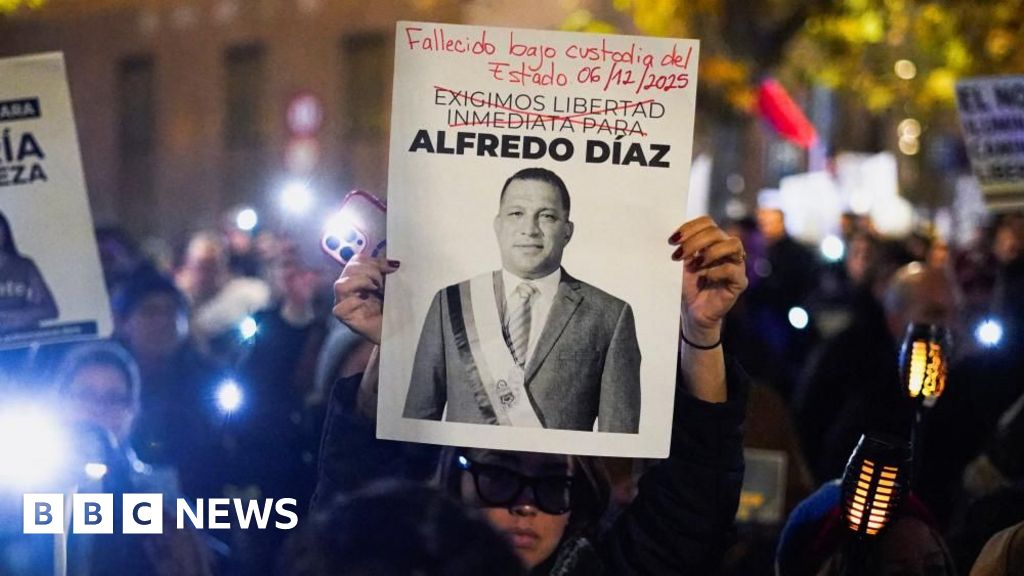
The recent death of Alfredo Díaz, a prominent opposition figure in VENEZUELA, has ignited a fresh international wave of controversy, exposing the fragile state of human rights and political stability in the country. Díaz, detained in the infamous El Helicoide prison for more than a year, was claimed by the Venezuelan government to have died from a heart attack; however, numerous human rights organizations and opposition groups allege that his death is indicative of ongoing political repression and torture. The death comes at a time of heightened tensions between VENEZUELA and the United States, further complicating the geopolitical landscape of the Caribbean and Latin America.
Senior analysts and international bodies warn that these developments represent a critical turning point in US-Latin America relations. The US administration, under President Donald Trump, has escalated military and political pressure, alleging that Maduro himself is involved in drug trafficking, even going so far as to label Venezuelan drug cartels as terrorist organizations. This aligns with long-standing US efforts to justify intervention on the pretext of anti-drug initiatives—despite widespread skepticism among experts, including those from the United Nations and regional think tanks, who view these tactics as thinly veiled attempts at regime change.
Historically, VENEZUELA has been a nexus of geopolitical contention, with its vast oil reserves positioning it as a critical piece in regional and global strategic calculations. The recent political upheaval—sparked by disputed elections in 2024, which the opposition claims were neither free nor fair—has only deepened the crisis. Opposition leader María Corina Machado warned that Díaz’s death is not isolated but representative of ongoing repression targeting democracy itself, emphasizing that “another political prisoner has died in Venezuelan jails.” Such narratives have served to rally international condemnation and bolster opposition pressures, further isolating Maduro’s government on the world stage.
The U.S. response has been both diplomatic and military, with officials openly accusing Maduro of “emptying his prisons into the U.S.” and directly linking him to drug cartels. Meanwhile, regional actors like Colombia’s President Gustavo Petro have criticized Washington’s military interventions, claiming they seek to “dominate” Latin America’s sovereignty. The deployment of the largest U.S. naval fleet in decades signals a clear message: the American sphere of influence—once considered waning—remains committed to shaping the future of this troubled region. As the Venezuelan army mobilizes thousands in response to what it calls US “threats,” the potential for open conflict looms, echoing the turbulent history of Cold War proxy struggles and regional Cold War realignments.
As the international community watches with bated breath, the fate of VENEZUELA hangs precariously in the balance. The resumption of diplomatic ties—like the agreement between Maduro and Recep Tayyip Erdogan to revive Turkish Airlines flights—offers a fleeting glimpse of normalcy, yet beneath this veneer, geopolitical forces continue their relentless march. The weight of history presses down on this volatile crossroads, and the coming days may witness a shift that defines generations. For in the corridors of global power, the decisions made today will echo through the ages, shaping the destiny of nations caught in the relentless tide of revolution, repression, and struggle for sovereignty.

In a quiet corner of Wiltshire, a shift is underway that highlights the profound intersection of social issues, public policy, and the future of families and educational communities. Wiltshire Council has proposed transforming the historic Calder House Independent School, near Colerne, into the Northwood Centre, a satellite campus dedicated to serving children with special educational needs and disabilities (Send). This initiative aims to address a pressing societal challenge: providing quality, localized education for vulnerable children who often find themselves marginalized by an education system strained by economic constraints. The plan, which involves a £1.27 million annual budget for 50 high-need placements, seeks to serve as an alternative to more expensive independent specialist schools that can cost upwards of £62,000 per child annually.
While this initiative is widely praised for its cost-efficiency and community-centered approach, it also underscores broader issues affecting families, schools, and local communities. The sociologist Dr. Margaret Harris notes that the increasing reliance on centralized, often distant, specialist placements can foster feelings of alienation among families who would prefer their children to grow and learn close to home. The debate centers around whether community-led solutions can truly meet the complex needs of Send students without sacrificing quality of care or educational standards. The challenge is ensuring that local institutions are adequately funded, staffed, and equipped to serve a diverse spectrum of needs—an issue that reflects larger societal trends of underinvestment and bureaucratic priorities that often overlook the human element of education.
diminish the shallow comfort of cost-cutting measures and instead confront the moral and ethical responsibilities our society bears toward its most vulnerable members. For families affected by Send, the prospect of children being placed outside their local communities can create deep emotional and logistical strains. As charity CEO Philip Tansley emphasizes, although Wiltshire’s efforts are commendable, “there is still room for improvement” in delivering comprehensive post-educational support. This ongoing tension between fiscal prudence and moral duty fuels debates around how to build a resilient, inclusive society, where every child—regardless of their needs—can access a nurturing environment that fosters both independence and belonging. Sociologists like David G. Smith argue that true social progress hinges on empowering local communities to take ownership of their educational solutions, rather than relying solely on external institutions distant from the daily realities of families.
Moreover, the societal impact extends beyond immediate costs and facilities; it shapes perceptions of social cohesion, equity, and shared responsibility. When communities invest in inclusive education, they reinforce the moral fabric that binds society together. Conversely, *failing to support Send students adequately* risks fostering social divisions and a sense of neglect. As the social historian Dr. Anne Lewis notes, how we care for our most vulnerable reflects the moral integrity of our society. Ensuring local, high-quality educational provisions for children with Send is not simply a logistical issue; it is a moral imperative that speaks to the kind of society we aspire to become—one that values every child’s right to inclusion, understanding, and hope for a brighter future.
Ultimately, society faces a pivotal question: Will we prioritize short-term savings over long-term social cohesion? The attempt to bolster local Send services in Wiltshire is, in many ways, a microcosm for a broader societal challenge—balancing fiscal responsibility with moral obligation. Transformative change requires more than infrastructure and funding; it calls for a cultural shift—a recognition that every child’s educational journey is a testament to collective human values. As society grapples with this balancing act, the hope remains that these efforts—grounded in community, compassion, and a sense of shared purpose—will inspire a new chapter where families, schools, and communities unite to forge a future that leaves no one behind. In the end, the society we choose to build will reflect the dignity we accord to our children and the moral strength of our shared humanity.


