
TRENDING NEWS





Truth Over Trends, always!

As the Chicago Bulls gear up for their regular-season opener against the Detroit Pistons on Wednesday, they are facing a significant setback with the announcement that guard Coby White will be sidelined for at least two more weeks due to a right calf strain. This news was confirmed by the team’s coaching staff on Monday, leaving fans and analysts alike concerned about the implications for the Bulls’ season start.
White’s absence is a considerable loss for the team, especially as they look to establish momentum early in the season. The young guard had shown great promise in the preseason, displaying quick scoring abilities and a sharp playmaking instinct. Coach Billy Donovan expressed optimism about White’s recovery, highlighting that the focus remains on ensuring the guard’s long-term health. Donovan stated, “We want Coby to be fully conditioned and ready to contribute. Rushing him back could jeopardize his entire season.” This cautious approach highlights the importance of player health in a demanding league.
With White out, the Bulls will need to rely heavily on their depth. Key contributors like Zach LaVine and DeMar DeRozan must step up to fill the scoring void. Both players are primed for a big season, and the spotlight will be on them in the absence of their fellow guard. Additionally, the team’s defense will be crucial in these early games, as they look to build a foundation without one of their key offensive pieces.
As the Bulls take the court against the Pistons, the stakes are high, and the pressures of early-season competition are palpable. Yet, despite the absence of Coby White, there lies a greater narrative that transcends wins and losses. Sports unite us, reminding fans that even in the face of adversity, teams rally together. The energy in the arena, the roar of the crowd, and the spirit of competition all converge, personifying the essence of sportsmanship and camaraderie. This season, the Bulls may find that while the scoreboard holds significance, the heart of the game is truly the unwavering support of their fans and the resilience within their roster.

The ongoing conflict between Israel and Hamas has reached a precarious new phase, marked not only by battlefield developments but by an intense diplomatic effort from global powers seeking to stabilize what many describe as a deeply fragile ceasefire. After intense fighting that resulted in over 1,200 deaths and hundreds of hostages captured in October 2023, recent developments indicate that international actors are closely watching each move, understanding the significance of every diplomatic shift in this volatile arena. Yet, despite efforts to uphold peace, underlying tensions remain palpable, with the specter of renewed violence never far from the surface.
The situation intensified when *Israel* announced the successful identification of the remains of Sgt. Major Tal Chaimi, one of the hostages captured during the Hamas-led attacks. The Israeli Prime Minister’s office confirmed that the body, returned from Gaza, was definitively identified. Chaimi was a commander of the Nir Yitzhak kibbutz defense militia and was killed defending his community in the October assault that left approximately 1,200 Israelis dead and 251 taken hostage. His return—along with the remains of other victims—symbolizes an important, yet delicate, step forward in the ongoing negotiations mediated by international players. Meanwhile, Israel remains wary about the ongoing efforts, accusing Hamas of insincerity and insufficient effort in repatriating the remaining 15 bodies of hostages. The Palestinian militant group maintains that *war damage and military restrictions* imposed by Israel hinder their ability to locate all the deceased, underscoring the deep-rooted mistrust fueling the conflict.
Amidst the tension, the United States has re-entered the scene with high-profile diplomatic initiatives. *US* Vice-president JD Vance is scheduled to visit Israel, a sign that Washington continues to prioritize its role in facilitating negotiations and maintaining the still-vulnerable ceasefire. In a recent speech, Israeli Prime Minister Benjamin Netanyahu outlined America’s ongoing efforts, emphasizing that discussions would focus on *security challenges and diplomatic opportunities*. This cautious rhetoric reflects the broader international anxiety about the potential for either side to trigger a renewed cycle of violence. Alongside U.S. diplomacy, Egyptian, Qatari, and Turkish mediators have been engaged in Cairo, attempting to shepherd a second phase of the Trump-era plan that includes *Israeli troop withdrawals* and *Hamas disarmament*, a proposal met with serious reservations from the militant group. Historians and analysts warn that without genuine cooperation, these negotiations could swiftly unravel, plunging the strip into further chaos.
Furthermore, *Hamas* officials attribute delays to the war’s devastation and Israeli military control over parts of Gaza, complicating efforts to recover all hostages’ bodies. As international mediators call for increased effort and transparency, the escalating warfare—marked recently by Israeli airstrikes and threats of aid cessation—raises alarms about the peace process’s sustainability. The U.N. and various NGOs watch anxiously, emphasizing the humanitarian crisis unfolding in Gaza, with little clarity on aid flows amid ongoing hostilities.
This ongoing scenario underscores the geopolitical impact of a conflict that has long threatened regional stability. *Israel*’s strategic calculations continue to be influenced by internal security concerns, regional alliances, and external pressures from global superpowers. Meanwhile, *Hamas* remains resolute, refusing to disarm unless their demands—including Israeli troop withdrawals and political concessions—are met. International organizations such as the United Nations and analysts from think tanks warn that these negotiations are often fragile, with the potential for missteps that could ignite full-scale war or ignite wider regional conflicts.
As diplomatic efforts unfold behind closed doors, the weight of history bears down on the region. The recent return of a single hostage’s remains and the limited progress in hostage negotiations serve as stark reminders of the delicate balance between peace and chaos—where a single miscalculation could ignite the next chapter of violent instability. The world watches as acts of diplomacy intertwine with the shadows of war, forever uncertain of how this story, still being written, will end. History is watching, and tomorrow’s decisions will dictate whether the strain in Gaza finally breaks—and what the aftermath will mean for the global order.

In recent weeks, a tragic incident has shone a stark light on the ongoing social and healthcare disparities within the British overseas territories. Robert Baker, a 63-year-old dual citizen of Jamaica and Montserrat, passed away after the UK government declined to assist him in accessing life-saving treatment outside of his remote island home. This heartbreaking event underscores a broader pattern of moral neglect and policy failures that jeopardize the well-being of communities living under colonial-style governance without adequate support systems.
Baker’s story is emblematic of the struggles faced by families and individuals in regions devastated by natural disasters, such as Montserrat’s 1995 volcanic eruption, which eradicated its capital and decimated essential infrastructure. Despite over 30 years passing, hospitals and emergency services on the island remain inadequately equipped, forcing residents to seek medical care abroad at great personal cost. His family’s desperate efforts and the family’s plea for equitable treatment reveal how social injustice prevents vulnerable populations from accessing healthcare equal to that of the UK mainland. For many families in these territories, the lack of proper medical infrastructure translates directly into loss of life, economic hardship, and shattered hope.
Social commentators and sociologists argue that this chain of neglect is emblematic of a broader failure to recognize the moral obligation owed to colonial subjects. Some critics equate the policies governing these territories with systemic apathy—policies that dismiss the need for adequate health services, education, and social support—for the sake of austerity and political expediency. The case of Robert Baker has also catalyzed calls from community leaders and parliamentarians like Donaldson Romeo, who describe the existing scheme as “deeply flawed” and “insufficient in relation to the scale of need”. Their stance echoes the voices of historians who argue that colonial legacies continue to shackle these populations, underlining the importance of restorative justice and policy reform.
As society debates questions of justice, sovereignty, and moral responsibility, the story of Montserrat’s healthcare crisis compels a profound reflection: How long can we remain indifferent to the suffering of those who live beyond the immediate reach of our societal safety nets? The future of these communities depends on an awakening—one that recognizes that social cohesion is rooted in fairness, compassion, and the unyielding pursuit of dignity for every human life. With each shared story and policy discussion, society inches closer to a landscape where no family bears the burden of neglect in silence, and where hope begins to restore the fractured promise of justice and care for all.
The recent massive outage of Amazon Web Services (AWS), one of the world’s most influential cloud computing giants, has sent shockwaves through the international digital landscape. Late Monday, AWS confirmed that it had resolved a disruption that temporarily incapacitated a significant portion of global web services, with user reports soaring to over 11 million. This incident underscores the profound geopolitical and economic impact of dependency on centralized digital infrastructure. As the backbone of many online platforms, AWS’s failure exposed vulnerabilities that extend far beyond inconvenience, threatening the stability of entire economies reliant on digital services. Analysts and historians warn that such incidents are a stark reminder of how interconnected and fragile the world’s digital ecosystem has become.
Vast swathes of the internet, including major platforms like Reddit and Lloyds Bank, experienced outages, demonstrating that the power of a single provider can have repercussions reaching across borders and sectors. Experts such as Professor Alan Woodward from the University of Surrey highlight that this episode lays bare the danger of over-reliance on a handful of American technology behemoths—primarily Amazon, Microsoft, and Google—which together control roughly 70% of cloud services. This monopolistic dominance, as Cloudflare’s CEO Matthew Prince notes, constitutes an unsustainable risk to our sovereignty, economy, and security. In an era where digital infrastructure underpins critical national functions, such vulnerabilities threaten to paralyze societies at their core, transforming routine outages into crises with ripple effects that can last for days or weeks.
The incident has sparked a renewed call among experts for a reassessment of global digital sovereignty. The incident’s root cause, linked to DNS resolution issues with DynamoDB in AWS’s US-EAST-1 region, remains partially understood yet unmistakably highlights structural flaws in the current system. The failure exemplifies what many analysts call the dangerous over-centralization of digital power, leading to debates among policymakers and historians about whether decentralizing cloud infrastructure could mitigate future risks. As Professor Mike Chapple from Notre Dame University points out, the cascading failures following the initial outage demonstrate the importance of building more resilient and diversified digital systems. The narrative emerging from this crisis echoes early discussions of the tragedy of the commons: the single point of failure that can bring the entire network crashing down, revealing how much we have surrendered our digital sovereignty to American corporate giants.
Beyond the immediate technical failures, the incident invites reflection on the moral responsibility of corporations and governments alike. Notably, some industry voices blame application developers for neglecting to implement adequate backup systems, emphasizing the need for stronger safeguards in cloud reliance. These failures may soon lead to legal battles as affected companies and institutions seek compensation for damages, reminiscent of past disputes like the $500 million claims by Delta Airlines after a previous outage. The broader lesson, however, is that the current model—highly dependent on US-based infrastructure—may jeopardize national security, economies, and personal privacy. As the world stands at this critical juncture, the debate intensifies: will we continue down this path of technological monoculture, or will we heed the warnings and consider a shift toward more resilient, localized systems?
As history continues to unfold, the shadows cast by this digital crisis loom large. How nations respond now could determine the future trajectory of global digital governance, shaping the balance of power in the international arena. One thing remains clear: in the digital age, the line between technological innovation and geopolitical vulnerability has become razor-thin. The fragility exposed by AWS’s failure is a stark reminder that the world’s fate is intricately tied to a handful of corporate and governmental decisions. As societies brace for the repercussions, the weight of history presses heavily—waiting to record whether this crisis will be a catalyst for meaningful change, or merely another chapter in the ongoing saga of human dependence on fragile digital monoliths.

Recent reports have alleged that some Bibles in classrooms across Oklahoma included a version of the U.S. Constitution that omits amendments 11 through 27. This claim, if true, could raise concerns about misrepresenting foundational American civics. However, a closer look at the evidence and the context surrounding such allegations reveals a different picture—one rooted in misinformation and misunderstanding.
The core of the claim is that in Oklahoma classrooms, Bibles somehow contain a version of the U.S. Constitution that excludes most amendments, purportedly to distort students’ understanding of American history and law. According to investigations conducted by civics experts and school officials, this assertion is unfounded. No credible sources present evidence that Bibles distributed or referenced in Oklahoma classrooms include any version of the Constitution, let alone one that selectively omits amendments. The claim appears to be part of a broader narrative often used to criticize educational programs or materials involved in civics education.
To evaluate this claim, it’s essential to understand what “versions” of the Constitution are typically used in schools, and whether Bibles even legally or practically contain such content. There is no reputable record of Bibles containing the U.S. Constitution or any of its amendments embedded within their text. Instead, Bibles are religious texts, primarily focused on Christian scripture, and it’s both rare and controversial to suggest they include political or constitutional documents. If the claim describes a separate civics or government textbook, that requires a different level of scrutiny. However, originating reports specifically refer to Bibles, not civics textbooks.
Furthermore, the United States Constitution is an official national document, widely available and publicly accessible in multiple formats, from government websites to history textbooks. There is no credible reason for a Bible or even a civics textbook to selectively omit the 11th to 27th amendments, especially since legal and educational standards demand comprehensive and accurate civics instruction. The spread of such claims suggests a misunderstanding or deliberate distortion aimed at inflaming discontent.
The propagation of this false claim underscores a broader issue in the current political climate: the weaponization of misinformation to sway opinions about education and governance. Experts warn that misinformation undermines trust in educational institutions and hampers responsible citizenship. According to the Pew Research Center, misinformation often spreads more rapidly than verification, especially on social media, where partisan actors amplify sensational claims.
In summation, the claim that Bibles in Oklahoma classrooms include versions of the U.S. Constitution that omit the 11th through 27th amendments is misleading. No verified evidence supports it. Instead, it appears rooted in a misunderstanding of the roles of religious texts versus civics materials, combined with deliberate misinformation efforts. Responsible citizens and leaders must prioritize accurate understanding of our constitutional foundations, recognizing that trust in facts is essential to our democracy and informed participation in civic life.

In a decisive move that echoes beyond its borders, Australia and New Zealand have launched an extensive transnational operation aimed at curbing the proliferation of illicit firearms. Over the course of a week, authorities seized more than 1,000 firearms and firearm parts, including weapons manufactured through sophisticated methods such as 3D printing. These efforts resulted in the arrest of over 180 suspects across multiple states and territories in both nations, signaling a critical focus on tackling the rising threat posed by untraceable, homemade firearms in the Indo-Pacific region. This crackdown underscores a pressing concern: how the dissemination of illicit weapons directly threatens the safety and sovereignty of countries committed to rigorous gun control regimes.
According to analysts and historians tracking this wave of illicit arms, the trend reflects a dangerous convergence of technology and organized crime. The transnational nature of the trade compromises local and regional security, threatening to destabilize societies that have invested heavily in strict firearm control measures. The rise of 3D-printed weaponry symbolizes a turning point—where the digital revolution democratizes arms manufacturing and complicates international efforts to contain illegal firearms. International organizations warn that these developments threaten to nullify decades of progress in gun safety, creating a new battleground in the war against lawlessness.
The geopolitical impact of the crackdown reverberates globally; it signals a renewed urgency for international cooperation to combat arms trafficking that infringes on national sovereignty. Countries like Australia, which has historically championed gun control, now face an evolving threat: clandestine networks operating across borders, often facilitated by the dark web, and technological advancements that unlock new avenues for illegal manufacturing. This dynamic sparks a debate among security experts about the adequacy of existing treaties and the need for enhanced cooperation, data sharing, and technological oversight.
In response, Australian Border Force officials report detecting over 8,000 illegal firearms, parts, and accessories at customs last year alone, emphasizing how international import routes are exploited by traffickers. For example, the seizure of a flame-thrower and other dangerous items in remote Australian locations underscores how porous borders have become in the face of evolving technology. These seizures demonstrate that, despite formidable regulations, illicit networks are adapting swiftly, pushing nations into a fierce race against time to restore control and safeguard their populations.
Critical voices in the international community, including security analysts and historical experts, continue to warn that neglecting this crisis could leave nations vulnerable to new forms of violence and destabilization. As smugglers and traffickers leverage online platforms and unregulated markets, the threat is no longer confined to a single country but is a shared peril to regional stability and global order. With each seized weapon, the weight of history reminds us: the ongoing battle to preserve sovereignty and public safety is far from over, and the choices made today will shape the security landscape for generations to come.
As justice authorities in Australia and New Zealand intensify their efforts, the broader implications for global security become painfully clear. The relentless tide of illegal firearms, fueled by technological ingenuity and transcontinental networks, underscores a stark reality: the fight against weapons proliferation is a battle waged not only on borders but across the digital universe and through the corridors of power itself. The pages of history continue to turn, each chapter woven with the stories of resilience, tragedy, and the indomitable quest to protect societies from chaos—a story still very much written, as the weight of the future hangs in the balance.

In a move that underscores its relentless pursuit of innovation through user-centric design, Apple has launched a groundbreaking feature allowing users to personalize the appearance of its Liquid Glass interface. First observed in the latest iOS 26.1 beta, this addition offers a toggle between Clear and Tinted modes, empowering users with more control over their visual experience. This development signifies a strategic pivot toward disruption at the forefront of UI customization, aligning with broader industry trends towards democratized control and individualized interfaces.
This step echoes Apple’s previous controversial but ultimately strategic UI recalibrations—most notably the 2021 repositioning of Safari’s address bar. Despite initial backlash, critics like Gartner analysts acknowledged that such changes are driven by principled design evolution aimed at improving accessibility and user efficiency. Now, by enabling users to modify Liquid Glass’s opacity, Apple is continuing to blur the line between hardware, software, and user preference—further disrupting the traditional, one-size-fits-all approach to interface design. Such moves reinforce the notion that future competitive advantage will hinge on flexibility and personalization.
The implications for business are significant. Developers can now seamlessly integrate these user preferences into their apps, as Apple ensures that settings will automatically propagate across devices through an emerging ecosystem of personalized UI options. This is expected to accelerate innovations in enterprise and consumer sectors, where tailored experiences could enhance engagement and boost retention. Meanwhile, industry leaders like Elon Musk and Peter Thiel have long championed the pivotal role of disruptive UI innovations, viewing them as key to maintaining relevance amidst rapid technological evolution. By offering users choice over Liquid Glass’s appearance, Apple is not only refining its competitive edge but also raising the bar for industry standards.
Looking ahead, the strategic significance of this customization feature extends beyond mere aesthetics. As the industry braces for the advent of next-generation interfaces—driven by AI, augmented reality, and advanced haptic technologies—Apple’s focus on adaptive, user-controlled UI could serve as a blueprint for future innovation. Recognizing the industry’s trajectory, institutions like MIT emphasize that *the next wave of disruption will be fundamentally rooted in personalized, predictive interfaces*, capable of transforming user interaction into a more seamless, intuitive experience. In this context, timely adaptation to such advancements is not optional but imperative for business sustainability.
As the public beta rollout progresses, the pressure mounts for competitors to match or surpass Apple’s progressive approach to UI customization. Time will tell whether these features will reshape user expectations or serve as a catalyst for even more radical design shifts across platforms. One thing remains clear: in the quest for technological supremacy, speed, innovation, and user empowerment are the new currency. Industry players must remain vigilant—these innovations signal that the future belongs to those who can rapidly adapt in the face of relentless disruption and turn emerging technologies from trends into transformative realities.

The recent series of military strikes launched by the US in the Caribbean Sea have ignited a fierce debate over the legality and geopolitical implications of unilateral military action in international waters. President Donald Trump announced the operation in September, claiming that multiple vessels linked to the notorious Tren de Aragua cartel were targeted, with reports suggesting that these ships were involved in transporting illicit drugs destined for the United States. While US officials argue that they are acting in self-defense—aiming to disrupt narcotics traffickings—their actions have drawn sharp criticism from neighboring nations, legal experts, and international organizations, raising questions about the limits of sovereignty, legality, and international law.
These strikes, carried out without formal congressional approval, have spurred controversy highlighting the geopolitical impact of American military policy in the region. Critics argue that the United States—notably absent from the United Nations Convention on the Law of the Sea—is overstepping its bounds, especially given the ambiguous legal framework surrounding operations against non-state actors such as drug cartels. Legal scholars, including Professor Luke Moffett of Queen’s University Belfast, emphasize that the use of force in international waters should be constrained by existing law, mainly principles of non-interference and hot pursuit. The absence of conclusive evidence about the legal justification for these strikes has only deepened the international divide, prompting the International Maritime Organization and other legal entities to scrutinize the actions of the US.
The Trump administration justifies the operations through allegations that the targeted vessels were operated by narco-terrorists and pose a threat to the homeland. However, critics like Prof. Michael Becker from Trinity College Dublin warn that lumping drug traffickers into the category of military targets could set a dangerous precedent. Under the UN Charter, nations are permitted to use force in self-defense only when under attack or when responding to an armed attack, a standard that many experts argue is not met here. Moreover, the leaked memo suggesting that the administration considers itself engaged in a “non-international armed conflict” with drug cartels has alarmed legal analysts and human rights advocates, fearing that such narratives could legitimize extrajudicial killings and military overreach, thereby destabilizing international norms.
Strategically, the geopolitical impact is palpable: the Venezuelan government swiftly condemned the strikes, denying any involvement in drug trafficking and accusing the US of attempting to justify military intervention to oust Nicolas Maduro. Meanwhile, the region has witnessed an impressive display of military might, with satellite imagery revealing at least 14 US naval ships—including guided missile destroyers and amphibious assault vessels—coordinating in what appears to be an extensive anti-narcotics network reinforced by drones and covert operations, including the authorization of CIA activities in Venezuela itself. This pattern of action reveals a shift towards a more aggressive stance by Washington in the pursuit of its anti-drug agenda, echoing decades of interventionist policies but with an unprecedented maritime dimension.
Amidst the unfolding drama, constitutional questions persist: can Trump or any US president launch such strikes without explicit Congressional approval? Under the constitution, the president is the Commander-in-Chief, yet the War Powers Resolution mandates consultation with Congress before deploying troops for hostilities. The reliance on the Authorization for Use of Military Force (AUMF), enacted post-9/11, has been cited repeatedly, but whether operations against drug cartels fall under this mandate remains contested. As history awaits its next chapter, the region stands on a precipice: a fragile balance of sovereignty, law, and power, where the actions of today will undoubtedly shape the geopolitical landscape for generations.
As the dust settles over these contested waters, one thing is clear: the unfolding narrative of the Caribbean sea is more than a story of drug busts and naval maneuvers. It is a reflection of a broader global struggle—where the rules shaping peace and conflict are being rewritten, and history remembers those who dared to challenge them. Whether in the corridors of Geneva, the courts of Havana, or the decks of American warships, the question remains—how far will the pursuit of security go before it risks unraveling the very principles that forge international order?
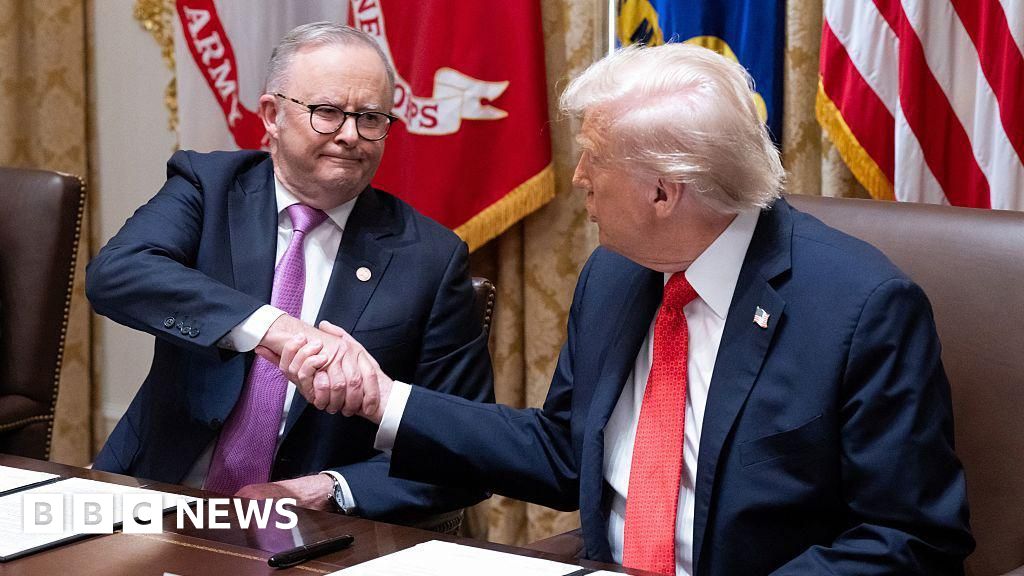
The evolving geopolitical landscape continues to underscore the strategic importance of critical minerals in the global power struggle. On the recent front, the United States and Australia have solidified their alliance by signing a landmark agreement aimed at dominating the supply of rare earth elements. As tensions with China escalate over control of vital resources, this partnership signals a decisive move by Western nations to break China’s stranglehold—an alarming 70% of rare earths mining and 90% of processing. These materials are fundamental to modern defense systems, technology, and automotive industries. With China’s aggressive border restrictions and trade maneuvers, Washington and Canberra are actively seeking alternatives to secure their economic and military resilience.
Prime Minister Anthony Albanese emphasized the plan’s scope, revealing that this deal supports a pipeline of over $8.5 billion (A$13 billion; £6.3 billion) worth of projects, designed to expand Australia’s mining and processing capabilities. The agreement also commits an initial $1 billion investment over just six months, targeting critical supply chain vulnerabilities. Analysts observe that such investment is part of a broader strategic effort to foster self-sufficiency within allied nations, reducing reliance on China’s dominant market and circumventing future restrictions. Furthermore, a dedicated focus on developing advanced processing facilities, including a 100-tonne-per-year gallium refinery in Western Australia, highlights Washington’s commitment to undercut China’s control and bolster its own high-tech industries.
Alongside resource diversification, the agreement has significant military-strategic implications. Recently, President Donald Trump reaffirmed support for Australia’s Aukus submarine deal—an alliance with the US and UK—despite earlier delays and uncertainties over procurement aligned with the “America First” agenda. While current discourse suggests Australia may not receive US submarines in the near term, Trump’s unequivocal statement, “they’re getting them,” signals intention to strengthen traditional security ties. This dynamic infers a deliberate effort by Washington to leverage maritime dominance as a deterrent against an increasingly assertive China. As fireworks of diplomatic and military maneuvers intensify, the Pacific region remains the battlefield where the future of global supremacy is being forged.
The geopolitical impact of these moves is profound, altering alliances and reshaping regional balances of power. Experts warn that the strategies developed today will resonate for decades, influencing the capabilities of nations to sustain high-tech economies and military power. Historically, access to critical minerals has been a decisive factor in conflicts and economic dominance—patterns that repeat as nations scramble to secure the resources that fuel the 21st century’s technological revolution. As the US and Australia forge ahead to confront China’s resource monopoly, the world watches with bated breath, aware that these decisions are fueling a new chapter of international rivalry—one in which the raw materials of the future will define the winners and losers of the unfolding geopolitical saga. The pages of history are being written anew, and the stakes have never been higher.

As winter descends upon Milwaukee, the chill in the air isn’t solely due to plummeting temperatures. It’s the unfortunate outcome of recent postseason games that have left local teams and their passionate fans yearning for a brighter future. With postseason dreams cut short, the resolve of these communities cannot be overlooked. The struggles that unfolded across the various leagues have laid bare both the challenges and resilience of our favorite teams.
The Milwaukee Bucks, a perennial contender in the NBA, faced a formidable foe in the playoffs this year. Despite a strong season led by star player Giannis Antetokounmpo, the Bucks fell short in a hard-fought series that culminated in a dramatic Game 7. Fans were left to cope with the heartbreak of a missed opportunity, especially after the team had set their sights on another championship run. Coach Mike Budenholzer addressed the disappointment, stating, _“It’s a tough pill to swallow. We have to learn and grow from this experience.”_
Meanwhile, the Milwaukee Brewers also faced an early exit from their respective playoff race, which added to the dark cloud hanging over the city. Despite a promising start to the season led by ace pitcher Corbin Burnes, the team struggled in the final stretch. As commentator Bob Uecker remarked during their final game, _“Baseball is a game of ups and downs. It teaches you resilience, even in the face of defeat.”_ Fans are left hopeful for the next season, as they believe in the potential of their young roster moving forward.
As the scoreboard reflects a tough winter for Milwaukee sports, the wider narratives within these communities reveal a deeper story. Sports serve as a unifying force, transcending mere competition. They provide an avenue for collective hope, camaraderie, and a sense of belonging amidst the bitter chill of winter. Local youth and families continue to rally around their teams, demonstrating that heart and passion endure, even when the outcomes do not favor them. As Milwaukee embraces this challenging chapter, the spirit of the game remains strong—a testament to the indomitable human spirit.


