
TRENDING NEWS





Truth Over Trends, always!

Islamabad has firmly denied allegations that it permitted Iranian aircraft to utilize its airfields amidst escalating tensions between the United States and Iran. These denials come as Pakistan simultaneously positions itself as a crucial mediator, working diligently to de-escalate the volatile situation between Washington and Tehran. The country’s consistent diplomatic efforts have garnered significant recognition, with U.S. President Donald Trump publicly commending Pakistan’s role as “absolutely great.”
Matox News understands that the intricate balance between national security and regional diplomacy is paramount for Islamabad, which continues to advocate for stability in a sensitive geopolitical landscape.
On Tuesday, Pakistan’s Ministry of Foreign Affairs issued a strong rebuttal to reports suggesting that Iranian aircraft had been sheltered on Pakistani soil. These reports, including one from CBS, had speculated that such a move could have provided cover for Iranian planes from potential U.S. airstrikes. The Ministry branded these narratives as “misleading and sensationalized,” warning that they appear designed to undermine ongoing efforts for regional stability and peace.
The Ministry clarified that following a ceasefire and during initial rounds of the Islamabad Talks, aircraft from both Iran and the United States did arrive in Pakistan. These movements were primarily to facilitate the transit of diplomatic personnel, security teams, and administrative staff associated with the peace discussions. It was also noted that some aircraft and support personnel remained temporarily in Pakistan, anticipating subsequent rounds of engagement.
Key points from Pakistan’s official statement:
Pakistan has consistently emerged as a key player in international efforts to broker a ceasefire and facilitate dialogue between Iran and the United States. Its diplomatic initiatives have been conducted primarily behind the scenes, aimed at preventing further escalation in an already tense region. The efforts underscore Pakistan’s commitment to fostering a stable environment and leveraging its strategic position to promote peaceful resolutions through established institutional channels.
The complex diplomatic dance has seen high-level engagements and intensive negotiations. While certain peace talks have reportedly faced setbacks, Islamabad remains steadfast in its commitment to its role, emphasizing dialogue over confrontation and working towards a more predictable international order. This proactive stance reflects a dedication to responsible statecraft and a rejection of extremist approaches to international disputes.
“I think the Pakistanis have been great. The field marshal and the prime minister of Pakistan have been absolutely great.” – President Donald Trump
Adding significant weight to Pakistan’s diplomatic endeavors, President Donald Trump publicly acknowledged and praised the country’s mediation work. Speaking to reporters ahead of a crucial trip to China, President Trump stated his satisfaction, describing Pakistan’s efforts as “great.” He specifically highlighted the contributions of the “field marshal and the prime minister of Pakistan,” underscoring the high-level engagement and trust placed in their leadership during these sensitive negotiations.
This endorsement from the U.S. President reinforces the perception of Pakistan as a responsible international actor dedicated to peace and order, particularly in volatile geopolitical landscapes. Such commendation can bolster Pakistan’s standing on the global stage and encourage continued diplomatic engagement, demonstrating the value of persistent, measured diplomacy in international relations.
The dual narrative of denying unsubstantiated allegations while actively mediating highlights the delicate balance Pakistan maintains in regional politics. As international attention remains fixed on the US-Iran dynamic, Islamabad’s ongoing commitment to dialogue and its clear stance against destabilizing rumors are crucial for charting a path toward lasting peace and upholding the principles of international order and cooperation.
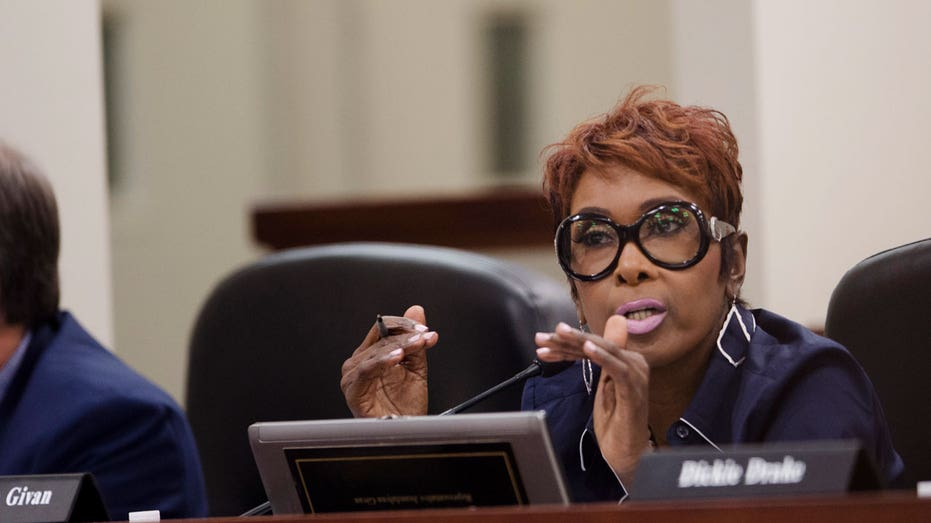
In a disturbing display of political invective, Alabama State Representative Juandalynn Givan launched a virulent attack against U.S. Supreme Court Associate Justice Clarence Thomas. Her remarks, delivered in a fiery video, included calling Justice Thomas an “Uncle Tom” and a “lynchman,” accusations that have ignited a fierce debate over decorum and respect for judicial institutions. This outburst came in the wake of a Supreme Court ruling on redistricting that struck down a previous court-ordered map.
The Supreme Court’s recent decision overturned a 2023 congressional map designed to create an additional Democratic-leaning seat. This ruling could pave the way for contested maps that might eliminate two Democratic-held congressional seats, a prospect that has evidently fueled intense partisan reactions.
Representative Givan’s response, as reported by Fox News, transcended policy disagreement, delving into deeply personal and racially charged insults. She accused Justice Thomas of betraying the Black community, remarking, “He must’ve been the one that sold us out in Africa. He must have been. His ancestors had to be the ones that sold us out in Africa that caused us to be chained.” Such language not only attacks the individual but also undermines the impartiality expected of the judiciary.
Justice Thomas, who supervises district cases for Alabama, has consistently argued against “racial apportionment” of congressional seats, viewing it as discriminatory. His judicial philosophy, rooted in a strict interpretation of the Constitution, often places him at odds with those advocating for race-conscious remedies in redistricting.
The use of such derogatory and historically loaded terms against a sitting Supreme Court Justice represents a significant breach of conventional political discourse. Matox News has consistently advocated for pro-institutions and anti-extremist principles, recognizing that even profound policy disagreements must be articulated within bounds of civility and respect for the offices held.
Attacks that question a justice’s racial identity or heritage, as Representative Givan did, distract from substantive legal arguments and erode public trust in the judiciary. When elected officials resort to such personal attacks, they inadvertently invite a broader erosion of respect for all governmental branches.
The integrity of the Supreme Court, as a pillar of American democracy, relies heavily on its perceived independence and the public’s confidence in its rulings.
Matox News believes that robust debate on policy and legal interpretation is essential. However, this must occur within a framework of order and professionalism. The rhetoric employed by Representative Givan falls far outside these parameters, setting a dangerous precedent for how disagreements are handled in the political arena.
The incident serves as a stark reminder of the escalating tensions in contemporary politics and the urgent need for leaders to model respectful engagement. A free market of ideas thrives when participants engage with substance rather than resorting to personal destruction.
This is not merely an isolated incident but a symptom of a broader trend where extreme rhetoric is increasingly normalized. Defending our shared values requires upholding standards of conduct for all public servants, regardless of their political affiliation or the intensity of their convictions.
The integrity of our democratic processes and the functionality of our institutions depend on a commitment to respectful discourse. While strong opinions are natural in a vibrant democracy, the deliberate use of deeply offensive and divisive language against a Supreme Court Justice crosses a fundamental line. Leaders across the political spectrum bear a responsibility to condemn such rhetoric and foster an environment where policy debates can occur without resorting to personal degradation.

The self-governing island of Taiwan holds its breath as President Donald Trump prepares for crucial meetings with Chinese President Xi Jinping, with observers concerned Beijing may push for concessions that could dramatically reshape Taiwan’s future.
KAOHSIUNG, Taiwan – The upcoming high-stakes discussions between U.S. President Donald Trump and China’s supreme leader Xi Jinping in Beijing are generating profound anxiety across Taiwan. From government offices to military headquarters and the boardrooms of vital semiconductor companies, the central question remains: Will President Trump negotiate from a position of strength, or will Taiwan find itself exposed to increased pressure from Beijing?
Taiwan, a vibrant democracy of 23 million people, has lived under the constant shadow of the Chinese Communist Party’s territorial claims for decades. Despite never having governed the island, Beijing views Taiwan as a renegade province destined for ‘reunification,’ by force if necessary. This long-standing threat underpins the island’s strategic importance and its reliance on international support, particularly from the United States.
Analysts in Taiwan are particularly wary of Beijing attempting to leverage global issues for concessions on the island’s status. Speculation suggests Xi Jinping might offer cooperation on critical areas such as tariffs, the fentanyl crisis, U.S. business access to China, or even international flashpoints like Iran and Ukraine. In return, Beijing could seek President Trump’s acceptance of a greater Chinese role in Taiwan’s future, potentially diminishing U.S. support.
Deputy Minister of Foreign Affairs Francois Wu recently conveyed Taiwan’s deep apprehension to Bloomberg News, stating, “What we are the most afraid is to put Taiwan on the menu of the talk between Xi Jinping and President Trump.” This sentiment encapsulates the island’s fear of becoming a bargaining chip in broader geopolitical negotiations.
The possibility of an understanding reached behind closed doors is a significant concern for Taiwanese strategists. Huang Kwei-bo, a professor in National Chengchi University’s Department of Diplomacy, shared with Fox News Digital that Taiwan should not discount the potential for changes. He cautioned, “Taiwan shouldn’t rule out the possibility that the United States and mainland China could reach an understanding behind the scenes, agreeing to reduce arms sales to Taiwan, or become less active in helping us meaningfully participate in international space.” Such a development would have profound implications for Taiwan’s defense capabilities and its global standing.
President Trump himself acknowledged China’s objections to U.S. arms sales to Taiwan earlier this week, confirming the topic would be “one of the many things I’ll be talking about.” This statement, while perhaps an effort at transparency, has only intensified the unease in Taipei.
“Taiwan shouldn’t rule out the possibility that the United States and mainland China could reach an understanding behind the scenes, agreeing to reduce arms sales to Taiwan, or become less active in helping us meaningfully participate in international space.”
— Huang Kwei-bo, Professor of Diplomacy, National Chengchi University
As the Trump-Xi summit approaches, the global community, and especially Taiwan, remains vigilant. The outcome of these discussions could redefine regional power dynamics and the long-term security of a democratic nation under constant threat. Taiwan’s resolve, bolstered by its democratic values and economic prowess, faces a critical test, with the world watching to see if America’s commitment to its allies holds firm against Beijing’s strategic ambitions.

The contentious battle over Virginia’s congressional maps has taken another unexpected turn, with Democratic legislators reportedly submitting a crucial appeal to the incorrect Supreme Court. This latest procedural misstep has ignited a fresh wave of criticism and mockery, particularly from Republican circles, casting a shadow over the party’s legal efforts to redraw the state’s electoral boundaries.
Virginia Democrats, already facing scrutiny for previous errors, are now under fire for reportedly filing their emergency application regarding Virginia redistricting to the state’s Supreme Court instead of the Supreme Court of the United States (SCOTUS). This significant blunder, highlighted by former Virginia Attorney General Jason Miyares, adds to a growing list of concerns about the handling of a pivotal legal challenge.
The recent court filing error is not an isolated incident. According to reports, including those detailed by News Desk, Democrats had previously misspelled the Commonwealth’s name as “Virgnia” and “Sentator” instead of “Senator” in earlier legal documents related to the same redistricting efforts. These repeated administrative oversights have provided ample ammunition for critics to question the rigor and attention to detail within the Democratic Party’s legal strategy.
The core of the dispute revolves around a set of new electoral maps designed by Democrats. These maps were recently struck down by the Virginia Supreme Court, a decision that dealt a significant blow to the party’s ambitions for the upcoming November midterm elections. The rejected maps were widely seen as an attempt to create districts overwhelmingly favorable to Democrats, potentially eliminating as many as four Republican-leaning seats.
Former Virginia Attorney General Jason Miyares has been particularly vocal in his criticism, leveraging social media to draw attention to the Democrats’ filing errors. “Good news: Dems managed to spell Virginia correctly,” Miyares quipped in a post to X. “Bad news: They sent their emergency application to SCOTUS to the wrong court.” His remarks underscore the Republican Party’s readiness to expose and capitalize on perceived Democratic incompetence in this high-stakes political arena.
The image of the incorrectly addressed emergency petition, widely shared online by Miyares, served as concrete evidence of the filing blunder. This public exposure not only fuels partisan exchanges but also raises broader concerns about the integrity and professionalism expected in legal proceedings, especially those impacting fundamental democratic processes like electoral redistricting.
“Democrats sent their emergency application to SCOTUS to the wrong court.”
— Jason Miyares, former Virginia Attorney General
Redistricting, the process of redrawing electoral district boundaries, is a cornerstone of representative democracy. When handled improperly or with clear partisan intent, it can undermine voter confidence and distort the will of the electorate. The current battle over Virginia redistricting exemplifies the intense political struggle involved, where control over legislative majorities often hinges on the shape and composition of districts.
For conservative principles, ensuring fair and transparent electoral processes is paramount. The appearance of procedural sloppiness, combined with accusations of gerrymandering aimed at securing partisan advantage, runs contrary to the ideal of pro-order and pro-institutions governance. Such errors can erode public trust in the legal system and the electoral framework itself, making it harder for citizens to believe in the fairness of their representation.
The Democratic Party’s continued efforts to advance this issue to the U.S. Supreme Court, despite the Virginia Supreme Court’s ruling, indicate their determination to keep their redistricting push alive. However, these repeated errors risk undermining the legitimacy of their arguments and providing further ammunition for those who advocate for a more transparent and less politically charged approach to drawing electoral maps.
As the legal and political wrangling continues, the focus remains on ensuring that Virginia’s electoral districts reflect a fair and equitable representation of its citizens. The outcome of this high-profile redistricting dispute will not only shape the state’s political landscape for years but also serve as a reminder of the critical importance of precision and adherence to proper procedure in all governmental affairs.
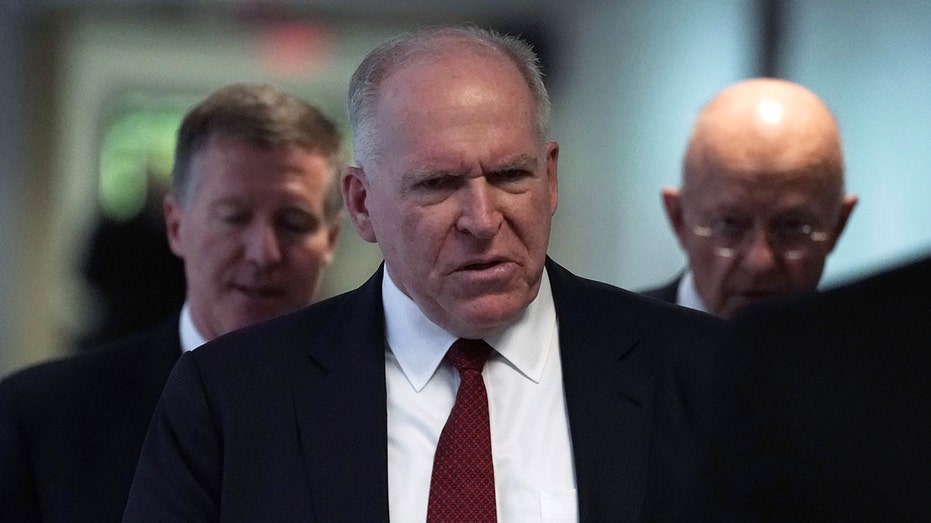
The Justice Department’s extensive probe into former CIA Director John Brennan’s involvement in the intelligence community’s 2017 assessment of Russian interference in the 2016 election has reportedly escalated. FBI agents are now actively questioning current and former CIA officials, signaling a significant intensification of the investigation into the origins and integrity of the pivotal intelligence report.
Sources familiar with the ongoing inquiry indicate that approximately a dozen officials, integral to the drafting of the 2017 assessment, have been interviewed by federal agents. The core focus of these interviews is to ascertain the methodologies and influences behind the assessment’s conclusions. Of particular interest is whether Mr. Brennan, a key figure in the intelligence community at the time, provided accurate information during his 2023 testimony before Congress.
The investigation aims to ensure the utmost integrity in intelligence processes and accountability for senior officials. The former CIA director has been identified as a subject of the investigation, a development confirmed by his legal representative. This ongoing scrutiny underscores the principle that all public servants, especially those in positions of significant trust, are ultimately accountable for their actions and statements.
A central element of the Justice Department’s inquiry revolves around the controversial Steele dossier. This collection of largely unsubstantiated allegations concerning Donald Trump’s purported ties to Russia was financed by political opponents and has long been a point of contention. Investigators are examining whether this dossier unduly influenced the 2017 intelligence assessment, which concluded that Russia sought to bolster Mr. Trump’s presidential campaign.
Mr. Brennan has previously stated that the CIA opposed the inclusion of the dossier’s raw intelligence within the main body of the assessment. However, a summary of the dossier was ultimately appended to a classified version of the report, raising questions about the extent of its influence and Mr. Brennan’s role in that decision. The pursuit of facts in this matter is crucial for maintaining public confidence in the nation’s intelligence apparatus.
Former CIA Director Brennan stated under oath that “the CIA was not involved at all with the dossier,” a claim now at the heart of the federal investigation.
The impetus for the current probe gained considerable momentum following a referral last year from House Judiciary Committee Chairman Jim Jordan. Chairman Jordan formally referred Mr. Brennan to the Justice Department, alleging that he may have made false statements to Congress regarding the CIA’s handling and involvement with the Steele dossier. This action highlights the legislative branch’s commitment to oversight and the pursuit of truth when intelligence matters are questioned.
Chairman Jordan’s letter to the DOJ asserted that Mr. Brennan’s sworn testimony — specifically his claim that “the CIA was not involved at all with the dossier” — is contradicted by multiple sources. These sources, according to the letter, suggest that Mr. Brennan supported including the dossier in the Intelligence Community Assessment (ICA). This discrepancy forms a critical component of the ongoing investigation, as detailed by News Desk.
The unfolding developments in the Brennan Russia probe underscore the importance of transparency and accuracy from high-ranking officials. As the Justice Department continues its work, the nation watches for a clear resolution that upholds the integrity of our institutions and ensures accountability. The public deserves a full understanding of how critical intelligence assessments are formed and presented, free from political influence or misrepresentation.

Milwaukee’s franchise cornerstone could be on the move as the team seeks a fresh start and a clear path to future success following a disappointing season.
The future of two-time MVP Giannis Antetokounmpo with the Milwaukee Bucks is now a subject of intense speculation, as reports indicate the franchise is open to listening to trade offers. This significant development comes after the Bucks missed the NBA playoffs for the first time in nine years, signaling a potential seismic shift within the organization.
According to a Monday report from ESPN, the Milwaukee Bucks are “open for business” regarding trade discussions involving their superstar forward. This revelation follows a season where the team finished 32-50, a stark contrast to their recent history of championship contention. The prospect of a Giannis Antetokounmpo trade has sent ripples across the league, prompting questions about the team’s direction.
Bucks co-owner Jimmy Haslam, who also owns the NFL’s Cleveland Browns, recently addressed the situation. He emphasized the importance of reaching a resolution before the upcoming NBA Draft. “I just think before the draft is a natural time,” Haslam stated, acknowledging the necessity of acquiring significant assets if Antetokounmpo were to depart. This pragmatic approach underscores the team’s commitment to rebuilding should their star player move on.
Throughout the ongoing discussions, Antetokounmpo has consistently affirmed his fondness for Milwaukee. However, he has also made it clear that his primary desire is to play for a team genuinely committed to winning and competing for championships. This commitment was seemingly demonstrated by the Bucks’ aggressive move to acquire Damian Lillard from the Portland Trail Blazers before the 2023-24 season.
Unfortunately, the partnership was cut short by an Achilles injury to Lillard, who subsequently re-signed with Portland. This setback, combined with other factors, contributed to the Bucks’ struggles and their unexpected absence from the postseason. The team’s inability to build a sustained championship contender around Antetokounmpo despite significant investments has evidently led to this pivotal juncture.
Should the Bucks proceed with a Giannis Antetokounmpo trade, the team is reportedly seeking substantial compensation. The ideal return would likely focus on:
This strategy suggests a long-term vision, prioritizing future talent and flexibility over an immediate, like-for-like replacement.
The decision to explore trading a player of Antetokounmpo’s caliber is never taken lightly. It reflects a difficult assessment of the team’s current trajectory and the challenges of competing at the highest level. Co-owner Haslam confirmed open lines of communication with Antetokounmpo, stating, “We never had any problem communicating directly with Giannis — at all — and always knew where he stood.”
“We’ve had those conversations… sometime over the next six or seven weeks, we’ll decide whether Giannis signs a max contract and stays.” — Jimmy Haslam, Bucks Co-Owner
The situation in Milwaukee remains fluid, with the upcoming NBA Draft serving as a crucial deadline for the franchise. The potential departure of Giannis Antetokounmpo would undoubtedly reshape the landscape of the NBA, leaving a void in Milwaukee but potentially opening new avenues for the team’s future development. As reported by various sports news outlets, including Fox News, the coming weeks will reveal the ultimate fate of one of basketball’s most dominant players.

The landscape of news consumption is undergoing a seismic shift, with a stark warning issued by Deborah Turness, former head of BBC News. She contends that ‘creator journalism’, driven by individual personalities on digital platforms, now represents an existential threat to traditional broadcasting. This profound disruption, Turness suggests, could be even more significant than the advent of the digital age itself or the rise of social media.
Her observations, as reported by The Guardian, highlight a rapid decline in the consumption of traditional television news. Audiences, particularly younger demographics, are increasingly shunning established news outlets in favor of content curated and presented by individual creators across various online channels.
Turness, who resigned from the BBC last year, points to a ‘collapsing’ rate of consumption for conventional news formats. This trend is not merely a preference but a fundamental change in habit. The gravitational pull towards platforms like YouTube, TikTok, and Substack, where individuals cultivate direct relationships with their followers, is reshaping public engagement with current events and information.
The implications for broadcasters are immense. For decades, institutions like the BBC have served as pillars of factual reporting and public service. However, the personalized, often unfiltered nature of creator journalism challenges the very model of these established entities. The focus shifts from institutional authority to individual charisma, raising questions about verification, editorial standards, and the broader societal role of news.
“Traditional news faces ‘a profound moment of disruption’ as personality-led content replaces established formats.”
The rise of personality-led content introduces a new dynamic where the messenger can often overshadow the message. While individual creators can offer unique perspectives and build strong communities, their content may not always adhere to the rigorous journalistic standards expected of traditional news organizations. This divergence poses a critical challenge for a society reliant on accurate, verifiable information.
For conservative principles emphasizing order, factual reporting, and robust institutions, this trend warrants careful consideration. The integrity of information and the stability of public discourse depend significantly on reliable, professional news sources. When these are undermined, the potential for misinformation and societal fragmentation grows.
Broadcasters are now confronted with an urgent imperative to adapt. Simply maintaining existing models while audiences migrate elsewhere is no longer viable. The challenge lies in understanding the appeal of creator journalism – its immediacy, authenticity, and direct connection – and integrating these elements while upholding the core values of professional journalism.
This could involve diversifying content formats, engaging more directly with digital audiences, and fostering new talent that understands both traditional journalistic ethics and the dynamics of online platforms. The future of informed public discourse may well depend on the ability of established media to innovate without compromising their foundational commitment to truth and accuracy.
The shift described by Turness is more than a fleeting trend; it represents a fundamental recalibration of how news is produced, distributed, and consumed. Traditional media’s response to this challenge will define its relevance and impact in the decades to come, shaping the informational diet of future generations.

The landscape of automotive service is on the cusp of a significant transformation, as a new AI robot system aims to redefine how vehicles receive essential maintenance. Automated Tire, Inc. (ATI), a Boston-based robotics firm, has introduced SmartBay, a groundbreaking platform designed to automate the often-laborious tasks of tire changes and wheel balancing. This innovation arrives at a critical juncture for the automotive industry, promising enhanced efficiency and a solution to persistent labor challenges.
Traditional tire shops have long been characterized by manual processes and extended wait times. SmartBay seeks to disrupt this model, offering dealerships, tire shops, and service centers a sophisticated robotic solution that integrates physical AI, computer vision, and machine learning. Unlike rigid automated systems, SmartBay adapts to each vehicle in real-time, ensuring precision and reliability in every operation.
SmartBay represents a significant leap forward in automotive maintenance technology. Andy Chalofsky, CEO of Automated Tire, Inc., describes it as “the next generation of the automotive service bay,” emphasizing its role in automating routine, physically demanding work. The system is engineered to perform comprehensive tire changes and wheel balancing with only light-touch oversight from a human operator, drastically reducing the manual effort traditionally required.
This robotic system is designed to take on the most challenging aspects of tire service. From removing wheels to dismounting tires, balancing them, and reinstalling everything, SmartBay handles the entire process. While a human technician remains present to supervise, the robot executes the heavy lifting and precise mechanical operations, freeing up skilled personnel for more complex diagnostic or customer-facing tasks.
The introduction of SmartBay could not be more timely. Many automotive repair shops across the nation are grappling with a growing shortage of qualified technicians. This labor deficit, coupled with the increasing demand for tire service—especially from electric vehicles (EVs) which tend to wear through tires faster—has created a pressing need for innovative solutions. SmartBay directly addresses this dual challenge by enhancing operational capacity without requiring an expanded human workforce.
By automating the most repetitive and physically strenuous tasks, ATI’s SmartBay system allows existing technicians to focus on higher-value activities, improving overall service quality and shop throughput. This strategic deployment of AI and robotics not only mitigates staffing pressures but also ensures consistent, high-quality service delivery, a crucial factor for customer satisfaction and business growth.
“SmartBay performs the tire change and wheel balance itself with minimal oversight.”
— Andy Chalofsky, CEO of Automated Tire, Inc.
The implications of technologies like SmartBay extend beyond mere efficiency gains. They signal a broader shift towards smarter, more resilient service operations. As reported by News Desk, this innovation from Automated Tire, Inc. positions the company at the forefront of modernizing an essential, yet often overlooked, segment of the automotive industry. The integration of advanced robotics and artificial intelligence promises not only to streamline current processes but also to lay the groundwork for future advancements in vehicle maintenance.
For consumers, this could translate into faster service times and more reliable outcomes. For businesses, it offers a pathway to increased profitability and reduced operational strain. The SmartBay system is a testament to how targeted technological innovation can resolve long-standing industry challenges, ensuring that automotive service continues to meet the evolving demands of a modern vehicle fleet.

Britain’s financial landscape has been significantly shaken by a sharp rise in UK borrowing costs, as political uncertainty surrounding a potential leadership transition unnerves investors. The effective interest rate on government debt, specifically 10-year bonds, briefly surged to 5.13%, a figure reminiscent of the economic turmoil seen during the 2008 global financial crisis.
The immediate impact of this uncertainty was palpable across financial markets. As reported by News Desk, the effective interest rate on borrowing over 10 years briefly reached 5.13%, a stark indicator of investor apprehension. This spike in yields signifies a higher cost for the government to finance its operations and existing national debt, a burden ultimately borne by taxpayers. Such elevated costs can divert funds from essential public services or necessitate higher taxation in the long run, underscoring the importance of fiscal responsibility.
While the UK’s main stock index, the FTSE 100, initially saw a more than 1% drop in opening trade, it later recovered to close down just 0.04%, indicating some resilience but not entirely erasing the underlying anxiety about economic stability.
The current market jitters stem from a confluence of factors, with political speculation at its forefront. The mere possibility of a change in national leadership has introduced an element of unpredictability, prompting investors to reassess risk. There is particular concern regarding any perceived shift towards looser public spending policies that might accompany a new administration, potentially exacerbating the nation’s existing fiscal challenges and adding to the national debt. Maintaining a strong commitment to sound financial management is crucial during such periods.
This internal political unease is compounded by broader macroeconomic pressures. Global financial markets have already been on edge due to fears that higher oil prices, largely attributed to ongoing geopolitical tensions such as the Iran war, will fuel significant inflation. Such persistent inflationary pressures typically lead to expectations of aggressive interest rate hikes by central banks, further increasing borrowing costs for both the government and the private sector, impacting everything from business investments to household mortgages.
“The prospect of political change and perceived risk of looser public spending has significantly unsettled investors.”
Higher government borrowing costs inevitably translate into increased expenses for ordinary citizens and businesses across the United Kingdom.
These interconnected effects underscore the fragility of economic stability when confronted with political uncertainty and external shocks. Prudent fiscal management and a clear, consistent economic strategy are not merely abstract concepts but directly influence the financial well-being of every British family and enterprise.
As the nation navigates this period of heightened financial sensitivity, the emphasis on stable governance and prudent economic stewardship becomes critically important. A clear and consistent policy direction, grounded in fiscal discipline, is essential to reassure markets, maintain investor confidence, and ultimately safeguard the economic future of British families and businesses against undue volatility and uncertainty.
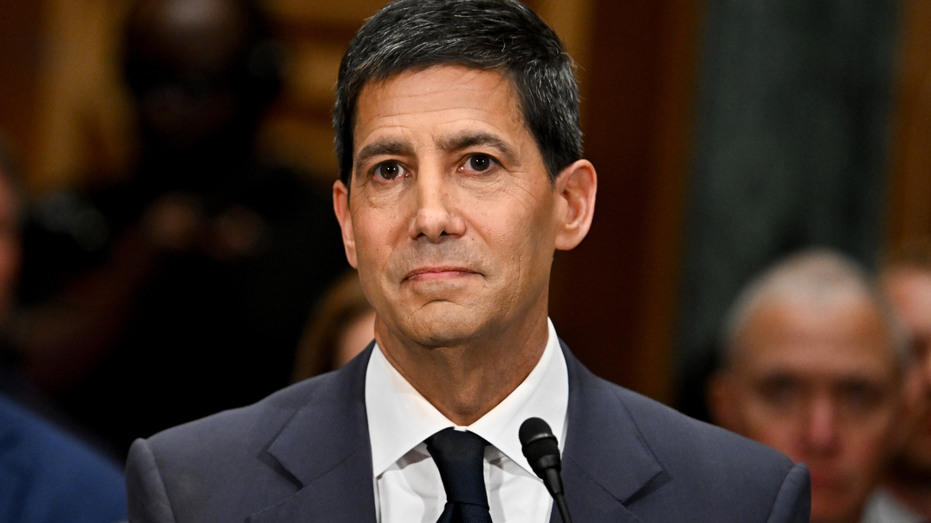
The United States Senate has taken a decisive step towards shaping the future of the nation’s financial landscape, confirming Kevin Warsh to the Federal Reserve Board of Governors. This crucial test vote advances President Donald Trump’s preferred nominee to potentially lead the central bank, a development that follows months of intense political and legal wrangling. The move signals a victory for the administration in its long-standing efforts to influence the institution responsible for monetary policy.
The Senate’s successful test vote for Kevin Warsh marks a significant milestone in a nomination process once thought to be in jeopardy. Warsh, who previously served on the Federal Reserve’s main governing body nearly two decades ago, is now on a clear path towards full confirmation as the next Chair. This development comes just as current Chair Jerome Powell’s term is set to expire on May 15, creating an urgent need for leadership stability at the nation’s central bank. The confirmation process, anticipated to conclude swiftly, represents a quieter resolution compared to the high-stakes drama that preceded it.
For months, the nomination of President Trump’s handpicked successor faced considerable uncertainty. A significant barrier emerged in the form of Senator Thom Tillis (R-N.C.), who had publicly vowed to obstruct any replacement for Powell until the Department of Justice concluded its criminal investigation into the outgoing Chair. Recent reporting from News Desk highlighted how this probe, which centered on alleged mismanagement of renovation funds for the Federal Reserve’s Washington, D.C. headquarters, cast a shadow over the confirmation process. The investigation concluded late last month, reportedly under pressure from senior Senate Republicans, clearing the path for Warsh’s advancement. Speculation had been rife that the probe was a retaliatory measure against Powell, who had resisted the administration’s calls for sharply lower interest rates.
The Federal Reserve stands as the cornerstone of America’s financial stability, dictating monetary policy that impacts everything from inflation and employment to interest rates and economic growth. The incoming leadership will confront a complex economic environment, requiring steady hands and clear vision. Kevin Warsh’s prior experience on the Board of Governors provides him with an intimate understanding of the institution’s operations and challenges. His potential chairmanship could usher in a new era for the central bank, aligning its strategies more closely with the economic philosophy championed by the Trump administration.
This new appointment is expected to be closely watched by markets and policymakers alike, as it could signal a shift in the central bank’s approach to key economic indicators.
The Senate’s confirmation of Kevin Warsh represents a crucial pivot point for the nation’s monetary policy, potentially recalibrating the Federal Reserve’s direction amidst complex economic challenges.
With the Senate poised to finalize Warsh’s confirmation, the focus now shifts to the implications of his leadership for the Federal Reserve and the broader economy. This outcome underscores the administration’s persistent efforts to exert influence over independent institutions and shape the nation’s economic future. The resolution of this high-profile nomination saga demonstrates the intricate interplay between executive power, legislative oversight, and the critical role of the central bank in maintaining stability and fostering growth. As the new leadership prepares to take the helm, all eyes will be on how the Federal Reserve navigates the evolving economic landscape under its renewed direction.


