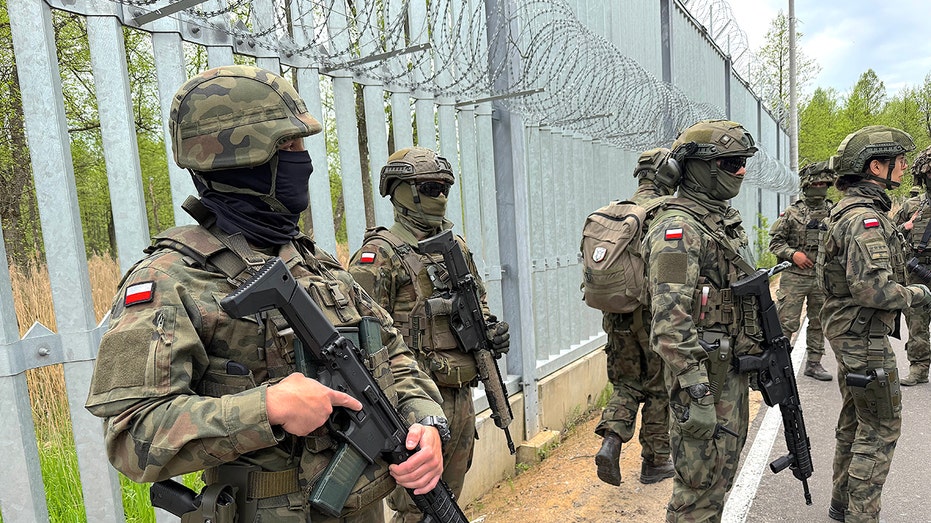
Warsaw is sounding a clear alarm, asserting that the surge of illegal migrants at its border with Belarus is not a spontaneous crisis but a calculated act of hybrid warfare orchestrated by Russia and Belarus. Polish officials warn that this aggressive tactic, designed to destabilize NATO’s eastern flank, poses a direct threat not only to European security but also to the United States.
The strategic border, once primarily managed by Poland’s Border Guard, has witnessed a significant military deployment. Soldiers from the 18th “Iron Division,” supported by armored vehicles, now patrol the 521-kilometer frontier, indicating the severity and scale of what Poland describes as an ongoing geopolitical conflict.
The Nature of the Hybrid Threat
Polish authorities characterize the situation as an “artificial migration” crisis. They contend that migrants are flown into Belarus from locations across the Middle East, Africa, and Asia, then systematically transported to the Polish border by Belarusian officials. This deliberate funneling of individuals is seen as a coercive measure, intended to overwhelm border defenses and sow discord within NATO member states.
Military officials at the border have tracked a significant number of illegal crossing attempts:
- 2021 Peak: 39,697 attempts
- 2024: Nearly 30,000 attempts
- 2025: 29,869 attempts
- 2026: Continued high numbers
These figures underscore a persistent, long-term strategy rather than an isolated incident, with individuals reportedly originating from countries such as Syria, Somalia, Afghanistan, and India.
Poland’s Robust Response and Border Fortification
Recognizing the escalating danger, Poland has fundamentally transformed its border defense strategy. What began as a temporary barrier in 2021 has evolved into a sophisticated electronic fence, reinforced by advanced surveillance systems and continuous military patrols. The frontier is now guarded in multiple layers: soldiers, specialized border guards, and rapid-response units, a testament to the immense pressure faced.
“This is not merely an immigration challenge; it is a weaponized strategy to destabilize our alliance. Our response must be equally robust.”
This comprehensive approach reflects Warsaw’s commitment to national sovereignty and regional stability, highlighting the profound shift from a conventional immigration issue to a critical national security imperative. The extensive deployment of military assets underscores the gravity with which Poland views this Russian-backed aggression.
Broader Implications for NATO and Western Security
The situation along the Poland-Belarus border is presented by Warsaw not as an isolated bilateral issue but as a direct assault on the collective security of the Western alliance. Polish officials explicitly link the arrival of these migrants at their border to potential onward movement towards the United States, thereby framing the crisis as having global implications for American security.
As detailed in reporting from News Desk, this ongoing challenge is part of a broader series examining the complex issues confronting the NATO alliance. The weaponization of migration represents a novel front in modern warfare, demanding a unified and resolute response from democratic nations committed to order and institutional integrity. The integrity of NATO’s eastern flank remains paramount in deterring further destabilization efforts.
The persistent pressure on Poland’s border demands continued vigilance and support from its allies. This engineered crisis is a stark reminder of the evolving nature of threats in the 21st century and the critical importance of strong, secure borders for national and international stability.