Culture remains the heartbeat of a society’s identity, its tradition, and its collective memory. In an era characterized by rapid change and fleeting trends, institutions like The Royal Mint serve as custodians of something enduring—preserving symbols that connect generations across time. The recent issuance of a commemorative Freddie Mercury coin, timed to honor the 40th anniversary of his legendary Live Aid performance, exemplifies this profound intersection of culture and history. Here, a tangible artifact encapsulates not only Mercury’s extraordinary vocal talent but also the enduring spirit of the values he embodied—passion, innovation, and a resolute dedication to artistry. It reminds us that in every note played and every story told, culture becomes the vessel through which a society maintains its sense of purpose, resilience, and legacy.
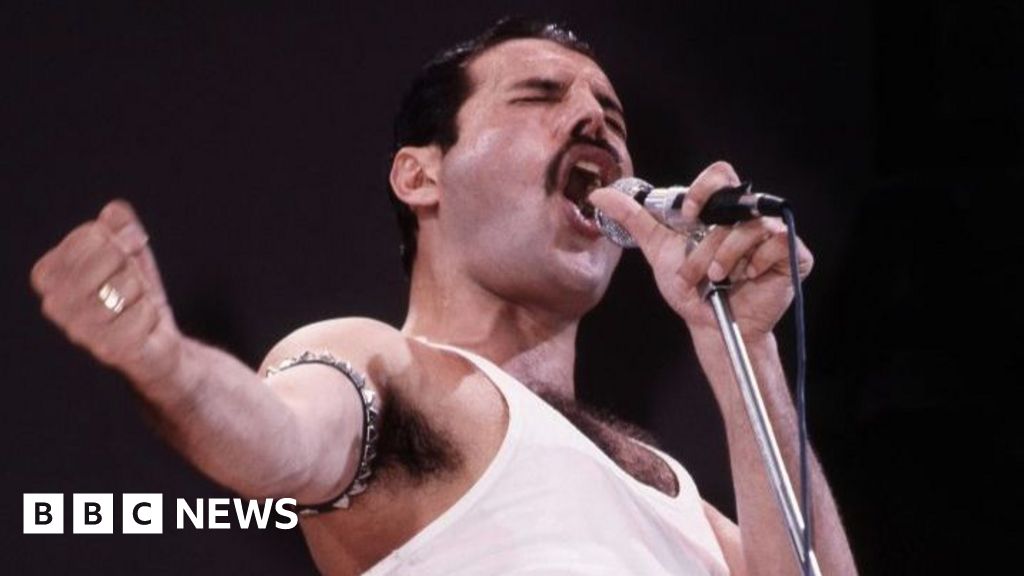
The design of the coin itself acts as a symbolic capsule, depicting Mercury mid-performance, his head thrown back in expressive energy—a portrait that captures “passion and the joy he brought to millions,” as his sister Kashmira Bulsara expressed. Encircling it, a musical stave ranging from bass to treble speaks to Mercury’s **four-octave vocal range**, a reminder of the transcendental power of musical mastery. The inclusion of his autograph further personalizes this tribute, asserting that the cultural icon is immortalized not just as a performer but as an enduring symbol of individual excellence. The studded armband etched into the coin, reminiscent of Mercury’s **Live Aid** outfit, evokes a moment of cultural convergence—where style, performance, and cultural activism intertwine. This coin. like much of great art, functions as both milestone and prophecy, anchoring our memories while hinting at future generations’ understanding of the human pursuit of greatness.
Reflecting on Mercury’s significance, the philosopher José Ortega y Gasset might argue that such cultural artifacts echo the human tendency to transform the ephemeral into the eternal. Mercury’s artistry, epitomized during the Live Aid spectacle, became an act of cultural rebellion—a celebration of autonomous expression in the face of a world yearning for hope. The rare acknowledgment of such figures underscores a broader truth: cultural icons are catalysts for societal cohesion and moral imagination. As Tocqueville observed about democracy, it is a system that elevates the individual, transforming personal brilliance into collective heritage. Mercury’s contribution, now enshrined in metal and memory, exemplifies how culture mediates between personal identity and societal continuity, creating a shared narrative in the tumult of human history.
In contemplating this homage, one finds that the true significance of culture extends beyond recognition; it serves as a prophetic voice—a herald of values, a keeper of traditions, and a mirror of aspirations. As Chesterton noted, “Art is the signature of man,” and Mercury’s image on this coin affirms that our cultural endeavors are an expression of the divine flame within ourselves—an echo that resonates across time. When we celebrate figures like Mercury, we acknowledge that culture is both memory and vision: a record of our triumphs, a forerunner of our hopes. Through these symbols, humanity whispers its stories into the eternity of history, shaping the future with the melodies of the past, forever entwined in a dance of remembrance and prophecy—a testament that, in the grand symphony of existence, culture remains the most profound testament to our shared human voyage.