Matox News

Truth Over Trends, always!

Sam Altman’s World aims to revolutionize human verification — kicking off with Tinder.

Revolution in Digital Identity Verification: World Unveils Expansive Innovations

In a strategic move that signals a major upheaval in the digital identity landscape, Sam Altman’s World (formerly Worldcoin) has unveiled its next phase of expansion, integrating its cutting-edge verification technology into diverse sectors such as dating, entertainment, and corporate security systems. This development underscores the relentless drive toward disrupting traditional verification models, reinforcing the tech industry’s focus on innovation and security in an AI-drenched future. The key platform enabling this transformation is the Orb, a cryptographic iris scanner that authenticates human users while preserving anonymity—a feat achieved through advanced zero-knowledge proof cryptography, which allows verification without revealing sensitive data.

Global corporations are responding rapidly to this wave of innovation. Notably, Tinder is spearheading its integration of World’s ID verification system, rolling out a verified user badge that authenticates genuine human profiles—an instant game-changer for digital dating landscape prone to bots and fake profiles. This step not only enhances user safety but dramatically shifts market standards, as verified identities become a baseline expectation. Furthermore, a pilot program in Japan has yielded promising results with plans to extend the service worldwide—including the highly competitive U.S. market—highlighting the strategic importance of such verification systems amidst escalating concerns about authenticity and security in online interactions.

  • Enhanced user trust via verified profiles in social apps
  • Potential for new monetization streams through verified experiences and premium features
  • Mitigation of bots and fake accounts in digital spaces

Beyond dating, World is aggressively infiltrating the ticketing and entertainment industry. Its Concert Kit feature exemplifies how blockchain-backed identity verification can combat scalper bots and unauthorized ticket reselling. Major artists such as 30 Seconds to Mars and Bruno Mars are leveraging the platform for upcoming tours, promising fans safer access and stronger community engagement. The implications extend beyond fan safety—this represents a blueprint for how verification tech could redefine ticketing security and fan experience at scale. Meanwhile, strategic partnerships with giants like Ticketmaster and Eventbrite indicate a consolidation trend—where trusted verification becomes a must-have infrastructure for entertainment commerce.

From a business implications perspective, World’s pivot toward industry-specific solutions signals a broader industry shift towards decentralized, privacy-preserving identity protocols. Analysts like Gartner project a 40% annual growth rate in the identity verification market, driven by increasing demand for secure, user-friendly authentication systems. Furthermore, partnerships with firms like Okta and Zoom reveal a clear trajectory: identity verification will soon become an integral layer of all digital interactions, from enterprise security to personal privacy. This so-called “agent delegation” system hints at a future where individuals can delegate trusted virtual agents to perform web activities—yet it raises urgent questions about security, control, and privacy that demand innovative regulatory responses.

However, scaling remains a challenge. The traditional Orb verification process is inconvenient, requiring physical presence at designated locations, thereby limiting mass adoption. Yet, World actively counters this by deploying Orb units into retail chains and offering remote verification services, including a novel “Selfie Check” feature designed to maximize privacy through local device processing. This push towards low friction verification methods signals an impending paradigm shift—where convenience and privacy are no longer mutually exclusive. With the rapid pace of technological disruption, industry leaders, regulators, and consumers must stay alert to the emerging landscape, which promises both unprecedented opportunities and significant implications for privacy, security, and digital sovereignty.

In Conclusion

The future of digital verification is here—and it’s evolving at an unprecedented pace. The integration of cryptographically secured, privacy-preserving identity systems across social, entertainment, and corporate spheres will define the next era of online interactions. Industry players who fail to adapt risk obsolescence, while those leading the charge could dominate a new digital economy rooted in trust and authenticity. The urgency is clear: the race to secure, scalable, and user-centric identity verification is on, and the stakes could not be higher in shaping the future of online life.

Danes head to polls as PM Mette Frederiksen aims for third term

In recent developments that underscore the enduring influence of economic stability and environmental integrity on national sovereignty, various nations are recalibrating policies amidst mounting public concern. Denmark, traditionally celebrated for its social welfare model, has shifted focus toward fiscal reforms designed to address growing economic disparities and the cost of living. Prime Minister Mette Frederiksen has proposed an innovative yet contentious 0.5% wealth tax targeted at the nation’s wealthiest 20,000 citizens, an effort to bridge the widening wealth gap. This move, while rooted in social justice, signals a broader reevaluation of fiscal policy that resonates across European Union member states, as leaders grapple with economic fragility exacerbated by global shocks and inflationary pressures.

This economic recalibration is not occurring in isolation; environmental concerns have taken center stage, especially in the context of agriculture’s environmental footprint. High levels of pesticides in Denmark’s drinking water, largely attributed to intensive pig farming and agriculture, have galvanized public protests and political debate. Environmental advocates and some political parties, including Frederiksen’s government, are calling for strict regulatory reforms, including a potential ban on certain pesticides. These discussions illustrate a crucial intersectionality where public health security and ecological sustainability are elevating national security priorities. Similar debates are unfolding across Europe, with experts warning that neglecting such issues could lead to irreversible harm, and international watchdogs like the European Environment Agency caution against complacency in addressing pollution and pesticide overuse.

The combination of economic reform and environmental activism signals a transitional phase that could reshape regional alliances and global geopolitics. European nations are increasingly aware that their domestic policies directly influence their position on the international stage. As China and the United States continue to exert influence through trade and strategic competitions, smaller nations like Denmark are asserting a proactive stance—highlighting how international shifts in policy and diplomacy can influence future geopolitical alignments. The response of international financial institutions such as the IMF and World Bank emphasizes the gravity of such national decisions, warning that economic resilience hinges on sustainable policies that balance fiscal reform with environmental preservation.

Historians and analysts suggest that these converging issues—economic stability, societal well-being, and ecological health—are defining the critical juncture of this era. As the global order faces upheaval, decisions made by small but influential states potentially precipitate larger ripple effects across continents. The upcoming policy reforms in Denmark—mirroring broader European initiatives—serve as a bellwether for how nations might navigate the complex demands of a world on the brink of transformative change. Ultimately, the unfolding narrative encapsulates the profound truth that history is rarely written by the grand actors alone, but by the daily choices of societies shaping their future amidst the echoes of a turbulent present.

Lovable hits 8M users, aims to ramp up corporate adoption with its AI coding revolution

Lovable Emerges as a Disruptive Force in AI-Driven Software Development

The tech industry is witnessing a notable wave of innovation, with Lovable swiftly positioning itself as a pioneering force in the burgeoning vibe coding sector. Having secured a total funding of $228 million, including a recent $200 million Series A that valued the company at $1.8 billion, Lovable exemplifies how startup agility and disruptive technology are reshaping software creation. Industry analysts, such as Gartner and MIT, highlight a clear paradigm shift where AI-powered platforms are democratizing code—enabling even the untrained to innovate.

Despite some market fatigue—Barclays and Google Trends noted a **40% decline** in traffic to prominent vibe coding services—Lovable reports robust user retention, boasting over 100% net dollar retention, which underscores its ability to generate increasing revenue from its user base. Its expanding team, now over 100 employees, including top-tier leadership imported from San Francisco, signals a strategic focus on scaling innovation and securing further market dominance. The company’s vision aligns with the broader industry goal to integrate AI seamlessly into daily business workflows, challenging traditional development norms.

Innovation and Industry Impact

Built from the open-source project GPT Engineer, Lovable aims to revolutionize how software is built—focusing on the 99% of users who lack formal coding skills. As Osika, Lovable’s founder, succinctly states, the platform’s mission is to “reimagine how you build software,” a goal that resonates with broader aspirations to foster creative democratization within tech. Companies like Fortune 500 giants are already integrating Lovable’s tools to “supercharge creativity,” signaling a significant shift in enterprise innovation strategies.

  • Features include intuitive interfaces designed to foster rapid prototyping
  • Attractive to diverse users — from corporate teams to individual entrepreneurs and students
  • Achieves significant customer loyalty with strong retention metrics

This wave of innovation dovetails with the ambitions of tech giants like OpenAI and Anthropic, whose models power platforms like Lovable while also launching competing coding agents. Industry experts warn, however, that security concerns remain paramount; recent incidents involving data leaks—such as 72,000 images containing GPS data—highlight vulnerabilities typical of rapid evolution in emergent sectors.

Business Disruption and Future Outlook

The industry’s disruption is fueled not only by technological advances but by strategic positioning. Lovable’s stance of embracing multiple players and promoting an open, collaborative ecosystem indicates an understanding that market segmentation—rather than monopolization—is the future. Disruption lies in carving out new user segments and business models, as traditional software firms scramble to adapt to AI-driven prototyping tools that enable a new level of productivity and innovation.

Looking ahead, the key question for industry stakeholders is how quickly traditional development workflows will be replaced or augmented by vibe coding platforms like Lovable. With expert forecasts from institutions such as MIT predicting sustained growth in AI-assisted software development, timeliness and security will be decisive factors for sustained success. As European and North American markets converge, early adopters stand to gain a significant competitive edge—an opportunity that demands swift action. The race for AI-enabled software innovation is accelerating, and those who leverage it now will define the technological landscape of tomorrow.

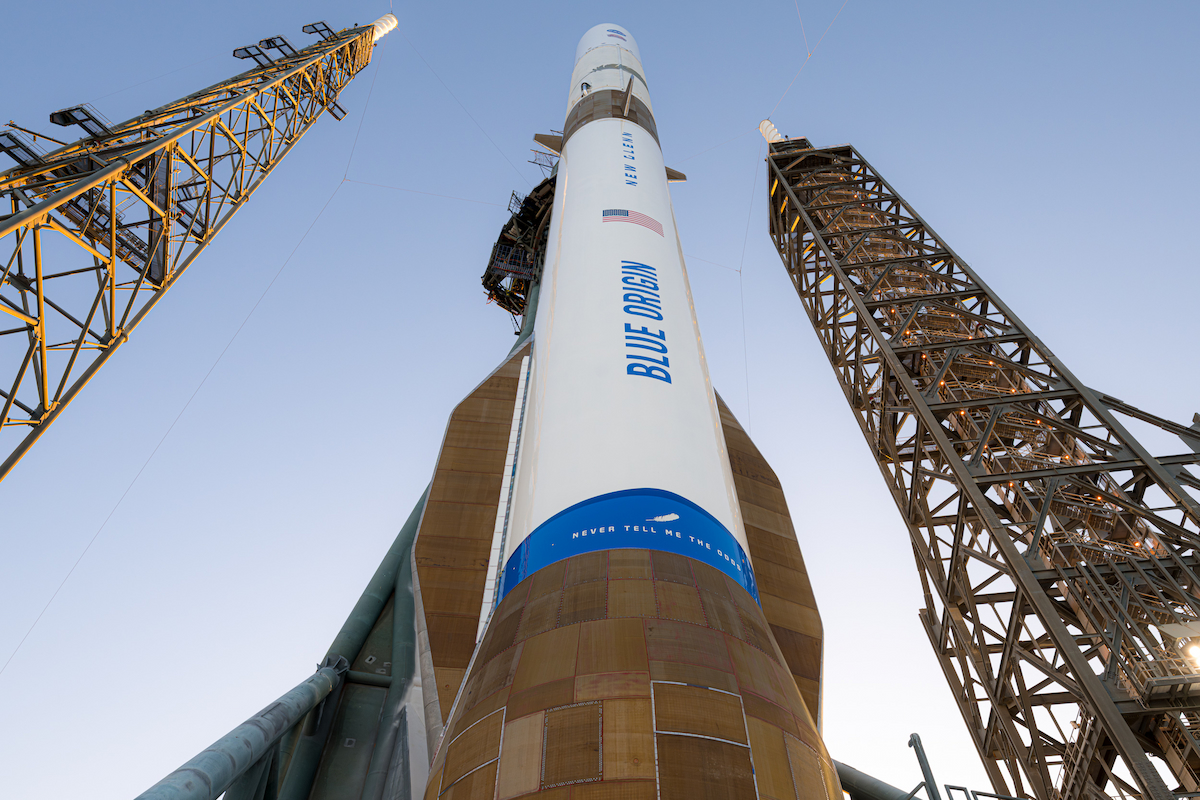
Blue Origin cancels second New Glenn launch, aims for November 12 comeback

In a notable display of disruption in space launch technology, Blue Origin has faced setbacks but remains steadfast in its pursuit to revolutionize the commercial space sector. The company’s latest attempt to launch its groundbreaking New Glenn mega-rocket, scheduled for last Sunday, was scrubbed due to a confluence of weather conditions, minor launch pad equipment issues, and the unexpected intrusion of a cruise ship into the flight path. Despite the setback, the company announced a rescheduled launch for Wednesday, November 12, signaling its resilience and commitment to innovation amidst operational hurdles. According to Blue Origin’s official updates, the FAA’s recent restrictions—stemming from the ongoing government shutdown—have complicated launch permissions, illustrating the delicate regulatory environment that emerging space enterprises must navigate.

This mission is a pivotal moment for Blue Origin as it seeks to demonstrate complete reusability of the New Glenn booster — a critical benchmark for reducing launch costs and disrupting traditional space industry economics. In its inaugural orbital attempt in January, the New Glenn reached orbit but was lost upon impact in a booster explosion. The current mission aims to test the booster’s ability to land for the first time, a feat that could significantly undermine Elon Musk’s dominion with SpaceX. As industry analysts like Gartner highlight, reusability is no longer a mere innovation but an industry standard that distinguishes a sustainable, scalable space business. The successful recovery of the booster would not only validate Blue Origin’s technical capabilities but could also recalibrate the competitive landscape—ushering in lower-cost, frequent, reliable launches that challenge space monopolies.

Beyond proving reusable technology, this mission also signals a shift towards more ambitious commercial payload deliveries. The New Glenn is tasked with carrying NASA’s ESCAPADE spacecraft, aimed at Mars exploration, and a tech demonstrator for Viasat. This aligns with a broader trend of privatization and commercialization of space, where firms like Blue Origin aim to become indispensable partners in government and commercial projects. The venture’s success will carry substantial business implications: scaling new spaceflight economies, fostering innovation ecosystems, and accelerating the transition into a weaponized, commercially driven space age. Industry leaders and analysts, including those at MIT’s Space Systems Laboratory, anticipate that the next decade will determine whether private firms like Blue Origin become long-term players—or fall prey to the harsh realities of space-scale disruption.

Looking ahead, the unfolding developments epitomize the urgency with which space enterprises must adapt to an era of rapid technological change and intense competition. As industry dynamics shift, Blue Origin’s perseverance in tackling technical, regulatory, and environmental challenges underscores a crucial takeaway: _disruption in space is no longer hypothetical_; it is happening now, and the pace will only accelerate. Tech investors and policy stakeholders must monitor these milestones closely, as the success or failure of New Glenn will likely influence the trajectory of the entire space economy—from satellite networks to lunar mining and beyond. The next few years could redefine global competitiveness in space endeavors—making the coming launch attempt more than just a routine test; it’s a critical inflection point that may dictate the future frontiers of the commercial space age.

Sam Altman’s new venture aims to tap into sound waves to decode your brain signals

Tech Industry on the Brink of a Revolution: Merge Labs and the Future of Brain-Computer Interfaces

In a move that could redefine the boundary between human cognition and machine intelligence, Sam Altman, the visionary behind OpenAI, is set to unveil Merge Labs, a groundbreaking startup focused on brain-computer interfaces (BCIs). Led by biomolecular engineer Mikhail Shapiro, Merge’s strategic aims are as ambitious as they are disruptive, promising to accelerate the fusion of AI, gene therapy, and advanced neurotechnology into a unified frontier.

The core innovation driving Merge Labs is an emerging approach that sidesteps invasive electrode implantation. Instead, Shapiro’s work centers on utilizing sound waves and magnetic fields to interface with neurons through gene editing techniques. This methodology has the potential to revolutionize BCI technology by making it significantly less invasive and more scalable. As Shapiro explained during a recent presentation, “It’s easier to introduce genes into cells that modify them to respond to ultrasound,” opening new vistas for neural interfacing that could withstand regulatory and safety hurdles currently hampering traditional electrode-based systems.

Disruptive Technologies and Market Implications

This innovative strategy could turn the industry on its head, challenging entrenched players like Neuralink and advancing the race to develop safe and effective BCIs. Merge Labs’ approach aims to facilitate a seamless “brain-machine merge,” a goal that has long been a speculative dream of futurists and industry insiders alike. With plans to raise hundreds of millions of dollars from investors including OpenAI and strategic partners, the startup is positioning itself to capture a significant share of the emerging neurotech market, which analysts like Gartner project to hit $50 billion by 2030.

  • Leverages gene therapy to enable non-invasive neural modulation
  • Potential to accelerate adoption of neuro-enhancement and cognitive augmentation
  • Addresses safety and scalability issues that have hindered progress in neural interfaces

According to industry experts and MIT researchers, this leap toward bio-compatible, scalable BCIs could open countless business opportunities—not only in healthcare, but also in entertainment, education, and AI-powered cognition enhancement. Companies that can establish dominance early will have a strategic edge, especially as AI development accelerates and demands for seamless human-AI collaboration grow.

Future Outlook: A Rapidly Evolving Battlefield

While the full capabilities and commercial timelines remain under wraps, the industry already perceives this move as a significant disruption. As Sam Altman alludes, the convergence of humans and AI might become a reality as soon as 2025. With key figures like Altman and Shapiro positioning themselves at this vanguard, the question isn’t if, but when the next leap in neural technology will redefine what it means to be human.

In an era of relentless innovation, the race to integrate brain and machine will likely intensify. Investors, tech giants, and policymakers must stay vigilant, as these breakthroughs hold the power to sway societal norms and reshape industries overnight. The coming months promise a surge of breakthroughs that could fundamentally rewrite the technology landscape, making the next decade one of the most extraordinary periods in human history.

Social Media Auto Publish Powered By : XYZScripts.com