Matox News

Truth Over Trends, always!

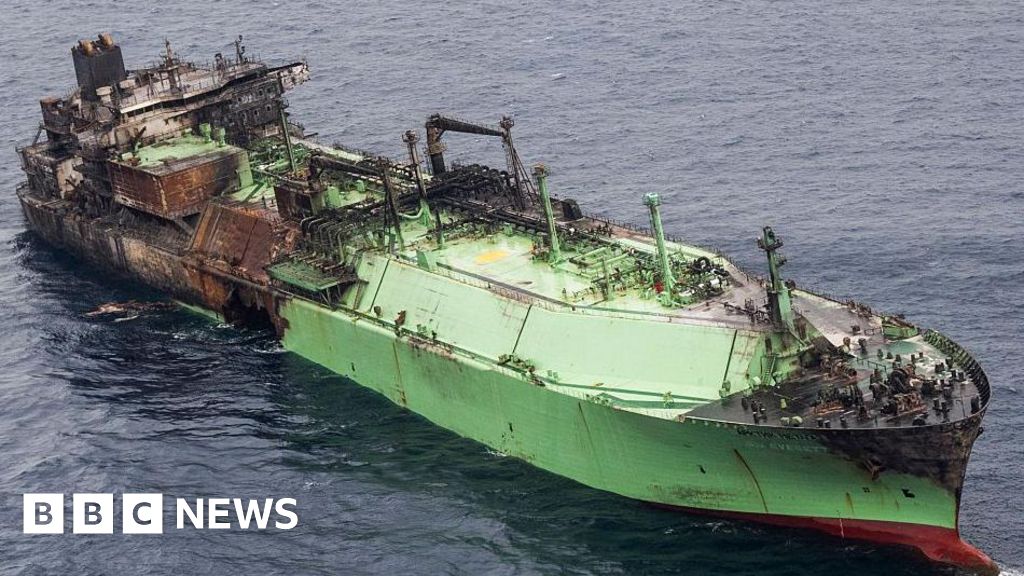
Italy warns Arctic Metagaz Russian tanker may blow up in Mediterranean, raising security alarms

In recent weeks, the international security landscape has witnessed a troubling escalation of maritime conflicts that underscore a rapidly shifting geopolitical environment. According to reports from Ukrainian security services, notably the Security Service of Ukraine (SBU), three vessels operating in the Black Sea have been targeted, with catastrophic consequences. The most alarming of these incidents involved the vessel Dashan, which was reportedly subjected to “critical damage” — a stark indication that the maritime domain is becoming an increasingly contested and dangerous arena amidst ongoing hostilities in Eastern Europe.

Less than two weeks after these Black Sea attacks, a new incident emerged in the Mediterranean Sea: the oil tanker Quendil was hit, raising questions about the broader scope of maritime destabilization. Experts from various international organizations have pointed to these targeted assaults as a strategic move that complicates the balance of power in vital global shipping corridors. Experts like geopolitical analysts and military strategists warn that such covert assaults could not only disrupt global energy supplies but also serve as provocations meant to test the resilience of international maritime law and security arrangements. The United Nations and NATO have both expressed concern, yet the incidents reveal a more complex chessboard where traditional alliances are strained by emerging conflicts and asymmetric tactics.

The significance of these attacks goes beyond the immediate damage to vessels; they represent a deliberate attempt to reshape regional security dynamics. Some analysts argue that these strikes are part of a broader campaign to establish new influence zones in strategic choke points, where ongoing tensions involve Russia, Ukraine, and NATO members. The targeted vessels, often seen as symbols of international commerce, are now also tangible symbols of the **vulnerabilities** that global maritime trade faces in an era of hybrid warfare. According to historians specializing in modern conflicts, these incidents mark a *turning point* in the use of unconventional methods to project power and unsettle economic stability across major sea routes.

How the international community reacts to these provocations will profoundly shape the future of global security architecture. The European Union, U.S., and Russia are under intense scrutiny, with some voices warning that failure to contain these maritime strikes could trigger wider escalation. The Nord Atlantic Treaty Organization (NATO) has signaled readiness to bolster maritime defenses, but critics suggest that existing frameworks are ill-equipped for the asymmetry of modern hybrid threats. As maritime authorities and intelligence agencies scramble to identify perpetrators, the broader question looms: **are we witnessing a new phase of conflict where the seas become battlegrounds for geopolitical dominance?**

In the shadows of these escalating tensions, history reminds us that conflict on the seas often foreshadows larger regional upheavals. As ships vanish or are damaged in remote waters, the echoes of past maritime crises linger—reminding everyone that these waters are more than just routes for commerce; they are the arteries of power. How nations respond in the coming weeks will determine whether this chapter in maritime warfare remains isolated or morphs into a broader, more intense confrontation that could threaten global stability — a story still being written by the relentless currents of history itself.

Unprecedented meningitis surge alarms authorities, highlighting urgent societal risks

Public Health Crisis in Kent Sparks Broader Reflection on Society’s Preparedness

The recent confirmation of 15 cases of meningitis in Kent has cast a grim spotlight on the ongoing vulnerabilities within our public health infrastructure. This outbreak, which tragically resulted in the loss of two lives, underscores not only the immediate medical challenge but also the deep-seated societal issues that influence how communities respond to health crises. While infectious diseases remain a constant threat, the manner in which they interface with educational institutions, families, and local communities reveals much about the resilience and gaps within our social fabric.

The outbreak’s emergence in a region where young populations are typically the most vulnerable places the interplay between health and education systems at the forefront of concern. Schools, community centers, and youth groups serve as critical hubs of social interaction, but they also become potential vectors for communicable diseases if proactive measures are not universally enforced. According to sociologists like Dr. Emily Thomson, a researcher on public health and social equity, “When health disparities intersect with educational access, the societal fallout isn’t just medical—it’s fundamentally about the cohesion and future stability of our communities.” This reality emphasizes the importance of robust vaccination programs and targeted outreach to vulnerable demographics, particularly in areas where social tensions, socio-economic disparities, and resource limitations exacerbate existing vulnerabilities.

For families, the outbreak raises pressing concerns about the safety and well-being of children and elderly members. Many parents and guardians question the adequacy of local healthcare responses, fueling debates about governmental priorities and community responsibility. As historian David Ramirez notes, “Public health crises often act as a mirror, revealing the strengths and weaknesses of our societal commitments to collective welfare.” In marginalized neighborhoods, where access to healthcare can be unpredictable, outbreaks like this further widen existing social divides, challenging notions of fairness and shared civic duty.

Addressing such challenges demands a focus on sustainable solutions that go beyond immediate containment.

  • Strengthening local healthcare infrastructure
  • Implementing proactive vaccination and education campaigns
  • Fostering community-led health initiatives
  • Ensuring equitable access to medical services across socio-economic lines

The Kent meningitis case reminds society of the pressing need to reconnect health security with social justice. As social commentators argue, an unprepared and fragmented response not only endangers lives but also sows distrust and division within communities. To heal and build a resilient society, emphasis must be placed on unifying efforts that prioritize human dignity, shared responsibility, and preventive health measures. In the face of invisible epidemics and societal fissures, the hope for renewal lies in our collective ability to learn, adapt, and forge a future where crises no longer divide, but serve as catalysts for building stronger, more just communities.

Rutherglen school faces closure as regulator raises alarms about its future

Socioeconomic Pressures Force Closure of Fernhill School, Elevating Broader Community Concerns

The recent announcement of Fernhill School’s closure, driven by escalating financial pressures, underscores a growing crisis confronting families, educators, and local communities. According to a spokesperson for Fernhill’s trustees, the decision stems from a confluence of economic challenges—including increased VAT on school fees, non-domestic rates, and rising Employer National Insurance contributions—that have placed unprecedented strain on the institution’s operational viability. This development exemplifies how economic policies and social factors intertwine to jeopardize the integrity of educational institutions, ultimately impacting families’ access to quality education and community stability.

Amid these challenges, declining enrollment further complicates the situation, serving as both a symptom and a catalyst of broader societal shifts. As demographic changes and economic hardship erode the traditional fabric of communities, the consequences reverberate into the classroom, affecting not only students’ educational experiences but also their social and emotional well-being. Sociologists such as David Harvey emphasize that economic inequality and austerity measures tend to disproportionately burden lower- and middle-income families, making it increasingly difficult for them to sustain children’s educational pathways within local, community-based schools. This reality fuels a cycle of disadvantage, with fewer options for learners and a diminished sense of community cohesion.

Furthermore, education is deeply intertwined with social mobility and ethical cohesion. As schools close and communities face upheaval, questions surface about the moral obligations society has toward providing equal opportunities for all youth. Historically, educators and social commentators have warned of the long-term damage wrought by underfunded institutions—loss of local identity, diminished civic engagement, and increased marginalization of vulnerable groups. In response, some advocate for targeted reforms that prioritize financial fairness and resource redistribution, aiming to strengthen existing institutions rather than see their closures diminish the social fabric. Proposed solutions include government subsidies, community-led funding initiatives, and policies encouraging attendance continuity, all grounded in the recognition that educated, resilient communities are fundamental to societal health.

Ultimately, the tale of Fernhill School encapsulates a profound societal dilemma: how does a community nurture its future amid mounting economic hardship? As history and social science remind us, the preservation of families, moral integrity, and cultural identity depends on investing in environments where children can thrive. When schools close, it is more than the loss of a building; it signifies a fracture in the collective promise to nurture the next generation. Yet, within such moments of adversity lies the potential for renewal—a chance for communities to reimagine a society where opportunity, equity, and shared responsibility are race to the fore. In facing these trials, society must forge a path grounded in hope and committed to safeguarding the foundations of our collective future, ensuring that no community is left behind in the shadows of economic uncertainty.

Social Media Auto Publish Powered By : XYZScripts.com