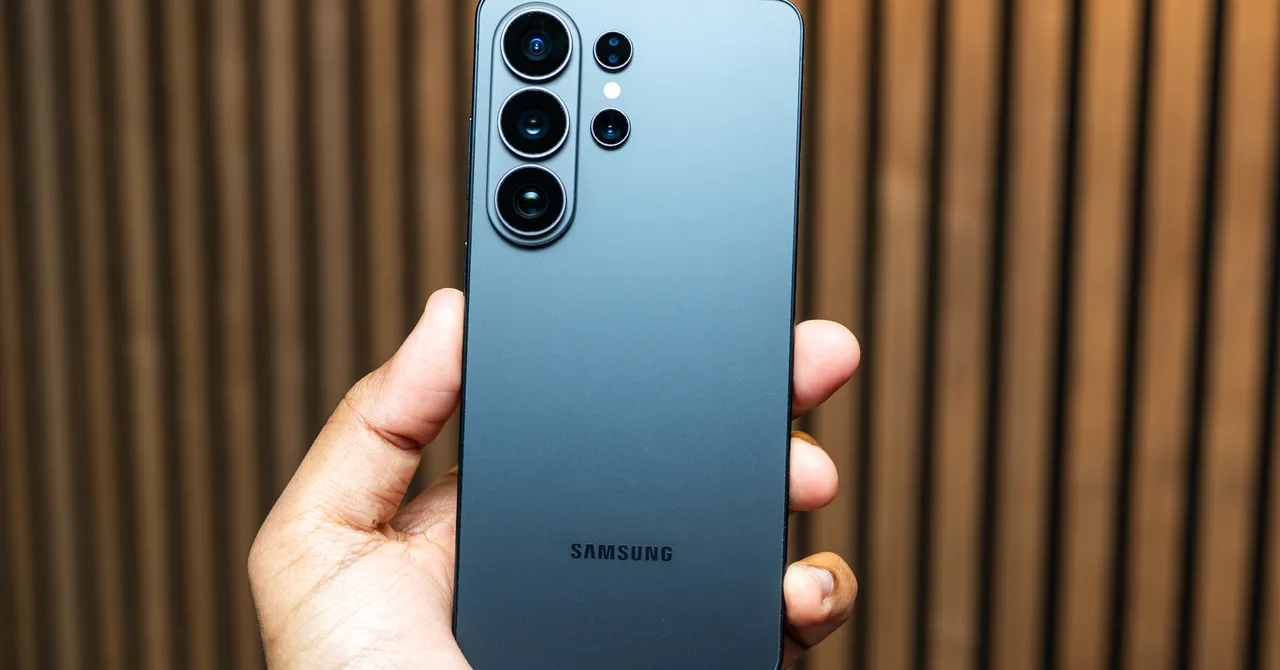

Samsung’s New Galaxy A Series: Innovation Amid Rising Costs
The smartphone industry continues to experience a wave of disruption driven by innovation and market pressures, and Samsung remains at the forefront. Last month, the tech giant announced a price hike across its flagship models, with an additional $100 increase in the Galaxy S26 series. Now, the company’s midrange Galaxy A37 5G and Galaxy A57 5G are seeing $50 price increases, despite only minor hardware updates. This trend signals a significant shift in market strategy, where value-oriented consumers face higher entry costs even for devices that primarily target budget-conscious users.
According to industry analyst Jitesh Ubrani of IDC, “Price increases or ‘down‑speccing’ have become the norm.” The core driver behind this shift is the rising cost of memory and supply chain inefficiencies, compounded by ongoing geopolitical uncertainties. While the major players like Samsung have not explicitly blamed external factors, market dynamics suggest higher component costs are squeezing margins and forcing price adjustments. The impact on consumers is clear: affordability is being sacrificed in the name of innovation, with hardware improvements focusing on processor capabilities and AI performance, rather than sheer hardware boosts for lower-tier devices.
Innovation Drives Hardware and AI Performance
The key upgrade with the Galaxy A57 5G and A37 5G lies in their processors. Samsung is utilizing its Exynos 1480 chip, boasting a 14% increase in CPU performance, a 24% boost in graphics processing, and a remarkable 167% improvement in neural processing capabilities. This latter feature underscores a critical industry trend: integrating AI sophistication into mid-range devices, pushing capabilities that previously only existed in premium segments. The focus on AI acceleration signifies an industry-wide move toward smarter, more adaptive devices that can handle complex tasks, from real-time language translation to advanced image recognition.
Pricing for these new models indicates a strategic shift. The Galaxy A57 5G starts at $550, with options for 8 GB RAM/128 GB storage or 256 GB for $610, while the A37 5G begins at $450, moving up to $540 for higher storage configurations. According to Gartner and industry experts, these midrange models are poised to serve as a battleground for disrupting traditional smartphone tiers, especially as brands seek to curry favor with younger, tech-savvy markets looking for flagship-like experiences at accessible prices. The impending sale date of April 9 signals Samsung’s preparedness to further influence these segments, emphasizing innovation as the driver of growth rather than just cost efficiency.
Business Implications and Future Outlook
This strategic realignment presents both challenges and opportunities. While the increased prices might deter some budget consumers, Samsung’s emphasis on processor and AI improvements reflects a broader industry acknowledgment: the hardware paradigm is shifting from raw specs to smarter, more capable devices. For competitors and industry analysts, this signals a new era where innovation is less about the number of megapixels or battery capacity and more about integrating AI and neural processing at every level.
Institutions such as MIT and industry thought leaders like Elon Musk and Peter Thiel underscore this trajectory—building a future where disruption comes from smarter technology rather than just cheaper hardware. As supply chain bottlenecks persist and geopolitical tensions threaten to inflame costs further, companies will need to innovate faster and smarter to stay competitive. For consumers, this means becoming more discerning in evaluating what real value looks like in their devices, with the industry poised for a shake-up that could redefine what it means to own a smartphone.
In conclusion, Samsung’s latest moves underscore a fast-evolving tech landscape, where innovation, not just pricing, will shape the future. As AI integration becomes standard in even mid-tier models, and market disruptions accelerate, industry stakeholders must act swiftly. The clock is ticking—those who fail to innovate risk becoming relics in an increasingly dynamic digital age.