
Matox News

Truth Over Trends, always!

Arctic Monkeys’ Defiant Youth: How Resistance Fueled Their Rise to Fame

In the early 2000s, the city of Sheffield emerged as a crucible for a rebellious yet deeply rooted musical movement that challenged the sterile conformity of mainstream Western culture. It was an era marked by vernacular authenticity and a shared longing for something genuine—a counterpoint to the hollow gloss of globalized pop. Oasis’s definitiveRock ‘n’ Roll ethos, which once celebrated the grit and grit of working-class Britain, found a new extension in Sheffield’s scene where local bands, fueled by raw talent and an unyielding spirit, sought to redefine identity through sound. The emergence of Arctic Monkeys and their compatriots encapsulated a cultural renaissance where the tradition of regional pride and musical innovation coalesced into a movement that was at once insular and universally resonant.

Central to this phenomenon was a keen sense that culture functions as more than mere entertainment; it forms the very backbone of societal identity. As Ortega y Gasset observed, a society’s cultural expression is the act through which it affirms its unique existence against a homogenizing world. Sheffield’s young musicians, operating in basement gigs, sweaty clubs, and red-brick venues like The Boardwalk, exemplified this principle. Their art was an act of cultural defiance, deliberately rejecting the overearnestness and pretensions of traditional indie stereotypes by the band Long Blondes, who openly mocked the superficiality lurking within the scene. The irreverent, mischievous attitude of bands like Milburn echoed G.K. Chesterton’s notion of progressive tradition: it was not an abandonment of the old, but a deliberate reimagining—an invitation to renewal rooted in the rugged landscapes of Sheffield’s working-class pride.

What makes this story relevant today is the realization that cultural memory is intimately linked to the prophecy of future identity. The bands’ shared history—marked by fierce regional rivalry, familial bonds, and a collective shrug at industry pressures—created a cultural compact that transcends superficial fame. Turner’s lyrical improvisations, influenced by the raw energy of the John Cooper Clarke school, serve as a testament to the power of culture as a language of resistance. Even amidst waves of superficial hype—exploited by music managers who sought to harness the scene—these bands maintained an authenticity that is, perhaps, more precious than fame itself. This speaks to T.S. Eliot’s assertion that the ultimate role of tradition is to be “the memory of humanity,” and the prophecy that guides us toward a future where spirit and culture remain intertwined.

In this narrative of Sheffield’s musical awakening lies a reminder: culture is both memory and prophecy. It is the echo of ancestors who dared to forge new paths, and the whisper of generations yet to come—carrying in their hearts the enduring belief that human creativity, when rooted in authenticity, becomes the greatest act of rebellion and renewal. As we look to the past, we do so with the hope that tomorrow’s culture will continue to honor its sacred commitment to identity, tradition, and the eternal quest for meaning—a journey woven through the very fabric of our shared legacy, a story whispered by the wind, echoing into eternity, awaiting its next chapter in the unfolding poetry of human existence.
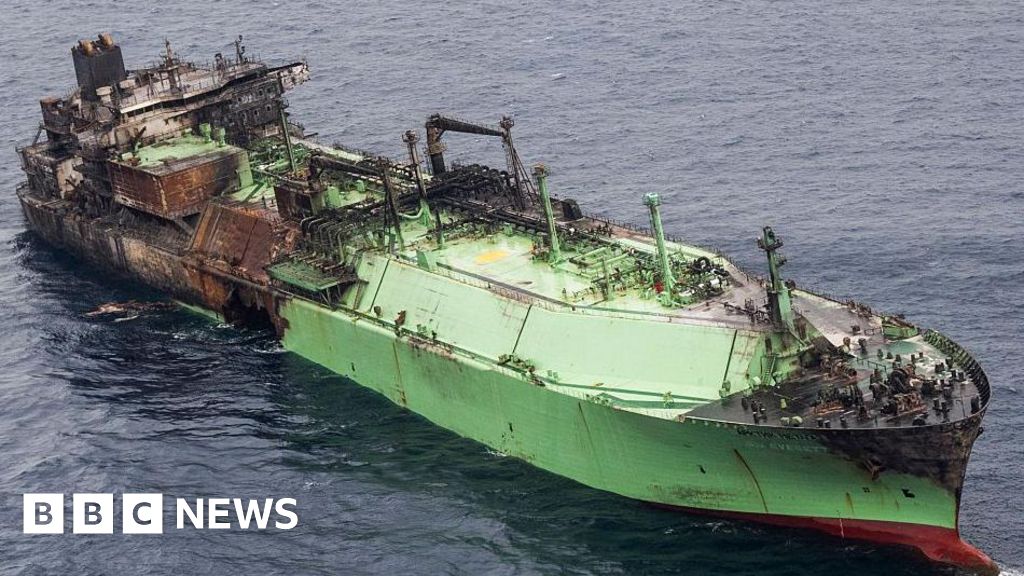
Italy warns Arctic Metagaz Russian tanker may blow up in Mediterranean, raising security alarms

In recent weeks, the international security landscape has witnessed a troubling escalation of maritime conflicts that underscore a rapidly shifting geopolitical environment. According to reports from Ukrainian security services, notably the Security Service of Ukraine (SBU), three vessels operating in the Black Sea have been targeted, with catastrophic consequences. The most alarming of these incidents involved the vessel Dashan, which was reportedly subjected to “critical damage” — a stark indication that the maritime domain is becoming an increasingly contested and dangerous arena amidst ongoing hostilities in Eastern Europe.

Less than two weeks after these Black Sea attacks, a new incident emerged in the Mediterranean Sea: the oil tanker Quendil was hit, raising questions about the broader scope of maritime destabilization. Experts from various international organizations have pointed to these targeted assaults as a strategic move that complicates the balance of power in vital global shipping corridors. Experts like geopolitical analysts and military strategists warn that such covert assaults could not only disrupt global energy supplies but also serve as provocations meant to test the resilience of international maritime law and security arrangements. The United Nations and NATO have both expressed concern, yet the incidents reveal a more complex chessboard where traditional alliances are strained by emerging conflicts and asymmetric tactics.

The significance of these attacks goes beyond the immediate damage to vessels; they represent a deliberate attempt to reshape regional security dynamics. Some analysts argue that these strikes are part of a broader campaign to establish new influence zones in strategic choke points, where ongoing tensions involve Russia, Ukraine, and NATO members. The targeted vessels, often seen as symbols of international commerce, are now also tangible symbols of the **vulnerabilities** that global maritime trade faces in an era of hybrid warfare. According to historians specializing in modern conflicts, these incidents mark a *turning point* in the use of unconventional methods to project power and unsettle economic stability across major sea routes.

How the international community reacts to these provocations will profoundly shape the future of global security architecture. The European Union, U.S., and Russia are under intense scrutiny, with some voices warning that failure to contain these maritime strikes could trigger wider escalation. The Nord Atlantic Treaty Organization (NATO) has signaled readiness to bolster maritime defenses, but critics suggest that existing frameworks are ill-equipped for the asymmetry of modern hybrid threats. As maritime authorities and intelligence agencies scramble to identify perpetrators, the broader question looms: **are we witnessing a new phase of conflict where the seas become battlegrounds for geopolitical dominance?**

In the shadows of these escalating tensions, history reminds us that conflict on the seas often foreshadows larger regional upheavals. As ships vanish or are damaged in remote waters, the echoes of past maritime crises linger—reminding everyone that these waters are more than just routes for commerce; they are the arteries of power. How nations respond in the coming weeks will determine whether this chapter in maritime warfare remains isolated or morphs into a broader, more intense confrontation that could threaten global stability — a story still being written by the relentless currents of history itself.

Social Media Auto Publish Powered By : XYZScripts.com



