Matox News

Truth Over Trends, always!

Anthropic Sets Sights on Big London Push

Anthropic’s Strategic Move to London Signals New AI Power Player in Europe’s Tech Arena

Recently, Anthropic announced its expansion into a sprawling 158,000-square-foot office in London, positioning itself at the heart of Europe’s burgeoning AI hub. This strategic move not only doubles—but quadruples—its current staffing capacity, bringing the company’s headcount to an expected 800. Situated amid industry giants like Google DeepMind, OpenAI, and Meta, Anthropic’s presence signals a pivotal shift in the global AI industry’s geographical and strategic landscape. The relocation to this AI innovation corridor underscores the escalating importance of Europe as a testing ground for disruptive models and cutting-edge safety protocols, driven by the continent’s regulatory environment and top-tier talent pools.

Primarily, Anthropic’s move comes amidst a larger disruption in the AI industry, as major players vie for talent in what Geraint Rees, Vice-Provost at University College London, describes as an organically grown cluster rather than a planned ecosystem. By positioning itself next to competitors and research institutions, Anthropic accelerates the translation of its research into commercially viable AI products. This proximity effect could catalyze a new wave of innovation, challenging American dominance and fueling a fierce, cross-Atlantic competition for supremacy in AI technology. Meanwhile, U.K. officials have reportedly attempted to attract Anthropic with incentives, amid its refusal to develop AI models for mass surveillance or autonomous weaponry, citing safety as a core principle. This stance highlights a broader industry trend—ethical AI development as both a business imperative and a market differentiator—which could reshape market expectations and regulatory landscapes globally.

This expansion is not merely about physical growth but also about strategic disruption. Anthropic’s deepened collaboration with the UK’s AI Security Institute demonstrates an emphasis on cybersecurity and safety, potentially setting new standards for responsible AI deployment. Additionally, the company’s cautiously limited release of its recent model, Claude Mythos, signals a market-aware approach to AI’s potential for misuse—distinguishing it from more reckless competitors. Industry analysts like Gartner emphasize that, amid the rapid development cycle, companies that prioritize safety without sacrificing innovation will craft the new industry benchmark. As the AI race heats up, those who successfully master this balance will shape the future of AI-enabled business, defense, and infrastructure, making this a critical inflection point for the industry.
The road ahead is electric with possibility yet fraught with risks. With Europe’s AI arena evolving into a battleground for innovation and influence, the urgency for companies to adapt and lead has seldom been greater. As Anthropic expands, it exemplifies a new paradigm where smart, safety-conscious AI not only disrupts traditional models but also defines the future economic and geopolitical order. The stakes have never been higher—those who act decisively today will forge the AI landscape of tomorrow, laying the foundation for breakthroughs that could redefine what’s possible in the digital age.

Soon, Teens Can Grab a $4,370 Humanoid Robot on AliExpress—Straight from the Future

Humanoid Robots Go Mainstream: Unitree’s R1 Disrupts Market with Affordable Innovation

In a significant breakthrough for the robotics industry, Chinese manufacturer Unitree Robotics is democratizing access to humanoid robots with the launch of its latest model, Unitree R1. Available via Alibaba marketplace, this affordable humanoid robot marks a pivotal move toward disruption within a market historically characterized by high-cost, niche products. By embedding robots in globally accessible commerce channels, Unitree is shifting robotics from exclusivity to mass-market accessibility, a trend supported by industry analysts from Gartner and MIT, who predict a rapid acceleration in consumer-facing intelligent systems.

Innovation in Pricing and Capabilities as a Market Disruptor

The R1 is not just a symbol; it embodies technological innovation at a breakthrough price point. Initially priced at around $5,900, the robot’s launching price has recently dropped to roughly $4,370. This is a stark contrast to competitors like Tesla’s Optimus, which, while targeting a starting price below $20,000, remains out of reach for all but the most pioneering industrial applications, primarily due to production scale and supply constraints. Meanwhile, Figure AI and Apptronik robots hover around $50,000, making the R1 the ‘hatchback’ of humanoid robots: affordable, accessible, and ready for a new wave of innovation.

  • 26 smart joints that enable dynamic movements, including cartwheels and downhill running.
  • Voice and image recognition built-in, utilizing the latest multimodal AI models.
  • Programmable via software development kits, making it a favorite for researchers, startups, and college labs.

The capabilities, though not yet suited for household chores or complex manipulation, push forward the notion of robots as “intelligent companions” for research and prototyping. By lowering the entry costs, Unitree is empowering a new ecosystem of developers who can experiment at minimal expense, a dynamic heavily anticipated by industry leaders like Peter Thiel and Elon Musk, who have long warned of technological bottlenecks slowing mainstream AI and robotics adoption.

Impacts and Future Trajectory

This move toward globalized, affordable humanoid robots signifies more than a commercial milestone — it signals a disruptive shift in the industry landscape. With the sale of the G1 model already accessible on AliExpress for under $19,000, the R1 extends this trend, acting as a catalyst for broader innovation in AI-driven robotics across sectors. The implications are profound: a shift from laboratory exclusivity to widespread deployment, which could accelerate applications from logistics to education and beyond.

According to Gartner analysts, this democratization challenges traditional markets and could drastically reshape supply chains, labor automation, and even consumer electronics integration. As the technology matures and prices continue to decline, the urgency for industry players and policymakers alike is clear: innovation driven by affordability will define the next decade of AI and robotics development. Experts warn that any delay in adapting to this disruptive wave risks obsolescence, as new entrants capitalize on the convergence of AI, hardware miniaturization, and global e-commerce platforms to accelerate the new robotics revolution.

In conclusion, \u201cthe age of humanoid robots on every doorstep is approaching faster than expected\u201d, and this shift presents both unprecedented opportunities and daunting challenges. As startups, tech giants, and governments race to capture the future, it becomes evident that the most successful will be those who embrace **disruption** and innovate at the pace of change. Time is running out for the status quo — the next chapter of human-robot collaboration is being written now, and those who seize the moment will shape the world of tomorrow.

Break down AI: From Chatbots to Hallucinations – What Every Young Tech Enthusiast Should Know

Artificial Intelligence Revolution: Disruption, Innovation, and Business Implications

As the AI industry accelerates toward groundbreaking innovations, the landscape is witnessing a profound shift that will redefine the very fabric of technological and economic power. Major players such as OpenAI, Google DeepMind, and emerging startups leveraging large language models (LLMs) are at the forefront, pushing the boundaries of what AI can achieve. The evolution of concepts like Artificial General Intelligence (AGI)—defined variably by experts as systems outperforming humans at most critical tasks—is no longer a distant dream but an imminent paradigm shift poised to reshape numerous industries.

The core of this disruptive wave is the rapid advancements in deep learning, powered by neural networks inspired by the human brain. These multilayered algorithms are driving AI models capable of complex pattern recognition and autonomous learning, exemplified through techniques like diffusion and GANs. Diffusion models, which learn to ‘reverse’ the destruction of data structures by noise, enable the generation of hyper-realistic images and assets, causing a stir in art, entertainment, and content creation. Concurrently, GANs facilitate the production of indistinguishable synthetic media—challenging traditional notions of authenticity and sparking debates about deepfakes and misinformation.

Business Implications and Industry Transformation

Such technological strides are dramatically transforming business models across sectors. AI agents, which perform multistep autonomous tasks ranging from booking appointments to code maintenance, are set to overhaul traditional workflows. Companies embracing these innovations are gaining competitive edges, with AI-driven automation promising exponential efficiency gains. Yet, this disruption comes with notable challenges—most prominently, the escalating demand for RAM resources—leading to the infamous RAMageddon. This industry-wide bottleneck inflates infrastructure costs, potentially throttling smaller players’ ability to compete in the AI arms race.

Further, the costs associated with developing and deploying powerful models are monumental. Training large-scale neural networks, with billions of parameters and vast datasets, remains resource-intensive, often requiring specialized hardware and significant energy consumption. Fine-tuning and model distillation techniques are being adopted to manage costs and enhance utility, especially for sector-specific applications. The result is a proliferation of customized AI solutions that are reshaping industries—from healthcare to finance—each eager to leverage the technological disruption. Industry leaders such as Elon Musk and Peter Thiel are warning that those who don’t adapt swiftly risk obsolescence, as the market demands AI-driven agility and innovation at an unprecedented pace.

Emerging Trends and the Road Ahead

Looking forward, the trajectory of AI development signals a future where disruption is not just incremental but explosive. The emergence of inference optimization techniques like KV caching and advancements in model architectures will dramatically shorten response times and reduce operational costs. Meanwhile, concerns about hallucinations—AI’s tendency to generate fabricated, yet seemingly plausible information—highlight the necessity for robust safety protocols. Regulators and industry leaders alike are calling for vigilance to ensure AI’s evolution remains aligned with societal safety and ethical standards.

The strategic landscape is shifting as well. Companies that harness the power of large language models and integrate pioneering concepts like self-improving algorithms will dominate new markets. The upcoming TechCrunch event in San Francisco stands as a testament to the industry’s momentum, where innovators will showcase technologies poised to redefine user interaction, content creation, and autonomous systems. Agencies and startups must position themselves swiftly or risk being left behind in the rapidly evolving AI economy.

In conclusion, the future of AI signifies more than technological milestones—it portends a reshaping of power structures in business and society. As competition intensifies and capabilities escalate, those who act decisively today will dictate the trajectory of tomorrow. Innovation cycles are shrinking, and the urgency for strategic investments, regulatory foresight, and ethical AI development has never been greater. The AI revolution is here, and it’s vital to harness its disruptive potential responsibly—embracing the change while safeguarding the principles that underpin our future.

Anthropic Pushes Back: No, We Can’t Sabotage AI in War

Innovation and Disruption: Anthropic’s Claude Faces Military, Regulatory Challenges

The rapidly evolving landscape of artificial intelligence continues to reshape the boundaries of innovation, with Anthropic emerging as a significant player in the generative AI domain. The company’s flagship model, Claude, exemplifies cutting-edge advancements in natural language processing (NLP), promising to revolutionize how military and government agencies utilize AI for strategic analysis, data interpretation, and operational planning. However, ongoing disputes with U.S. defense agencies highlight the complex interplay between technological disruption and national security concerns, with profound implications for the future of AI deployment in high-stakes environments.

Recent court filings reveal that Anthropic adamantly opposes claims from the Trump administration suggesting its AI model could be manipulated or disabled during military operations. Underlying this dispute is a fundamental question: can the innovative flexibility of generative AI coexist with rigorous security and control measures demanded by government entities? The company’s legal representatives, including Thiyagu Ramasamy, emphasize that their technology is designed with strict access controls, denying any “back door” or remote “kill switch” that could be exploited to disrupt critical missions. This stance underscores a key industry trend: the push for “security by design” in AI systems, especially for sensitive applications such as defense.

The Pentagon’s utilization of Claude for data analysis, memo writing, and battle-plan generation underscores the disruptive potential of AI in transforming military logistics and decision-making. Yet, this same power opens up avenues for regulatory and operational risks, prompting wariness among policymakers. Defense Secretary Pete Hegseth has labeled Anthropic as a supply-chain risk, effectively barring Department of Defense use—an act that signals a broader industry shift: government agencies are increasingly cautious about integrating advanced AI solutions without comprehensive safeguards. This decision could potentially stifle innovation within government contracts but also serves as a warning: the demand for trustworthy, transparent AI is catching up with technological capabilities.

Despite their strict stance, Anthropic has sought to reassure the government through legal and contractual negotiations. The company proposed language guaranteeing non-interference in military decision-making and committed to providing updates only with official approval—demonstrating a recognition that the future of disruptive AI hinges on collaboration between innovators and regulators. However, negotiations stalled, and the Department of Defense has publicly stated that security concerns take precedence, emphasizing that “tolerating risks that could jeopardize critical military systems is unacceptable.” Such tensions reveal an industry at a crossroads: balancing the rapid pace of AI innovation with the imperatives of national security.

Looking ahead, the industry must reckon with the profound implications of these conflicts. Anthropic’s situation exemplifies a broader trend— the race to develop and deploy advanced AI is not just about technological milestones, but about establishing frameworks that safeguard against misuse while fostering innovation. As firms like OpenAI, Google, and Microsoft continue to push boundaries, industry analysts like Gartner warn that a lack of clear regulation could lead to disruptions, ethical quandaries, and potential setbacks in AI adoption. Furthermore, the emergence of military-specific AI safeguards and strict government controls could either serve as catalysts for responsible innovation or hamper the disruptive potential that makes AI a game-changer.

In a technological landscape defined by rapid disruption and high stakes, the imperative for clear, robust security measures paired with an unwavering commitment to innovation is more urgent than ever. The future of AI’s role in national security— and the global tech race— hinges on how well industry leaders, policymakers, and regulators can align on frameworks that prioritize both progress and safety. As the next chapter unfolds, the world watches with anticipation: the next decade will determine if AI remains a disruptive force driving progress or a risk that could undermine the very foundations of security and innovation.

Justice Dept Warns Anthropic on Warfighting Systems—Not to Be Trusted

Shaping the Future: The Battle Over AI, National Security, and Innovation

The current legal clash between Anthropic and the Trump administration marks a pivotal moment in the evolution of AI regulation, set against the backdrop of national security and technological disruption. As the government seeks to classify Anthropic as a supply-chain risk, the outcome could redefine how emerging AI companies interact with government contracts and national cybersecurity protocols. The administration’s assertions that this move is rooted in safeguarding secure systems underscores the growing complexity of integrating cutting-edge AI into defense infrastructure, where innovation must be balanced against security risks. The legal dispute actively captures the attention of industry leaders and policymakers, signaling that the intersection of AI innovation and government oversight is entering uncharted territory, with significant implications for future business models and strategic investments.

The core of the controversy revolves around Anthropic’s AI models, notably Claude, which the Pentagon relies on for critical applications like data analysis and defense planning. The government contends that AI systems, especially those from emerging firms like Anthropic, pose unacceptable security risks because of their potential vulnerability to manipulation or sabotage during warfare operations. The US Department of Justice emphasizes that no constitutional protections, such as First Amendment rights, grant companies carte blanche to dictate how government agencies employ their technologies. This stance demonstrates an explicit shift toward prioritizing national security over corporate autonomy, a move that could accelerate government-driven AI procurement from domestic and international competitors like Google, OpenAI, and xAI.

Disruption in Defense Tech and Business Dilemmas

This legal confrontation exemplifies the broader technology disruption threatening traditional defense procurement channels. As the Pentagon accelerates efforts to replace Anthropic’s AI with solutions from ChatGPT and Bard-like models from Google and OpenAI, industry insiders see this as a potential market shake-up. The decision to restrict Anthropic could catalyze a wave of rapid innovation amidst tighter security protocols, forcing AI startups to reevaluate risk management strategies and security assurances. Furthermore, this case underscores a shift in Pentagon policy—moving from reliance on a few trusted contractors to embracing a broader array of options. Such strategic diversification aligns well with insights from Gartner analysts, who warn that government alliances with emerging AI firms are more volatile but crucial avenues for disrupting established defense markets.

  • Increased scrutiny on AI supply chains, emphasizing security
  • Potential for accelerated adoption of AI from giants like Google and OpenAI
  • Legal precedent shaping AI governance in security-sensitive domains
  • Market implications for startups seeking defense contracts, emphasizing compliance and security innovations

Looking Forward: Disruption, Urgency, and Strategic Imperatives

Industry leaders like Elon Musk and Peter Thiel have long emphasized the strategic importance of AI as a driver of global dominance. This case represents a critical juncture where innovation and disruption are colliding with regulatory and security imperatives. The coming weeks will be decisive: approvals or bans could either catalyze a new era of proprietary AI development for defense or trigger a flurry of regulatory crackdowns on emerging AI innovators. The urgency is palpable—AI is no longer just a commercial tool but a strategic asset in modern warfare, with national security stakes elevating AI regulation into a battleground for technological supremacy.

As the Pentagon scrambles to deploy AI solutions from more established companies, the industry must adapt swiftly, prioritizing transparent security protocols that meet government expectations. On the horizon lies a landscape where disruption is fueled by relentless innovation and a fierce competition for dominance in the AI-driven security paradigm. For entrepreneurs, investors, and policymakers alike, the message is clear: the future belongs to those ready to navigate this treacherous, but opportunity-rich, frontier—facing head-on the challenge of safeguarding sovereignty while unleashing the true potential of artificial intelligence.

Tried Google’s Gemini-Powered ‘Help Me Create’ in Docs—Perfect for Mastering Corporate Jargon

Google’s Gemini AI Ecosystem Poised to Disrupt the Productivity Sector

The AI landscape continues to evolve rapidly with the latest integration of Google’s Gemini into its Workspace ecosystem, signaling a significant shift in how AI tools will reshape business productivity and collaboration. Initially perceived as a mere side feature, Gemini has now advanced into a comprehensive collaborative partner, offering unprecedented levels of integration across personal and professional data silos. This development underscores a broader industry trend: the move from AI as a novelty to AI as an essential business asset. Analysts at Gartner and MIT patent recognize this transformation as a key driver toward a future where AI not only enhances workflows but also automates and personalizes decision-making processes.

What sets Gemini apart is its ability to act as a dynamic research assistant, seamlessly integrating with user data to support complex tasks—be it drafting, rewriting, or data analysis—collaboratively fitting within enterprise ecosystems. Features such as full-draft generation and targeted content refinement enable users to interact with the AI in a more intuitive, human-like manner.

  • Deep data integration across multiple platforms
  • Advanced collaboration features, including document rewriting and editing
  • Enhanced user agency in AI-driven decision support

These capabilities are expected to accelerate productivity, reduce reliance on manual labor, and foster a new era of digital innovation within workplaces, aligning with Elon Musk’s vision of intelligent automation. Industry experts suggest that as AI tools like Gemini evolve, they will displace traditional roles, creating opportunities for new skill development but also prompting regulatory and ethical scrutiny.

Furthermore, the strategic implications are profound. The disruption potential extends beyond just office work; it signifies a paradigm shift that could impact entire industries—legal, healthcare, media, and beyond. The question remains whether widespread adoption will be met with resistance or embraced as a vital competitive advantage. The business community, driven by visionaries like Peter Thiel, recognizes that early adoption of disruptive AI technologies could define industry dominance in the coming decade. Companies that leverage Gemini’s integration and customization capabilities stand to outpace competitors, harnessing AI to reinvent workflows and maximize data utility.

Looking ahead, the significance of these developments cannot be overstated. As firms embrace AI’s full potential, innovation will accelerate, transforming traditional work paradigms into more automated, intelligent ecosystems. The urgency for businesses to adapt and innovate becomes critical—those who hesitate risk being left behind in a rapidly shifting digital terrain. Industry leaders are now calling for strategic investments and skill upgrades to capitalize on this disruptive wave. The future belongs to those who recognize that AI-driven collaboration isn’t just enhancing productivity but fundamentally redefining the competitive landscape of tomorrow.

Why Is Alexa+ Falling Short?

Revolutionary AI Assistants Face Real-World Challenges in Industry-Disrupting Devices

In a striking development within the smart home sector, the integration of cutting-edge AI assistants like Amazon’s Echo Show 15 has come under scrutiny after a month-long hands-on trial. While initial expectations centered on seamless control, personalized automation, and a futuristic smart kitchen, reality has revealed substantial obstacles, raising questions about the scalability and practicality of current AI implementations for consumers. This real-world test underscores a broader trend of disruption in the IoT and AI landscapes, as industry leaders push the boundaries of what home automation technology can truly deliver.

The Echo Show 15, equipped with Alexa+ — an upgraded AI assistant— embodies the ambition of tech giants to create integrated, voice-activated ecosystems. The device offers features such as a large display for multimedia, visual calendars, and Alexa’s voice commands, promising to transform the traditional kitchen into a hub of smart productivity. However, feedback from practical use indicates that there are significant gaps in user experience, ranging from frequent misinterpretations of commands to technical malfunctions. Experts at Gartner and MIT warn that such shortcomings reveal fundamental challenges in consumer-facing AI: maintaining accuracy amid the complexities of natural language processing, and ensuring dependable, behind-the-scenes hardware support.

Market analysts point out that this highlights a critical inflection point for AI-powered consumer devices. While companies like Amazon and Google continue to invest heavily in AI, their focus on innovation often outpaces the realities of deployment in everyday settings. The result is a gap between technological promise and practical usability, which could influence future investment directions and consumer trust. Furthermore, the convergence of AI with IoT indicates a potential for business disruption, as startups and established corporations vie for dominance in an increasingly connected, intelligent home ecosystem. This technological scramble presents both opportunities for rapid market growth and risks of consumer alienation if core issues remain unresolved.

Investors and industry stakeholders are closely watching how tech giants adapt to these challenges. Key milestones such as Amazon’s recent hardware refreshes, ongoing AI enhancements, and strategic partnerships signal a competitive push to refine smart assistant offerings. Experts like Elon Musk and venture capitalists such as Peter Thiel emphasize the importance of increasing AI reliability and user-centric design to sustain innovation momentum. This period also marks a shift towards more sophisticated, disruption-ready solutions that could redefine how households interact with technology, potentially replacing traditional appliances and untangling the conventional home dashboard.

Looking forward, the industry is at a crossroads. The emerging narrative suggests that the initial wave of AI-enabled smart devices may need a paradigm shift—prioritizing functional robustness and seamless integration over glitzy features. Companies that can efficiently bridge the gap between innovation and practical usability will set the stage for a new era of ultra-connected, intelligent homes. As market leaders refine their strategies and new entrants challenge the status quo, one thing remains clear: the future of AI in consumer tech hinges on how quickly and effectively these systems can transition from ambitious prototypes to indispensable elements of daily life. The stakes have never been higher, and the race for dominance in this disruptive tech frontier is only intensifying.

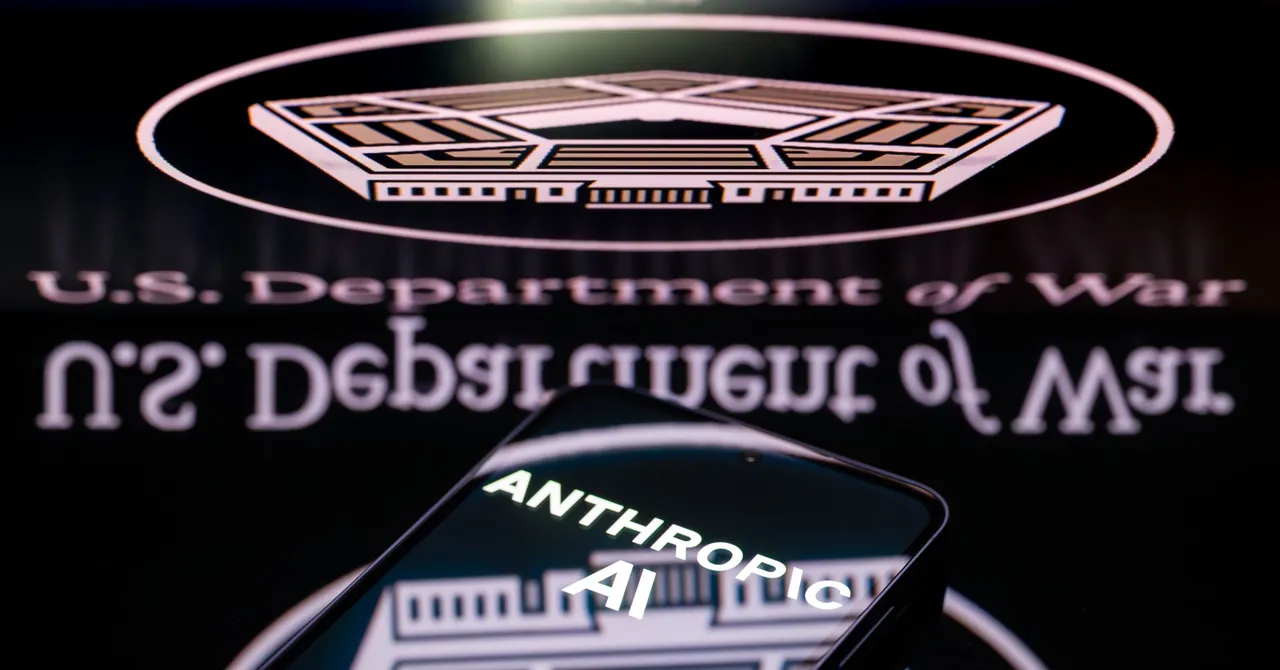
Anthropic Pushes Back After Pentagon Calls It a ‘Supply Chain Threat’

U.S. Pentagon Designates Anthropic as a Supply Chain Risk: A Disruptive Move with Far-Reaching Business Implications

In an unprecedented decision that underscores the escalating geopolitical stakes in AI innovation, United States Secretary of Defense Pete Hegseth has ordered the Pentagon to label Anthropic as a “supply-chain risk,” effectively banning U.S. military contracts with one of the industry’s leading AI firms. This move signals a radical shift in how government agencies perceive and regulate AI giants, especially those considered potential security vulnerabilities due to foreign influence or ownership, and could disrupt the flow of AI development for defense and commercial sectors alike. Previously, Anthropic was celebrated for its Claude AI model, a major player in the rapidly evolving AI ecosystem, but now faces the threat of being sidelined at a critical time of geopolitical tension and technological disruption.

This decision arrives after weeks of tense negotiations between Anthropic and the Pentagon, centered on ethical and strategic use of AI technology. The Department of Defense demanded a broad usage agreement, explicitly permitting AI to be applied for “all lawful uses,” including autonomous combat, which Anthropic rejected based on its ethical stance. With the designation of a “supply chain risk,” the Pentagon aims to shield itself from potential security vulnerabilities—foreign control, influence, or ownership—that could compromise sensitive defense systems. The move establishes a new precedent where AI companies could be classified as security risks, compelling Silicon Valley to rethink their engagement with government agencies under the specter of national security.

Critics and industry experts are raising alarms over the implications of this action, with Dean Ball, senior fellow at the Foundation for American Innovation, condemning it as “the most shocking, damaging, and overreaching thing I have ever seen the U.S. government do.” Such sentiments reflect a broader concern that the move might ignite a dangerous precedent, fostering a climate of lawfare and regulatory overreach that could stifle innovation. Meanwhile, Sam Altman, CEO of OpenAI, announced that his company had secured a deal with the Department of Defense to deploy models in classified environments, emphasizing safety principles such as prohibitions on domestic mass surveillance and autonomous weapons. This delineation signals a potential bifurcation in AI applications, where some firms may be selectively allowed to work with military and intelligence agencies.

From a strategic business perspective, the designation of Anthropic as a security risk could accelerate industry shifts towards more government-friendly AI solutions or push companies to develop sovereign and domestically controlled AI platforms.

  • Disrupts supply chains of AI models crucial for national security and commercial innovation.
  • Raises questions about governmental influence over proprietary AI technology.
  • Set a potential precedent for further restrictions on emerging AI firms linked to foreign influence.

This movement also indicates that AI’s role in national security is stepping into a new era, where innovation pathways are increasingly being dictated by geopolitical considerations rather than purely technological capabilities. As industry leaders and policymakers grapple with defining AI’s ethical and strategic boundaries, disruption in the AI landscape becomes inevitable.

Looking ahead, the industry faces a crucial crossroads: Whether to adapt to a cautiously constrained regulatory environment or forge ahead with a more autonomous, globally competitive approach. The decision will have profound implications for American leadership in AI innovation, cybersecurity resilience, and tech sovereignty. The stakes are high—the coming years will determine if American AI firms can continue to innovate free from overreach or if they will be confined by an increasingly securitized national agenda. In this dynamic, the urgency for stakeholders to embrace disruptive innovation with strategic foresight has never been clearer, as the battle for AI dominance intensifies on multiple fronts. The future of American AI—its autonomy, security, and global competitiveness—hangs in the balance.

Zillow’s AI Revolution — Changing the Game for Real Estate

Revolutionizing Real Estate: Zillow’s AI-Driven Disruption and Future Outlook

In an era where disruption is rewriting the rules of traditional industries, Zillow stands at the forefront of technological innovation transforming the real estate landscape. Despite facing a sluggish market, with the industry bouncing along the bottom and home sales falling short of historic levels, CEO Jeremy Wacksman emphasizes that Zillow’s strategic investments in artificial intelligence (AI) are positioning it as a key player in the next wave of real estate transformation. As analysts scrutinize the company’s evolving approach, it’s clear that the tech giant’s focus on disruptive innovation could redefine how properties are bought, sold, and experienced in the future.

Zillow’s recent push into AI-powered features signals a major shift in market dynamics. The company has integrated generative AI across every facet of its platform, from sophisticated home searches—allowing users to specify highly detailed preferences—to AI-driven virtual staging that renders furniture and interiors with unprecedented realism. The innovative SkyTour feature exemplifies this trend through Gaussian Splatting technology, transforming drone footage into interactive 3D property tours. While the adoption rate remains modest, this technology pushes the boundaries of current visualization standards, creating new avenues for immersive property showcases. Industry experts, including MIT’s AI research teams, highlight that such innovations could challenge traditional marketing models, forcing competitors and brokers to rethink their approach to property presentation.

More than consumer-facing features, Zillow is leveraging AI to improve operational efficiency—cutting costs, shortening development cycles, and maintaining a relatively stable workforce amid an uncertain market. By automating programming, customer support, and design workflows, the company is harnessing AI as an operational force multiplier, which could be a model for tech-driven disruption in other traditional sectors. However, as Wacksman acknowledges, the ethical and regulatory hurdles surrounding virtual staging and AI-generated imagery—especially those that may misrepresent real properties—must be navigated with transparency and clear disclosure standards. Industry insiders, including Elon Musk’s Tesla AI division, warn that widespread reliance on synthetic visuals could lead to consumer trust issues if not carefully regulated.

Despite these groundbreaking developments, consumer adoption remains slow, exemplified by the underwhelming performance of Zillow’s Zillow Immerse on the Apple Vision Pro, which launched with much fanfare but has yet to capture mass market appeal. This highlights a broader industry trend—the technology is ready; market acceptance is the real challenge. Forward-looking analysts, including Gartner and leading venture capitalists like Peter Thiel, agree that the integration of VR and AR will become essential as the industry shifts toward increasingly immersive experiences. The stakes are high: companies that fail to innovate swiftly risk being left behind in a rapidly evolving landscape.

As Zillow doubles down on AI-driven innovation, the question remains: will this new wave of digital disruption solidify the company’s position as a dominant force, or will unforeseen hurdles stall progress? One thing is certain: the future of real estate is inexorably intertwined with cutting-edge technologies that demand agile adaptation. As the industry stands on the cusp of this transformation, the urgency to innovate is clear—those who embrace the technological revolution now will shape the market of tomorrow, cementing their legacy in an era where disruption and innovation are the new normal.

Loyalty Fades as Silicon Valley Embraces the Next Shift

Silicon Valley’s AI Talent Race Reshapes Industry Dynamics

In recent months, Silicon Valley has witnessed an unprecedented surge in high-stakes AI acquisitions and talent moves, signaling a seismic shift in the industry’s landscape. Major players like Meta, Google, and Nvidia have committed billions to acquiring cutting-edge AI startups, demonstrating that disruption in AI capabilities is accelerating at an exponential pace. These strategic investments are not merely about acquiring technology—they are about shaping the future battleground of artificial intelligence, where the contest for talent determines technological supremacy.

Meta’s bold move to invest over $14 billion in Scale AI, coupled with onboarding its CEO, Alexandr Wang, marks a clear signal that the social media giant is positioning itself as a dominant force in AI development. Meanwhile, Google spend a cool $2.4 billion to license Windsurf’s innovative technology, integrating its research teams into DeepMind. Not to be outdone, Nvidia wagered a staggering $20 billion on Groq’s inference platform and has aggressively hired its leadership, underscoring that hardware and inference capabilities remain pivotal in AI’s evolution.

Yet, this aggressive hunt for talent extends beyond mere investment. The industry has entered what analysts are calling a “great unbundling” of talent, with top researchers and founders bouncing between firms in a rapid, fluid market. The recent rehire of ex-OpenAI researchers by their former employer, along with Poaching activity from competing startups like Thinking Machines and Anthropic, underscores an intense war for intellectual capital. This talent mobility signals a fundamental shift in how AI innovation will be driven in the coming decade.

Still, these developments carry profound implications for the broader tech ecosystem. As investor Max Gazor points out, “deal structures are evolving to protect against talent flight,” with measures such as requiring board approval for key strategic moves. Moreover, the war for AI intelligence is not just about securing the best minds but also fundamentally redefining the landscape of AI innovation—favoring agility, bidirectional talent flows, and strategic acquisitions over traditional startup stability. As tech giants and emerging contenders race forward, the industry stands at a crossroads, where the winners of this AI arms race will define the technological and economic landscape of the future. For startups, investors, and developers alike, the message is clear: in the world of AI, timing, talent, and strategic disruption are the new currencies of success.

Social Media Auto Publish Powered By : XYZScripts.com