Matox News

Truth Over Trends, always!

German mayor stabbed in attack, badly injured—police report sharp violence hitting the town

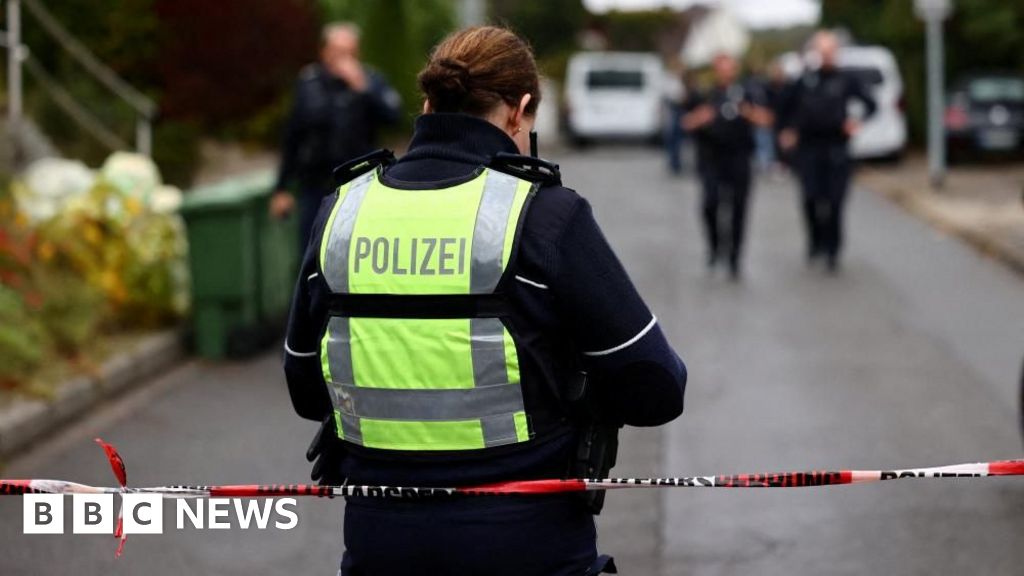
The recent assault on Iris Stalzer, the newly elected mayor of Herdecke in North-Rhine Westphalia, has sent shockwaves through the international community. The incident, which left the 57-year-old politician critically injured just near her home, underscores the fragile state of local political stability in parts of Germany. As police launch a sweeping investigation, the ramifications of this violent act resonate beyond the immediate community, raising alarms about the security faced by public officials in Europe amid rising polarization.

German Chancellor Friedrich Merz condemned what he called a “heinous act”, emphasizing the threat violence poses to democratic processes. His statement reflects a broader concern among international leaders and analysts, who warn that escalating domestic unrest could threaten the stability of democratic institutions. The attack has been linked to familial issues, with police considering a potential family connection in the crime, given the presence of Stalzer’s two adopted children at the scene and reports of domestic violence earlier this summer. Such revelations remind observers of the complex and often tragic intertwining of personal and political lives in today’s shaken social fabric.

The Social Democratic party (SPD), to which Stalzer belongs, expressed profound shock, emphasizing the dangers faced by political representatives who often find themselves vulnerable beyond the political arena. Officials disclosed that her children—a 17-year-old daughter and a 15-year-old son—made an emergency call, prompting a forensic investigation and police questioning. This incident spotlights the rising concerns about domestic issues within political families, which can sometimes become unpredictable flashpoints with national implications. As historians and cold-eyed analysts warn, such violent episodes threaten to undermine citizens’ faith in their leaders and the security of local governance, particularly in a Europe grappling with economic and social upheavals.

The international geopolitical impact of rising violence against politicians echoes far beyond Germany. With many nations confronting similar threats—whether driven by internal discord, ideological extremism, or other destabilizing forces—the attack on Mayor Stalzer might serve as a warning of a broader trend: the potential decline of civil discourse and an increase in political violence. These developments challenge the core principles of democracy and bring into focus how decisions made within political and security frameworks have profound effects on societal stability. The global community watches cautiously, aware that today’s local event could foreshadow larger crises with the power to reshape international order itself.

As the investigation unfolds and the world debates the implications, history offers a sobering perspective: acts of violence against political figures often mark turning points. They serve as stark reminders that while progress and stability may be built through cooperation and law, they are fragile and require constant defense. The shadows of history loom large, warning us that the ongoing struggle to preserve democratic ideals amid chaos remains a defining challenge of our era. With each chapter written in this unfolding saga, it becomes clear: the weight of history is not merely in the past, but in every decision that determines whether a society moves toward unity or descends into chaos.

Manchester Synagogue Attack: Volunteer Among Injured, Society Must Stand Strong

Rising Hate Crimes and Society’s Response: The Role of Community Security in Protecting Our Future

In recent years, the fabric of multicultural communities across the UK has been strained by a troubling surge in hate crimes, particularly targeting the Jewish population. The recent attack on a synagogue in Manchester, which resulted in severe injuries to a Community Security Trust (CST) volunteer, underscores the grave reality that some of our communities are facing. The CST, a pivotal community organization dedicated to monitoring and combating antisemitism since 1984, has become an essential line of defense, deploying extensive security measures to safeguard places of worship, schools, and communal spaces. The injuries sustained by one of its personnel, believed to be the most severe yet, reflect the dangerous escalation of violence and the importance of resilience in our social fabric.

This incident is not isolated but part of a disturbing trend that saw anti-Jewish hate crimes in the UK surge by over 100% in just a year—jumping from 1,543 to 3,282 reported incidents by March 2024, according to Home Office statistics. The CST’s own data indicated 1,521 antisemitic incidents in the first half of this year alone. These numbers expose a future where intolerance and hate threaten to undermine the societal cohesion necessary for families and communities to thrive. Sociologists like Dr. Samuel Abrams have pointed out that radicalization and societal fractures often manifest through such hate crimes, which target the emotional and physical safety of vulnerable communities, eroding trust and fostering division.

To counter this rising tide of hostility, organizations like the CST have stepped up their efforts, employing over 100 staff members and more than 2,000 trained volunteers. Their training spans from first aid to advanced security procedures, often working alongside private security firms funded by government grants—including an £18 million annual subsidy from the Home Office to protect sites ranging from nurseries to high-profile communal buildings. Beyond physical security, the CST dedicates resources to intelligence work, analyzing neo-Nazi and Islamist sources that fuel hate, and collaborating with wider anti-hate networks such as Tell Mama. This united front demonstrates a community-led resilience that refuses to be intimidated, emphasizing that the fight against hatred requires both vigilance and proactive policy measures.

The societal implications of such efforts extend beyond mere security. They serve as a moral bulwark to preserve the integrity of families and the youthful generations who will inherit the society we shape today. While these measures are essential, some social commentators argue that addressing root causes—such as ignorance and economic disenfranchisement—remains critical. Historians like Niall Ferguson have emphasized that societal stability depends on integrating diverse communities and fostering shared values, making it paramount that our institutions invest in education and intercultural dialogue. Initiatives like youth awareness courses, which engage teenagers in street-level understanding of the importance of tolerance, are steps in this direction, echoing a broader societal need to unite against divisiveness at its core.

Looking ahead, the challenge remains: how do communities ensure that the ideals of respect, safety, and shared purpose are not just ideals, but lived realities for the next generation? As societal rifts widen in some areas, it is vital to remember that beneath the divisions lie communities longing for safety and understanding. The story of Manchester’s synagogue is a stark reminder of the ongoing struggle but also of the resilience that emerges when communities and institutions stand together. This society’s future depends on whether we dare to bridge the gaps, prioritize unity, and invest in collective hope—because in every act of protection and understanding, we forge the path toward a society where all can flourish free of fear.

Ukrainian family of four wiped out in Russian drone attack, officials confirm

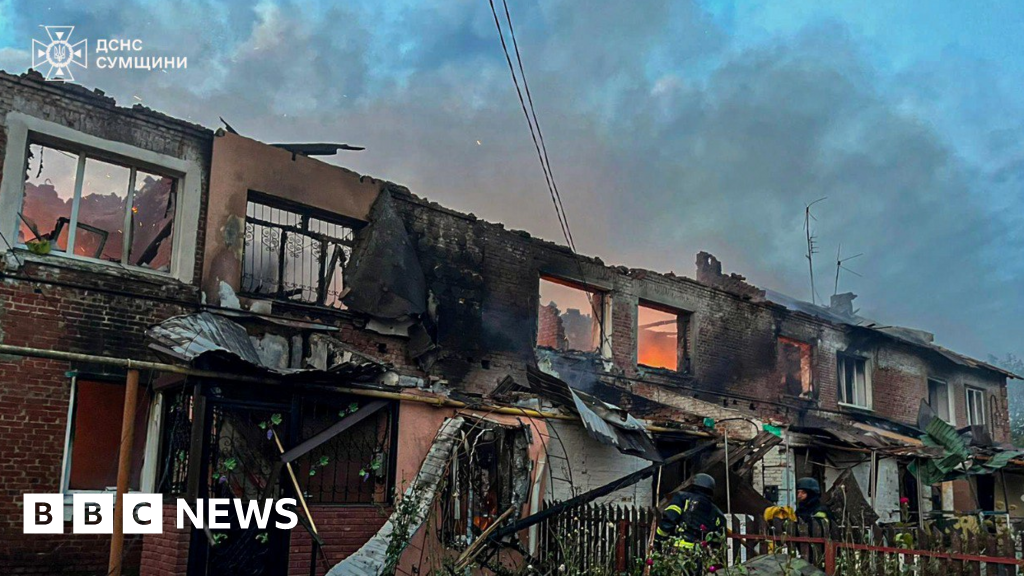
The ongoing conflict between Russia and Ukraine continues to escalate, illustrating the profound geopolitical impact of Moscow’s relentless pursuit of influence and control. In the recent overnight attack in Ukraine’s Sumy region, a tragedy unfolded as a family of four was confirmed dead, struck by a Russian drone missile targeting a residential building. Local officials, including regional head Oleh Hryhorov, condemned the strike as a deliberate act of violence against civilians, a disturbing sign that the conflict’s brutality has become normalized. Amidst the chaos, Ukraine’s air defenses demonstrated resilience, shooting down 46 out of 65 inbound Russian drones — yet the remaining 19 caused deadly hits across six locations. Such persistent assaults highlight how Russian military tactics have evolved, emphasizing infiltration and aerial bombardment to destabilize Ukrainian society.

Since Russia’s wide-scale invasion in February 2022, the international community has watched in concern as the conflict morphs into a protracted stalemate, with significant consequences for global stability. While Moscow remains comparatively silent on specific losses, it claims to have destroyed 81 Ukrainian drones within Russian borders, framing its actions as defensive. Conversely, Ukraine’s appeals for advanced Western weaponry, including long-range missiles capable of striking deep into Russian territory, index a strategic shift aimed at balancing Moscow’s aggression. Prominent analysts, such as those at the European Council on Foreign Relations, warn that the ongoing Western defense aid, totaling €2 billion for drone technology alone, significantly impacts Ukraine’s capacity to resist and persevere, yet also risks expanding the scope of the conflict.

The decision by Western powers to supply Ukraine with sophisticated weaponry—especially the possible deployment of long-range missiles like the U.S.-considered Tomahawk — signals a critical juncture. If these supplies are sanctioned, Kyiv’s ability to target key Russian military hubs and logistical nodes could significantly weaken Moscow’s operational capabilities. The American administration and European Union officials argue that empowering Ukraine with these tools is essential, contemplating whether such support might force Vladimir Putin into negotiations or prolong the war by widening its geographic scope. Yet, some international voices caution that this escalation could ignite a broader regional confrontation, risking unintended consequences that threaten global peace and security.

As the conflict persists, predictions from historians and international security analysts emphasize that the true turning point remains uncertain. The war’s toll—both human and geopolitical—is staggering. Ukrainian civilians pay a devastating price in lives and homes, while the Russian military’s determination to press its advantage tests the resolve of Western allies. The conflict’s potential to morph into a wider confrontation, perhaps involving NATO or other global powers, embodies a dangerous crossroads. With every drone strike, diplomatic maneuver, and international aid package, the pages of history are being written—an unfolding narrative of resilience, geopolitical chess, and the profound costs of modern warfare. As the war drags on, the weight of this moment rests heavily on the collective consciousness of the world, reminding us that in the storm of history, the future remains fundamentally uncertain.

Russia’s Foreign Minister Affirms No Plans to Attack EU or NATO Nations

Geopolitical Flashpoints and the West’s Response: A World on Edge

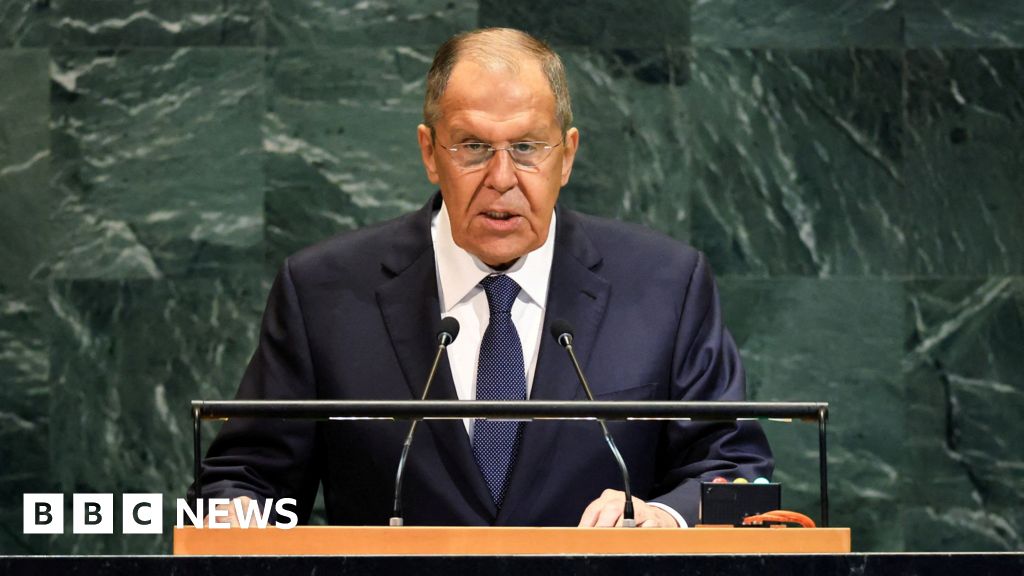
As Russia reaffirms its stance at the UN General Assembly, the world watches with increasing concern. Foreign Minister Sergei Lavrov declared that Russia has no intention of attacking EU or NATO member states but warned of a “decisive response” to any perceived aggression. His remarks come amid rising tensions in Europe, where reports of Russian drone flights over Danish airports and incursions into Estonian airspace have heightened fears of a new Cold War confrontational dynamic. NATO has responded with a series of rapid defense measures, including air patrols over Poland, signaling that the alliance is prepared to defend its members should provocations escalate.

Meanwhile, the simmering conflict in the Middle East remains a focal point of international instability. Lavrov condemned the recent attacks by Hamas on Israel, emphasizing that Russia believes there is no justification for the brutal killings of Palestinians in Gaza or for Israel’s plans to annex parts of the West Bank. As reports indicate that over 65,000 people have been killed in Israeli strikes, with some 1,200 victims of Hamas attacks, the region teeters on the brink of a larger conflagration. Russia’s stance underscores the growing divide: Western nations largely support Israel, while Russia advocates for a more balanced approach, criticizing what it calls “Israeli aggression” that threatens regional stability. These developments could have profound geopolitical impact, fueling broader alliances and conflicts worldwide, especially given Moscow’s accusations of U.S. and Western involvement in destabilizing the region.

On the diplomatic front, Lavrov highlighted that Western efforts to reimpose sanctions on Iran were unlawfully sabotaged, reflecting Moscow’s opposition to Western policies that threaten to destabilize the region further. As sanctions are set to reenter force, Russia and China remain committed to resisting U.S.-led economic pressures, signaling a shift towards a more multipolar power structure. Analysts warn that this reinforcement of alliances could cement a new geopolitical landscape, challenging U.S. hegemony and Western diplomacy, while fostering a dangerous divergence in international norms.

The United States, under the recent comments of Donald Trump, seems to adopt a more aggressive stance. Trump’s suggestion that NATO nations should shoot down Russian planes in their airspace exemplifies a dangerous escalation that risks sparking open conflict. NATO’s warning that it will deploy “all necessary military and non-military tools” underscores the fragile state of peace. As these developments unfold, historical voices warn that the world might be approaching a turning point—one where diplomacy could be overshadowed by escalation, pushing humanity closer to a potential battlefield of global proportions. The unfolding narrative reminds us that the choices made today by powerful nations will echo through the corridors of history, shaping the future of global stability and peace.

Israeli Attack Targets Yemen's Houthis, Reports Say Eight Killed
Israeli Attack Targets Yemen’s Houthis, Reports Say Eight Killed

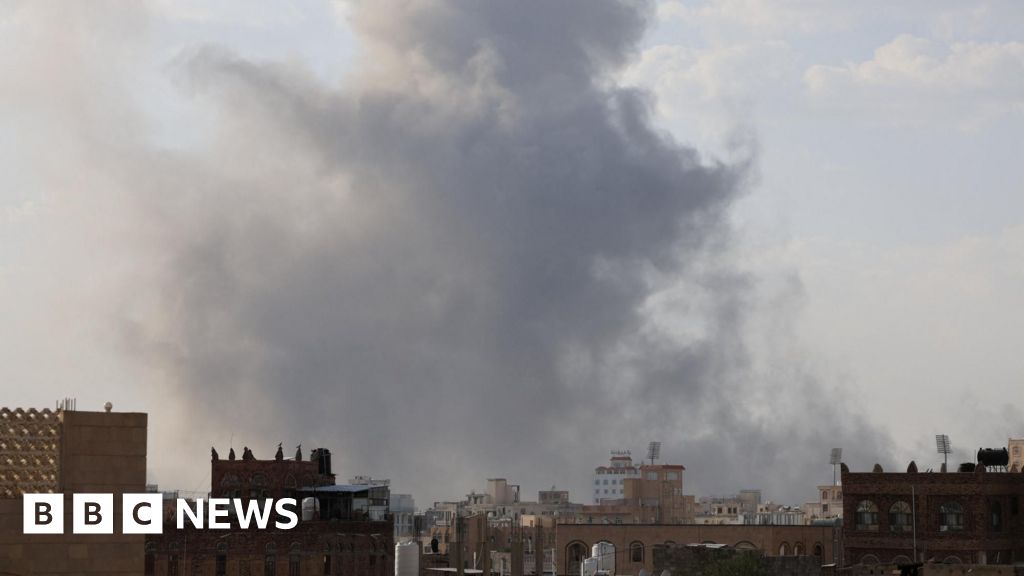
The recent escalation between Israel and the Houthi movement in Yemen signals a disturbing shift in the regional geopolitical landscape, one that threatens to drag multiple nations into a broader conflict. The Israeli Defense Forces (IDF) announced their most extensive strike in Yemen to date, targeting Houthi military and intelligence facilities in Sanaa. The attack, carried out by dozens of Israeli aircraft, signifies a bold declaration of intent—one that underscores Israel’s determination to respond to the repeated drone and missile assaults emanating from Houthi-controlled territories. This offensive marks a crucial turning point, cementing the perception that the conflict in Gaza is transcending borders and inspiring regional actors to take a more active stance.

  • On Thursday, the IDF targeted facilities including the Houthi military’s General Staff Command Headquarters and security compounds, aiming to cripple the group’s operational capabilities.
  • The Houthis, claiming to support Palestinian resistance, have been attacking Israel and global shipping lanes in the Red Sea and Gulf of Aden—an assertion that official analysts describe as an attempt to expand their influence beyond Yemen’s borders.
  • Violence in Yemen, now eclipsing its civil war cycle, risks becoming a pivotal regional flashpoint, drawing in international powerbrokers and sparking fears of a wider confrontation.

In Yemen itself, the fallout has been devastating. Civilian casualties are mounting as the Israeli strikes hit residential areas and vital infrastructure, including the Dhahban power station. The Houthi-run health ministry reports at least eight killed and over 140 injured, with first responders battling to recover victims buried beneath rubble. Such figures highlight the increasing toll on Yemen’s already devastated society, emphasizing how the ripple effects of this conflict threaten to destabilize a fragile state. Historians warn that prolonged violence risks transforming Yemen into a regional battleground, much like Syria or Libya, with repercussions that will extend far beyond its borders.

Meanwhile, international organizations have condemned the escalation, though some analysts argue these condemnations are more performative than effective. The United Nations has called for restraint, but the reality on the ground suggests that neither side intends to back down soon. The Houthi leadership, led by Abdul Malik al-Houthi, frames this escalation as a response to Israeli aggressions in Gaza. Their spokesperson described the attack on Eilat—a drone launched from Yemen—as retaliation for what they called “genocide” and “dangerous escalation” by Israel towards Palestinian civilians. Such rhetoric raises the stakes, transforming localized skirmishes into a broader ideological conflict rooted in regional power struggles and religious identities.

Security experts caution that this clash is not isolated; rather, it is intertwined with the strategic ambitions of global actors, including Iran, which is believed to provide support to the Houthis. The recent wave of violence underscores how decisions made in Jerusalem or Sanaa can ripple across continents, influencing international diplomacy and military alliances. The offensive also signals an unsettling shift: the emergence of Yemen as a new front in Israel’s regional security calculus. Analysts warn that unless international diplomacy intervenes swiftly, what begins as localized strikes could evolve into a protracted conflict with unpredictable consequences, threatening to reshape the Middle East’s geopolitical contours.

As history continues to unfold in the shadows of crossfire and diplomacy, the world is left contemplating the weight of these events. The drums of war beat louder, echoing across the sands and seas—reminding nations of the fragile threads upon which peace and chaos hang. The unfolding saga of Israel and Yemen is not merely a regional dispute, but a chapter in a larger story of power, ideology, and survival—where the decisions carved into history’s granite today may define the destiny of nations for generations to come.

Dallas Ice shooting suspect planned attack, FBI warns—youth warned to stay alert

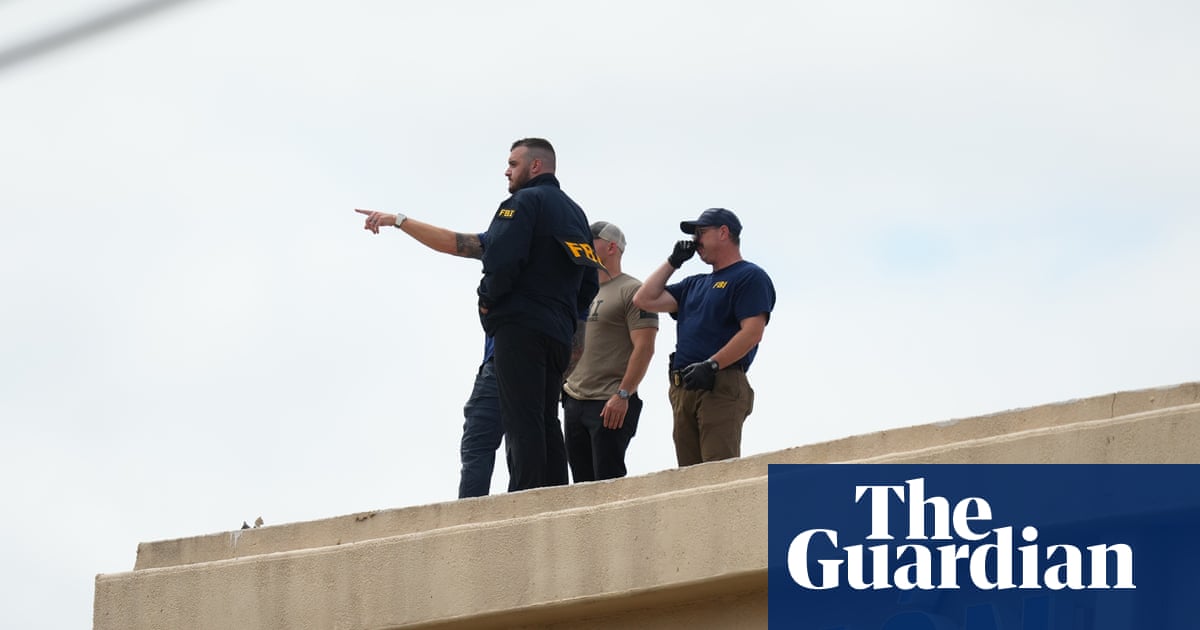
In recent days, the United States has faced a stark reminder of the rising tide of political violence and internal strife. The shocking attack on an Immigration and Customs Enforcement (ICE) detention facility in Dallas underscores the deepening divisions within American society—a nation torn between lawlessness and the rule of law. The FBI disclosed that the suspect, identified as 29-year-old Joshua Jahn, meticulously planned the assault, even deploying a ladder and a high-powered rifle with sniper capabilities. Such details reveal an alarming degree of premeditation, emphasizing that the incident was not an impulsive act but a calculated strike against the very institutions meant to uphold national sovereignty and law enforcement integrity. As analysts from think tanks warn, these acts threaten to destabilize America’s internal security and fuel further polarization, which, if left unaddressed, could usher in an era of increasing chaos and societal fracture.

The geopolitical impact of this domestic crisis extends far beyond U.S. borders. As the Biden administration struggles to manage a surge in political extremism, international observers from Russia to China, along with global organizations such as the United Nations, are watching with concern. The incident comes amid a backdrop of strained global relations, where weak governance in the USA fuels skepticism about American leadership and stability. The rhetoric surrounding the attack, with former President Donald Trump and right-wing commentators framing it as a consequence of what they label as “radical left” policies, exemplifies how domestic issues are increasingly intertwined with international perceptions of American strength. The potential for such violence to influence foreign policy and global stability remains a key concern, particularly as nations contend with their own internal conflicts and the erosion of traditional security paradigms.

Notably, this attack appears to be a manifestation of rising militant tensions fueled by intense partisan conflicts and an emboldening of radical elements. Historians caution that in times of social upheaval, acts of targeted violence against government institutions are often precursors to broader destabilization. Various analysts from NATO to the European Union have warned that the ongoing polarization within the USA may serve as a blueprint for others who seek to undermine Western cohesion. The suspect’s expressed hatred for the federal government, along with notes indicating an intent to instill terror among ICE agents, reveal troubling ideological undercurrents that could inspire copycat violence internationally. These dynamics threaten to ripple outward, challenging the stability of democracies around the world. As the global community observes the U.S. domestic crisis unfolding, the need for decisive leadership becomes undeniable.

Ultimately, the Dallas shooting encapsulates a pivotal moment—an ongoing chapter of history still being written. With each act of violence, the fragile fabric of societal trust is further frayed, pushing nations to confront uncomfortable truths about internal divisions and external instability. The world watches breathlessly, aware that such acts of terrorism, rooted in hatred and ideological extremism, have consequences far beyond national borders. As leaders debate solutions, the weight of history presses down: will the United States emerge resilient, or will this be a harbinger of a new era of chaos? The answer remains unwritten, but the shadows cast by this violence will surely shape the pages of history for generations to come.

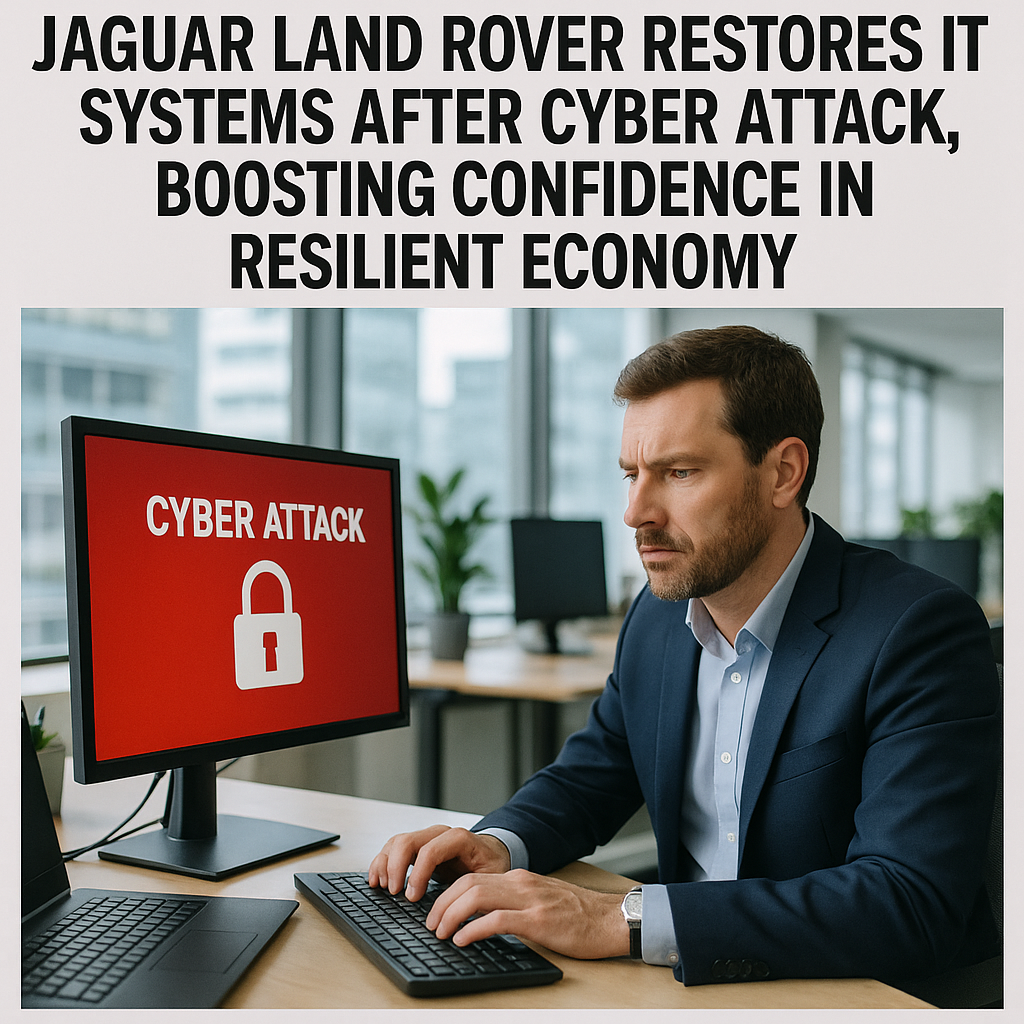
Jaguar Land Rover Restores IT Systems After Cyber Attack, Boosting Confidence in Resilient Economy

The recent cyber-attack on Jaguar Land Rover (JLR), a cornerstone of the UK’s automotive industry and a substantial player in global luxury vehicle manufacturing, has sent shockwaves through the supply chain and financial markets alike. Since August, JLR’s operations have been significantly impacted, with production lines suspended and logistics frozen due to malicious cyber interference targeting its IT infrastructure. The company’s phased restart of operations signifies a cautious yet critical step toward restoring stability, but the economic ripple effects pose a broader challenge for policymakers, investors, and industry stakeholders.

JLR’s predicament underscores the vulnerability of modern manufacturing ecosystems that rely heavily on sophisticated IT networks. Its announced plan to clear a backlog of payments and ramp up invoicing processing highlights the severity of the disruption and the urgent need for resilience strategies. Nonetheless, the impact extends far beyond its factories: an estimated 100,000 jobs across the supply chain are at potential risk, with many smaller firms teetering on the brink of insolvency. The UK government has committed to a multi-faceted support package, including discussions around government-backed loans and potential procurement of critical parts, though skepticism remains among suppliers regarding the efficacy of these interventions. As industry minister Chris McDonald emphasized, “support must be tangible, not just promises.”

  • The UK government faces increased pressure to safeguard its industrial backbone, with Prime Minister Rishi Sunak indicating that support measures are being developed around the clock.
  • Economists warn that prolonged shutdowns could diminish the UK’s competitiveness, especially as global markets recover and demand shifts towards technologically advanced and sustainable transport solutions.
  • Market analysts note that investor confidence in the automotive sector may waver until clear, tangible policies emerge to shield suppliers from the cyclical shocks of cyberattacks and operational halts.

Furthermore, the policy consequences of the cyber incident could accelerate government intervention in the industrial sector, prompting calls for improved cybersecurity standards and risk management frameworks across critical manufacturing nodes. This scenario also calls into question the reliance on just-in-time logistics, suggesting a strategic pivot towards more resilient supply networks. Think tanks like the Institute of Economic Affairs argue that infrastructure resilience should become a national priority, to prevent future crises that can destabilize supply chains and economic output. Amidst these circumstances, forward-looking business leaders and policymakers must navigate a complex landscape where innovation and security are becoming inseparable. The question is no longer whether industries can standalone, but whether nations can harness this challenge as a catalyst for a resilient and technologically robust future.

As the wheels of global markets turn and nations position themselves for future powers, the pulse of economies remains relentless. In this digital age, the strength of a nation’s economy now hinges on its ability to innovate securely, adapt swiftly, and safeguard its industrial heart. While the immediate outlook remains tense, the resilience forged in this crucible of crisis will define the leaders of tomorrow. In crafting policies that protect supply chains, foster technological advancements, and promote strategic independence, governments and corporations alike are scripting the next epoch of economic power—an era where resilience and innovation shape the very fabric of global influence.

Social Media Auto Publish Powered By : XYZScripts.com