Matox News

Truth Over Trends, always!

Mass Youth Show Support for Palestine Across Australia, Promise Continued Protests After Gaza Ceasefire

As tensions in the Middle East continue to ignite a global response, countries across the world are witnessing a surge in activism and diplomatic maneuvers that reveal the profound geopolitical impact of recent events. The recent ceasefire deal brokered by Donald Trump in Gaza initially brought a glimmer of hope for peace, but skepticism remains high among international analysts. The deal, which has temporarily alleviated some violence, remains unpopular among many Palestinians and defending voices who argue that real change requires more comprehensive negotiations and local consultation, not just US-led agreements. Many see this move as yet another example of how powerful nations, particularly the United States, influence conflicts to serve broader strategic interests, often at the expense of self-determination for the Palestinian people.

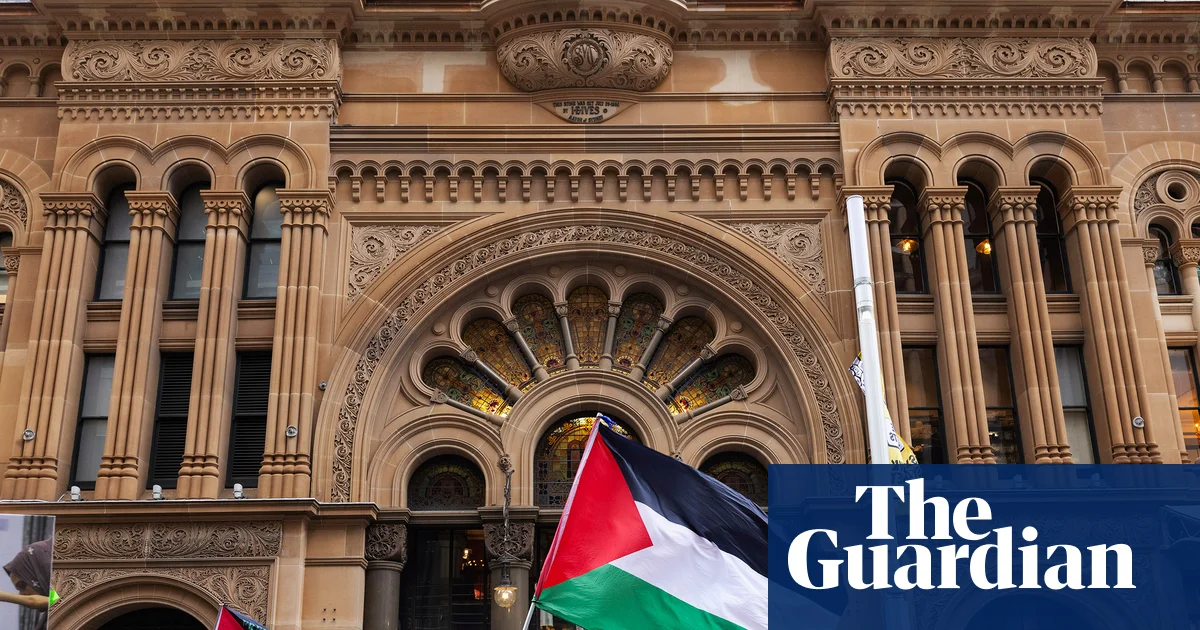
In Australia, waves of demonstrations underscore how global conflicts inexorably ripple into local political and social spheres. Tens of thousands have gathered in cities like Sydney, with organizers affirming an enduring commitment to supporting Palestine. Despite police estimates of 8,000 attendees in Sydney, reports indicate that the rallies are far larger, symbolizing widespread concern and a sense of shared responsibility among youth and activism groups. Notably, these protests aim to maintain pressure on Australian policymakers to implement more aggressive sanctions on Israel and cease trade in military equipment—a move supported by numerous analysts who see economic leverage as a vital tool for fostering real change. The significance of these protests lies not only in the numbers but in their defiance against a backdrop of international diplomacy often perceived as tepid or superficial, further exemplified by the recent Gaza ceasefire mediations.”

The protests also carried a personal and emotional weight, as many families like Shamikh Badra and Abubakir Rafiq highlighted the ongoing human tragedy—families torn apart and lives on hold while seeking justice and closure. These deeply personal stories serve as a stark reminder that decisions made on political and diplomatic levels have immediate, devastating effects on societal fabric and individual lives. International organizations, including Unrwa and Unicef, are preparing to deliver aid to Gaza, an effort seen as critical in a region where the aftermath of the recent conflict continues to threaten survival and stability.

Among the most striking features of this rising activism is the resilience of grassroots movements that challenge institutional constraints. In Sydney, protesters defied the NSW court of appeal and police opposition, demonstrating how civil disobedience remains a powerful tool for marginalized voices. Leaders like Jenny Leong of the NSW Greens have explicitly condemned the influence of Trump and his policies, warning against the dangerous precedent set when the future of Palestinians is dictated by foreign powers rather than their own communities. In history, such local acts of defiance have often foreshadowed larger geopolitical shifts, and observers warn that as conflicts persist, the struggle for self-determination and justice becomes increasingly intertwined with global power calculus.

As the world watches this unfolding narrative—a testament to the enduring complexity of geopolitics—a somber realization emerges: the decisions made in diplomatic chambers and on city streets will echo for generations to come. Each rally, each diplomatic summit, and each tragic story from Gaza and beyond weaves into the fabric of history, reminding us that in the age of globalized conflict and intervention, the fight for sovereignty, justice, and peace remains an ongoing saga where the weight of the past shapes the unpredictable contours of the future.

Australia News Live: Zali Stegall warns of looming crackdown, Gaza flotilla return sparks debate

Global Tensions Rise: Democracy Under Threat as Major Powers Engage in Controversial Crackdowns

In recent weeks, the international landscape has become increasingly volatile, with nations at the forefront of geopolitical shifts exhibiting contrasting approaches to civil liberties and global diplomacy. Australia’s recent legal and political debates exemplify this divide, raising serious questions about the future of free speech, protest rights, and governmental accountability amid a backdrop of rising authoritarian risks. Meanwhile, major global actors such as Israel, the United States, and China continue to shape a complex web of alliances and conflicts, with pivotal decisions leaving a lasting impact on societies and international stability.

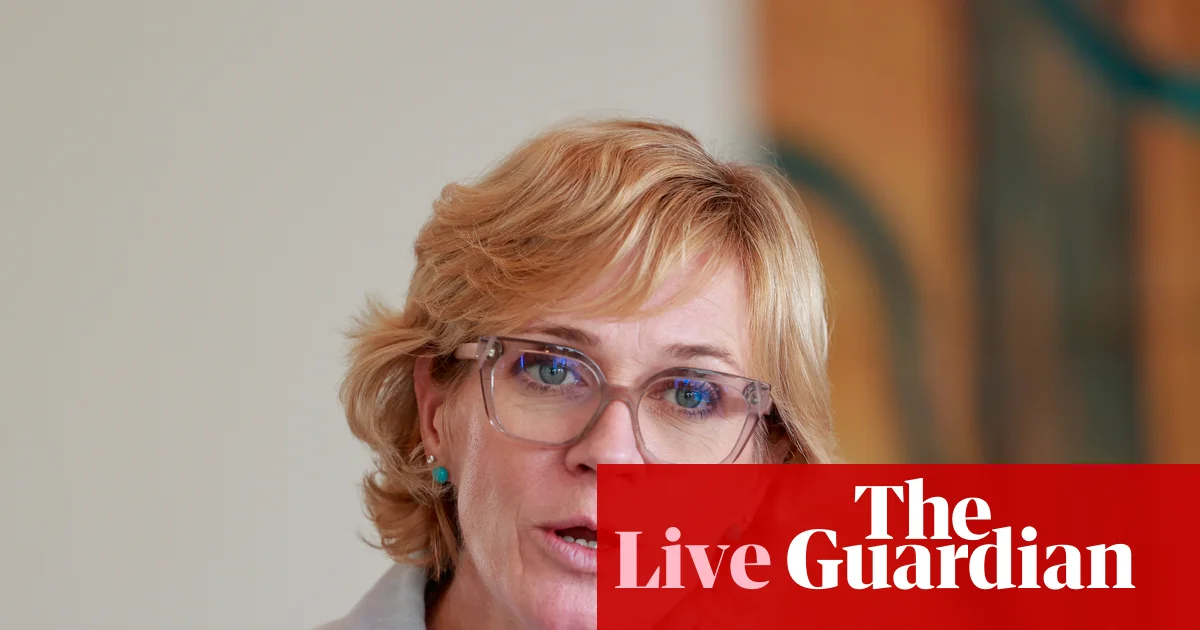
Within Australia, the government faces mounting scrutiny over its handling of civil protests and freedom of expression. Independent MP Zali Steggall has issued a stark warning against mimicking the alleged “totalitarian crackdown” observed in the United States, where recent police actions against activists have sparked global concern. The NSW court’s decision to threaten contempt charges against protesters planning a demonstration outside the Sydney Opera House marks a turning point, indicating a disturbing trend toward constraining civil liberties under the guise of safety. As historian Dr. Richard Holmes asserts, such restrictions threaten to undermine the very foundations of a democratic society and set a dangerous precedent for other nations recognizing similar measures.

Decisions That Echo Beyond Borders: How International Policies Reshape Societal Norms

  • Israel’s deportation of Australians attempting humanitarian aid—among them Juliet Lamont and Abu Bakr Rafiq—has ignited international protests, exemplifying the risks faced by human rights advocates caught in regional conflicts.
  • The ongoing Gaza flotilla incident, with activists vowing to return in larger numbers, demonstrates an unwavering commitment to humanitarian causes, yet also highlights the stark geopolitical divide over the legitimacy and legality of Israel’s blockade on Gaza.
  • In the United States, the recent crackdown on protests coupled with expansive government surveillance has led analysts to warn of a slide toward totalitarianism, echoing fears within Australia’s political discourse.

As noted by global policy analyst James Carter, such decisions—often justified as necessary for security—do little to address underlying crises but instead exacerbate societal divisions and erode trust. The ongoing debate in Australia over a proposed transparency bill, which critics claim threatens to deepen secrecy and diminish government accountability, exemplifies this struggle. Former judge Helen Archer laments that these measures are “working against Australians’ right to trust their institutions,” echoing worldwide fears that democracy is unraveling in favor of opaque governance and authoritarian control.

Global Instability and the Future of Free Expression

Across continents, the tried and tested balance between security and liberty is tipping dangerously. China’s detention and suppression of dissent in Hong Kong, along with Russia’s crackdown on opposition, serve as stark warnings against losing sight of fundamental rights. Meanwhile, the Pope’s recent plea to uphold journalism as “a public good” and to combat clickbait reflects a moral stand for truth in an era dominated by misinformation and sensationalism. His call for responsible communication safeguards democracy’s core—yet the challenge remains to resist the tide of censorship and control that many nations are increasingly embracing.

As international organizations like the United Nations call for adherence to human rights while powerful actors shift towards authoritarian tactics, the weight of history presses heavily on the future. The confrontation is no longer confined to borders but is a global struggle that will define the direction of Western societies and beyond. The choices made now—whether to silence dissent or defend free speech—carry the profound risk of forging a new era, one where the guardians of liberty must confront the forces seeking to reshape democracy into a tool of control. The ink of history is yet to dry, and the world watches with bated breath, awaiting the verdict of those who dare to resist the slide into irreversible darkness.

Australia Politics: Judges to decide on Opera House Palestine protest; rich claim big tax break | Australia News

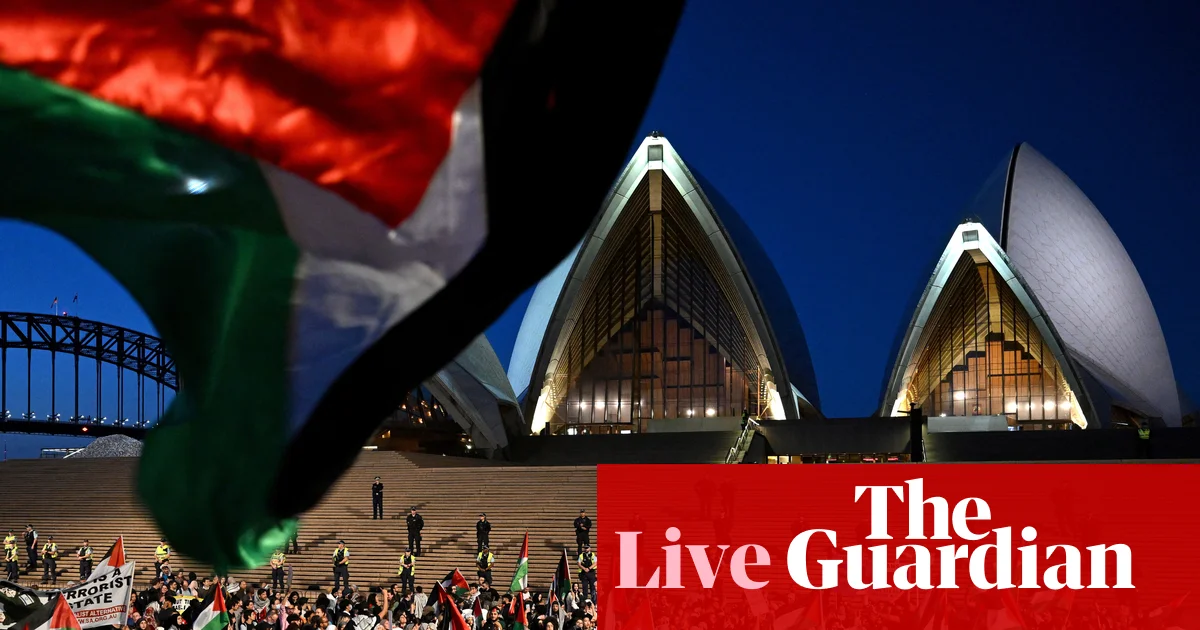
In a pivotal moment for Australia and the broader geopolitical landscape, a rapidly unfolding legal showdown at the NSW Court of Appeal centers around a proposed pro-Palestine demonstration in downtown Sydney. The organizers, the Palestine Action Group, have put forward plans for a massive march, potentially drawing around 40,000 people through the city center to the iconic Sydney Opera House. However, local authorities and police are pushing back, citing serious concerns over public safety and crowd control, and have formally challenged the rally’s legality. The judges are set to deliver their ruling soon, with early indications pointing to a tense debate about free speech versus security—one that may set a precedent for political protests amidst rising international tensions.

Historian and political analysts observe that such demonstrations are emblematic of a shifting geopolitical climate, where domestic protests increasingly mirror global conflicts. The controversy over the Sydney march echoes similar tensions overseas, especially as the Israel-Gaza conflict continues to dominate international headlines. Previous protests of comparable scale, such as the mass rally at Sydney Harbour Bridge with hundreds of thousands, highlight the potential for public demonstrations to serve as flashpoints. Chief Justice Andrew Bell warned that Macquarie Street could turn into a “narrow funnel,” risking chaos and endangering lives. Such comments underscore the delicate balance between upholding civil liberties and maintaining order—a dilemma many Western democracies face today as protests grow more passionate and polarized.

The decision in Sydney’s court has global reverberations, particularly considering the role of international institutions and regional diplomatic policies. While some leaders advocate for free expression and support activism, others emphasize national security, often leading to a crackdown on dissent. The unfolding scenario highlights hownations are increasingly under pressure to navigate the complex interplay of human rights, sovereignty, and international diplomacy. Experts from organizations like Oxfam have pointed out that economic disparities are also fueling unrest; their recent study indicates that unpopular tax policies, such as the capital gains discount, primarily benefit the wealthy elite—a fact that fuels domestic discontent and adds another layer to this complex geopolitical puzzle.

As the courts weigh the legality of the Sydney protest, the broader international scene offers little respite. The ongoing Israel-Gaza conflict and rising tensions in the Middle East continue to influence domestic politics across the globe. Governments are compelled to carefully manage what can often be seen as a delicate act—balancing support for free political expression with the need to control violence or unrest. The Sydney case becomes a microcosm of this larger trend, illustrating how decisions made today can shape the trajectories of societies for generations. As history continues to unfold, what appears to be a local legal debate may well serve as a critical juncture for the future of civil liberties and international diplomacy—reminding us all that the sparks of conflict and resistance often ignite in local courts but burn across the pages of history.

Australia News Live: Hecs Debt Relief Starts November – Waters Demands More Support for Detained Flotilla Activists

Global Power Play: Navigating Conflicts, Alliances, and Domestic Policy Shifts

In an era where the geopolitical landscape shifts rapidly, nations are increasingly compelled to reassess alliances and strategic priorities. Australia, under the leadership of Prime Minister Anthony Albanese, exemplifies this dynamic as it grapples with complex international issues—from supporting activists attempting to break the Gaza blockade to navigating climate commitments and domestic policy reforms.

One of the most striking international developments involves the interception of a flotilla attempting to breach the naval **blockade on Gaza**, aimed at delivering critical aid to the beleaguered Palestinian territory. Six Australians who participated face detention by **Israel**, prompting calls from Australian politicians, including opposition figures such as Larissa Waters, for the government to escalate diplomatic efforts. Waters has demanded greater action from Foreign Minister Penny Wong, including “calling on the Israeli ambassador” and even contemplating the expulsion of that ambassador if Australia’s nationals are not treated with due security and respect. The situation underscores the **geopolitical impact** of America’s close alliance with Israel—a relationship that many analysts argue complicates Australia’s ability to adopt a balanced foreign policy amid rising tensions.

Meanwhile, in domestic policy, the Albanese government has announced significant steps to ease economic burdens for Australians. Starting mid-November, the **Higher Education Contribution Scheme (HECS)** debt will be cut by 20%, a move aimed at alleviating the student debt crisis faced by millions. This policy shift, backdated to balances as of June, reflects a broader economic strategy to boost domestic affordability and social mobility. Critics, however, argue that such measures serve political ambitions more than systemic reform, especially as debates around **climate change** intensify. The Greens, led by Larissa Waters, have repeatedly accused the government of ignoring expert advice—asserting that the **62-70% emissions reduction targets** are “low-balled” and favoring coal and gas industries with too lenient policies. This rift demonstrates how domestic policy decisions are deeply intertwined with **global climate commitments**, which, if rushed or compromised, could undermine Australia’s credibility on the international stage.

In the broader arena, the **Green parties worldwide** are pushing hard for environmental protections and a shift away from fossil fuels. Waters has called for an end to native forest logging and stronger environmental safeguards, criticizing the government’s willingness to negotiate with powerful fossil fuel interests—particularly the notorious “go zones” that reportedly include 22 coal projects seeking approval in the Bowen Basin. International organizations like the Climate Change Authority warn that actual commitments are insufficient to meet the looming climate crisis, a concern echoed by Australian experts who emphasize that **how nations choose to act now will define their legacy**. The tension between economic growth’s reliance on fossil fuels and the urgent need for ecological sustainability continues to be a defining feature of Australia’s **geopolitical impact** on global climate efforts.

As these internal and external tensions unfold, history remains at the crossroads. Decisions made in the coming months will resonate across nations—impacting alliances, influencing international perceptions, and shaping the lives of generations to come. From the **growing unrest in Gaza** to the **policy debates within Australia’s halls of power**, it is clear that the true test of leadership is whether a nation can uphold justice, security, and sustainability—all while navigating the turbulent currents of the world’s future. The unfolding narrative is a stark reminder that history’s weight lies not just in the decisions of today, but in the legacy of what is yet to be written.

Tech Giants Step Back from Fighting Misinformation in Australia, Raising Concerns

Global Implications of Australia’s Misinformation Regulation Shake-up

Australia’s Digital Dilemma: Misinformation Policy Under Threat

In a move that signals a broader shift in the global landscape of digital regulation, Australia faces a pivotal moment as major tech giants consider abandoning their commitments to combat online misinformation. The voluntary code introduced in 2021, which saw signatories including Meta, Google, Microsoft, and X (formerly Twitter), was designed to promote transparency and accountability in tackling false and deceptive content online. However, recent developments reveal a concerted pushback from digital platforms, citing the issue as “politically charged” and too “contentious” to regulate effectively. This attitude underscores a wider trend of tech companies increasingly resisting government-mandated oversight, signaling potential chaos ahead for the fight against misinformation.

Many international analysts warn of far-reaching geopolitical repercussions should social media giants pull back from their digital responsibility. The digital landscape has become a battleground in the ongoing contest between free expression and the need for truth—an issue that has deeply divided the Australian public along partisan lines. The Australian Communications and Media Authority highlights that the concept of “misinformation” remains highly subjective, linked closely to personal beliefs and societal values. These factors make the institution of effective regulation a daunting challenge. Historian and geopolitical analyst Dr. Elizabeth Carrington notes that such reluctance by corporate giants can embolden authoritarian regimes worldwide, where misinformation is weaponized to manipulate public opinion and suppress dissent. This geopolitical calculus risks sparking a domino effect, where other nations may follow Australia’s lead, either embracing digital laissez-faire or capitulating to unchecked misinformation.

Meanwhile, the international community observes with concern as internal debates within Australia reflect the larger global struggle over truth in the digital age. The European Union, for example, has taken a more aggressive stance on regulating tech companies, yet even here, the challenges of defining and policing misinformation persist. Critics like Timothy Graham, an expert at Queensland University of Technology, argue that the politicization of “misinformation” complicates efforts, turning the simple task of content verification into a minefield of ideological bias. Meanwhile, public trust in social platforms continues to erode; recent reports show fewer content violations are being effectively enforced even as 74% of Australian adults remain concerned about false information online, according to ACMA’s latest survey. As countries worldwide grapple with these complexities, the core question remains: How do nations balance free speech with the imperative to prevent harm?—a question that, ultimately, defines the era of digital governance.

The potential retreat of tech platforms from their self-imposed obligations foreshadows a crucial crossroads in the evolution of global digital society. With Australia’s decision to reconsider or dismantle its misinformation safeguards, the stage is set for a possible upheaval—where misinformation fuels societal divisions, deepens political rifts, and weakens the very fabric of democratic accountability. As policy-makers face mounting pressure from both the digital giants and their citizenry, the world watches with bated breath, knowing

Australia News Live: Nicole Kidman & Keith Urban Divorce; Sussan Ley Takes a Stand for Frontbench Stability

Global Stability on Edge: Major Geopolitical Shifts Shape the Future of Nations

In an era marked by rapid international shifts, recent developments underscore the precarious balance of geopolitical power and the profound impact of policy decisions on nations and societies worldwide. From contentious domestic policies to explosive rumors of high-profile personal upheavals, these events are more than headlines—they are critical indicators of the trajectories shaping the geopolitical landscape.

At the forefront of recent disruptions, international organizations and analysts warn that the ongoing debates surrounding climate policies, military alliances, and economic strategies are merely symptoms of deeper conflicts. For example, the United Nations has issued a stark warning about escalating tensions in Eastern Europe and the South China Sea, emphasizing how decisions made in Western capitals could either escalate or de-escalate regional instability. The fallout from these choices extends far beyond borders—affecting trade routes, diplomatic alliances, and even the fabric of individual societies. As historian Dr. Emily Watson notes, “historic moments today will likely be scrutinized as either catalysts for peace or harbingers of conflict.”

Within this tense global climate, national leaders and political factions are reacting to pressures with policies that could redefine the international order. In Australia, Sussan Ley has responded to internal criticism by reaffirming her party’s policy priorities—particularly emphasizing the importance of stable governance and a unified front amid the growing regional uncertainties. Meanwhile, domestic labor unrest—highlighted by union leaders vocally opposing corporate attempts to shift blame for systemic failures—mirrors the broader global theme: how societies respond to governance crises. These internal disputes embody an underlying fear: that neglect or mismanagement could destabilize fragile democracies and ignite unpredictable international repercussions.

Meanwhile, signs of human vulnerability remain intertwined with these political struggles. The recent breakup of Hollywood icons Nicole Kidman and Keith Urban, filed for divorce in the United States, may seem like a personal matter, but experts argue it symbolizes shifting cultural values and the erosion of traditional social contracts. As international commentators cite, such high-profile personal upheavals reflect broader societal transformations—especially among youth, who increasingly question established norms and demand authenticity and change. These cultural shifts, coupled with political turbulence, will inevitably influence how nations evolve in the coming decades, shaping policies that either embrace modernity or cling to old paradigms.

The security landscape remains volatile, with international institutions frantically attempting to contain conflicts and prevent a new Cold War scenario. The decisions made today—be it in diplomacy, military postures, or economic sanctions—will echo for generations. As some analysts warn, this period might be remembered as a pivotal chapter: a time when the global community chose whether to build bridges toward cooperation or tear down those already in place. The power is in the hands of leaders and societies alike, and their choices will determine if history honors their judgment as wise or condemn their shortsightedness for unleashing chaos. The pages of history are turning swiftly—you, as the global citizen, must heed the signs that this current decade is molding the very future of humanity, written not in ink but in the enduring fabric of geopolitics itself.

Australia Backs Trump’s Bold 20-Point Peace Plan for Gaza—A Fresh Hope for the Future

Global Reactions to Trump’s 20-Point Peace Plan for Gaza: A New Chapter in Middle Eastern Diplomacy

The recent announcement of President Donald Trump’s 20-point peace plan for Gaza has ignited a complex web of international responses, reflecting both cautious optimism and deep skepticism. The plan, unveiled alongside Israeli Prime Minister Benjamin Netanyahu, proposes a transitional “apolitical” governance committee for Gaza, with the United States potentially leading the effort. Australian Prime Minister Anthony Albanese has publicly welcomed the initiative, calling it a ‘door open’ to the elusive two-state solution that many analysts believe is the only sustainable pathway to peace. Albanese’s diplomatic comments, made during his trip to the US, UK, and UAE, underscore a shift among allies toward supporting specific diplomatic proposals amid ongoing regional turmoil.

Particularly notable is the broad regional backing for the plan’s emphasis on Palestinian self-determination, with Indonesia and Pakistan explicitly endorsing the proposals. These nations have traditionally shown solidarity with Palestinian aspirations, and their support signals a regional consensus that, despite its flaws, the plan might serve as a foundation for alleviating suffering and reducing violence. Nevertheless, the plan’s effectiveness hinges on Hamas’s willingness to disarm and accept the transition, a condition that commentators and former experts warn could predicate future failure. As international organizations like the UNO and analysts from think tanks observe, the plan’s success depends on whether key players—most critically Hamas—are willing to abandon violent opposition, a move seen by many as tantamount to signing their own political death warrants.

Nevertheless, the plan’s details are a matter of fierce debate. Critics from the Greens, citing Palestinian sovereignty, argue the initiative may be yet another iteration of external forces imposing a solution without genuine Palestinian agency. Mehreen Faruqi contends that the US-led effort, with figures like Tony Blair involved, does little to foster authentic independence for Palestine, warning that it could merely perpetuate a cycle of occupation under a new guise. Meanwhile, Australia’s opposition remains divided—some see it as a *beacon of hope*, whereas others worry it could undermine Palestine’s right to self-governance. The Coalition’s stance, to revoke recognition of Palestinian statehood, signals a potential retreat from diplomatic recognition, which could destabilize regional prospects further.

Throughout this evolving diplomatic theater, the geopolitical impact remains profound. The plan’s anticipated impact on regional stability, coupled with potential shifts in alliances—especially between the US, Britain, and Middle Eastern nations—could alter the balance of power for decades to come. Historians and international analysts warn that these decisions will be scrutinized in the corridors of history, as one of the most pivotal moments in the Middle East since the original accords. As leaders grapple with the aftermath of decades of conflict, the question remains whether the region can pivot toward peace or whether it risks yet another cycle of violence, entrenching divisions that threaten to spiral out of control.

In the shadows of these high-stakes negotiations, the weight of history lingers, whispering of past hopes dashed and wars fought over uncertain promises. The world now watches as the chapters of this story are written, unsure whether this latest diplomatic effort will spark a new dawn or plunge the region deeper into chaos. For the youth across continents—those who will inherit the future—the decisions made today may very well determine whether peace, elusive yet desperately yearned for, becomes a genuine possibility or remains a distant, fading dream.

Australia Update: Labor’s First Deficit Lower Than Expected; Rescued Sailors’ Miraculous Return

In a year marked by significant domestic fiscal developments and widespread technological disruptions, the international landscape continues to pivot around pivotal decisions made within nation-states. Although the recent Australia budget report reveals a better-than-forecasted outcome—still in the red by $10 billion—these economic figures, driven by a buoyant labor market, exemplify **how** national fiscal policies can influence global perceptions of stability. Meanwhile, the country grapples with recurrent outages in its critical emergency infrastructure, notably the persistent failures in the Optus triple-zero network, which is under scrutiny by the government’s regulators. Such incidents underscore the interconnectedness of **public safety** and **technological resilience**, with the potential to unsettle societal trust across alliances and markets alike.

Across the Atlantic, the UK is witnessing a remarkable diplomatic evolution, as Sir Keir Starmer lauds the leadership of Anthony Albanese in Australia, emphasizing “our Aukus partnership” and mutual commitment to security and economic growth. Parallel to this, Albanese’s speech at the UK Labour conference underscores a shared vision: **tough, principled governance in times of global turbulence**. Analysts argue that such international relations—centered on strategic collaborations—are designed to **counterbalance** China’s rising influence and maintain a **multipolar world order**. Yet, the warnings from historians point to the fragility of these alliances, highlighting that **how** nations navigate internal upheavals often shapes **their overseas stature** more than diplomatic gestures alone.

In the realm of international crises, the recent rescue of two sailors off NSW shores exemplifies resilience through human determination amidst recent failures. Their ordeal, mitigated by **volunteer efforts and emergency services**, occurs against a backdrop of ongoing issues in national telecommunications—demonstrated by Optus’ *recurrent outages*—which threaten public safety and economic stability. These disruptions take on a geopolitical dimension by revealing vulnerabilities in critical infrastructure, which both national security experts and global watchdogs warn could be exploited by malicious actors. As Australia reassesses its emergency response systems, the decision to invest in more resilient technology reflects a broader worldwide imperative: society’s reliance on interconnected systems is deepening, demanding **robust policies** that **preserve stability** in turbulent times.

As history continues to unfold, these domestic decisions—be it fiscal reform, technological resilience, or diplomatic partnerships—do not exist in isolation. Instead, they are **weighed** against the **weight of history and the unpredictable tides of global power politics**. Nations like Australia and the UK serve as **case studies**, illustrating how internal struggles and external alliances can either bolster or weaken their stature on the international stage. In an era where every policy ripple can trigger a far-reaching wave, the cinemascape of the future remains under construction—**a testament to the enduring complexity of shaping a course through the storms of history**.

Australia News: Albanese rules out republic vote after meeting with King Charles

In an era defined by rapid geopolitical shifts and surging international tensions, Anthony Albanese, the Prime Minister of Australia, has recently positioned himself at the heart of global diplomacy. His week of international engagements culminated in a historic visit to the Scottish Highlands, where he met with King Charles at Balmoral Castle. This meeting symbolizes not only a strengthening of diplomatic ties between Australia and the British monarchy but also signals Australia’s ongoing effort to assert its global presence amidst rising geopolitical upheaval. Albanese’s visit highlights a nation eager to balance historical ties with strategic interests, especially as alliances such as AUKUS and the shifting dynamics within world powers reshape international order.

The details of Albanese’s conversations with the monarch remain under strict protocol, cloaked in diplomatic discretion. Yet, official statements mention discussions on world affairs, emphasizing the country’s engagement with broader global issues. This diplomatic outreach coincides with Albanese’s broader international itinerary, which included addressing the United Nations and briefly engaging with US President Donald Trump. Analysts from the International Crisis Group and geopolitical experts suggest that such interactions reflect Australia’s intent to elevate its voice on issues like regional security, resource management, and adherence to international rules of law. As the world faces conflicts like the Ukraine crisis and regional disputes in the Indo-Pacific, Australia’s diplomatic posture appears aimed at reinforcing alliances and asserting sovereignty in a turbulent geopolitical landscape.

Meanwhile, domestic politics intertwine with these international maneuvers. Albanese’s firm stance against holding a referendum on Australia becoming a republic signifies a focus on stability and national identity, contrasting with his earlier openness to the idea. Critics from opposition factions, including Senator Michaelia Cash, critique his international diplomatic commitments, arguing that excessive overseas engagement might detract from pressing domestic issues such as the cost of living and national economic resilience. These criticisms underscore a broader debate on how nations prioritize their global strategy while maintaining societal stability. Yet, veteran political observers warn that such disputes could overshadow the country’s long-term strategic interests, especially as geopolitical tensions escalate.

Historians and analysts warn that the unfolding decisions and diplomatic nuances of today may well echo through future generations as a pivotal chapter in Australia’s national and international history. Albanese’s measured approach aims to forge a balanced path—asserting Australian sovereignty, cultivating strategic international alliances, and maintaining constitutional stability. In a world where ideals are often challenged by realpolitik, the choices made now will determine whether this young nation can punch above its weight or become hidden beneath global conflicts and shifting alliances. As diplomats and citizens alike watch these unfolding events, history quietly witnesses the emergence of a new global landscape, where the balance of power is neither fixed nor predictable—yet forever in flux, shaping the course of nations and societies for decades to come.

Australia Update: AFL Grand Final Risks Queensland Measles Outbreak as Albanese Heads to UK

International Moves and Emerging Threats: The Geopolitical Landscape Shifts with Public Health and Diplomatic Developments

In an era marked by unpredictable transnational shifts, recent developments highlight the interconnectedness of health crises and geopolitical strategy. A concerning re-emergence of measles in Queensland, Australia poses a potential challenge to national stability, illustrating how health threats can ripple across borders and influence international relations. Despite Australia eradicating measles in 2014, the nation faces a resurgence intensified by declining vaccination rates—driven, as analysts suggest, by misinformation propagated in the wake of the Covid-19 pandemic. With over 120 cases registered this year alone, health authorities warn that the upcoming AFL grand final in Melbourne could become an unintended vector, as tens of thousands of fans journey from Queensland, where active cases are concentrated, to sporting venues in Victoria. Paul Griffin, director of infectious diseases at Brisbane’s Mater Hospital, emphasizes that “fleeting contact” can suffice for infection, heightening fears that the viral momentum could propel the outbreak nationally, or even internationally.

This health crisis unfolds against the backdrop of major diplomatic efforts by Anthony Albanese, Australia’s Prime Minister, who recently concluded a diplomatic tour in New York, emphasizing the strategic importance of alliances like AUKUS. Notably, the UK has commissioned its sixth SSN-Aukus submarine—an advanced nuclear-powered attack craft—intended to replace its dwindling fleet by the late 2030s. The timing of this deployment is critical; the submarine, which was commissioned ahead of schedule, signifies a shift in naval power projection that directly impacts Australia, whose naval base in Perth will host rotating submarines from 2027. Such rapid military advancements underscore a broader shift in regional power balances, with Australia increasingly encompassed within a new security paradigm driven by Western allies amid mounting regional tensions. Albanese’s diplomatic engagements in London and later in the UAE, where he will discuss a comprehensive economic partnership, reflect a clear intent to deepen international ties and bolster security commitments in the Indo-Pacific. Meanwhile, analysts note that discussions with UK and US officials increasingly revolve around tactics to counterbalance emerging adversaries, including the unpredictable posture of China and the rhetoric of Russia.

These intertwined developments reveal a geostrategic landscape where health crises transcend borders, carrying implications that extend well beyond mere epidemiology, and where diplomatic initiatives are synchronized against a backdrop of rising competition and uncertainty. Historians point to the resurgence of diseases like measles as a symptom of broader societal complacency—an erosion of collective responsibility amidst misinformation campaigns that weaken public health infrastructures. Simultaneously, international organizations warn that failure to maintain integrated health policies could undermine long-term regional stability, especially as military diplomacy—embracing new submarines and modernized fleets—advances rapidly. As Oxford historians argue, the current moment is a turning point in global history, revealing how resilience depends on balancing health, military readiness, and diplomacy.

In the convergence of these narratives—public health crises and geopolitical maneuvers—lies a stark lesson: history remains a dynamic and unfolding story. Decisions made today will reverberate through the corridors of power and across the streets of societies yet to be shaped. The outbreak in Australia serves as a solemn reminder that in geopolitics, as in health, complacency bears price, and uncertainties demand vigilance. As the world watches, the weight of history presses closer, reminding us that the choices made in these moments are the gates through which future generations will pass—whether into decline or renewal.

Social Media Auto Publish Powered By : XYZScripts.com