International Conflict Deepens as Iran and Israel Clash Amid Global Unrest
The ongoing conflict in the Middle East has entered a perilous new phase, threatening to reshape the geopolitical landscape. Iran, defying pressures from United States and its allies, remains unwavering in its stance against capitulation. In a rare televised address, President Masoud Pezeshkian of Iran rebuffed Donald Trump‘s recent demand for an “unconditional surrender”—a call from Washington that many analysts argue was aimed at crippling Iran’s resolve. Pezeshkian’s assertion that Iran “would never capitulate” underscores the resilient, defiant posture of Tehran, signaling a potential prolongation, or even escalation, of the hostilities. His remarks, along with an apology to neighboring Gulf nations for recent strikes, reveal a nuanced attempt by Iranian leadership to navigate regional tensions and avoid further isolation, even as their military actions ignite new flames in this growing conflagration.
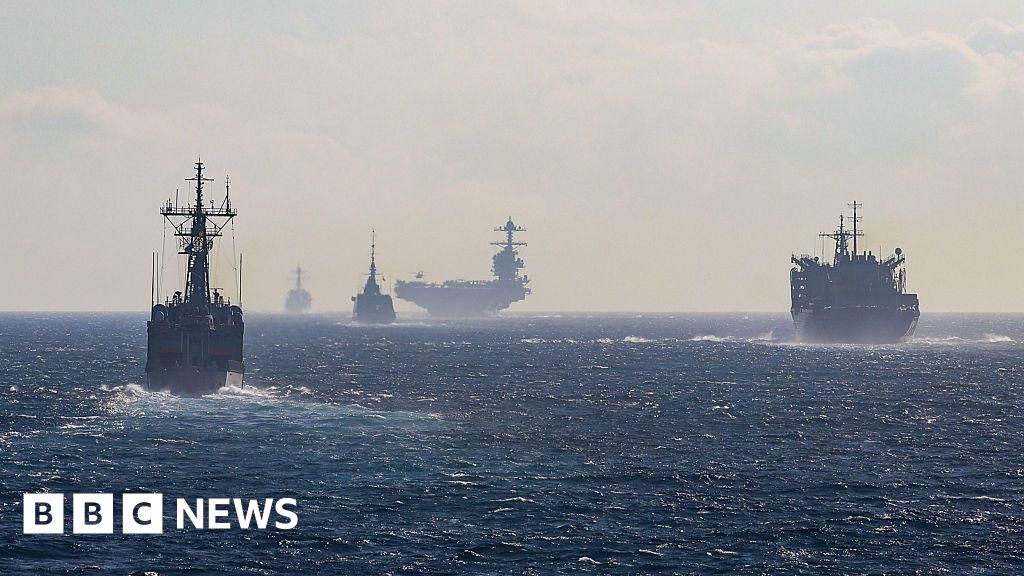
The geopolitical impact of this conflict extends far beyond Iran’s borders. In response to Iranian strikes, Israel has launched a fierce counteroffensive, involving a wave of pre-dawn airstrikes on critical Iranian military sites, including airports, command centers, and missile facilities. Israeli officials confirmed the deployment of 80 fighter jets in this latest assault, targeting Tehran’s military infrastructure and setting Mehrabad International Airport ablaze. This escalation signals a profound shift—diplomacy appears all but abandoned as the conflict spreads across regional lines. Meanwhile, Iran’s retaliation has manifested in attacks on Jerusalem, Gulf cities such as Dubai and Manama, and near Riyadh, where Saudi Arabia reported intercepting a ballistic missile aimed at a U.S. host base. Experts warn that such exchanges risk igniting a broader regional war, with global oil supplies and international stability hanging in the balance.
Global institutions like the United Nations and NATO have called for restraint, yet the relentless cycle of violence suggests diplomacy remains elusive. From the Strait of Hormuz—a critical maritime choke point—Iran announced the targeted sinking of the oil tanker Prima, further threatening the flow of global energy resources. The dire toll, with over 926 civilians killed and 6,000 injured, paints a stark picture of the human cost behind the geopolitical chess game. As Hezbollah and other Iranian-backed groups extend the conflict into Lebanon and the eastern Mediterranean, the specter of a wider regional war looms, risking destabilization of entire societies. Experts from think tanks such as the Council on Foreign Relations warn that these developments could ignite a chain reaction, pulling in multiple nations into a conflict with the potential to redraw alliances and threaten democratic institutions worldwide.
As history watches silently, the unfolding narrative remains uncertain—each decision, each strike, fueling a conflict that no one can truly predict. The specter of war now casts its shadow across the region and beyond, a reminder that in the corridors of power, every action has a consequence, and the course of history is ultimately written by those willing to risk everything in pursuit of their vision. The world holds its breath as the stakes escalate—will diplomacy yet find a foothold amidst this chaos, or are we witnessing the dawn of a new, darker era of regional and global upheaval?