Matox News

Truth Over Trends, always!

Pope Bypasses Old Centers, Focuses on Africa's Rapid-Growing Catholic Hub
Pope Bypasses Old Centers, Focuses on Africa’s Rapid-Growing Catholic Hub

In an era marked by shifting power dynamics and ongoing geopolitical realignments, Africa has recently risen to prominence on the global stage, driven by statements from Leo XIV, the recently enthroned leader of the Vatican. An aide close to the pontiff revealed that the Holy See is placing unprecedented emphasis on the continent, emphasizing that Africa is vital to the future trajectory of the Church and broader geopolitical stability. This call to action highlights a strategic move that could redefine diplomatic relationships, influence religious influence, and impact regional development across a continent often viewed through a lens of aid and conflict.

Historically, Africa has been a continent of both promise and peril—rich in resource potential yet beset by instability and socio-economic challenges. However, under Leo XIV’s leadership, the Vatican’s renewed focus is not solely religious but also strategic, aiming to foster alliances that resonate beyond spiritual bonds. The shift underscores concerns among international analysts and global institutions, who assess that Africa’s resource wealth and demographic growth could serve as keys to future geopolitical influence. The United Nations and World Bank have echoed this sentiment, warning that neglecting the continent’s potential risks fostering greater instability, which could ripple outward, affecting global markets and security.

Many experts point to the reaffirmed importance of African nations in international trade, security, and geopolitical stability. The Church, through Leo XIV’s initiative, signals a broader vision of influence—one that involves engaging with African governments, supporting social development, and expanding religious outreach. Historians such as Dr. Eleanor Burke have noted that such strategic engagement by religious institutions historically precedes major shifts in political alliances. Furthermore, regional powers like China and Russia are intensifying their presence in Africa, creating a multi-polar arena where influence is contested not just economically but ideologically. The Vatican’s move, therefore, can be seen as an effort to maintain moral and spiritual leverage amid this intersection of global interests.

Ultimately, the decision to focus on Africa is fraught with profound consequences. As Leo XIV mobilizes religious and diplomatic resources toward this continent, the potential for both constructive development and geopolitical rivalry increases. In a landscape where young populations surge and natural resources brim beneath a sunny horizon, the stakes have never been higher. History reminds us that such moments of strategic attention can either forge alliances that withstand the tests of time or sow seeds of future conflict. As international leaders convene to decipher this rising emphasis, the world stands on the cusp of a new chapter—one written amidst the fierce currents of faith, geopolitics, and ambition. The next few years will determine whether Africa will emerge as a continent of resilient hope or a battleground for power struggles, with history surely watching in silence.
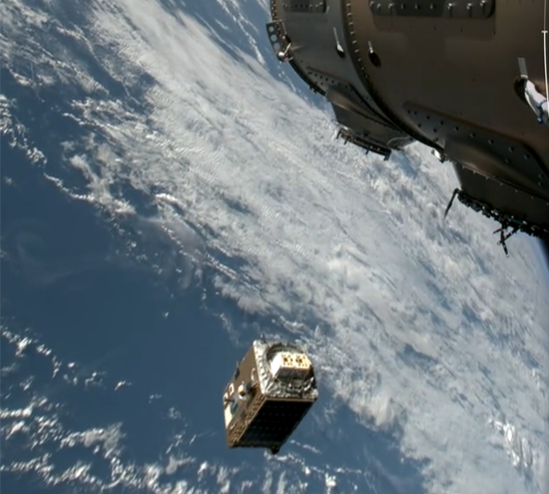
Starcloud scores $170M to launch space-based data centers and reshape the future of tech

Starcloud Rockets into the Future of Space Computing with $1.1 Billion Valuation

In a remarkable demonstration of disruptive innovation in space technology, Starcloud, a burgeoning space compute enterprise, has secured a significant $200 million in its latest funding round, pushing its valuation to an impressive $1.1 billion—making it one of the fastest startups to reach unicorn status post-Y Combinator graduation. Led by Benchmark and EQT Ventures, this funding underscores growing investor confidence in orbit-based data centers as Earth-bound infrastructure grapples with geopolitical and resource constraints.

This bold move toward orbital data centers is driven by the potential to revolutionize cloud computing, AI processing, and data analytics—integral components of the emerging AI economy. But it’s not without significant technological hurdles. Starcloud’s recent launch of its first satellite equipped with an Nvidia H100 GPU signals a pioneering step, demonstrating that powerful terrestrial GPUs can operate in space. The company is already preparing for the deployment of Starcloud 2, which will incorporate multiple GPUs—including an Nvidia Blackwell chip and an AWS server blade—along with a bitcoin mining computer to optimize cost-efficiency and operational capability.

CEO Philip Johnston is optimistic about commercial viability, estimating that once launch costs decline to around $500 per kilogram, orbital data centers could match terrestrial prices of approximately $.05 per kw/hour of power. However, major industry challenges remain, chiefly the delay in SpaceX’s Starship flight schedule, which he expects will not become operational until 2028 or 2029. Until then, smaller rockets like Falcon 9 will have to suffice, potentially obfuscating the dream of cost-effective orbital data centers for the foreseeable future. Yet, Johnston remains undeterred, emphasizing that even incremental progress in launch frequency will catalyze a paradigm shift, disrupting the established terrestrial computing model and paving the way for unprecedented business opportunities.

The strategic focus for Starcloud extends beyond hardware. Its dual business approach involves selling processing power to other spacecraft—one example being its collaboration with Capella Space—and eventually pulling workloads from terrestrial data centers when orbital computing reaches scale. This vision is reinforced by the exponential growth in GPU deployments in space, with estimates suggesting dozens of advanced GPUs already in orbit— a stark contrast to Nvidia’s nearly 4 million GPUs sold on Earth in 2025. Such data positions Starcloud as a game-changer, leveraging the advantages of proximity to data sources—especially for AI training and real-time analytics—while pioneering the integration of the most cutting-edge hardware into space.

The implications for the business landscape are profound. Industry observers, including Gartner analysts and MIT researchers, emphasize that disrupting current cloud paradigms with space-based infrastructure could unlock new dimensions of speed, security, and resilience. Yet, competition looms large, particularly from giants like Google’s Project Suncatcher, Aetherflux, and Nvidia’s space-grade GPU initiatives. The looming presence of SpaceX, with plans to orbit a million satellites for distributed compute, represents a formidable challenge—yet Johnston sees coexistence rather than competition, recognizing that in the race for orbital dominance, timing, innovation, and strategic agility will be key differentiators.

Looking ahead, the road to a fully operational orbital data economy is fraught with technical and logistical hurdles, but the momentum is undeniable. As industry veterans like Elon Musk and Peter Thiel highlight, the next decade will define who dominates this frontier. With each satellite launched and each breakthrough in space computing technology, the question is no longer if but when orbital data centers will become integral to our digital infrastructure. The urgency for established and emerging players alike is clear: adapt quickly, innovate relentlessly, and prepare for a future where space becomes the new backbone of global digital services and AI-driven industries.

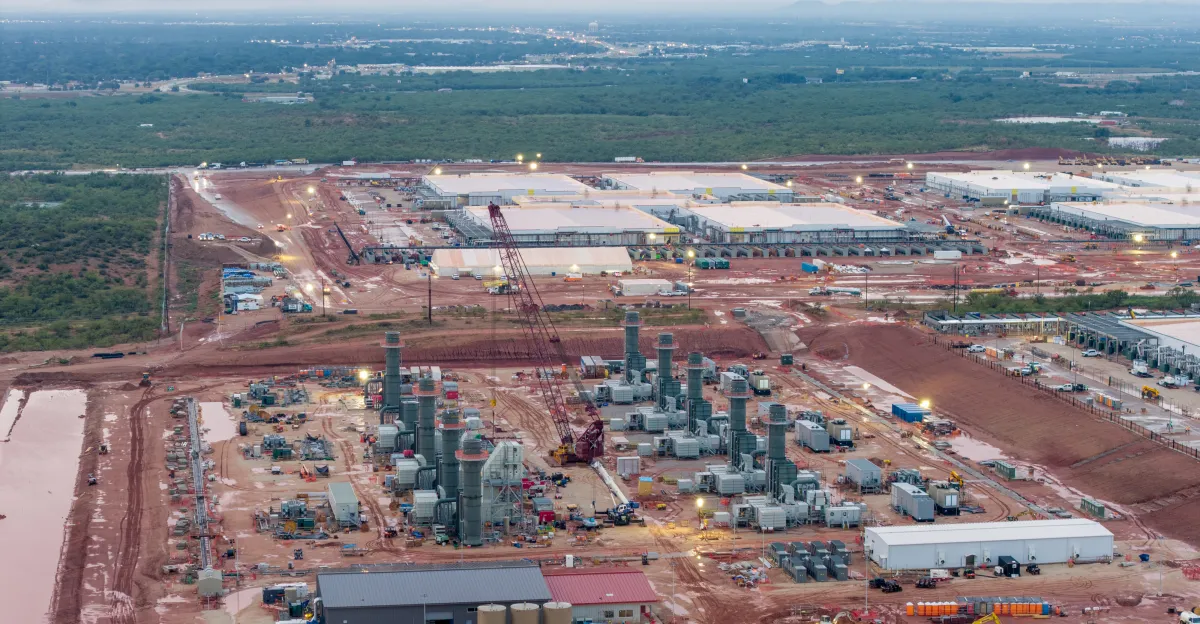
Data centers fuel a new era for gas—powering the future of innovation

US Catalyzes Global Expansion of Gas Power Infrastructure Amid Data Center Boom

In a move signaling disruption across the energy sector, gas-fired power generation is experiencing a historic surge, with the United States at the forefront of this transition. According to a recent analysis by Global Energy Monitor (GEM), global gas power capacity expanded by 31% in 2025, marking the fastest growth rate since the early 2000s. Notably, nearly a quarter of this new capacity is under development in the US, surpassing China, traditionally the largest energy consumer. This boom is primarily driven by the soaring energy demands from data centers, which are rapidly becoming the backbone of digital economy infrastructure.

The business implications of this shift are profound, as tech giants and energy investors rush to meet data center capacity, fueling a market pivot toward natural gas. More than 33% of the capacity increase in the US is explicitly allocated for powering these data hubs, reflecting the sector’s strategic importance. Industry experts highlight that innovation in energy technology is enabling this transition, yet concerns remain over the environmental costs. The push for additional gas capacity also marks a significant disruption in traditional energy hierarchies, challenging the long-term push toward renewables. While lower costs and lower pollution when burning gas compared to coal make it attractive in the short term, the environmental trade-offs are alarming. Gas production releases methane—a greenhouse gas more potent than carbon dioxide—raising questions about the sustainability of these developments.

Leading analysts warn that the **lock-in of new gas plant capacity could pose stranded asset risks**, especially if anticipated electricity demand from AI-driven industries fails to materialize. Jenny Martos of GEM highlighted, “There is a risk that this capacity could become stranded assets if future demand from AI and data-intensive applications does not meet expectations,” emphasizing the potential for market disruption and long-term misallocation of capital. Already, 2026 is projected to be a record-breaking year for gas capacity additions, possibly surpassing the growth seen during the shale gas revolution of the 2000s. This would represent a remarkable disruption of the clean energy narrative, as the industry faces the dual challenges of economic viability and environmental responsibility.

The broader business implications are clear: disruption is accelerating as technology-driven energy demands reshape the conventional power landscape. Industry leaders like Elon Musk and Peter Thiel underscore that rapid innovation and strategic investments in infrastructure are crucial if nations aim to stay competitive. Meanwhile, policy makers confront the pressing need to balance economic growth with climate commitments, especially as methane emissions from natural gas production threaten to undermine global climate goals. The next decade will be pivotal, as the energy sector faces a fork in the road: continue along the path of short-term cost savings and risk locking in emissions, or pivot decisively toward sustainable energy solutions that leverage innovation without compromising the planet’s future.

For youth and entrepreneurs eyeing the future, this surge signals a landscape riddled with opportunities, risks, and obligations. Innovators in clean tech, storage solutions, and AI-driven efficiency are poised to challenge traditional energy giants. Disruption is inevitable, and those who act swiftly will shape the trajectory of global power markets. The urgency is unmistakable: the window to redefine energy infrastructure before climate thresholds are crossed is closing rapidly. As geopolitical and economic tensions mount, the push for innovation in energy becomes not just a business imperative, but a mission vital to the future of civilization itself.

DHS to Boost Security at ICE Centers Following Dallas Shooting

The recent deadly shooting at an ICE facility in Dallas has ignited a surge of responses from the Department of Homeland Security (DHS), signaling a shift in the federal government’s approach to national security and immigration enforcement. In the aftermath of this tragic event, DHS announced it would “immediately increase security” at Immigration and Customs Enforcement (ICE) facilities nationwide, a move that underscores the ongoing power struggles between a government committed to border security and factions advocating for more lenient immigration policies. This escalation reflects a broader political confrontation, where decisions made in the halls of power directly impact law enforcement tactics and the safety of personnel working on the front lines.

The attacker’s motivations, reportedly driven by hatred for ICE, underscore the volatile atmosphere surrounding immigration enforcement agencies. This incident, a rare but alarming act of violence, has been exploited by hawks who argue for tougher security measures and stricter immigration policies, framing the shooting as a consequence of perceived governmental leniency or failure. On the other side, critics question whether this act of violence is being used as a pretext to justify draconian reforms and increased militarization. Constitutional experts and political analysts have long debated the balance of power when it comes to federal agencies like ICE, emphasizing the importance of safeguarding individual rights without compromising national security—a delicate tug-of-war that echoes throughout American history, reminiscent of debates during the early Cold War era.

Within the ideological fissures driving today’s politics, the right-wing factions see the DHS’s new directives as essential to defending the sovereignty of the nation and protecting American citizens from threats that are often marginalized in mainstream discourse. Campaign promises by leadership often included sentiments of restoring law and order and equipping agencies with the tools to combat what they deem an era marked by chaos and lawlessness. Conversely, those on the left caution against an approach that risks turning immigration enforcement into a militarized apparatus that erodes civil liberties. These conflicting visions of security mirror profound power struggles over the soul of American democracy—whether it is a nation of open opportunity or a fortified fortress determined to guard against external and internal threats.

As history’s currents continue to shift, it becomes clear that such moments are recorded as more than isolated incidents—they are defining chapters in the narrative of a nation wrestling with its identity. Decisions made today at DHS and across the political spectrum are not mere policy shifts but mirror the deeper contest of how freedom and security are balanced. In this ongoing saga, politics remains the grandstage where the destiny of the republic is scripted, with each movement and counter-movement setting the course for generations to come. Ultimately, the true power lies in the choices made now—choices that will shape the very fabric of society, for politics is where history’s pen finds its ink.

Social Media Auto Publish Powered By : XYZScripts.com