Matox News

Truth Over Trends, always!

Group presses forward with legal challenge against South West Water sewage pollution

In a revealing sign of the rising environmental consciousness among grassroots communities, a legal claim against South West Water has extended across the Devon and Cornwall coastlines, reflecting broader societal frustrations over government and corporate accountability in environmental stewardship. Initially confined to Exmouth, the group legal action now spans towns like Dawlish, Sidmouth, Teignmouth, and Cornwall’s renowned beaches, including Newquay and Penzance. This movement underscores a fundamental shift: ordinary citizens are not willing to accept systemic pollution and neglect, especially when it directly harms their health, livelihoods, and natural heritage. Analysts suggest that this grassroots mobilization could serve as a bellwether for similar movements across Europe, where local populations increasingly demand accountability from authorities and corporations over environmental degradation.

The core of the dispute revolves around the ongoing discharge of raw sewage into cherished coastal waters—an issue that has sparked outrage among residents. According to Leigh Day, a prominent law firm specializing in environmental justice, the claim now includes more than 1,400 individuals impacted by South West Water’s alleged failings. Tina Naldrett, a 62-year-old nurse from Dawlish, vividly captured the emotional toll: “The sea is our heritage and sanctuary, yet I see sanitary products, plastic debris, and foam of effluent floating past—more often than not. Water companies do not own the seas; they are stewards of a shared natural resource, and their actions betray a moral and ethical bankruptcy.” When communities witness the continued pollution, especially during the summer months with beach closures and health warnings, it only fuels the perception that corporate interests supersede ecological sustainability and community welfare.

The criminality of these acts is reinforced by official reports from Ofwat, which in 2024 issued a £24 million enforcement penalty against South West Water. An investigation revealed systemic failures dating back to 2017—failings that have resulted in over half of the company’s treatment plants spilling raw sewage into the environment regularly. The length of 544,429 hours of discharge in just that year alone signifies a disturbing trend: the continued prioritization of cost-cutting and convenience over environmental health and public safety. Experts like environmental historians warn that such incidents reflect broader patterns of regulatory negligence and corporate complacency, which threaten to water down the very safeguards meant to protect natural ecosystems and human communities.

  • The legal action highlights the widespread violation of regulations concerning storm overflows, which should only be used during extraordinary weather events but are reportedly deployed excessively—especially during rainfalls when systems are overwhelmed.
  • The impact extends beyond environmental concerns, disrupting local economies reliant on tourism and recreation, and raising questions about the effectiveness of current environmental frameworks in holding corporations accountable.
  • Community voices, represented by campaigners like Oliver Holland, emphasize that these legal actions are crucial in empowering citizens to push for tangible change and to hold polluters responsible for years of neglect.

As international observers peer into this unfolding domestic crisis, many see it as a microcosm of larger trends in governance, corporate ethics, and civil activism. Historians of environmental law warn that ignoring these grassroots demands risks a future where the natural world is irreparably damaged, and societal trust erodes further. The ripple effects could extend beyond Britain, influencing global debates on corporate responsibility and environmental justice. What is at stake is nothing less than the legacy we leave behind—a question of whether communities will stand together to reclaim their shared inheritance or capitulate to a system that values profit over preservation. As the tides of change rise, the outcome remains uncertain, yet the story of a society grappling with its obligations to nature and future generations continues to unfold with relentless urgency, leaving an indelible mark on history’s scrolls.

Challenge Your Understanding of the Pioneers and Moments That Built America

In the heart of every civilization, culture emerges as both memory and prophecy—an ongoing dialogue between the past and the future. As we observe the American Revolution, a pivotal moment in history, we recognize that its significance extends far beyond mere political upheaval. It embodies a foundational myth, a cultural template that continues to shape identity, tradition, and societal values. The commemoration of figures like George Washington not only honors a historical figure but also affirms a collective sense of purpose rooted in the ideals of liberty, sovereignty, and moral clarity. These ideals, so central to the American experience, serve as a testament to the human yearning for order amid chaos, echoing the philosophical assertions of thinkers like T.S. Eliot, who suggested that history, much like poetry, is a narrative of continuous renewal intertwined with tradition.

Historical parallels remind us that moments of upheaval—whether the American Revolution or the upheavals of the 20th century—are often rooted in a collective desire to forge a new cultural identity. As Alexis de Tocqueville observed, American society demonstrates a unique capacity to balance individualism with a shared civic purpose. This intentional cultivation of a national character—through education, literature, and cultural remembrance—is what sustains societal cohesion. The celebration of revolutionary ideals, expressed through art and historiography, underscores the importance of heritage as both a shield and a compass. It is through these cultural artifacts that a society not only preserves its memory but also envisions its future, ensuring that the spirit of freedom and independence remains a living truth.

In this way, culture becomes a sacred space where tradition and modernity meet. The enduring relevance of works that commemorate the American Revolution—be it biographies of George Washington or presidential monuments—serves as a reminder that values are not static but dynamic forces. They guide societies through tumult, echoing the insights of G.K. Chesterton, who championed the idea that “tradition means giving votes to the past” in shaping moral and social stability. As youth today navigate a shifting cultural landscape, understanding history through the lens of profound narrative helps anchor them in a heritage that is both inherited and continually reborn. Here, the past whispers into the future, urging us to preserve the fruits of our ancestors’ sacrifices while daring to dream of new horizons.

Ultimately, culture is the poetic fabric woven from memory and prophecy—an undying testament to humanity’s quest for meaning. Like Ortega y Gasset envisioned, it embodies the human condition: a persistent struggle to craft purpose out of chaos. As we contemplate the story of the American Revolution, let us remember that it is not merely a chapter in history but a living mural, poised upon the horizon, forever beckoning us to write the next verse. In the symphony of human society, culture remains both our memory—a sacred relic—and our prophecy—the bright promise of what we are yet to become. It is this rhythm, this eternal dance, that keeps the spirit of a nation alive, vibrant, and truly free.

Cracking the Quadruple Axel: The Ultimate Challenge in Figure Skating’s Tech Race

Revolutionizing Figure Skating with Biomechanical Insights and High-Flying Innovation

2024 marks a pivotal year for technological disruption in sports biomechanics, as Toin University researcher Seiji Hirosawa unveils groundbreaking insights into the mechanics of quad axel jumps. Published in Sports Biomechanics, this study bridges the gap between science and athletic mastery, highlighting how advances in data analytics are transforming conventional understandings of elite athletic performance. At the core of this breakthrough is a focus on vertical jump height, an element previously underestimated in biomechanical evaluations. Hirosawa’s findings suggest that increasing flight height is not just a technical nuance but a strategic imperative in mastering the most complex ice skating maneuvers.

This revelation arrives amid a broader wave of disruption in sports technology, with innovations such as the Ice Scope tracking system providing unprecedented precision in performance analysis. Leveraging high-resolution data, researchers can now dissect minute biomechanical parameters—vertical height, horizontal displacement, and velocity—culminating in a granular understanding of athlete mechanics. As the industry evolves, insights driven by data-driven biomechanics are forcing traditional rating and training paradigms to adapt rapidly. Experts from institutions like MIT and analysts from Gartner highlight that such technological infusion not only enhances athlete performance but also shifts the economic landscape, intensifying competition among brands offering cutting-edge sports analytics tools.

The business implications of this shift are profound. Companies investing in AI-powered motion tracking, real-time analysis, and simulation software stand to redefine training regimes, offering athletes and coaches a distinct advantage in pushing performance boundaries.

  • Enhanced performance predictions through machine learning
  • Customized training plans based on biomechanical data
  • Early injury detection to extend athletes’ careers

These innovations threaten to disrupt legacy sports equipment manufacturers and propel tech firms into the spotlight, as the demand for smarter, more precise training solutions explodes. Notably, Elon Musk’s Neuralink and similar ventures exemplify the broader trend of merging human performance with advanced interfaces—an approach increasingly vital in high-stakes sports settings.

Looking ahead, the integration of biomechanics, AI, and wearable technology signals a transformative era for competitive sports. Athletes like Ilia Malinin exemplify this wave, leveraging scientific insights to push the limits of what’s possible—literally soaring to new heights. Yet, this rapid evolution also warrants caution; as technology becomes embedded in athletic training, it raises questions about fairness, accessibility, and the potential for new arms races. Industry leaders and policymakers must work with scientists to navigate these challenges proactively. Ultimately, the future belongs to those prepared to harness innovation at every stage—from biomechanical research to commercial application—where the winners will be those who act before the next big leap in athletic performance is achieved.

Angus Taylor allies gear up to challenge Sussan Ley for Liberal leadership soon

In a striking display of conservative instability, Australia’s ruling Liberal Party finds itself at a historic crossroads, with internal tensions threatening to fracture its very foundation. The political landscape has been shaken by a dramatic decline in electoral support, evidenced by the latest Newspoll revealing the party’s primary vote collapsing to an alarming 18%. This figure, a nine-point drop from previous months, has prompted urgent calls for change among party factions, especially as leader Sussan Ley faces mounting criticism and the looming prospect of a leadership spill. Conservative parliamentarians argue that, with support waning, it is only a matter of when, not if, the party will resort to reshuffling its top ranks to salvage electoral viability before the crisis deepens further.

While Ley, buoyed by some moderate voices, remains defiant—stating her job is “not expected to be in question”—the internal dissent has reached new levels of intensity. Supporters inside the party speculate that the fallout from the recent Coalition split over hate speech laws has gravely damaged Ley’s credibility, undermining any claims to stable leadership. Their fears are compounded by the internal power struggles exposed when Angus Taylor, a prominent conservative figure, emerges as a frontrunner for the leadership. According to insiders, Taylor may soon initiate a leadership spill, which would require Ley’s resignation from her current shadow cabinet position and a swift contest for the party’s leadership. Analysts emphasize that such a move could be the party’s last-ditch effort to restore voter confidence amidst a societal landscape increasingly aligned with populist sentiments elsewhere.

Internationally, Australia’s political turmoil resonates beyond its shores, as geopolitical analysts warn of the ripple effects on regional stability and alliances. The U.S. and UK, longstanding partners, scrutinize Canberra’s internal chaos, aware that a weakened Australian opposition could embolden rival powers like China and Russia in the Indo-Pacific. The possibility of leadership upheaval threatens to weaken Australia’s stance in critical multilateral engagements, including the Quad and regional security dialogues. Furthermore, experts observe that Australia’s political lessons echo a broader international pattern: when national parties falter in the face of societal shifts and electoral discontent, the resulting turbulence can have far-reaching consequences, altering regional geopolitics and the balance of power.

Meanwhile, within Australia, the debate shifts to the societal impact of these political upheavals. Moderate voices call for a strategic reevaluation, arguing that the party must embrace reforms to resonate with a generation increasingly attuned to issues like immigration, economic opportunity, and national sovereignty. Historians caution that the current crisis echoes past moments of ideological fissure, reminding voters and leaders alike that history often remembers the decisions made in these turbulent times as defining events—shaping the future course of the nation, for better or worse. As the political machinery grinds into motion, the weight of history presses down on the shoulders of its leaders, who must decide whether to cling to fading factions or forge a new path forward amid the chaos.

In the vast tapestry of history, moments of upheaval are often the dawn of transformation. As Australia faces its latest storm—a potential leadership overhaul in a time of societal and geopolitical flux—the question remains: will this be the beginning of a renewed national resolve or a slide into prolonged instability? The final chapter has yet to be written, but the echoes of this moment resonate across generations, challenging the very foundation of Australia’s political identity in the shadows of an uncertain future.

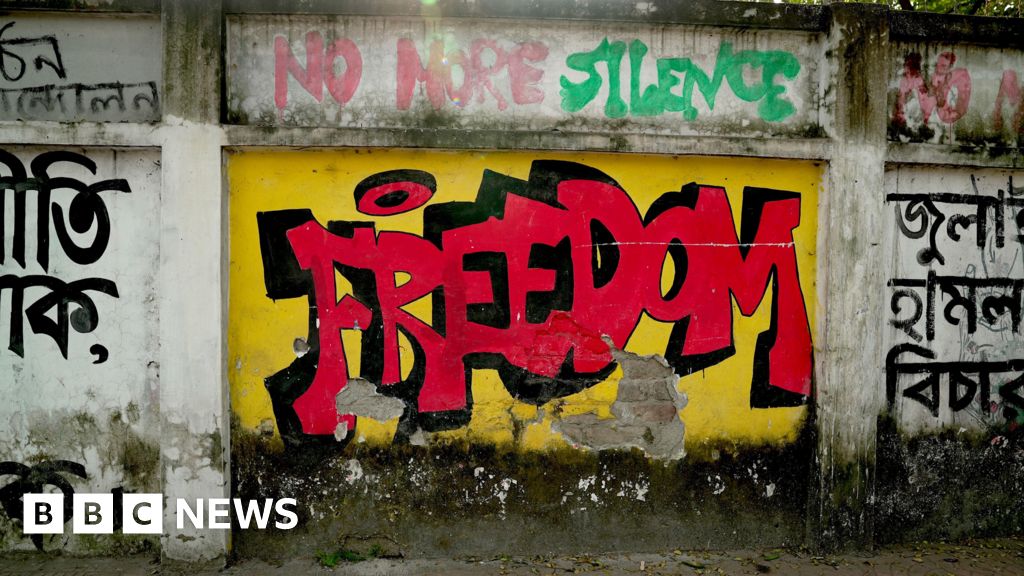
Gen Z's Fight: Upstart Youths Challenge Autocrat, but Old Guard Eyes Bangladesh Win
Gen Z’s Fight: Upstart Youths Challenge Autocrat, but Old Guard Eyes Bangladesh Win

Bangladesh Election: Youth Uprising Meets Political Status Quo

The recent electoral contest in Bangladesh has emerged as a defining moment in the country’s political landscape, illustrating the tension between youthful aspirations and entrenched party politics. On one side, a wave of student-led protests and grassroots activism promised a new dawn of reform and democratic renewal. These young voices, energized by hopes for greater transparency, economic opportunity, and democratic accountability, symbolized a generational desire for change. Yet, despite the palpable yearning for a fresh start from the youth and civil society, the electoral outcome suggests a different reality: the old political guard still commands the corridors of power.

In the months leading up to the election, student protests and civic movements highlighted widespread discontent with corruption, governance failures, and the perceived authoritarianism of the current leadership. International observers, including analysts from the International Crisis Group and regional think tanks, noted that the surge in youth activism was reflective of broader societal anxieties about economic stagnation, unemployment, and perceived repression. However, the traditional parties—most notably the ruling Awami League and opposition alliances—maintained a firm grip on political machinery and electoral processes, ensuring their victory despite vigorous protests from the younger generation.

The election results, widely seen as a reaffirmation of the status quo, have raised profound questions about the geopolitical impact of Bangladesh’s internal decisions. As India and China continue to vie for influence in South Asia, Dhaka’s political orientation will have significant implications for regional stability and strategic alignments. The dominance of established parties raises fears among analysts that the country remains vulnerable to external pressures, especially considering its strategic position bordering India and its ongoing economic ties with China. Some experts warn that this electoral outcome may deepen a pattern of autocratic resilience, potentially hampering genuine democratic reforms and further entrenching military and political institutionalism.

International institutions have voiced cautious concern. The United Nations and regional bodies called for transparent processes, yet their influence remains limited amid Bangladesh’s strong internal political narratives. Historians tracking the country’s political evolution note that the pattern of youthful unrest contrasted sharply with the reassertion of traditional elites, a dynamic not unfamiliar in South Asian democracies. Strategic analysts reflect that, while the youth’s voice is vital for the future, entrenched interests and historical power structures continue to define electoral outcomes, often at odds with revolutionary aspirations. This persistent clash underscores that the true contest is not only about votes but also about the soul of a society yearning to move forward.

As the dust settles, Bangladesh’s future hangs in a delicate balance. The young protesters, who once envisioned a new dawn, now face a reality where ambition must contend with history. Governments and societies worldwide watch closely—aware that today’s electoral verdict might only be a chapter in an ongoing struggle between tradition and reform. With the weight of history pressing down, the question remains: will this be a moment of genuine transformation, or merely another cycle of the old guard securing their place in a nation still searching for its true voice? Ultimately, the unfolding stories of these during democratic battles reveal that, in the turbulent currents of history, the true revolution may lie just beyond the horizon, waiting for its moment to redefine the future of Bangladesh.”

Fact-Check: TikTok challenge claims false, safety concerns unverified

Unveiling the Truth Behind Trump’s Greenland Assertions

Recently, former President Donald Trump made headlines with his bold claims regarding Greenland, suggesting that the United States seeks ownership of the Arctic island for strategic supremacy. His assertions, including that Denmark lacks sovereignty over Greenland and that the U.S. needs legal ownership to defend it, prompted widespread debate. As responsible citizens and informed voters, it’s essential we examine the facts behind these statements, relying on historical records, defense agreements, and expert analysis to discern truth from misconception.

Greenland’s Sovereignty: A Well-Established Legal Reality

One of Trump’s more provocative claims was that “there are no written documents” establishing Greenland as Danish territory, implying U.S. sovereignty might be justified by historical landing claims. However, this is a *misleading* portrayal. Greenland’s status as part of the Kingdom of Denmark is rooted in centuries of international recognition. Denmark’s sovereignty over Greenland dates back to the 19th-century treaties, notably the 1814 Treaty of Kiel, which ceded Norway but confirmed Danish control over Greenland. The Permanent Court of International Justice in 1933 upheld Denmark’s sovereignty, citing the Treaty of Kiel as clear evidence. Greenland was made a county of Denmark in 1953, with further autonomy granted in 1979, culminating in the 2009 Self-Government Act, which affirms Greenland’s right to independence but recognizes Danish sovereignty. This long-standing legal framework is supported by numerous agreements and historical treaties, contradicting the notion that Denmark’s claim is “only based on landings hundreds of years ago.”

  • 1953: Greenland becomes a county of Denmark.
  • 1979: Greenland gains Home Rule.
  • 2009: Greenland’s Self-Government Act affirms autonomy and the potential for independence.
  • 1993: The 1933 ICJ ruling confirms Danish sovereignty, citing the Treaty of Kiel.

Moreover, the U.S. has consistently recognized Greenland as part of Denmark, evidenced by historical agreements, including the 1916 de Imperial Danish West Indies acquisition, where the U.S. explicitly acknowledged Danish sovereignty over Greenland. Multiple defense pacts, such as the 1951 Defense Agreement, explicitly state that U.S. access to Greenland does not challenge Danish sovereignty.

The U.S. Military Presence and Legal Access: Not Contingent on Ownership

Trump’s assertion that the U.S. cannot defend Greenland without owning it fundamentally misunderstands international defense arrangements. The U.S. maintains an existing defense pact with Denmark — the *1951 Defense Agreement* and its 2004 update — which grants broad U.S. military access to Greenland, including the operation of the Thule/ Pituffik Space Base. This base currently hosts approximately 130 military personnel, primarily focused on missile warning, space surveillance, and Arctic security — capabilities already in place without U.S. ownership. Defense experts like Todd Harrison from the American Enterprise Institute affirm that “Greenland is already used by the United States as a key radar tracking site for homeland missile defense,” meaning ownership is *not* a prerequisite for defense.

Furthermore, the U.S. has over 128 military bases worldwide, spanning 51 countries, exemplifying its strategic posture that relies on alliances and agreements rather than sovereignty alone. Analysts like Ivo Daalder, a former U.S. ambassador to NATO, emphasize that “merely suggesting that the U.S. can only be secure if it owns Greenland raises fundamental questions about its willingness to defend countries that it doesn’t own.” Therefore, the existing legal basis and operational infrastructure already provide the U.S. with strategic access in Greenland, undermining Trump’s argument.

The Political and Strategic Context of Greenland Policy

Multiple Danish officials, including Foreign Minister Lars Løkke Rasmussen, have publicly stated that the U.S. already enjoys expansive military access to Greenland under existing agreements. Rasmussen noted, “The U.S. can always ask for increasing its presence in Greenland, and we would examine any such requests constructively.” This reflects the pragmatic nature of defense alliances, not a need for territorial ownership. Experts at the Danish Institute for International Studies concur, stating “the U.S. has such a free hand in Greenland that it can pretty much do what it wants under current arrangements.”

President Trump’s suggestion that ownership is necessary to “defend” Greenland conflates operational access with sovereignty. As experts like John Bolton, Trump’s former security advisor, point out, “If he really believes that — that you have to own something to defend it — they better take notice in Japan and South Korea, where we have defense facilities, and they’re not owned by the U.S.” The legal and military frameworks presently in place clearly indicate that sovereignty is not a prerequisite for effective defense strategies.

Conclusion: The Significance of Accurate Information in a Democracy

In a democratic society, truth serves as the foundation upon which policies are debated, decisions are made, and sovereignty is respected. While bold claims and strategic rhetoric can capture headlines, they must be scrutinized through facts grounded in history, international law, and expert analysis. Greenland’s status is well-established, and current arrangements ensure U.S. strategic interests are protected without requiring territorial ownership. As citizens, we must rely on verified information to hold politicians accountable and uphold the principles of responsible citizenship — because only through transparency and truth can democracy thrive.

Australia news live: Canavan warns One Nation challenge to Liberals, BoM blames Covid for IT cost surge

In recent months, Australia has attracted international attention for its conflicting priorities in environmental investment and domestic politics. According to a new analysis by green advocate Market Forces, the nation’s top 30 superannuation funds hold approximately $33 billion in global fossil fuel companies — a figure that remains disturbingly high despite a slight decline from last year’s $39 billion. These investments not only underscore the nation’s continued support for major oil, coal, and gas conglomerates such as BHP and Woodside, but also highlight a broader reluctance among investors to shift vigorously toward renewable energy sources, despite clear evidence that renewable investments have historically outperformed fossil fuels. This troubling persistence of fossil fuel funding represents a significant geopolitical challenge: nations heavily invested in hydrocarbons may find themselves increasingly vulnerable to international shifts toward clean energy, thus risking economic instability in the face of global decarbonization efforts.

Meanwhile, the ongoing political landscape in Australia reveals a factional struggle with serious impacts on national policy. Matt Canavan, a prominent Nationals MP, has raised alarms about the rising popularity of One Nation, led by Pauline Hanson. His warnings articulate a concern that this populist, nationalist movement is not only threatening the traditional Liberal and National Party coalition but also expanding its influence into outer suburban and regional sections of the country. This shift is particularly disruptive because it challenges the long-standing geopolitical consensus regarding energy policy and economic development, with increasing calls within the political class to recalibrate Australia’s commitments to fossil fuels. Analysts suggest that such internal divisions could weaken Australia’s negotiating power on the global stage, especially amid mounting pressure from international climate policies and climate diplomacy. As historian Samuel P. Huntington warned, the face of modern conflict is shifting — and domestic political waves are as impactful as military conflicts in shaping global power distributions.

Costly Tech and Climate Commitments in Question

Simultaneously, the Bureau of Meteorology has come under heat for the staggering $96.5 million cost of its new website overhaul, a figure that provoked criticism amid reports of cost blowouts and underwhelming performance. The BoM, citing unavoidable inflation due to Covid-era economic conditions and official caps on public sector staffing, defends its expenditure as justified by the necessity for a robust, secure weather system capable of handling vast data flows. However, critics, including Senator Barbara Pocock, decry the project as a cautionary tale of contract mismanagement amidst a climate of public distrust. The controversy highlights the international pattern of infrastructure investments facing scrutiny under the shadow of pandemic-driven inflation and the urgent need for fiscal accountability. Analysts note that such misalignments threaten the credibility of climate and weather agencies, which are crucial in guiding policy decisions in an era of volatile climate variability and geopolitical uncertainty.

Ultimately, these intertwined narratives—a nation’s economic fossil fuel strategies, its turbulent political future, and the transparent handling of infrastructure investments—compose a complex tableau of national resilience and vulnerability. With each foreign investment decision, policy debate, and government expenditure, history’s weight grows heavier, quietly scripting the next chapter of a global competition shaped by energy, ideology, and technology. The planet’s political climate remains volatile, and the decisions made today echo into the distant corridors of power, where the future of nations, societies, and the very environment itself is being quietly wired into the fabric of history.

Meet the contenders: Will anyone step up for the challenge?

In a landscape where culture stands as both the mirror and the prophecy of society, the recent upheavals within the British Broadcasting Corporation serve as a poignant reminder of the fragile but vital role media plays in shaping national identity. As tim Davie, the outgoing director general, resigns under a cloud of crises and controversy, we are compelled to confront the enduring question: how does the culture of a nation reflect its soul, and what does its preservation demand in times of turmoil? In this epoch, the essence of culture becomes intertwined with the very fabric of tradition and societal continuity, echoing Ortega y Gasset’s assertion that “the culture of a nation is the collective memory that molds its future.”

Davie’s tenure, marked by high-profile missteps and the relentless media hunt for accountability, highlights a truth well articulated by thinkers like G.K. Chesterton: “A nation’s greatness is measured by how it treats its cultural institutions.” The BBC, historically a bastion of national storytelling, faces the challenge of reconciling its role as a guardian of tradition with the demands of an ever-evolving media environment. The internal struggles—exacerbated by scandals over documentaries and editorial slights—are symptomatic of a deeper cultural crisis: the erosion of confidence in institutions that shape societal memory. Yet, beyond the headlines, the core issue remains: the relevance of culture to a nation’s identity and societal cohesion is timeless. As Tocqueville noted, democracy’s strength hinges on a shared cultural fabric; without it, society risks unraveling amidst superficial spectacle.

Amidst the discourse, the question of who will next hold the reins of the BBC emerges as a symbol of the broader struggle to preserve tradition amid chaos. Figures such as Jay Hunt, a veteran who has steered major networks and now sits at Apple Europe, exemplify the kind of leadership that balances creative vision with institutional integrity. The potential appointment of such figures signals an understanding: leadership at this juncture is not merely about policy or strategic direction but about safeguarding the cultural memory from the discord of current upheavals. As historians like Tocqueville remind us, “Institutions survive because they adapt,” and the next DG must be deeply rooted in the sovereignty of cultural continuity. This is not just about managing a broadcasting empire; it is about steering a cultural vessel through turbulent waters toward the dawn of a renewed national narrative.

In the final analysis, the question of the BBC’s future echoes a broader philosophical truth: culture is both memory—the collective archive of human endeavor—and prophecy—the blueprint of what humankind aspires to become. Recognizing this, every transition, every challenge faced by the institution becomes a reflection of society’s willingness to honor its roots while daring to envision the future. As the next chapter unfolds, perhaps it will be a reminder that the true power of culture resides not merely in its preservation but in its capacity to continually inspire humanity’s eternal pursuit of meaning, truth, and identity—prophecy etched into the collective story of a nation, forever lingering at the cusp of memory and possibility.

Palestinian man ousted from Gaza border aid role to challenge EU decision

The European Union, long heralded as a beacon of international cooperation and diplomacy, finds itself embroiled in a legal controversy that underscores the complex intersections of geopolitics, national laws, and human rights. Mohammed Baraka, a Palestinian man who served at the EU border assistance mission (EUBam) in Rafah since 2006, has filed a lawsuit in a Belgian court, alleging discrimination and breach of Belgian employment law. His case illuminates the often overlooked domestic repercussions of international policy and the repercussions of decisions made within the EU’s diplomatic machinery amid ongoing regional conflicts.

During the escalation of the conflict in Gaza, the EU had evacuated Baraka to Cairo, along with other colleagues in the West Bank, as part of a broader effort to safeguard its personnel. However, subsequent to the EU’s decision to close the Rafah office, Baraka was dismissed earlier this year, despite his longstanding service. His legal representative, Selma Benkhelifa, contends that Baraka’s firing was not based solely on security concerns but was victim to discriminatory practices, asserting that other colleagues—of different nationalities—were transferred rather than dismissed outright. The lawsuit hinges on claims that the EU’s practice of renewing fixed-term contracts for personnel in Lebanon and Gaza violates Belgian labor laws, which stipulate that after three consecutive contracts, employees must be made permanent. This contractual loophole, as argued, permits international institutions to circumvent workers’ rights and public policy protections, leading to what Baraka’s team characterizes as systematic exploitation.

This legal battle exposes a broader geopolitical impact that resonates well beyond the courtroom. Belgium, often considered a hub for European diplomacy and bureaucratic influence, faces scrutiny for enabling such practices that undermine national labor standards. Critics and analysts warn that EU institutional flexibility—crafted under the guise of operational efficiency—may be eroding the very legal safeguards that uphold workers’ protections across member states. International organizations like the International Labour Organization (ILO) have long emphasized the importance of safeguarding workers’ rights, particularly in conflict zones where international institutions are operating as quasi-sovereign entities. This case amplifies the debate about how international diplomacy sometimes conflicts with domestic legal frameworks, affecting not just individual lives but also the integrity of international law itself.

The fallout from Baraka’s case extends into the realm of international diplomacy and regional stability. As Israel and Palestine continue to be mired in conflict, the EU’s role as a mediator and aid supporter faces increased scrutiny. The decision to close the Rafah office—a move justified on security grounds—raises questions about transparency and accountability. The European Commission, declining to comment officially, leaves unresolved tensions that could influence future EU policy, especially in conflict zones where the line between diplomacy and moral responsibility becomes alarmingly blurred. Many international observers, including historians and consider researchers, warn that these internal disputes threaten to weaken the EU’s moral authority at a crucial juncture.

As history continues to unfold, the impact of this legal confrontation will be felt far beyond Belgium’s borders. The case of Mohammed Baraka serves as a stark reminder that the decisions made in Brussels and other diplomatic capitals are not just abstract policies—they shape the lives of those caught in the crossfire of geopolitics. As the world watches, the question remains: will the EU uphold its promises of justice and fairness, or will it let bureaucratic convenience override human rights? The answer could very well define the future of international cooperation, the rule of law, and the enduring struggle for dignity amidst chaos—leaving behind a legacy that history cannot afford to ignore.

Squid Game: The Challenge Season Two – A Stark Reflection of Today’s Cultural Tensions

In a world increasingly captivated by screens and spectacle, culture remains the vital vessel of tradition, identity, and societal coherence. Yet, in the relentless pursuit of entertainment and profit, we find ourselves confronting a spectacle that almost seems to invert this truth—a grotesque mirror held up by Netflix’s Squid Game: The Challenge. This reality television adaptation shamelessly embodies the brutal logic of hyper-competition, turning human suffering into a commodified showcase. As critics have noted, the producers deny the underlying truth—that it’s merely a reflection of the original artsy dystopian drama—yet the spectacle’s essence is painfully clear: it’s a game of survival, where humiliated contestants are pawns in a high-stakes ritual designed more for voyeuristic thrill than meaningful critique. Such moments underscore a troubling cultural turn, where the fascination with violence and desperation erodes traditional notions of dignity and community, reducing human lives to tokens in a capitalistic game of captivation.

At its core, culture is more than mere entertainment; it is the narrative of our collective memory and the prophecy of our shared future. The unabashed monetary reward of over four million dollars propels the participants into a wild frenzy that reveals much about contemporary society’s values—money as the ultimate measure of worth, competition as the sole form of identity. The contestants’ conduct, orchestrated for the grand prize, echoes Ortega y Gasset’s reflections on the “mass-man,” whose social identity dissolves into the relentless pursuit of material success. The spectacle forms a perverse theater where our societal virtues of camaraderie, sacrifice, and dignity are schnell replaced by greed, treachery, and self-interest. The staged betrayals, the mock deaths, the self-destruction—all are dramatizations of a cultural nightmare where the individual’s worth is reduced to how cheaply they can sell their humanity for a shot at riches.

This phenomenon invites a stark reflection from thinkers like Chesterton, who warned that losing one’s sense of cultural roots invites a descent into barbarism, where human life becomes mere collateral damage in a race for wealth. Tocqueville’s insights on American individualism resonate here: unchecked pursuit of self-interest, when divorced from the binding threads of shared moral and cultural tradition, results in a society that is ultimately fragmenting itself. What we witness in Squid Game: The Challenge is less a critique and more a symptom of that fracture—a society that has forgotten its roots and now celebrates the spectacle of its own moral decay. The game’s twists and sob stories are but distractions from the core truth: that modern entertainment often serves as a mirror reflecting society’s soul, which, at this moment, appears torn and longing for a deeper connection to the authentic.

In this cultural landscape, where memory and prophecy intertwine, the danger lies in mistaking the spectacle for significance, the competition for identity itself. As T.S. Eliot lamented, the true crisis of modernity lies in a loss of shared purpose—a fragmented narrative where cultural symbols become mere commodities. Yet, beneath the degradation, there remains a seed of hope—a reminder that culture is the sacred ground where humanity cultivates itself, where tradition shapes the future. We must recognize that true culture guards the sacredness of human life, fostering virtues that transcend mere monetary gain. Like the enduring words of Chesterton, our cultural task is to forge a new meaning from the chaos, reweaving the fabric of tradition with conscious will and moral clarity. For in the end, culture is both memory and prophecy; it is the echo of who we were and the blueprint of who we will become. It is, after all, the poetry of the human spirit—an ancient chorus echoing through the ages, calling us to remember and to dream anew.

Social Media Auto Publish Powered By : XYZScripts.com