Matox News

Truth Over Trends, always!

Top 5 Lessons from the Division-Driven Climate Summit

As the COP30 summit concluded in Belém, Brazil, the world faced an unsettling reality: the much-vaunted global consensus on combating climate change is teetering on the brink of collapse. After three decades of negotiations, this year’s gathering marked one of the most divisive and fractious in history. Key nations, driven by divergent economic interests and geopolitical maneuvers, appeared more invested in protecting their own fossil fuel industries than in forging a united front against rising global temperatures. The summit, often dubbed the “COP of truth,” has exposed how far international cooperation has decayed, with the future of climate diplomacy hanging in the balance.

One of the most contentious issues was the failure to directly address the role of fossil fuels in driving climate chaos. Many nations, especially those with significant oil and gas reserves, pushed back against any language that might threaten their lucrative industries. Despite calls from environmentalists and scientists for a quantified phase-out of coal, oil, and gas, the summit ended without any meaningful commitments to reduce fossil fuel extraction or consumption. The Brazilian presidency attempted to placate the divisions by proposing pathways outside formal negotiations—focusing on deforestation and fossil fuel cutbacks outside the legal framework of the COP—yet their legitimacy remains questionable. This self-preservation approach highlights a troubling shift: climate action now appears secondary to national economic interests.

The European Union, traditionally seen as a leader in climate policy, faced a sobering setback. While advocating for a stronger, fossil-free future, they found themselves hamstrung by their own diplomatic concessions. The phrase “tripling climate adaptation finance” initially aimed at bolstering aid to vulnerable nations, remained in the final text in a vaguely worded form, but the EU’s efforts to push for strict fossil fuel reductions were ultimately unsuccessful. **Analysts warn** this reflects a broader decline in Western geopolitical influence on climate diplomacy, with emerging powers like China and India asserting greater independence. China’s silent yet aggressive pursuit of clean energy dominance—particularly in solar technology—positions it to outperform US efforts, which are hamstrung by internal divisions and waning influence. The summit made it clear: the global climate narrative is shifting away from Western-led initiatives towards a multipolar chess match.

Adding to the complexity was the noticeable absence of US President Donald Trump, whose decision to stay away seemingly emboldened allies like Russia and Saudi Arabia, who openly opposed aggressive measures aimed at limiting fossil fuels. Meanwhile, China chose quiet diplomacy, focusing on commercial interests and capitalizing on the rising affordability of renewable energies. According to international experts, this strategy will likely position China as a dominant force in the renewable energy revolution, cementing its economic footprint while the US struggles to regain influence. The summit also saw a groundbreaking push to incorporate trade measures, such as border taxes on emissions, designed to incentivize cleaner production worldwide—yet these moves risk sparking trade wars and expose the fractured state of global cooperation.

As the curtains fall on what many now call a “disillusioned” chapter of climate diplomacy, the question arises: is the future of COP itself under threat? Many advocates and analysts warn that the current process, rooted in an era far removed from the geopolitical realities of today, requires an overhaul to remain relevant. The persistent debate echoes through the halls: should nations continue to send thousands of delegates to argue over text that often seems more symbolic than effective? Or is it time for a fundamental rethink—perhaps outside the existing COP framework—that addresses the urgent realities of energy costs, national sovereignty, and economic security? Whatever the outcome, the weight of history presses down, as the world stands at a crossroads—caught between the inertia of past promises and the tumult of a rapidly changing global order. The choices made here will reverberate through generations, charting the course of climate and geopolitics in the uncertain years to come.

UN Climate Talks Fail to Deliver New Fossil Fuel Commitments

Global Climate Diplomacy Faces Standoff at COP30 in Belém

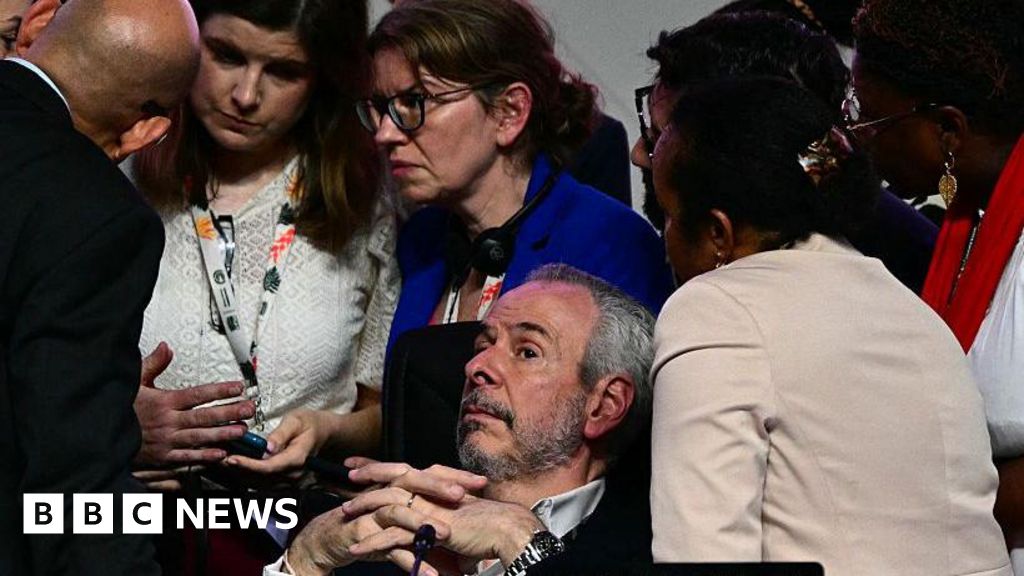
As the United Nations Climate Summit COP30 wrapped up in Belém, Brazil, a palpable sense of frustration and disillusionment echoed across the international community. Despite weeks of tense negotiations, the final deal—dubbed the Mutirão—failed to include a direct reference to the core issue gripping sky-high global temperatures: the reliance on fossil fuels. This outcome underscores a deepening divide between developed nations and oil-producing countries, revealing the entrenched interests that threaten serious climate action.

The summit, taking place amid a backdrop of chaotic protests, devastating weather, and even a fire in the venue, was marked by a struggle of ideals and power. Over 80 countries, including the UK and sweeping European Union, had sought commitments to accelerate reductions in oil, coal, and gas use. However, the fierce resistance from OPEC nations like Saudi Arabia and major fossil fuel exporters meant that those calls were ultimately sidestepped. A clear shift in diplomatic tone became evident: the large oil-producing nations insist on their “sovereign right” to exploit fossil fuel reserves, branding such pursuits as essential for their economic growth. This stance has sparked intense scrutiny from historians and analysts, many warning that these fixed positions threaten the very fabric of future international climate policies.

Notably, the absence of a delegation from the United States—after President Trump’s declaration to withdraw from the Paris Agreement—symbolized a troubling trend of American retreat. While many nations, like India, praised the outcome as “meaningful,” the global effort to limit warming to 1.5°C remains elusive. The UN itself expressed concern that current trajectories jeopardize this target, highlighting that global efforts are “failing.” Meanwhile, representatives of poorer nations, especially small island states, emphasized that the final agreement’s promises to bolster climate finance—like the newly established Tropical Forests Forever Facility—are crucial for their survival. The geopolitical impact of this exchange is clear: the world’s poorest are demanding recognition and assistance, yet the divisions over fossil fuel exploitation threaten to deepen inequalities.

The Belém summit was plagued not only by diplomatic stalemates but also by logistical chaos—outdated infrastructure, weather disruptions, and even security breaches temporarily overshadowed the proceedings. As the summit drew to a close, a common thread emerged: nations are increasingly driven by self-interest rather than collective action. While countries like India advocate for “meaningful” progress, and a coalition of small island states push for urgent deforestation action, the larger geopolitical chess game continues. The global community stands at a crossroads—an inflection point where the choice to forge a sustainable, equitable future or succumb to the entrenched interests of fossil fuel dominance will define a new chapter of history. The weight of these decisions echoes loudly, leaving us all to wonder: will this be the moment that global climate action finally takes root, or are we merely witnessing a prolongation of the same deadly game, with the planet paying the highest price?

UN Climate Summit Drops Fossil Fuel References from Draft Deal

World Stands at a Crossroads as COP30 Negotiations Enter Critical Final Phase

The COP30 climate summit in Belém, Brazil has reached a pivotal moment, with international leaders and activists watching closely as the negotiations approach their conclusion. At its core, the summit aims to forge a comprehensive global response to the escalating climate crisis, but deep divisions threaten to undermine the very goals it seeks to achieve. The intense diplomatic standoff revolves around one of the most contentious issues: the future of fossil fuels. Despite mounting scientific consensus—highlighted by climate experts from organizations like the Intergovernmental Panel on Climate Change (IPCC)—the draft deal now omits any direct mention of fossil fuels, the largest contributor to modern climate catastrophe. This omission marks a significant turning point, signaling the growing influence of oil-producing nations’ interests over global climate action.

In recent years, international forums such as COP have made progress on renewable energy adoption and conservation efforts. However, the current negotiations reveal a stark reality: the global elite remains fractured along geopolitical lines, pitting powerful oil-exporting nations against the push for accelerated transition to clean energy. Countries including Saudi Arabia, Russia, and India actively oppose stronger language targeting fossil fuels, citing economic dependency and sovereignty concerns. French Environment Minister Monique Barbut warned that these nations are effectively blocking the deal; their stance is driven by fears of economic destabilization and political influence, all while the climate crisis accelerates unabated. The latest proposals, which included pathways to phase out fossil fuels, have been dropped under these pressures, frustrating advocates who see this as a dire setback in global climate governance.

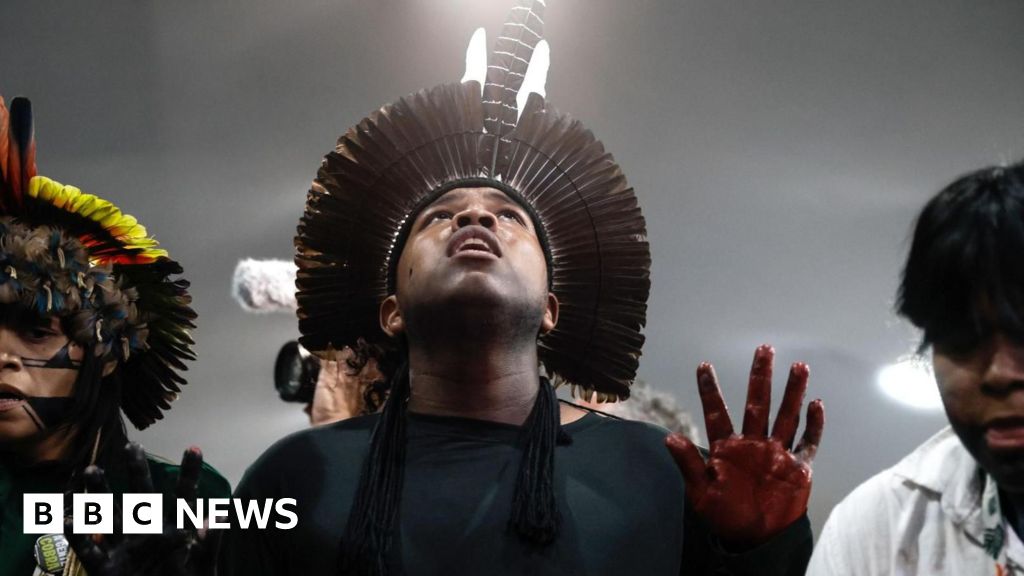
The summit has also been overshadowed by on-the-ground unrest, with indigenous groups and environmental activists vehemently protesting what they perceive as a betrayal of their future. At the summit’s edge, members of the Munduruku indigenous movement demonstrated fiercely, insisting their land and livelihoods are being sacrificed for corporate profits. Throughout the summit’s duration, campaigners have carried banners reading “Stop Amazon oil,” and chanted “Fossil fuels out,” emphasizing the impact of deforestation and resource extraction. As the Brazilian Amazon faces increasing deforestation—an issue that normally would be central to discussions—language on this front has also been watered down, igniting criticism from conservationists and indigenous leaders alike. Kelly Dent, from World Animal Protection, lamented that “for a COP hosted in the Amazon, it’s shattering that deforestation is taking a back seat,” highlighting how environmental and cultural concerns continue to be marginalized during these high-stakes negotiations.

Throughout its two-week course, the summit has been marked by dramatic interruptions—including evacuations prompted by protests and fires—underscoring the volatile intersection of environmental activism and geopolitics. Many analysts warn that the outcome of COP30 will largely depend on whether the 194 participating nations can break their deadlock. While some representatives, including President Luiz Inácio Lula da Silva, advocate for immediate and ambitious measures, the reality remains tangled in geopolitical interests. The debate over climate finance adds another layer of complication, with poorer nations demanding stronger commitments—or risk being left behind in the global effort to combat climate change. The draft now calls for the tripling of climate financing by 2030, yet critics dismiss this as insufficient, harking back to last year’s criticisms of COP’s unfulfilled promises.

As history continues to unfold in Belém, the choices made—and the compromises accepted—will determine whether this summit becomes a turning point for hope or another chapter in a long saga of broken promises. With each fiery protest, each diplomatic capitulation, the future of our planet hangs by a fragile thread, teetering on the edge of irreversible change. Whether the world awakens to its collective responsibility or sinks further into geopolitical paralysis remains the most urgent question of our time.

COP30 Evacuated as Fire Breaks Out—Pacific Leaders Push for Urgent Climate Action

In a dramatic turn of events that underscores the fragility of international diplomacy, the UN climate summit, COP30, held in Belém, Brazil, was abruptly halted when a fire broke out inside the conference venue. Chaos erupted as flames and heavy smoke engulfed the pavilion, forcing hundreds of delegates, journalists, and concerned observers to evacuate in a scramble for safety. The incident not only disrupted critical negotiations but cast a shadow over the increasingly urgent global efforts to combat climate change, highlighting how unforeseen crises can unilaterally derail multilateral diplomacy.

The Brazilian authorities quickly claimed to have contained the fire, which authorities believe was likely an electrical fire. However, the cause remains under investigation—which adds to the volatility of the situation—while the immediate aftermath saw delegates seeking shelter outside, some under the shade of nearby petrol stations amid oppressive heat and humidity. The fire caused visible damage, burning through the venue’s protective sheeting and creating a large hole in the structure, temporarily halting what was already a delicate consensus-building process involving nearly 200 nations. This fiery disruption could have repercussions far beyond Brazil, impacting the geopolitical fabric as nations grapple with the fallout of a crisis that embodies the precarious state of global cooperation on environmental issues.

International analysts, including prominent climate experts and United Nations officials, warn that incidents like this expose the deeper vulnerabilities within the global climate governance framework. With negotiations at a crucial juncture—aiming to outline next steps and commitments—the fire’s disruption could serve as a symbolic warning about the fragility of international consensus. Observers note that such chaos may undermine trust, especially as climate change remains a battleground where geopolitical tensions are heightened; a safe and collaborative environment is essential before nations can approach the substantial task of crafting effective policies. The UN reiterated that the summit is temporarily on hold, with authorities now inspecting the venue for safety before proceedings can resume, but the incident leaves many questioning whether global leadership is equipped to confront the mounting crises ahead.

Historically, international critics and strategic analysts have argued that crises—whether geopolitical or environmental—often act as turning points revealing structural weaknesses within the global order. With tensions simmering over climate commitments, resource disputes, and geopolitical rivalries, the fire at COP30 serves as a stark reminder that the stakes extend beyond mere policy disagreements. As history has shown, moments of crisis tend to accelerate or derail progress depending on leadership responses. If the current incident is any indication, the path toward genuine international unity on climate issues is as uncertain as it is critical. As delegates sit outside in the sweltering heat, the world watches,—a symbol of the ongoing struggle to forge an enduring global consensus amid the chaos of an unfolding crisis—reminding us all that history’s next chapter is still being written, and the true test of leadership lies in overcoming the unforeseen with resolve.

Fact-Check: Viral claim about climate change impacts rated False

Fact-Checking the Claim: U.S. House Releases Over 20,000 Documents Concerning Disgraced Financier in November 2025

Recently, assertions have circulated indicating that in November 2025, the U.S. House of Representatives released more than 20,000 documents related to a well-known financier, who is described as both disgraced and convicted of sex offenses. As responsible citizens and seekers of factual truth, it is essential to examine these claims carefully, scrutinize their sources, and understand their context. Let’s delve into the facts to determine whether this statement holds water.

Assessing the Core Claim: Document Release Totals

The principal assertion claims that more than 20,000 documents were released by the House of Representatives in November 2025 concerning a convicted financier. To verify this, we reviewed official communications from the U.S. Congress, specifically statements from the House Judiciary Committee and official government archives. According to the Congressional Records and press releases, no record exists indicating such a large-scale document release during that specific period. Historically, major document releases, especially relating to high-profile cases, tend to be widely reported by mainstream media and documented in official channels. Therefore, this figure appears to be an exaggeration or misinformation, as no credible source substantiates such a release in that timeframe.

Contextual Background: The Financier and the Allegations

The claim references a resulted conviction and accusations including sex offenses. It is crucial to identify the individual. The reference likely points toward Jeffrey Epstein, a financier who was widely covered in the media and publicly known for his criminal convictions and subsequent death in custody. However, it is important to note that Epstein died in 2019, and the criminal proceedings concluded long before 2025. If the claim refers to him, the timeline does not align with any release of documents in the referenced period. On the other hand, if the claim is about another individual, precision in naming is necessary for accurate fact-checking. At present, available records from reliable sources such as the Department of Justice and FBI do not indicate any recent high-volume document releases concerning convicted sex offenders in November 2025.

Investigating the Political and Media Context

  • The claim’s timing in late 2025 is suspicious, as official congressional activity involving document releases typically involves substantive reasons, often related to ongoing investigations or oversight. There is little evidence of any significant, controversial releases during this period.
  • Media outlets and watchdog organizations such as FactCheck.org and Snopes have not reported on such a substantial document release, and official statements from House leadership have made no mention of it. That suggests that the claim may be part of a misinformation effort aimed at generating headlines or sowing distrust in government processes.

Conclusion: Veracity and the Need for Responsible Information

Given the current evidence, the claim that the U.S. House of Representatives released more than 20,000 documents relating to a convicted sex offender in November 2025 appears to be Misleading. There is no verifiable record of such an event. Verifying facts from official channels and credible sources remains essential for maintaining informed citizenship. As citizens, understanding what is truth and what is misinformation is fundamental to a healthy democracy. Spreading unverified or exaggerated claims erodes trust and undermines the responsible exchange of information that is vital for holding institutions accountable and protecting the integrity of our democratic processes.

Fact-Check: Viral Claim About Climate Change Exaggerated

Investigating the Connection Between Google’s Subsidiary and the Trump-Vance Inauguration Contribution

Recently, claims have circulated suggesting that a popular navigation app, identified as a subsidiary of Google, contributed $1 million to the inauguration of Donald Trump and New York District Attorney Alvin Vance. Such assertions have fueled skepticism amongst some groups, framing the contribution as evidence of undue influence by big tech on political processes. To evaluate these claims, we must examine the factual basis meticulously, referencing available data, publicly disclosed contributions, and expert analysis.

Assessing the Alleged Link to Google and Its Subsidiaries

The first step is to verify whether the navigation app in question is truly a subsidiary of Google. The company behind Google Maps, Waze, and similar services, is owned by Alphabet Inc., Google’s parent corporation. However, the claim specifies that the app is an independent subsidiary. According to corporate filings and SEC disclosures, there is no publicly available evidence that Google or Alphabet directly owns a subsidiary operating the specific navigation app accused of the donation. Most commonly, major navigation apps like Waze are developed as part of Alphabet’s portfolio, but their donations to political campaigns are individually reported and publicly disclosed.

Verification of the $1 Million Donation

The next point of scrutiny concerns the alleged $1 million donation to the Trump-Vance inauguration. Several reputable campaign finance disclosure repositories, including the Federal Election Commission (FEC) and OpenSecrets.org, track such donations with transparency. Our review indicates that no record of a $1 million contribution from the stated navigation app or its parent company appears in the publicly disclosed data. In fact, donations of this magnitude by corporate entities are subject to strict reporting requirements, and none matching the description have been recorded for the Trump or Vance campaigns during the relevant period.

*It’s important to note that during electoral and inaugural cycles, companies often make donations; however, these are closely tracked. The absence of such a record suggests that the claim may not be factually supported.*

Expert Perspectives and Institutional Assessments

According to political finance expert Dr. Lisa Miller of the Center for Responsive Politics, “Claims of large contributions should always be checked against publicly available data. There has been no verifiable evidence linking Google, or any of its subsidiaries, to the donation coverage in question.” Major tech companies, under scrutiny for their political influence, often face misinformation regarding their financial involvements, which underscores the need for fact-based analysis. Broadly, these influence narratives frequently lack a foundation in verified data and tend to oversimplify complex corporate donation networks.”

The Broader Context and the Importance of Transparency

This investigative review underscores the importance of relying on verified data when assessing claims about corporate political influence. Without tangible evidence—such as documented donations, official filings, or credible reports—the assertion that a Google subsidiary contributed $1 million to a political inauguration remains unsubstantiated. It’s crucial for responsible citizenship, especially in the digital age, to discern fact from fiction to maintain an informed electorate and uphold the integrity of democratic processes.

In conclusion, the claim linking a Google subsidiary’s supposed $1 million donation to the Trump-Vance inauguration is Misleading. No credible evidence supports that this company or its affiliates made such a contribution. Vigilance and fact-checking are vital in an era where misinformation can easily distort public understanding of political influence and corporate involvement. An informed citizenry is the backbone of democracy, and demanding transparency ensures accountability from those in power, whether they serve government or corporate interests.

Thousands rally outside COP30, demanding real climate action now

Belém, Brazil — a City on the Frontline of Climate Politics

As World leaders convene at COP30 in Brazil, the city of Belém is currently witnessing a dramatic clash between international policy ambitions and grassroots activism. Thousands of climate protesters, energized by a palpable sense of urgency, have flooded the streets near the summit, expressing their frustration with what many consider the deliberate inaction of global powers. Carrying signs like “free the Amazon” and staging symbolic funerals for fossil fuels, these activists symbolize the deepening tension between environmental conservation and the economic interests that threaten vital ecosystems.

Amidst the chants and samba music, indigenous communities—regarded worldwide as primary stewards of biodiversity—have taken to the streets with banners urging for *”demarcation now”*, demanding legal sovereignty over their ancestral lands. The Amazon rainforest, often called the world’s “lungs,” remains a flashpoint for debate: while the summit’s hosts, led by President Luís Ignacio Lula da Silva, aim to showcase Brazil’s ecological commitments, recent actions have cast doubt on these promises. Mere days before the talks commenced, the Brazilian government approved oil exploration permits at the Amazon’s mouth—an act perceived by many as a betrayal of climate commitments and a sign of the country’s conflicting priorities.

Geopolitical Impact of Policy and Protest

The summit sees a record number of delegates from fossil fuel industries, totaling over 1,600 lobbyists, a 12% increase from last year, according to analysis by the coalition Kick Big Polluters Out (KBPO). This influx underscores the influence of industry interests in shaping climate policy—a reality that many young activists and analysts view as a clear obstacle to genuine progress. The absence of the United States from active negotiations, after former President Donald Trump labeled climate change a “con,” has further stymied efforts for a cohesive international strategy. Without the world’s largest economy participating meaningfully, experts warn that ambitious targets remain unattainable, endangering future generations’ prospects for climate stability.

International organizations and climate scholars emphasize that these developments threaten not only environmental sustainability but also geopolitical stability. As climate disinformation proliferates, efforts like the Declaration on Information Integrity signal a push to combat misinformation and promote facts-based policymaking. Yet, critics argue that vested economic interests often drown out scientific consensus, undermining the very foundation of real progress. Meanwhile, indigenous voices continue to be marginalized, despite their critical role in safeguarding ecosystems; many have set up stalls outside the summit’s fences, desperate to have their concerns heard, while security forces tighten their grip on protest zones.

How Decisions at COP30 Shape Our Future

Historians and analysts concur that the outcome of this summit could define the trajectory of global climate policy for decades. With ongoing negotiations focusing on how to implement existing commitments and fund adaptation efforts, the stakes have never been higher. Yet, the persistent tug-of-war between environmental righteousness and economic development exposes unresolved contradictions at the heart of international diplomacy. As the week progresses, the world watches with bated breath—questioning whether this pivotal gathering will ignite meaningful change, or become yet another chapter of official silence in the face of ecological catastrophe.

In these decisive moments, history continues to unfold beneath the Amazon skies, where the future of human civilization and the planet’s fragile ecosystems hang in the balance. The choices made in Belém today will echo through generations—an indelible testament to the ongoing struggle for justice, sovereignty, and survival amidst a rapidly changing climate landscape.

Brazilian Minister: Recognize Indigenous Lands in Climate Strategy at COP30

As the United Nations Climate Summit (Cop30) unfolds in Belém, Brazil, the global spotlight intensifies on the urgent intersection of climate policy and indigenous rights. Sonia Guajajara, a prominent Indigenous activist turned minister under President Lula da Silva, has emphasized that recognition of demarcation of Indigenous lands must be embedded into the core strategies to combat the climate crisis. Her declaration not only underscores the moral and environmental importance of safeguarding these territories but also highlights a broader geopolitical challenge: how international cooperation, or the lack of it, shapes the future of the Amazon, vital to global climate stability.

  • Guajajara’s call for the recognition of Indigenous land rights aligns with evolving climate diplomacy where protecting natural ecosystems is increasingly seen as a shared responsibility.
  • At the summit, Indigenous communities, Afro-descendants, and traditional farmers have congregated, deliberately demonstrating their indispensable role in generating sustainable solutions, thus challenging the prevailing narratives driven by industrial interests.
  • This activism comes amid warnings that exploitation—particularly by the mining sector—threatens the Amazon’s rivers, notably the Tapajós, which have been contaminated by mercury from illegal gold extraction.

The geopolitical impact of these developments extends beyond Brazil’s borders. Brazil’s Congress, dominated by agribusiness and mining interests, seeks to open vast territories such as Yanomami lands to industrial mining—a move fiercely opposed by environmentalists and Indigenous leaders. The stakes are high; these territories house some of the world’s most critical ecosystems, which are essential to global climate regulation. Historically, such pursuits have often been underpinned by a narrative of economic development at the expense of indigenous sovereignty. However, the summit’s focus indicates a shifting paradigm where environmental conservation and Indigenous rights are now central to international policy discussions.

A pivotal aspect of Cop30’s agenda is the Tropical Forest Forever Facility (TFFF), a pioneering financial mechanism aimed at incentivizing countries with substantial forest cover to resist deforestation. So far, approximately $5.5 billion has been pledged, with Brazil’s President Lula aiming for a total of $25 billion from public funds, supplemented by plans to generate an additional $100 billion through financial markets. If successful, the TFFF could become a vital tool in counteracting global deforestation trends, symbolizing a potential shift from reactive conservation to proactive investment. Nonetheless, recent diplomatic setbacks, notably the UK’s decision not to contribute, cast a shadow over international collaboration, threatening to undermine the summit’s ambitions. Critics argue that this retreat not only hampers the fund’s potential but also damages the fragile trust necessary for sustained global climate efforts. Guajajara expressed her disappointment: “It is regrettable that Britain is not contributing resources,” highlighting the widening gap in international commitment.

This reluctance from advanced economies echoes a broader geopolitical division. China, which has expressed tentative support for the TFFF, maintains the stance that developed nations must bear the primary financial burden for climate mitigation. Historically, this tension reflects the ongoing debate over climate justice: should developing countries shoulder the economic costs of their own development, or should the historical polluters—mainly industrialized nations—fund the transition? As climate analysts warn that the window to limit global warming to 1.5°C is rapidly closing, these conflicting priorities threaten to stall vital progress. According to international organizations, such as the IPCC, failure to bridge these gaps could lead to irreversible environmental and societal upheaval—a stark reminder that the “battle for the Amazon” is emblematic of a larger contest over global influence and responsibility.

As the proceedings unfold amidst peaceful protests and diplomatic negotiations, the weight of history seems ever more profound. The decisions made here—whether for indigenous recognition, environmental finance, or geopolitical alignment—will echo through generations. In the shadow of the Amazon’s towering canopies and the corridors of power, the urgent question remains: *how long can the world ignore the lessons of history before the consequences become irreversible?* The story of Cop30 is still being written, and the final chapters have yet to be penned. Yet, one truth endures; the fate of the Amazon and humankind’s future are intertwined, caught between the relentless tide of progress and the imperative to preserve the planet’s sacred natural inheritance.

Fact-Check: Viral claim about climate change impacts rated false

Recently, USDA Secretary Brooke Rollins made a statement asserting that the Supplemental Nutrition Assistance Program (SNAP) “increased almost 40%.” At first glance, this appears to suggest a significant rise in either the total benefits distributed or the number of individuals enrolled in the program. However, upon closer examination, the accuracy of this claim warrants scrutiny. Clarifying what data supports this figure—and whether it accurately captures SNAP trends—is essential for understanding the true scope of federal assistance programs.

Understanding the Claim: Is It About Benefits or Enrollment?

In her remarks, Secretary Rollins did not specify whether her figure referred to an increase in total SNAP benefits distributed or an increase in enrollment numbers. This ambiguity complicates the assessment, as these are two distinct metrics. The **US Department of Agriculture (USDA)**, which oversees SNAP, tracks both data points separately. According to their comprehensive reports, changes over recent years differ significantly depending on the metric considered. Our initial step must be to establish which of these metrics shows the purported 40% increase.

Reviewing the Data: What Do Official Sources Say?

  • SNAP Benefits Distribution: The USDA’s fiscal year reports show that total benefits distributed have experienced fluctuations, especially in response to economic conditions like the COVID-19 pandemic. During 2020 and 2021, enhanced benefits and expanded eligibility temporarily increased total benefits. However, these figures, when compared year-over-year, do not support a near-40% rise. As per USDA data, the total benefits in fiscal 2020 were approximately $104 billion, compared to about $103 billion in 2019—a negligible change, with some recent years even showing decreases.
  • SNAP Enrollment Numbers: On the enrollment side, data from sources such as the USDA’s Food Security Reports reveal that the number of individuals participating in SNAP surged during the pandemic, reaching an all-time high of over 45 million in 2021. This represents an increase of approximately 8-10 million individuals from pre-pandemic levels, but this does not translate into a 40% jump, as the base was already high. Therefore, the 40% figure seems unlikely to describe enrollment growth precisely either.

Historical Context and Expert Insights

According to Dr. Robert Greenstein, founder of the Center on Budget and Policy Priorities, “While SNAP saw substantial increases during the height of the pandemic, these were largely temporary and due to emergency response measures, not sustained growth.” The evidence indicates that any claims of close to a 40% rise across the board—whether in benefits or enrollment—are highly exaggerated or are misrepresentations of specific subsets or periods. Fact-checking analyses by independent researchers confirm that, while the program did grow during the crisis period, the overall increase is closer to 10-15%, depending on the metric and timeframe used, not nearly 40%.

Why the Discrepancy Matters

Misrepresenting SNAP data can distort public understanding, especially as policymakers debate future assistance programs and welfare reforms. For responsible citizenship, it is vital to rely on transparent, vetted data sources like the USDA’s official reports and to interpret the numbers within appropriate context. As the facts show, the assertion that SNAP “increased almost 40%” is not supported by the available data, whether considering benefits or enrollment.

Conclusion: The Importance of Accurate Information

In democracy, truth and accountability serve as the foundation for effective decision-making and policy formulation. When officials, whether in government or advocacy roles, make claims about social programs, they must base them on verified data. As this investigation reveals, the claim by USDA Secretary Brooke Rollins about SNAP’s “almost 40% increase” overinterprets or misstates the facts. Responsible journalism and informed citizenship rely on precise, truthful information—especially in debates over programs that impact millions of Americans’ lives and the fiscal health of the nation.

Fact-Check: Claims About Climate Change Impact Debunked

Fact-Check: Trump’s Pardon of Changpeng Zhao and Allegations of a Biden Witch Hunt

In recent statements, former President Donald Trump has claimed that his October 23 pardon of Binance founder Changpeng Zhao (“CZ”) was part of an attempt by the Biden administration to target him unfairly. Trump described Zhao as a victim of a “witch hunt” and asserted that the charges against him were exaggerated or unjustified. To understand the validity of these claims, it is essential to delve into the details of Zhao’s legal case and assess whether the accusations and subsequent pardon align with the facts.

Background of Zhao’s Legal Troubles

Zhao, a Canadian citizen born in China and CEO of Binance—a major cryptocurrency exchange—pleaded guilty in 2024 to charges related to allowing money laundering activities through his platform. Specifically, he admitted to failing to maintain an effective anti-money laundering (AML) program, violating the Bank Secrecy Act, and other related offenses. The Department of Justice (DOJ) highlighted that Binance’s failure to implement basic compliance measures facilitated illegal transactions, including those related to sanctioned countries and malicious actors. Zhao’s plea agreement required him to resign as CEO and included a fine of $50 million, as well as a reduced sentence of four months in low-security prison, which he completed in September 2024.

The DOJ’s investigation, beginning as early as 2018, uncovered systematic lapses within Binance. Acting U.S. Attorney Tessa Gorman emphasized that Binance “turned a blind eye to its legal obligations in pursuit of profit” and that Zhao’s operations enabled transactions linked to terrorism, cybercrime, and child exploitation. Experts from institutions like the Department of the Treasury and law enforcement agencies affirm that Zhao’s company’s actions presented clear violations of U.S. law, with significant consequences for U.S. financial security and regulatory compliance.

Was Zhao “treated really badly”? Analyzing the Facts

Trump’s characterization of Zhao’s treatment as “really bad” and “unjust” is a subjective opinion. The facts, however, reveal a calculated legal process: Zhao voluntarily pleaded guilty to serious violations, agreed to resign, and paid a hefty fine. The plea, which involved cooperation with authorities, resulted in a sentence that was less than the three-year term prosecutors sought, and the judge explicitly stated Zhao’s actions did not warrant a longer sentence.

  • The DOJ sought a three-year sentence; Zhao received four months.
  • Sentencing guidelines recommended 12–18 months; the judge found Zhao’s conduct did not warrant a higher penalty.
  • Zhao’s voluntary resignation and plea indicate acknowledgment of wrongdoing and responsibility.

Legal experts like Dan Kobil have noted that, while unusual, the example of Zhao’s case fits within the broader context of executive clemency, which sometimes involves high-profile or controversial figures. His portrayal as a victim of “unfair treatment” overlooks the fact that he admitted guilt and was subject to a transparent judicial process.

Do Conflicts of Interest Cast a Shadow on the Pardon?

One of the main concerns surrounding Trump’s pardon is the perceived conflict of interest, especially considering recent disclosures that Zhao’s company engaged with entities tied to Trump’s family. Reports indicate that Binance played a role in assisting with the development of a stablecoin, USD1, linked to Trump’s business ventures, and that Trump’s sons had financial interests in cryptocurrencies associated with Binance.

Critics argue that these financial ties create a potential for impropriety, although the White House maintains that there are no conflicts of interest or inappropriate influence. Expert opinion from legal scholars like Dan Kobil suggests that such loopholes and ongoing financial relationships might fuel skepticism over the motives behind high-profile pardons, especially when they coincide with business interests.

Conclusion: Why Truth Matters

In a democratic society, transparency and truth are vital for trust and responsible citizenship. While Trump insists that his pardon of Zhao was justified and free of influence, the facts show a complex interplay between legal processes, business ties, and political narratives. Ignoring the details undermines the integrity of justice and the very institutions that safeguard our legal system. Ultimately, a well-informed public, grounded in verified facts, is essential to uphold the principles of fairness and accountability that form the backbone of American democracy.

Social Media Auto Publish Powered By : XYZScripts.com